Snakes of Morocco
More fear than harm
Morocco has one of the richest snake faunas in North Africa: 26 species in 7 families. Only seven are highly venomous: the country’s six Vipers and the Egyptian Cobra. The other 19 species, mostly colubrids, are harmless to humans.
snake species
snake species
This diversity is spread fairly evenly across the country, and the pressures on these snakes are much the same everywhere. Deliberate killing and road mortality are problems nationwide, while habitat loss and lengthening droughts weigh heaviest on species confined to small, isolated patches, such as the Puff Adder, a relic of a wetter era, or the North African Mountain Viper, a North African endemic.
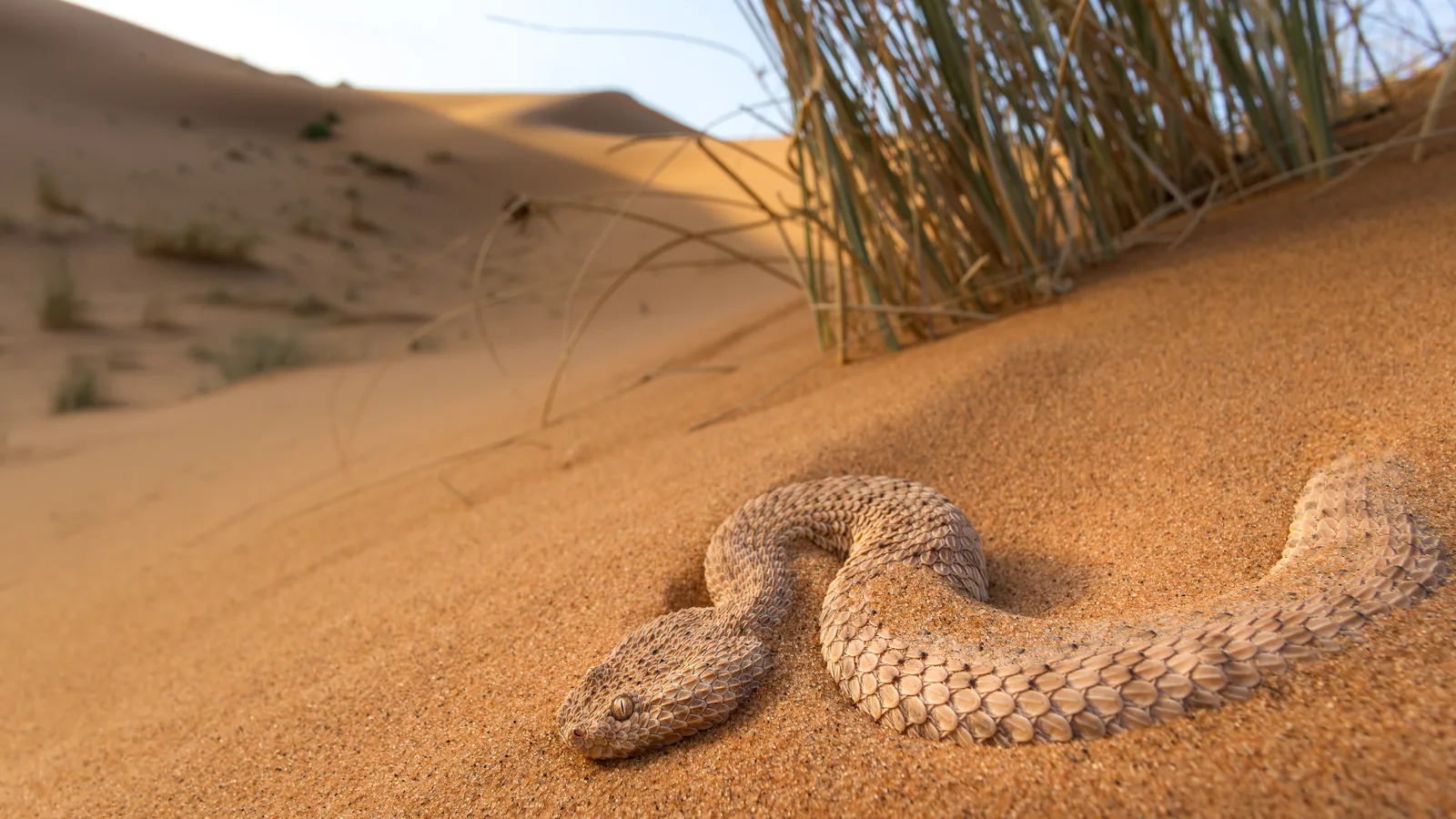
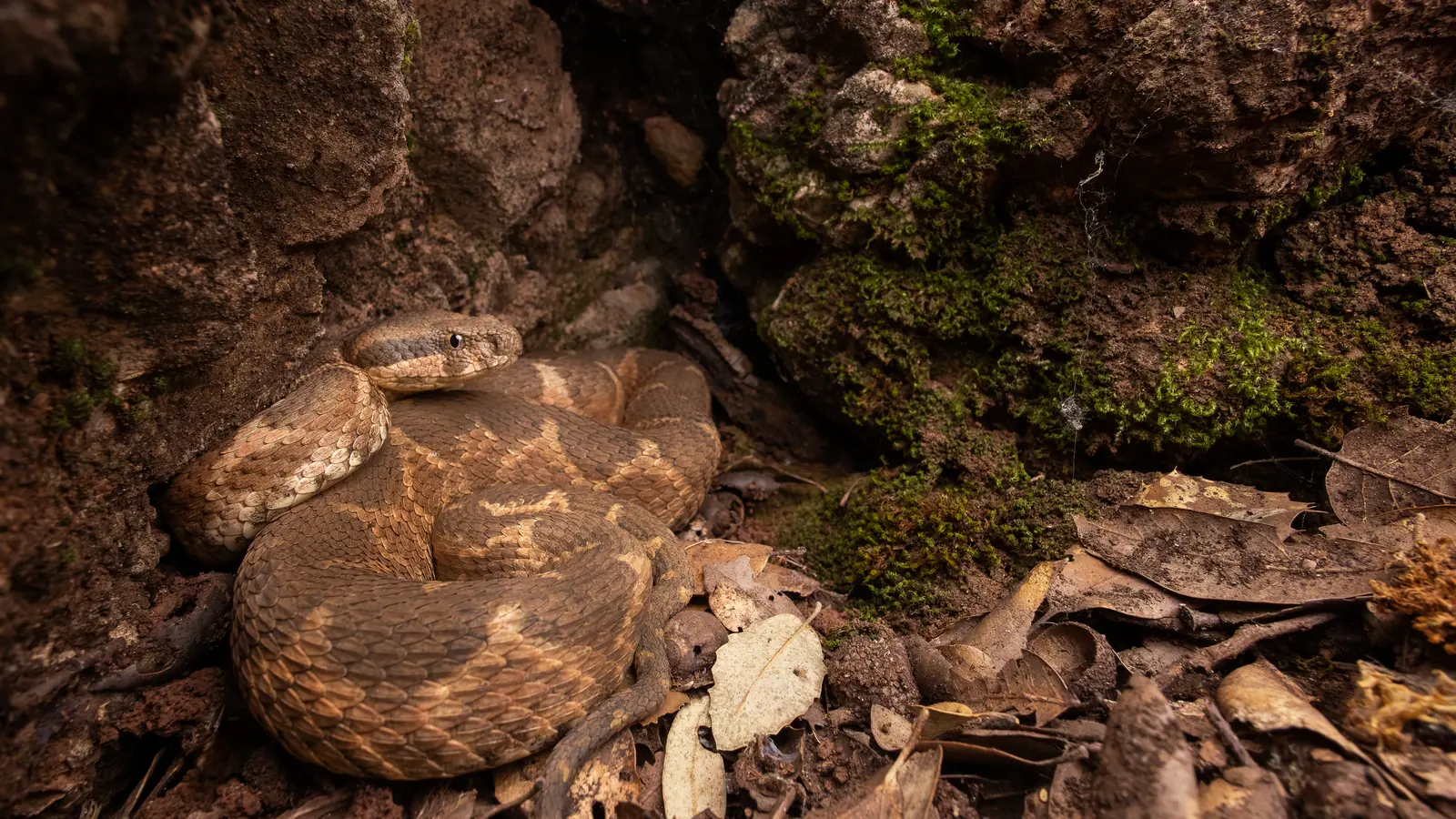
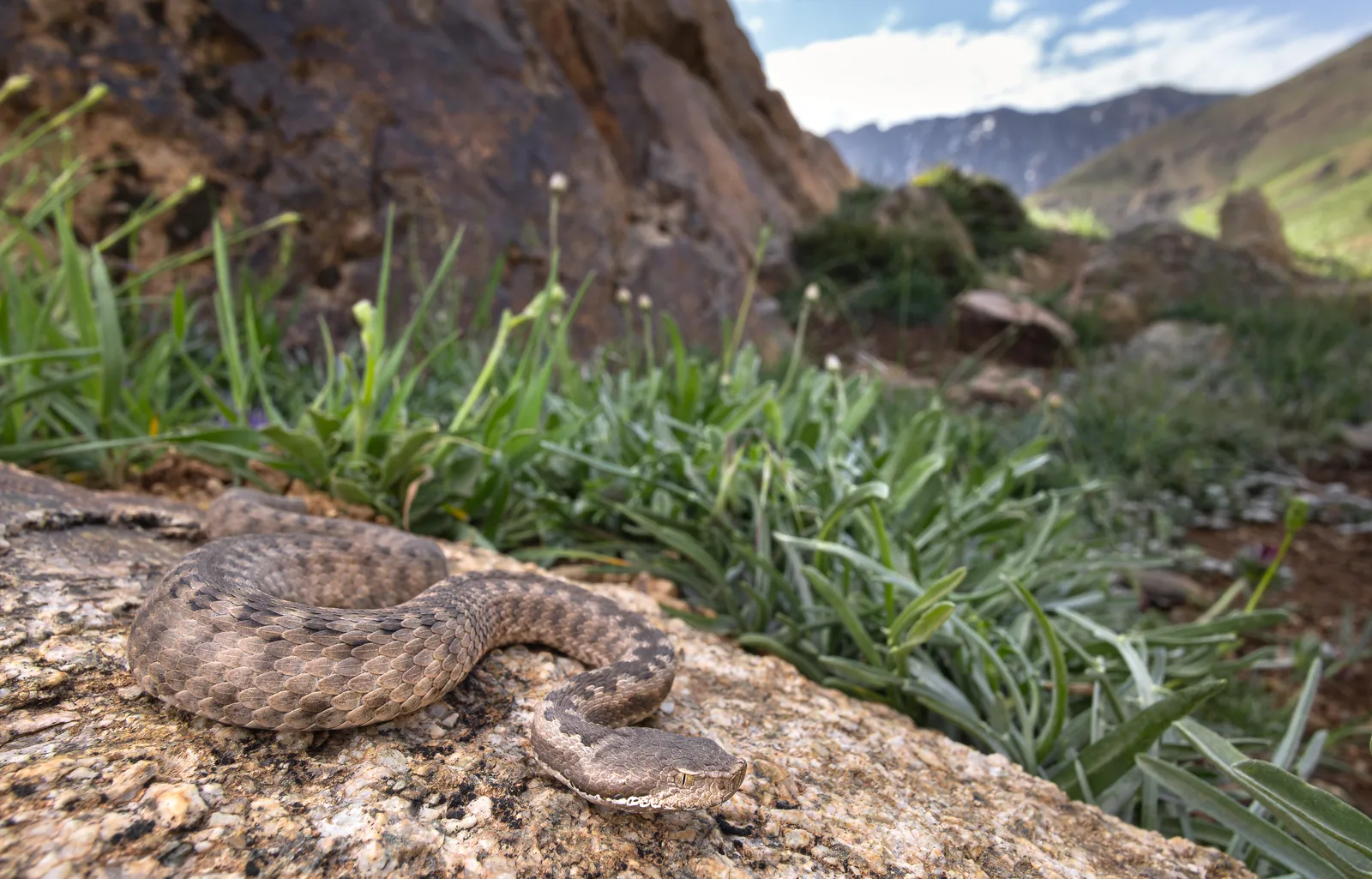
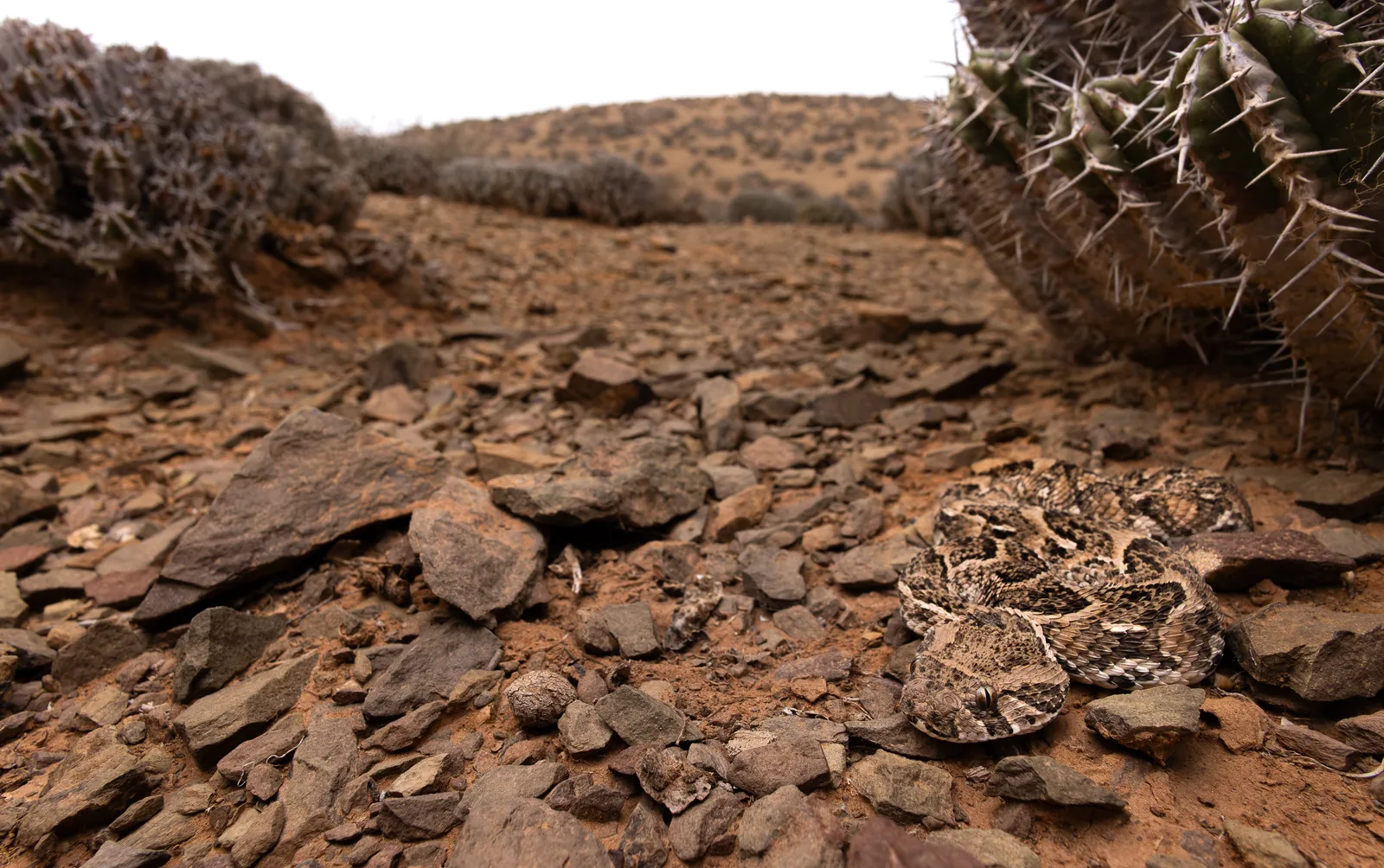 Cerastes viperaSahara Sand Viper
How to identify a Snake in Morocco
Two of Morocco's seven Snake families are venomous, the Cobras and the Vipers; the other five are harmless. Keep your distance, this guide is for identification, not to encourage the handling of harmless species.
1 Is it really a Snake?
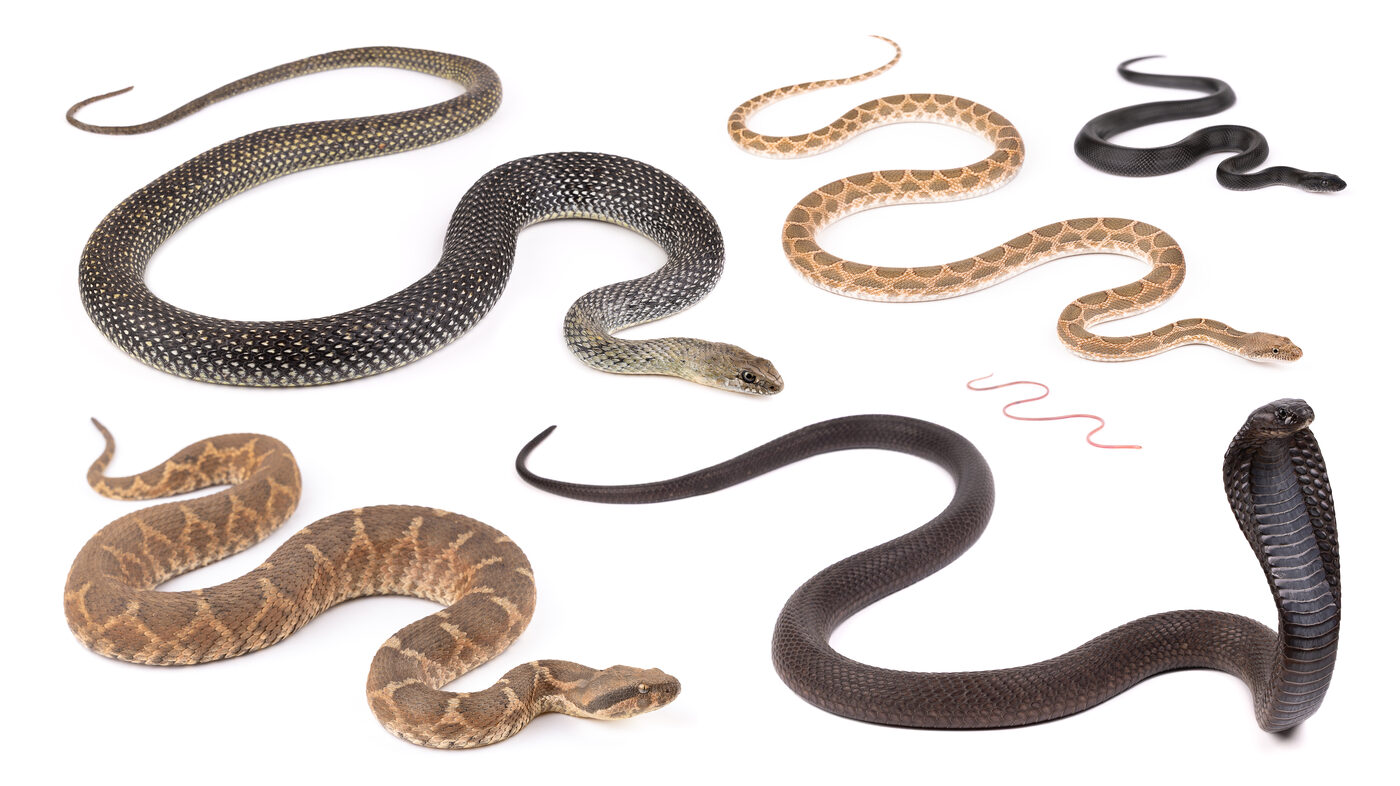 COLLAGE: snake head (lateral) + full body on white
Three quick checks
- No legs, no eyelids, no ear openings
- Legless lizards also have no legs, but they blink and have ear openings
- Worm lizards also have no legs and no ear openings, but their eyes are hidden under their scales
2 Which snake family is it?
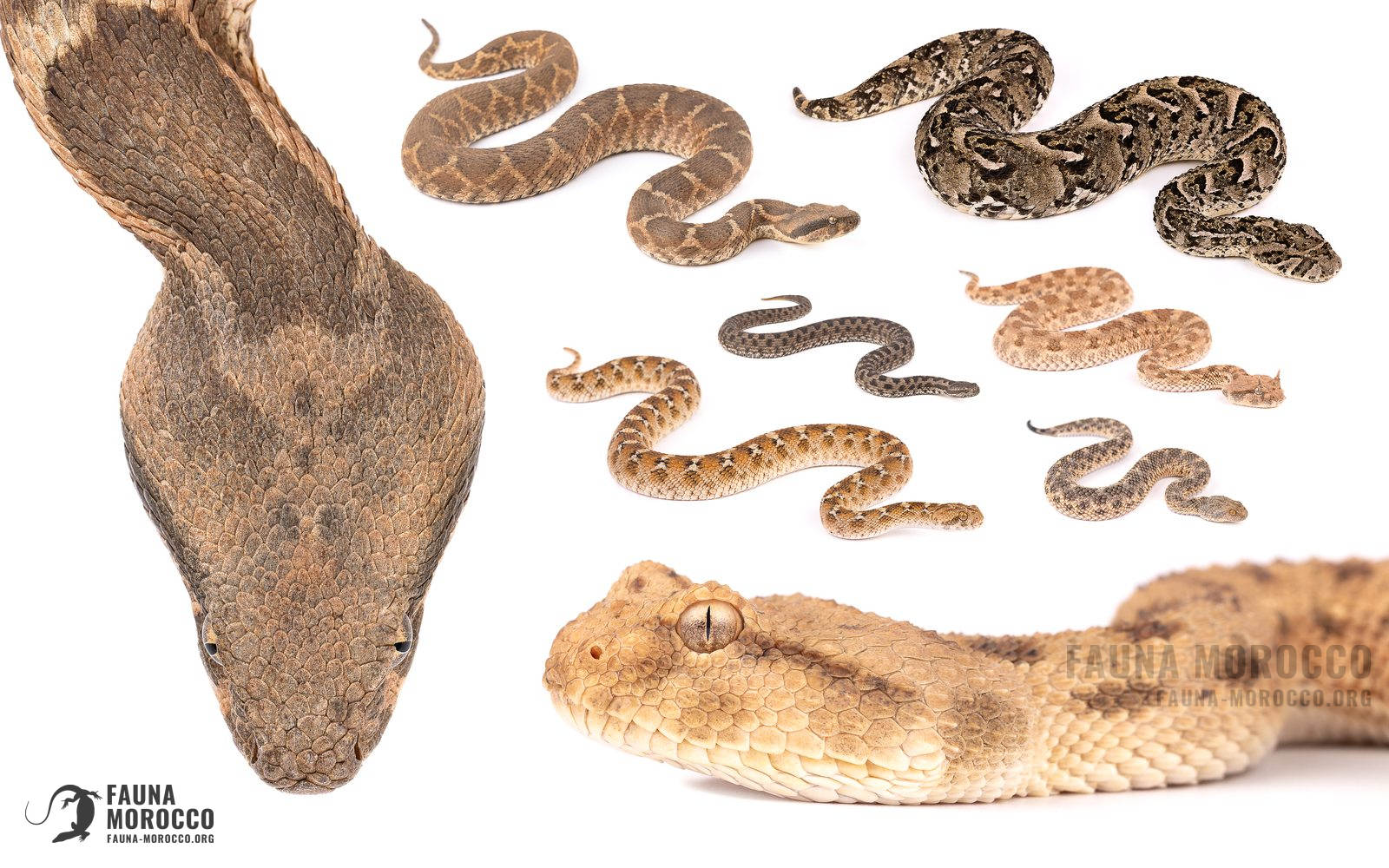
Vipers
Viperidae · 6 species
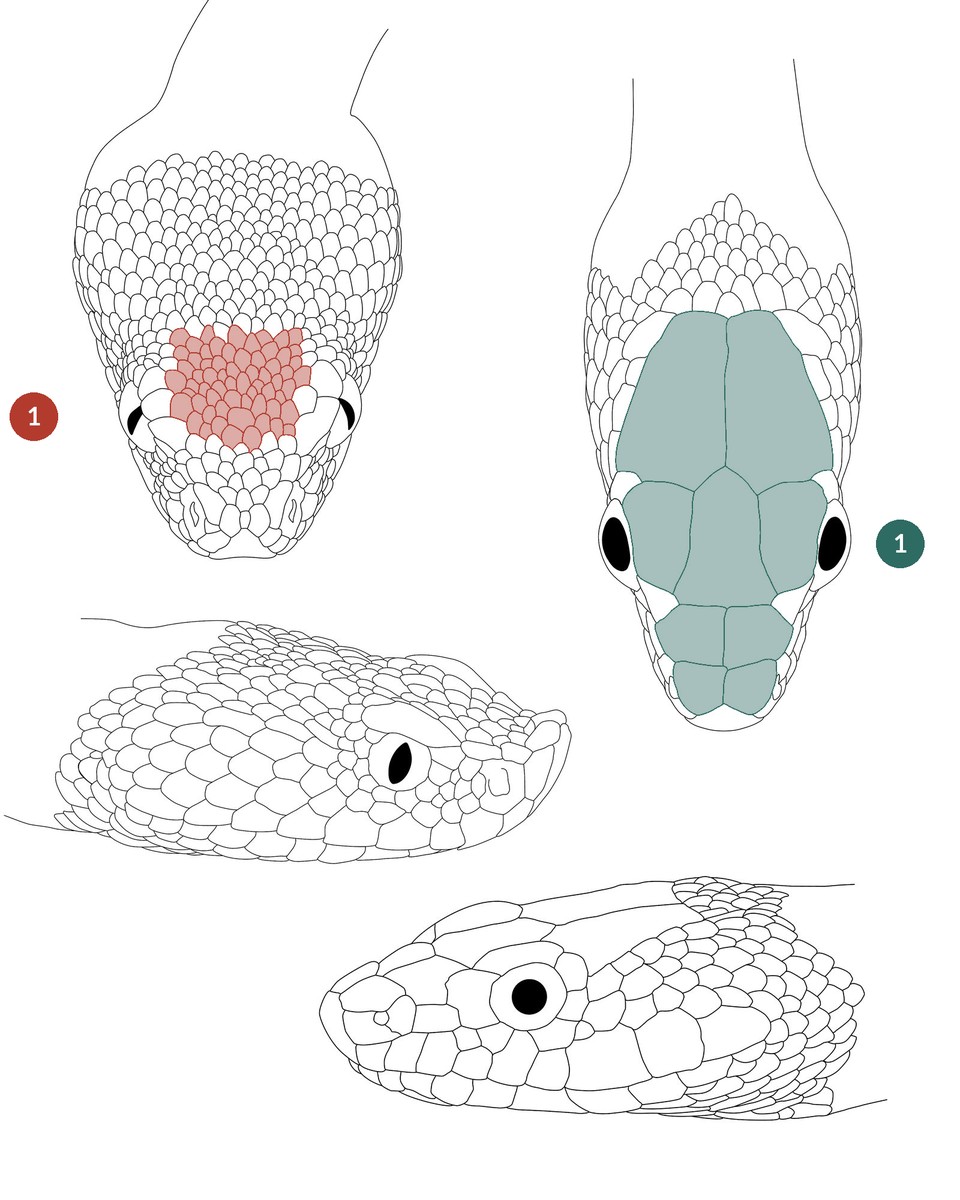
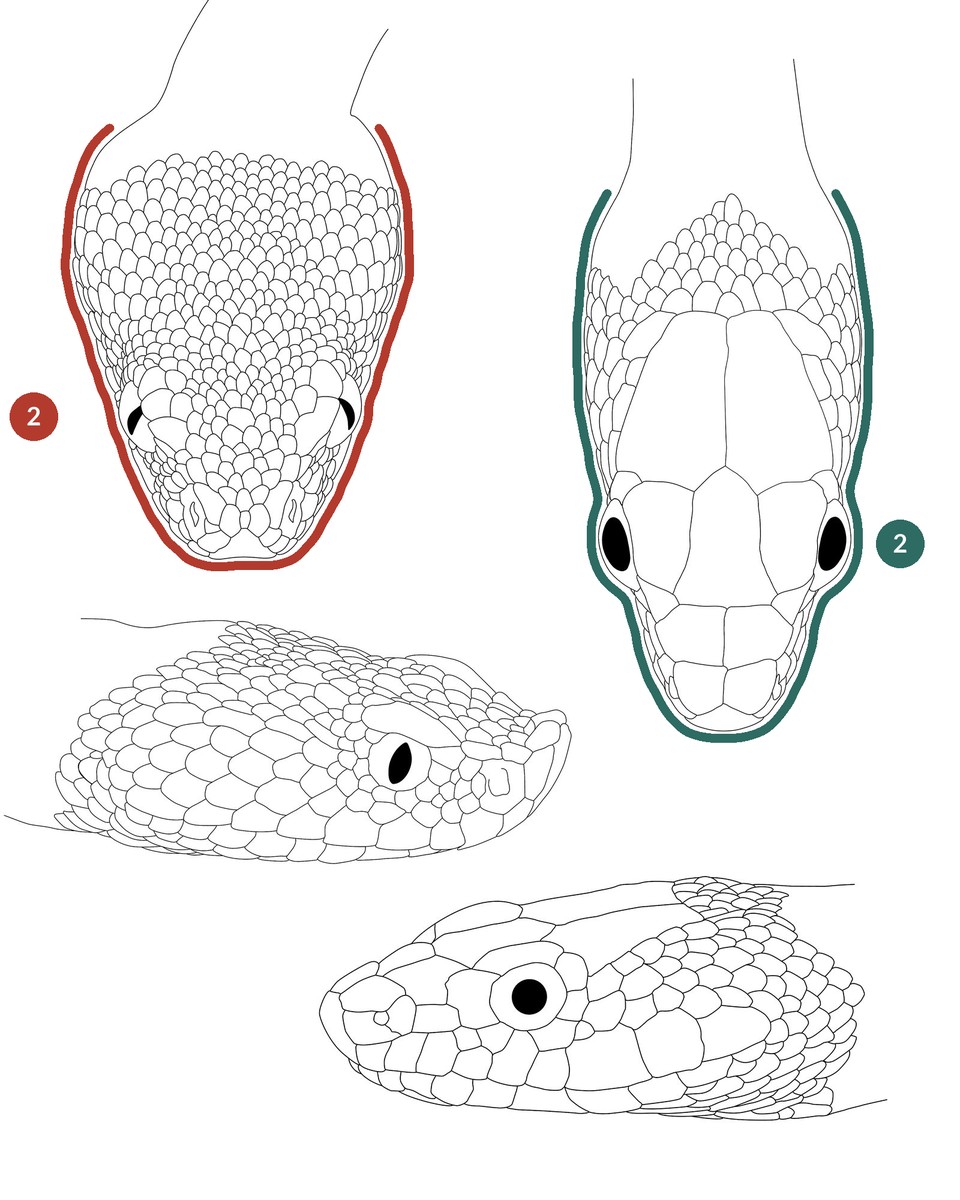
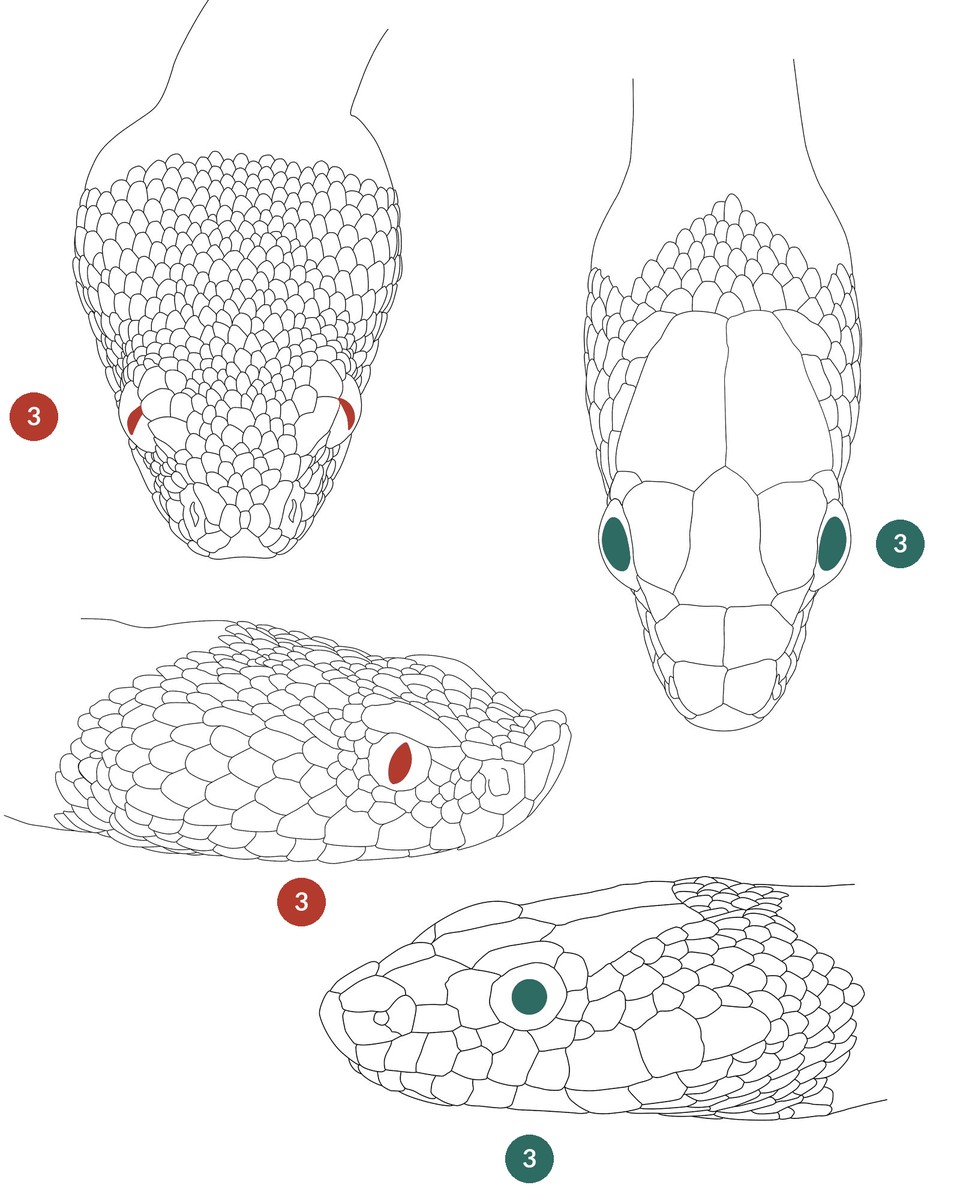
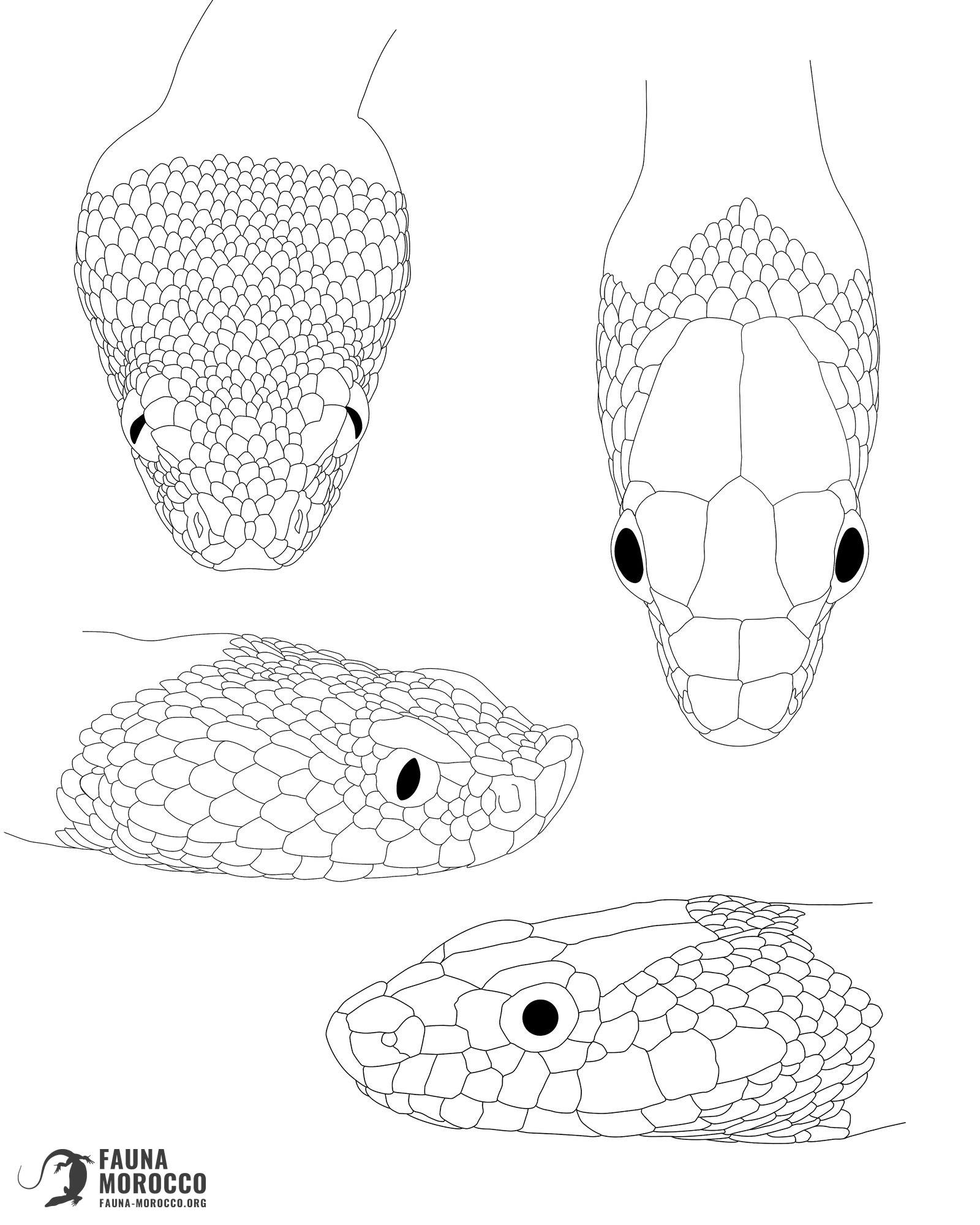
- Broad, triangular head, clearly set off from the neck
- Many small, irregular scales on top of the head
- Vertical, slit-like pupil
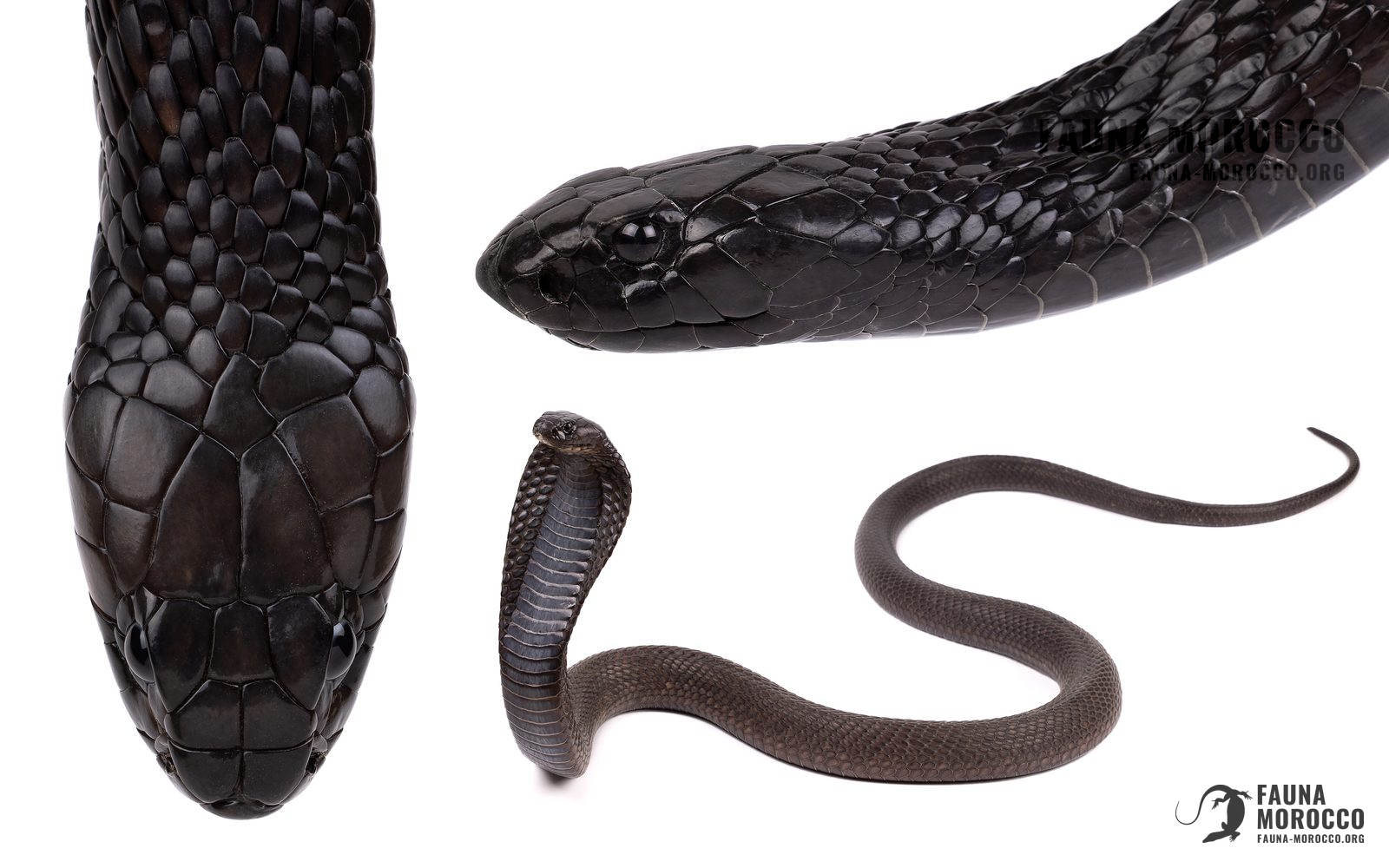
Cobras
Elapidae · 1 species
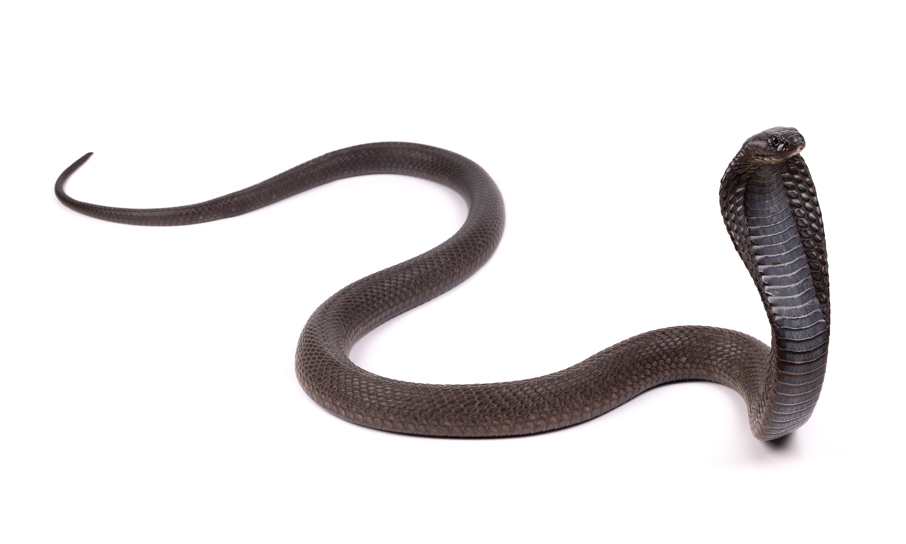
- Spreads a hood when threatened
- Dark eyes, no visible iris
- Do not confuse with colubrids
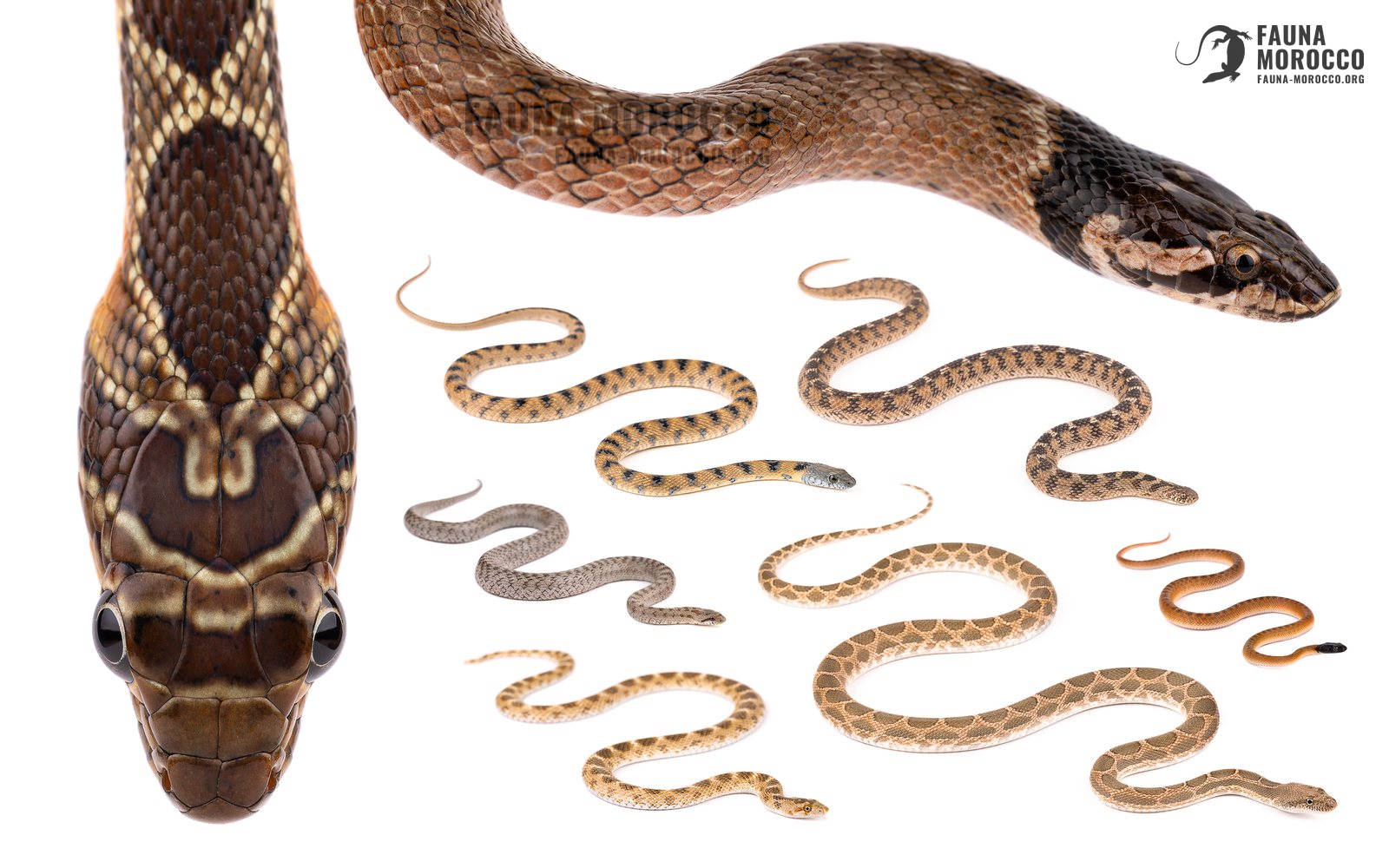
Colubrids
Colubridae · 12 species
- Large, symmetrical plates on top of the head
- Round pupil
The pupil can look slit-like in some species or in low light, so the head scales are the most reliable clue. See our Vipers vs harmless snakes guide.
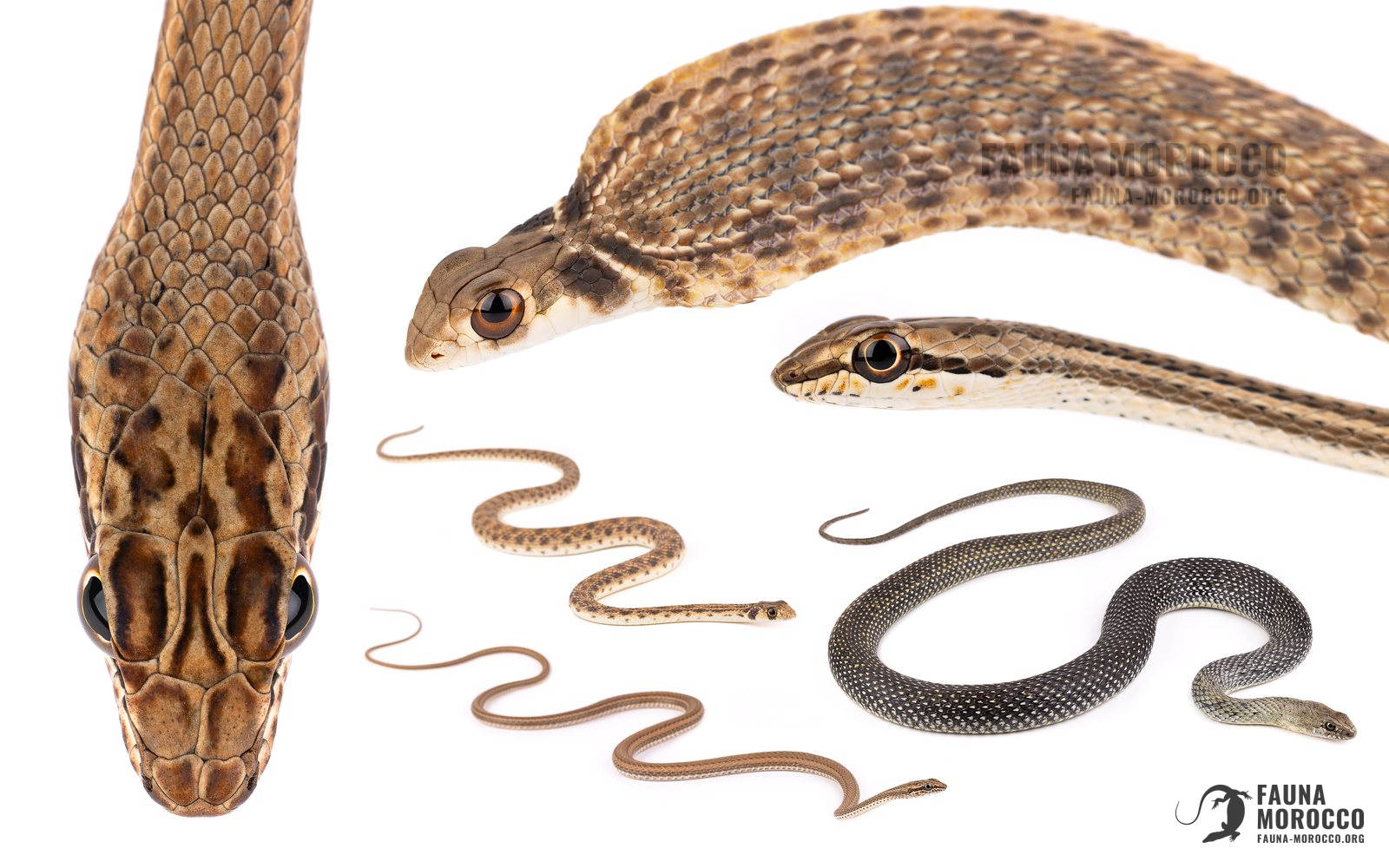
Psammophiids
Psammophiidae · 4 species
- Round pupil ringed with pale yellow to orange
- Pointed snout
- Large, symmetrical plates on top of the head
- Very similar to colubrids
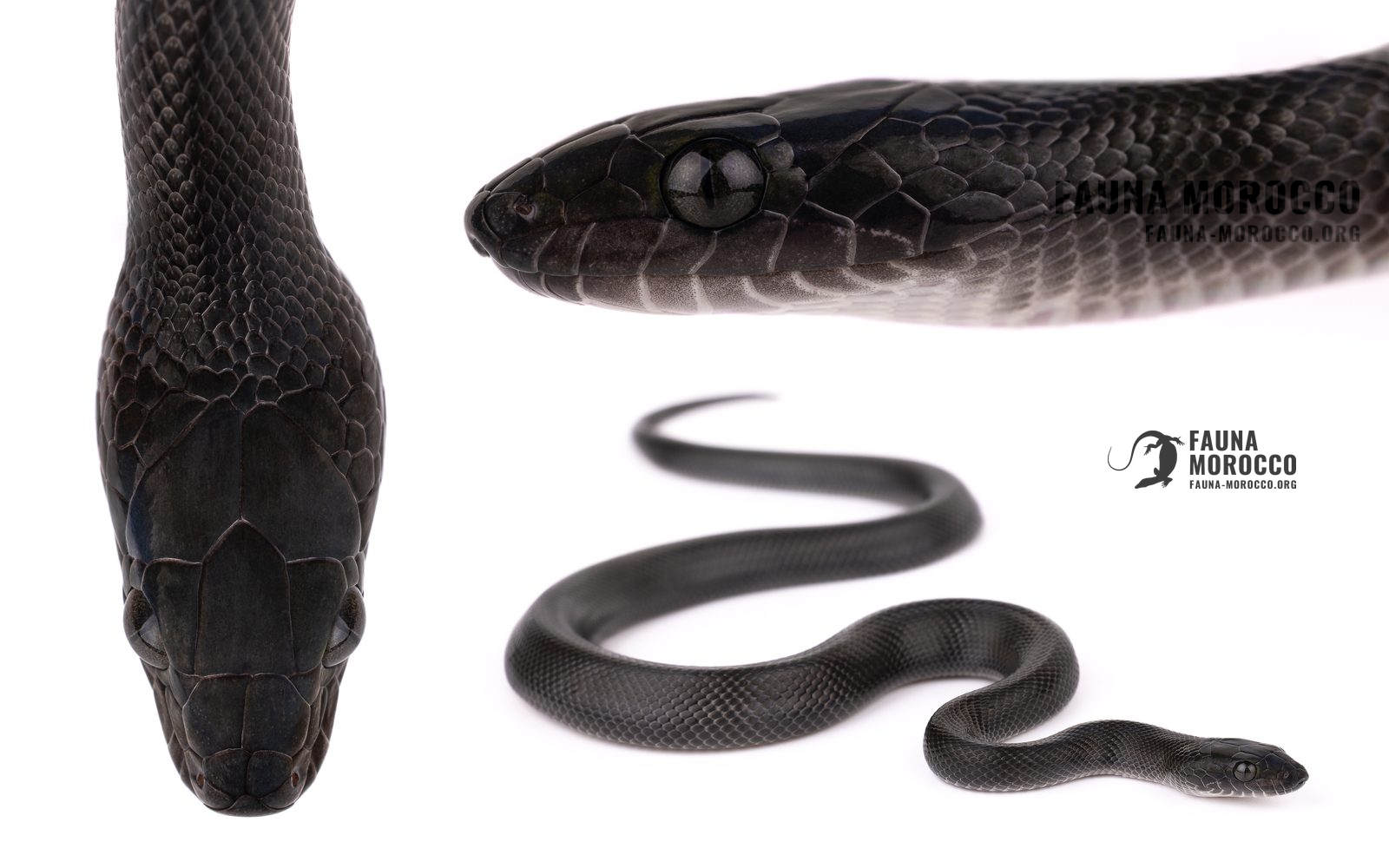
House Snakes
Lamprophiidae · 1 species
- Brown to black body, iridescent scales
- White belly
- Flat, squarish snout
- Large, symmetrical plates on top of the head
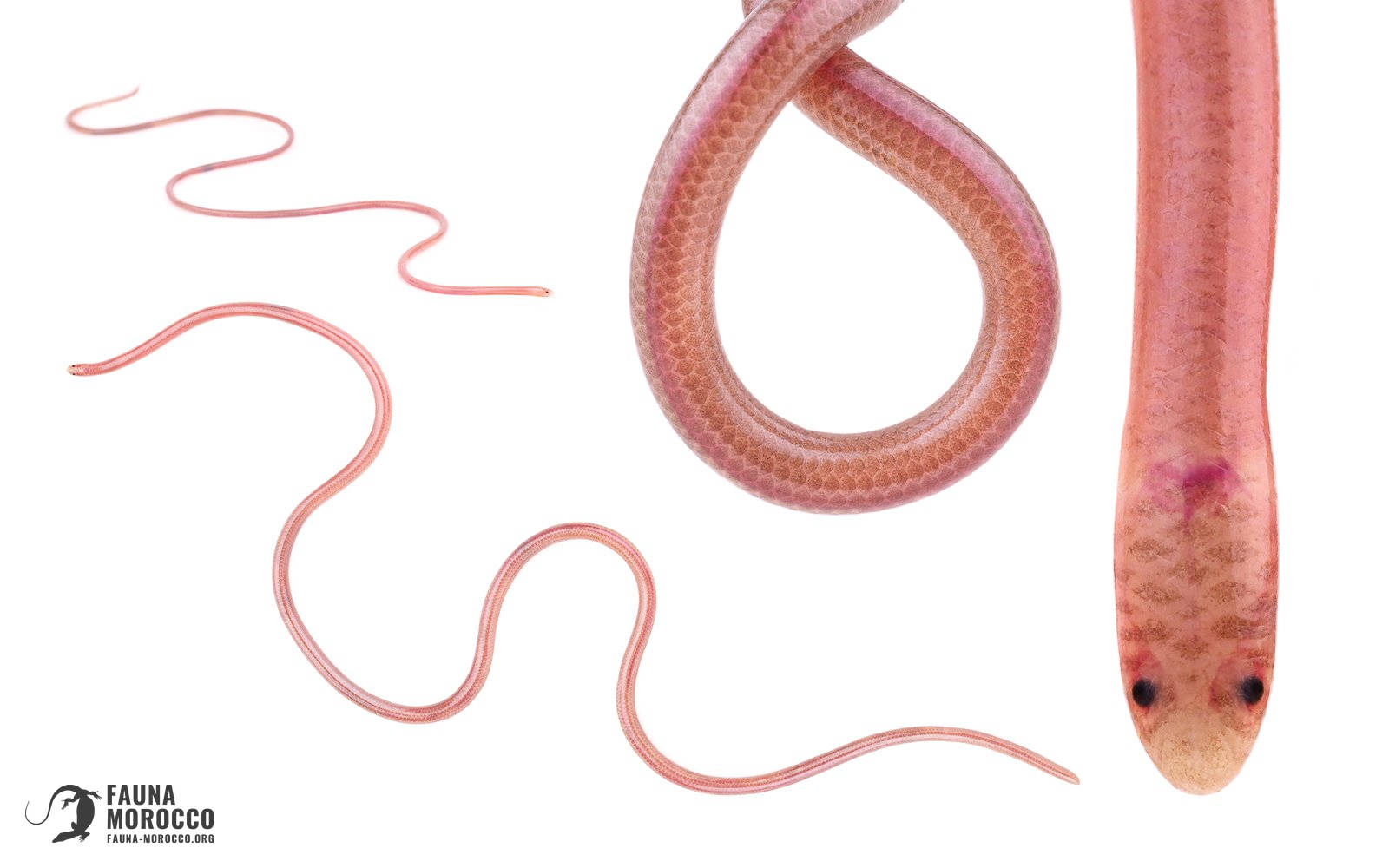
Thread Snakes
Leptotyphlopidae · 1 species
- Worm-like, very long and thin
- The only pink snakes in Morocco
- Do not confuse with worm lizards (amphisbaenians)

Sand Boas
Boidae · 1 species
- Very small eyes, many small scales
- Blunt at both ends, shovel-like snout
- Do not confuse with Trogonophis (worm lizard)
Venomous or harmless?
What to do if bitten by a Viper or Cobra
A bite from a Viper or Cobra is a medical emergency. Call right away.
- Move away from the snake and stay calm.
- Remove rings, watches and anything tight.
- Keep the bitten limb still, splint it if you can.
- If possible, carry the person for any movement, do not let them walk.
- Get to a hospital as fast as possible: only proper medical treatment works.
- If it is safe, note the time and take a photo. Never try to catch or kill the snake.
Do not cut, suck, apply a tourniquet, ice, alcohol or coffee.
General information based on the WHO, provided for guidance only. It is not medical advice and does not replace professional care. Source: WHO
Snakes of Morocco
Are there snakes in Marrakech or in Agadir?
In both Marrakech and Agadir, you are far more likely to meet a snake used by a charmer than a wild one. Morocco has 26 snake species, and some live around cities, in gardens and farmland.
But snakes are shy, the 7 venomous species especially so, and only one or two are likely near large cities. Most visitors never see a snake during their stay, and when they do it is almost always a harmless species.
Are Morocco's snakes dangerous? How many are venomous?
Only 7 of Morocco's 26 snake species are venomous: the country's 6 Vipers and the Egyptian Cobra. The other 19 are harmless to humans. Meeting any snake is unlikely, and a venomous one even less so, though encounters are naturally more frequent in rural areas.
A few simple habits remove almost all risk: don't walk barefoot in nature, watch where you put your hands and feet (don't reach into holes or under rocks and woodpiles you can't see into), use a light when walking at night, and never leave your shoes outside after dark.
If you do meet a snake, keep your distance and let it move off. To check whether a species is venomous, see our Venomous or Harmless guide.
What is the most dangerous snake in Morocco?
The vipers of greatest medical importance are the Puff Adder (Bitis arietans) and the Moorish Viper (Daboia mauritanica), together with the Egyptian Cobra (Naja haje).
Snakes are not aggressive, they are defensive and will not attack people. Keep in mind that encountering snakes in Morocco is unlikely, and that most of them are entirely harmless.
Check out our Identification guide to learn how to differentiate different species, or our Venomous or Harmless one to quickly check whether a snake is venomous.
What should I do if a snake bites me?
Get to a hospital as fast as you can, stay calm and keep the bitten limb still. For the full do's and don'ts, see our What to do if bitten guide.
How can I tell a venomous snake from a harmless one?
The three main clues are head shape, scalation and pupil shape. Our Illustrated guide walks you through them so you can tell whether the snake you saw was venomous.
Are there cobras in Morocco, and are the charmers' cobras venomous?
Yes. The Egyptian Cobra (Naja haje), also called the North African cobra, is the only cobra in Morocco. It is a large, often very dark snake that lives south of the Atlas Mountains, and it is highly venomous: the charmers' cobras are this same species, not a harmless lookalike. The animals used in the squares usually have their fangs broken off before they are handled.
Sadly it is captured from the wild and used by snake charmers, a practice that has pushed the species to greater risk in Morocco. Wild cobras are collected every year and used until they die. For more, see our Egyptian Cobra species account.
What is the largest snake in Morocco?
The Montpellier Snake (Malpolon monspessulanus) is the largest snake in the country, sometimes passing 2 metres. It is a fast, harmless colubrid whose fangs sit at the back of the mouth and deliver only a mild venom, not dangerous to people. Snakes with rear-set fangs like this are called opisthoglyphous.
When and where is the best time to see snakes in Morocco?
Late spring and early autumn, on warm sunny days, are best. In high summer the heat pushes activity to the first hours of the morning and the still-warm hours of the night.
The arid regions, their oases and dry riverbeds hold the greatest diversity, but snakes turn up in almost every habitat, from the coast to the mountains, wherever there is cover and prey. Whenever you find one, watch it from a respectful distance and never try to handle it.
A snake is in my house or garden. What do I do, is it legal to kill it, and how do I keep them away?
Most encounters are harmless. Don't try to catch or kill it, that is when most bites happen; give it a clear way out (it usually followed rodents in), keep children and pets back, and call local civil protection or a handler if you are unsure (see our Venomous or Harmless guide).
To keep snakes away from your house, remove what draws them: control rodents, clear clutter and woodpiles, and seal gaps around doors and foundations.
On the law: all Moroccan snakes are strictly protected under law 29-05, so killing one is illegal. Collecting or keeping a live snake without a permit carries a fine of 5,000 to 20,000 dirhams per animal, and article 5 also prohibits killing them by any means. So no, you may not kill it: back off, leave it alone, and it will move off by itself. (Decree 2-12-484 of 21 May 2015, Annex I, Official Bulletin no. 6366.)
How do you say "snake" in Arabic and Moroccan Darija?
In Standard Arabic, ثعبان (thu'ban) is a snake and أفعى (af'â) a viper. In Moroccan Darija a snake is commonly l'hanch and a viper lafâa, terms you'll see in our species list. Many species also carry their own Darija names, sometimes varying from region to region. Explore the different families of snakes in our Encyclopedia and learn more about their different Darija names.
Haven’t found an answer to your question?
Ask usThe snake families of Morocco
Cobras
Elapidae
1 species
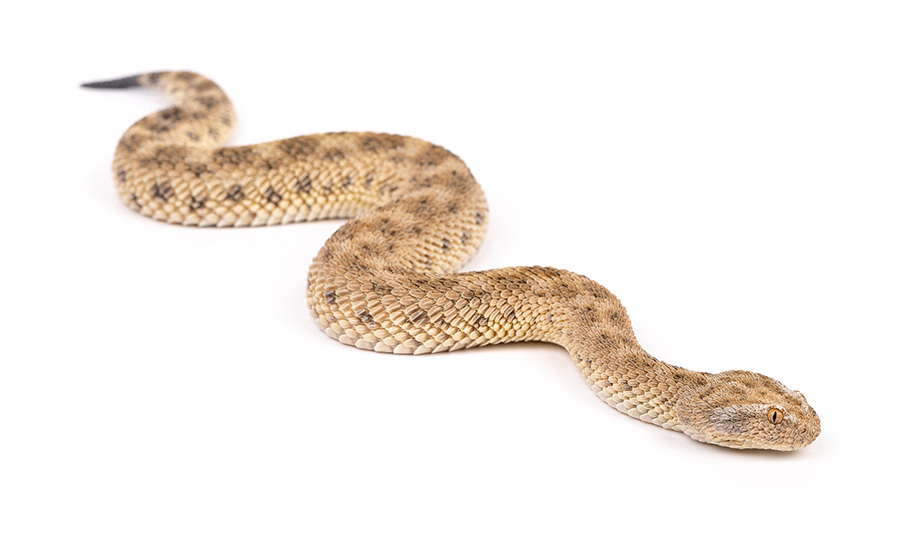
Vipers
Viperidae
6 species
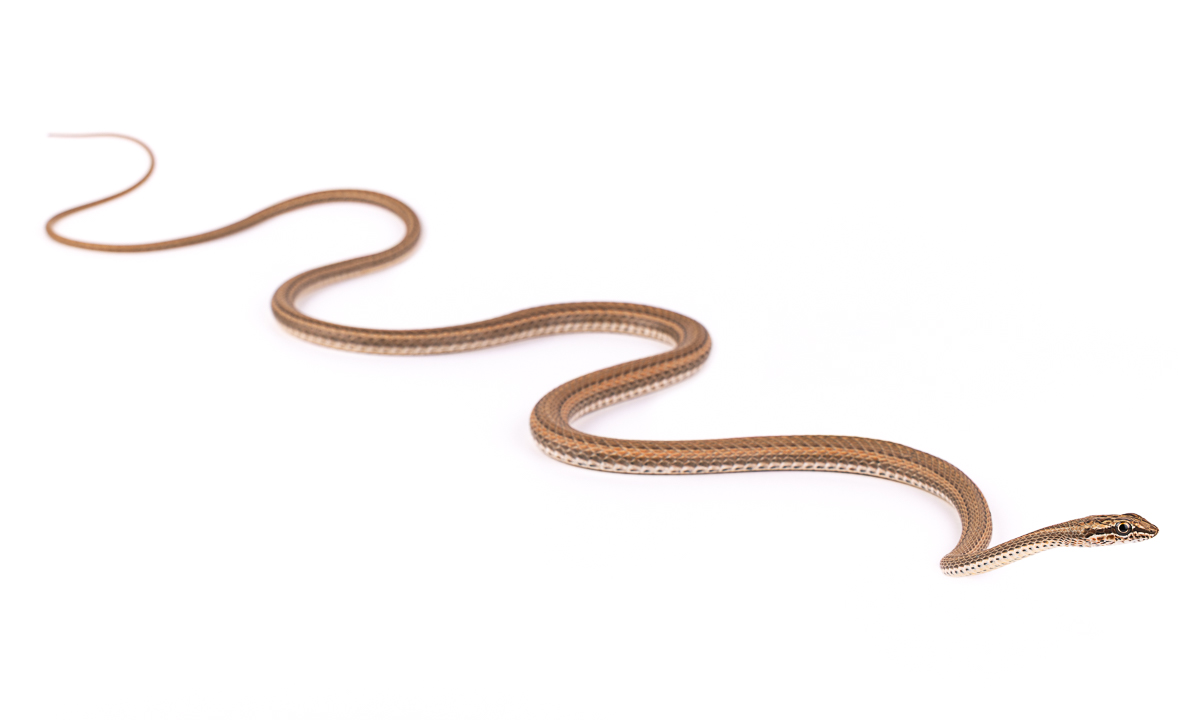
Sand Boas
Boidae
1 species
Page coming soonNo species matches that. Try the Latin name, or clear the search.
The full list of Morocco's 26 snake species. Highly venomous families are flagged.
Elapidae · 1 speciesHighly venomous
Naja hajeEgyptian Cobraالكوبرا المصريةLCRead accountViperidae · 6 speciesHighly venomous
Bitis arietansPuff Adderالأفعى النفاثةLCRead accountCerastes cerastesSahara Horned Viperالأفعى القرناءLCRead accountCerastes viperaSahara Sand Viperالأفعى القَرعَاءLCRead accountDaboia mauritanicaMoorish Viperالأفعى الموريطانيةNTRead accountEchis leucogasterWhite-bellied Carpet Viperأفعى الأهرامLCRead accountVipera monticolaNorth African Mountain Viperأفعى الأطلسVURead accountPsammophiidae · 4 species
Malpolon monspessulanusMontpellier Snakeحنش مونبلييLCComing soonMalpolon insignitusEastern Montpellier Snakeحنش مونبليي شرقيLCComing soonRhagerhis moilensisMoila False Cobraالكوبرا الكاذبةLCComing soonPsammophis schokariSchokari Sand Racerحنش شقاريLCComing soonColubridae · 12 species
Coronella girondicaSouthern Smooth Snakeالحنش الأمغرLCComing soonDasypeltis sahelensisSahel Egg Eaterحنش اكل البيضLCComing soonHemorrhois algirusAlgerian Whip Snakeحنش حدوة الحصان الجزائريLCComing soonHemorrhois hippocrepisHorseshoe Whip Snakeحنش حدوة الحصانLCComing soonLytorhynchus diademaAwl-headed Snakeحنش التاج الدفانLCComing soonMacroprotodon abubakeriAbubaker's False Smooth Snakeحنش أبوبكرLCComing soonMacroprotodon brevisWestern False Smooth Snakeالحنش ذو القبعة الغربيLCComing soonNatrix astreptophoraRed-eyed Grass Snakeالحنش المطوقLCNot documentedNatrix mauraViperine Water Snakeحنش الماءLCComing soonSpalerosophis diademaBlotched Diadem Snakeحنش كليفوردLCNot documentedSpalerosophis dolichospilusWerner's Diadem Snakeالحنش الأرقم المغاربيLCComing soonTelescopus tripolitanusNorth African Catsnakeحنش شبيه القطLCComing soonLamprophiidae · 1 species
Boaedon fuliginosusAfrican House Snakeالحنش الإفريقي الشائعLCComing soonLeptotyphlopidae · 1 species
Myriopholis algeriensisBeaked Thread-snakeالثعبان الخيطيLCComing soonBoidae · 1 species
Eryx jaculusJavelin Sand Boaأصلة الرمال المرقطةLCNot documentedAbout this checklist
Our list follows the most recent reference checklist of Moroccan herpetofauna (Bouazza et al., 2021). We revise and expand it as new studies appear. For a small number of species, we have drawn our own conclusions in light of the latest data (endemism status, species boundaries).