Moorish Viper

Conservation status:NTNear Threatened
Population trend:Decreasing
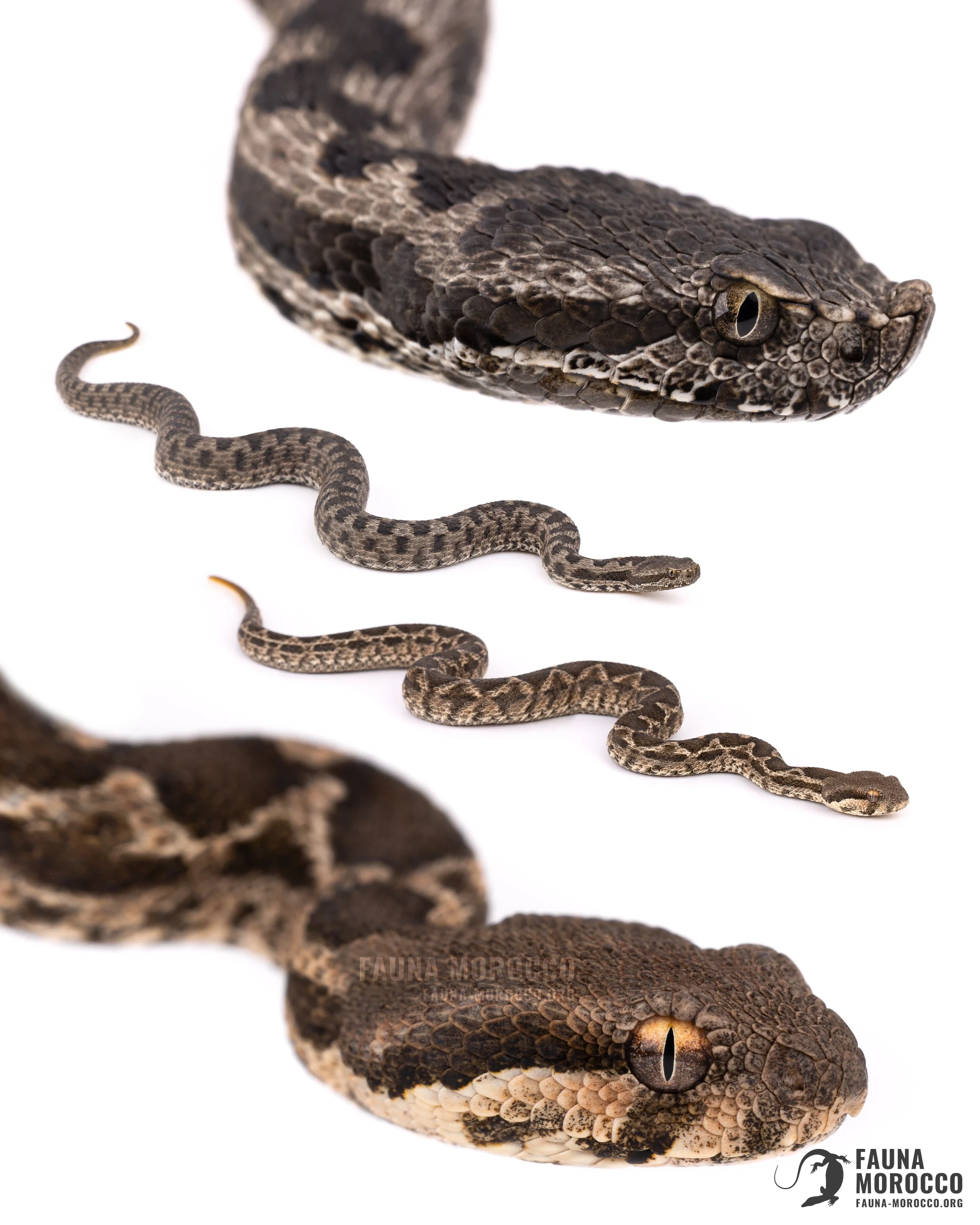
Moorish Viper (Daboia mauritanica), Morocco

The Moorish Viper (Daboia mauritanica) is the largest viper in North-West Africa and the most widely distributed one in Morocco, which holds the core of its global range18. It is also the snake of greatest medical importance in the country, named in most of the viper bites recorded there2.

Yet it is hard to find alive. Heavily persecuted, killed on the roads and trapped in wells, it is listed as Near Threatened and slowly declining17, and what happens to it in Morocco largely decides its fate as a species.

The Moorish Viper (Daboia mauritanica) is the largest viper in North-West Africa. Adults are frequently between 80 and 130 cm in total length16, sometimes reaching up to 180 cm3.

The body is robust and cylindrical and the tail is short. The head is broad and triangular, clearly distinct from the neck, and covered above with small scales. The snout is rounded. The eyes are moderately large, with a vertical pupil and a golden or orange iris3.

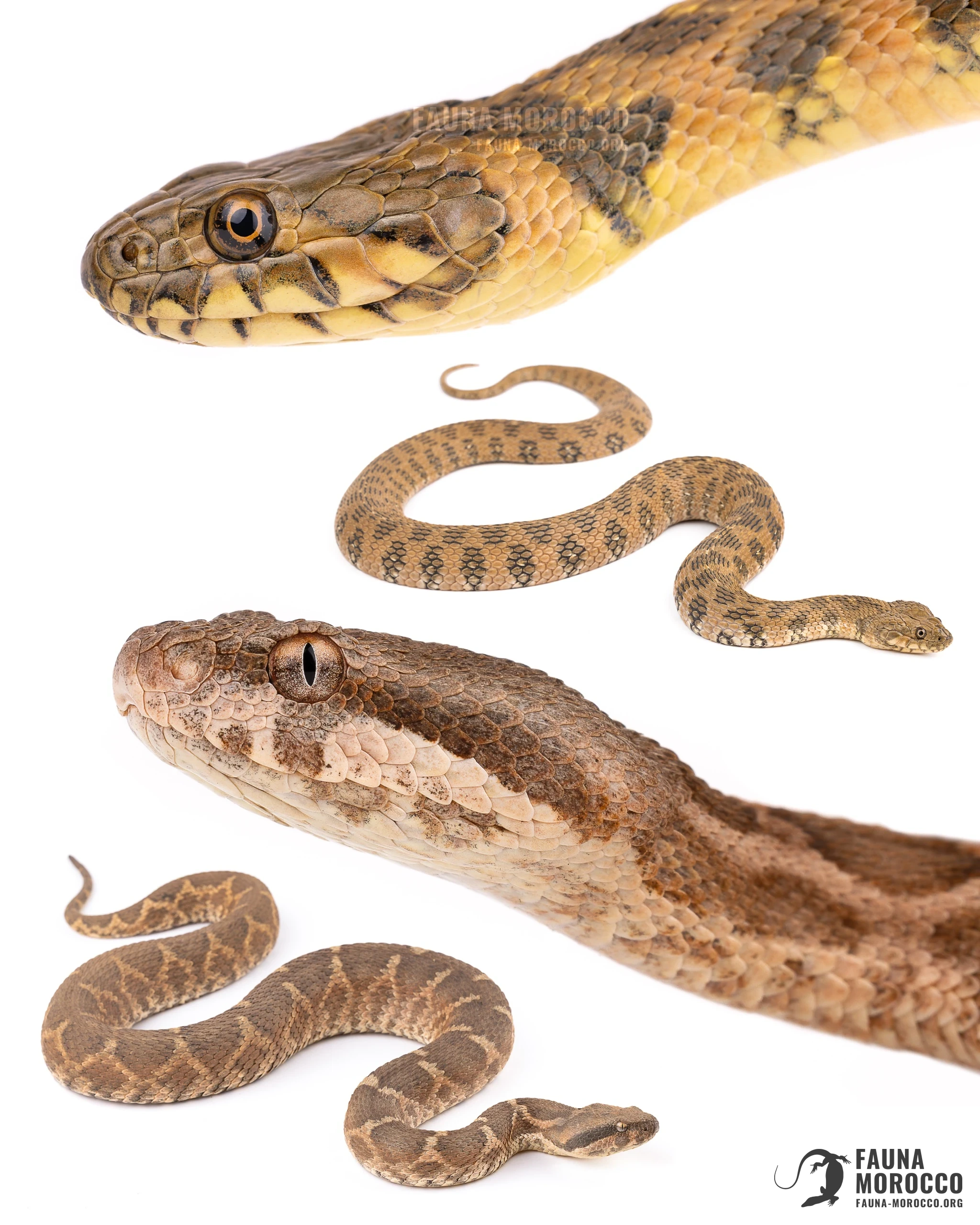
Body colouration is extremely variable. The ground colour runs through grey, brown, red, orange and sand. The dorsum typically carries a dark undulating stripe, which may be partly or wholly replaced by round or oval blotches, and the flanks bear large dark blotches alternating with the dorsal ones. Markings may be faint or entirely absent, and unmarked animals are not uncommon in arid habitats. The top of the head is usually uniform in colour. Two dark stripes usually run from below and behind the eye to the corner of the mouth3.

Much of this variation is geographically structured. Animals from north of the Atlas tend to be strongly contrasted, while those in the Anti-Atlas and at the South-Western end of the range are typically pale1. Both forms occur between Agadir and Tan-Tan. Uniformly reddish animals are known from Guelmim and Ouarzazate (J. Timms, pers. comm.)15 and greenish ones from around Taroudant (J. A. Valverde, unpublished)15. Juveniles are generally the most strongly contrasted, while old animals are usually duller. Whether these phenotypes reflect local adaptation or phenotypic plasticity is unresolved16. Dorsal pattern in vipers is in any case under strong selection for crypsis and is known to evolve with the local environment.

The species was long treated as a subspecies of Macrovipera lebetina8, before mitochondrial sequence data placed the North African animals inside Daboia, alongside the Asian species and the eastern Mediterranean Daboia palaestinae12.

The open question is the status of Daboia deserti (Anderson, 1892), the Saharan taxon long separated from D. mauritanica on the basis of subtle morphological differences8911. Martínez-Freiría et al.16 sequenced North African animals and found that specimens morphologically identified as deserti do not form a lineage of their own: they nest inside the widespread Central-East lineage, which also contains animals with typical mauritanica colouration. They concluded that deserti cannot be maintained as a valid species and that all North African populations should be referred to Daboia mauritanica.

The Moorish Viper is usually easy to identify by its large size, rounded snout, triangular head and zigzag patterns. Juveniles could be confused with the Dwarf Atlas viper (Vipera monticola), but the latter has an upturned snout. The Viperine snake (Natrix maura) could also be confused with the Moorish Viper, but the white markings on the upper jaw and sides of the head of the Viperine snake, its round pupil and the shape of the snout give it away.

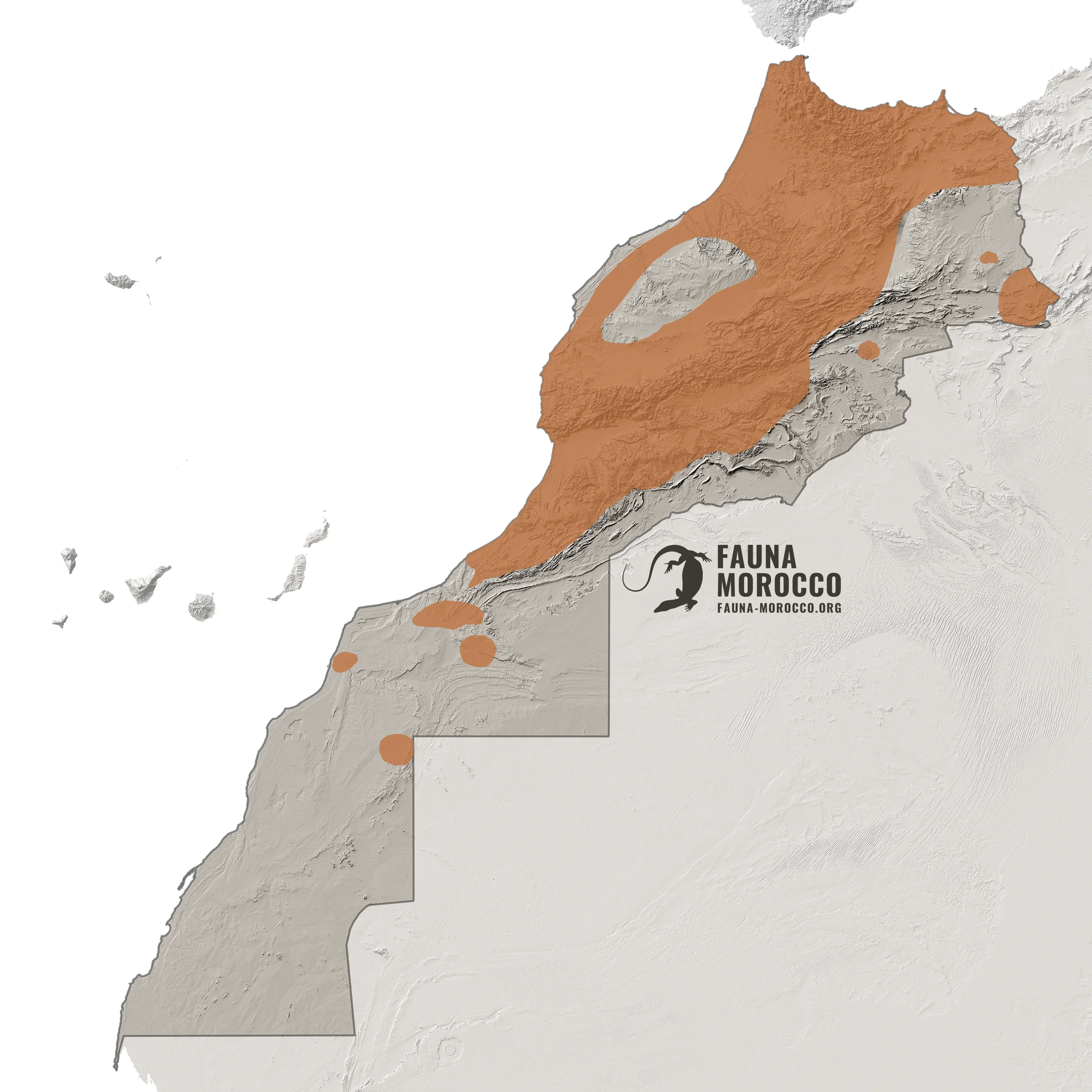
The Moorish Viper is endemic to North-West Africa and is almost restricted to the Mediterranean region of North Africa. It can be encountered from the Atlantic coast of Morocco to North-Western Libya through Northern Algeria and Tunisia, where it lives from sea level to about 2,300 m521. It avoids the warmest and driest environments of the continent16. It is the Sahara desert, not the distance from the coast, that limits this species to the south.

Morocco holds the core of the range, and the 2010 national assessment put 63% of the species' global distribution inside the country18. The Moorish Viper is also the most widely distributed viper in Morocco. It occurs from the Mediterranean fringe and the Rif south through the Atlantic plains, the Middle and High Atlas, the Anti-Atlas, the Souss and the Drâa, to the Atlantic Sahara, and eastwards along the Algerian border to Figuig. In the Rif, it is the most abundant between roughly 200 and 600 m119. It is frequent under arid and semi-arid bioclimates but much scarcer in the more humid regions1. A 1922 record from Jbel Grouz, near Figuig, went unconfirmed for ninety years until the species was found there again (R. León Vigara & G. Martínez del Mármol, unpublished)15, which gives a fair measure of how thin survey coverage is at the eastern edge of the Moroccan range.

The internal structure of the Moroccan range is well resolved. Seven geographically clustered mitochondrial lineages have been identified, six of them endemic to Morocco, and the south-western quarter of the country alone holds four of them in potential contact16. A large share of records comes from road-killed animals rather than encounters with living snakes15, so a blank area may reflect low road density or low observer effort as readily as real absence.

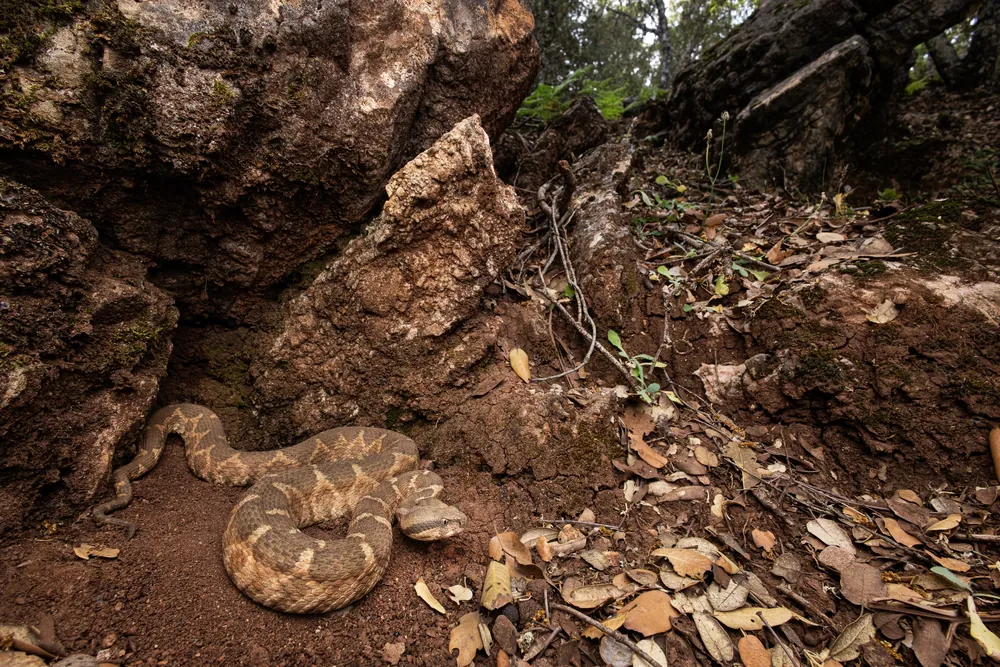
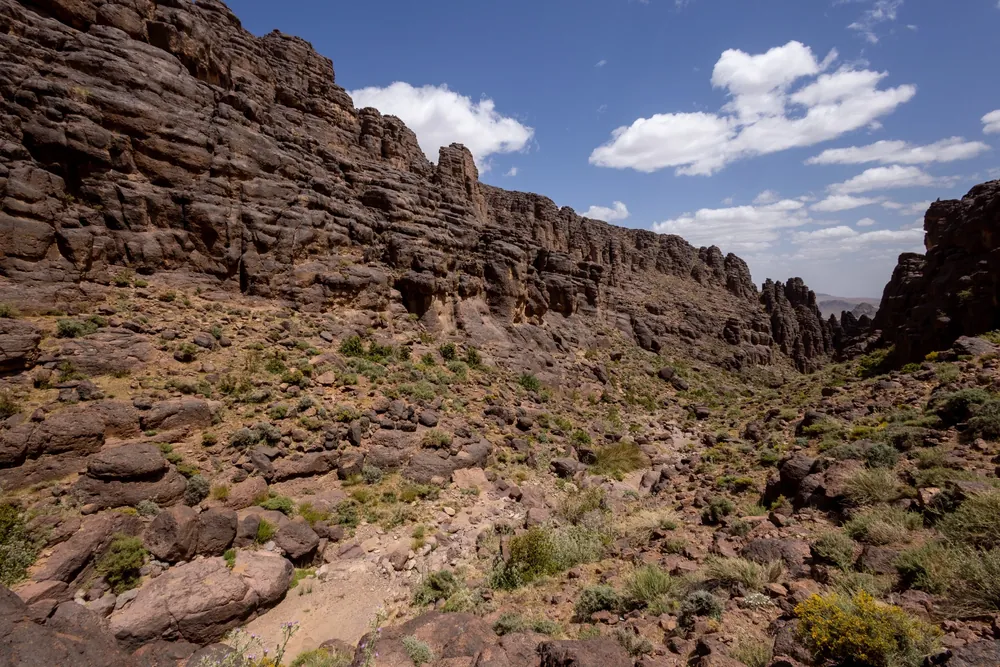
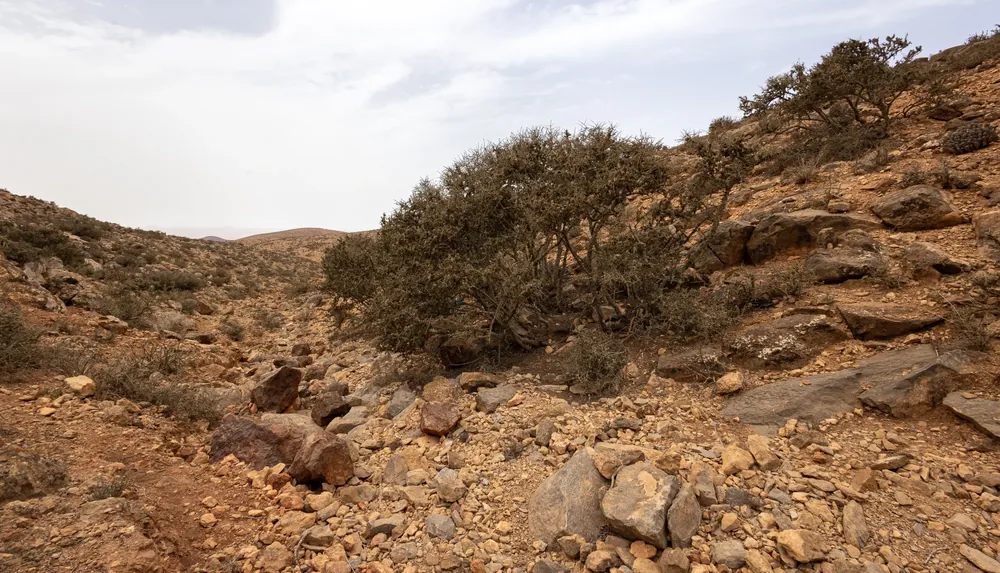
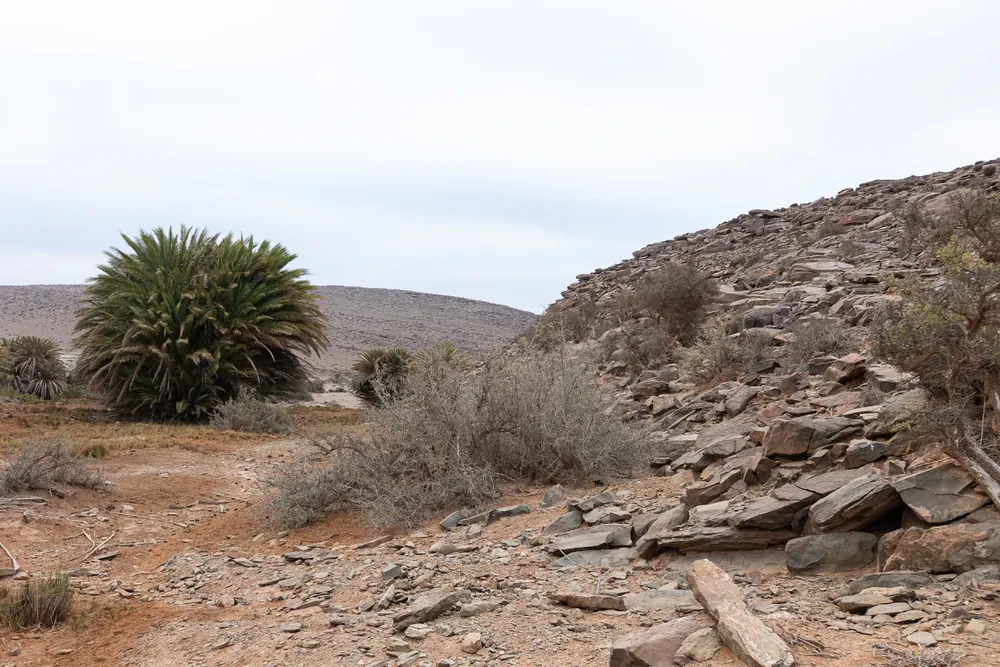
In Morocco, the Moorish Viper is above all a snake of rocky ground: stony slopes, hills, low escarpments and the sides of wadi valleys521. It appears most commonly in rocky biotopes near riverbeds, which concentrate both cover and prey15.

The Moorish Viper also does well in cultivated and settled areas. Dry-stone walls, officinal spurge (Euphorbia officinarum) and planted prickly pear (Opuntia ficus-indica) are a fair description of the species' typical Moroccan ground in the south1315. From Agadir south to Tan-Tan it is relatively abundant in Atlantic-influenced steppe dominated by the Officinal spurge, where burrowing mammals are plentiful15.

During our expeditions, we also encountered Moorish Vipers near dry or running river beds at different altitudes, as well as in oak forests in the north of the country (pers. obs.).

Habitat overlap with the other large Moroccan vipers is partial. The Moorish Viper prefers rocky ground to the sandier substrates used by the Puff Adder (Bitis arietans). The two share wadi beds and bushy sandy patches in the south-west, where the Sahara Horned Viper (Cerastes cerastes) may occur alongside them15. A possible case of true syntopy between the Moorish Viper and the Puff Adder has since been described from South-Western Morocco4. No such overlap has yet been formally reported in the northern mountains between the Moorish Viper and the North African Mountain Viper (Vipera monticola)19, although syntopy is likely in the Rif mountains (pers. comm.).

No dietary study has been carried out on the Moorish Viper, in Morocco or elsewhere. The available accounts report lizards, birds and small mammals21. Several Moroccan observations come from areas with large colonies of Barbary ground squirrel (Atlantoxerus getulus), a plausible prey item, and farmers on the outskirts of Casablanca killed an adult found in a chicken coop, claiming that the species may take chicks15.

In the absence of species-level data, the closest useful comparison is with the Asian congeners, which are similar in size, build and foraging mode. Russell's viper (Daboia russelii), and the Palestine viper (Daboia palaestinae) are heavy-bodied ambush predators whose diets are dominated by rodents, with lizards and birds taken more often by juveniles and small adults, and both are strongly associated with agricultural land for exactly that reason. It seems reasonable to assume a comparable pattern in Morocco, with field rodents forming the bulk of the adult diet and a broader, more reptile-based diet in young animals. This would also explain the species' persistence and relative abundance around farms, walls and villages.

A possible caudal lure has been suggested. In some individuals, and particularly in juveniles, the scales at the tip of the tail are granular and differently coloured from the rest of the body, yellowish in animals from Casablanca, Figuig15, Agdz and Taroudant (pers. obs.). That condition matches what is associated with caudal luring in several viperids, including the closely related Russell’s viper (Daboia russelii)7. The behaviour itself has not been observed in Daboia mauritanica, and the inference rests on morphology alone.

Unlike the strictly nocturnal Saharan vipers with which it sometimes shares ground, the Moorish Viper is active by day as well as at dusk, in the first hours of the night and sometimes even late at night when the temperature is high enough15 (pers. obs.). It is typically found at the foot of scrub, in rock crevices or at burrow entrances, and rarely far from cover.

Activity is strongly seasonal. Algerian animals in the Oran region become dormant during the coldest months and resume activity in March21. In Morocco, the pattern is presumably similar, with the length and completeness of winter dormancy varying with altitude and local climate, and with peaks of surface activity from April to June and again from September to October15. It is possible that activity also switches to the first hours of the night during summer (pers. comm.). Snakebite records offer indirect support: bites notified to the Moroccan poison control center are concentrated in spring (44%) and summer (42%), with a marked peak in June, although this reflects human activity as much as snake activity2.

The most consistent observation about this snake is how hard it is to find alive, and two explanations have been proposed. Martínez-Freiría et al.16 attribute the scarcity of encounters to genuinely low activity or low abundance and note that this is precisely what has prevented anyone from assembling life history data for the species. Moroccan field observers attribute it instead to sustained persecution over a very long period, pointing out that most encounters are with animals already dead on a road15. The two explanations are not mutually exclusive, and the available evidence does not choose between them.

When it comes to temperament, Moroccan observers describe this species as irascible, and its temper is part of the reason snake charmers prefer the Puff Adder (Bitis arietans) for handling15.

During our encounters with this species, most individuals moved slowly, only letting us hear a faint hiss. No Moorish Viper struck at us, even when handled for white background photos (pers. obs.). It can, however, strike extremely fast, so handling it or approaching it closely is strongly discouraged.
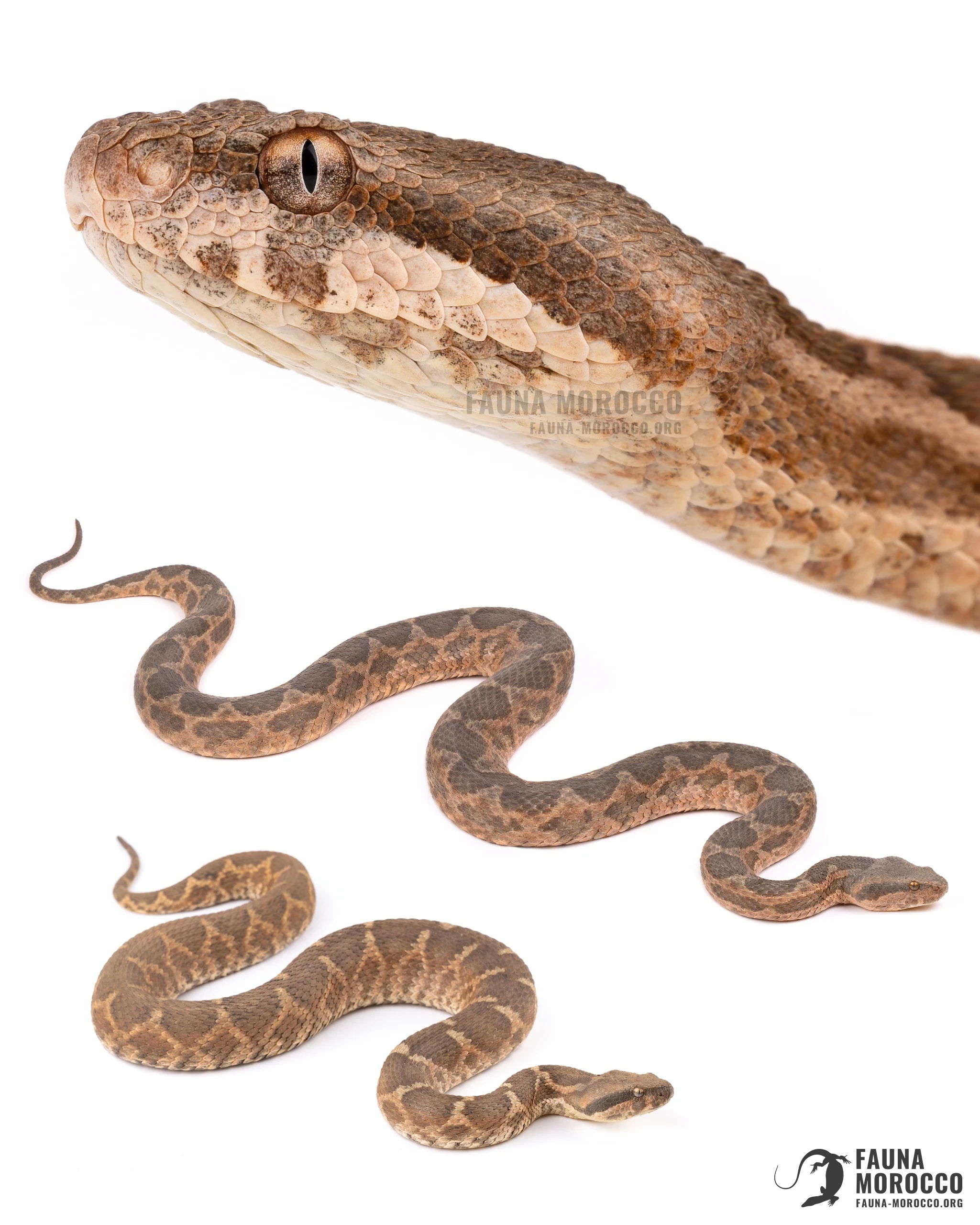
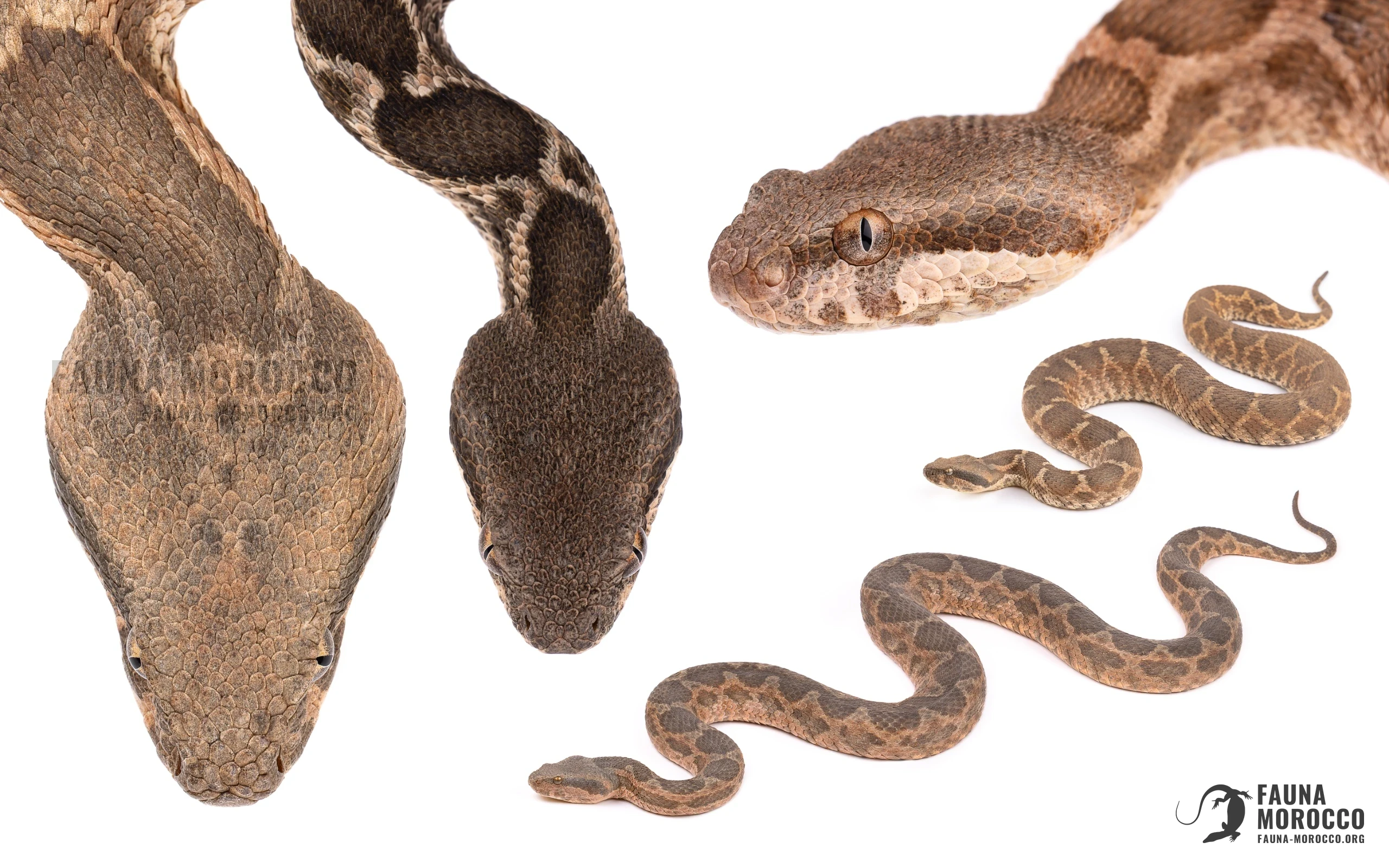
The first line of defence of the Moorish Viper is crypsis. The broken dorsal pattern and the dark head bands break up the outline against rock and litter, and the animal's usual response to a distant threat is to stay still. If the threat keeps approaching, the viper will usually try to flee to nearby cover if it can. If not, the viper might strike, with or without injecting venom. Dry bites, in which the fangs are used without venom being injected, are indeed widespread among viperids and are presumably part of the repertoire of the Moorish Viper as well, though they have not been documented for this species.

The Moorish Viper is one of the most medically important snakes in Morocco. It made up 45.5% of the cases considered by Khourcha et al.10, and in the 873 snakebites notified to the Moroccan poison control centre between 2009 and 2013, it was identified in 69.4% of the viper bites where the snake could actually be named2. The same holds across the border, where it is held responsible for most envenomation cases in Algeria5.

The venom is a complex mixture of at least 45 components, dominated by enzymes that destroy tissue and blood vessel walls, as well as molecules interfering with blood clotting14. The clinical picture after a bite is the classic viper syndrome: severe pain, swelling that spreads up the limb, bleeding, and a fall in the platelet count. A dangerous drop in blood clotting was recorded in 23.5% of cases of viper bites and swelling severe enough to cut off circulation within a limb, requiring surgical release, in 7.6%2.

Access to treatment, rather than the intrinsic strength of the venom, is what drives outcomes in rural Morocco. Antivenom is stocked only in hospitals in high-risk regions, so it is unavailable in the peripheral health centres people actually reach first. The two antivenoms used in the country were not raised against Moroccan Daboia mauritanica venom. The available antivenoms only partly neutralise the tissue damage it causes210. Both the Moroccan poison control centre and the toxinologists working on these venoms have concluded that a region-specific antivenom is needed210.

Wild boar Sus scrofa is listed among its predators21. The Montpellier Snake (Malpolon monspessulanus) is suspected to occasionally feed on Moorish Vipers, as it is known to take other venomous snakes15.

The Moorish Viper is oviparous6. Mating is reported to take place in May21.

Only one Moroccan clutch has been described in detail. An adult female of about 1.30 m was found in the Souss-Massa region in August, trapped in a dry well, with a clutch of 11 eggs. The eggs averaged roughly 4.5 cm by 2.5 cm13. Clutches of up to 21 eggs have been reported for the species17.

Eggs of this species are said to contain embryos at an advanced stage of development when laid, and to hatch after six to eight weeks6. A short incubation of that kind is consistent with the mid-August laying date above, which would place hatching in late September or October. Hatchling size and age at sexual maturity remain undocumented.

No study has addressed longevity in the Moorish Viper, in the wild or in captivity. Captive maxima are available for two close relatives of comparable size: 15 years for Daboia russelii and 13.3 years for Macrovipera lebetina22. A captive ceiling somewhere in the region of 15 years is therefore a reasonable working figure for this species, with wild animals presumably falling a bit short of it.

The Moorish Viper is listed as Near Threatened on the IUCN Red List with a decreasing population trend, on the grounds that it is probably slowly declining, through persecution, accidental mortality and over-harvesting17. The national assessment of the Moroccan herpetofauna reached the same category, Near Threatened, and estimated that 63.2% of the species' global distribution lies within Morocco18. That figure is the important one for conservation purposes: what happens to this viper in Morocco largely determines what happens to it as a species. The global assessment dates from 2006 and has not been revised in twenty years, which is worth bearing in mind, since none of the pressures listed have eased and several have intensified.

  • Direct killing is the oldest and probably the heaviest pressure. The species is large, dangerous and well known to people, who often kill it on sight15.
  • Road mortality is the second major source of loss, and the fact that most Moroccan records are of road-killed animals is itself an indication of its scale.
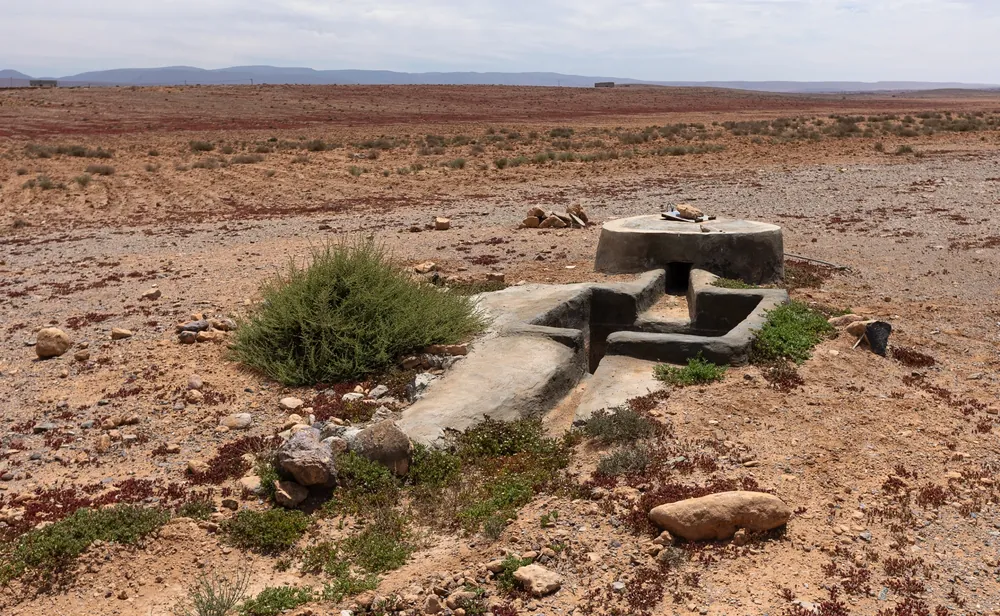
  • The third is wells, cisterns, open reservoirs and pipeline access lids that act as pitfall traps throughout Morocco: hundreds of such structures functioning as permanent traps13.
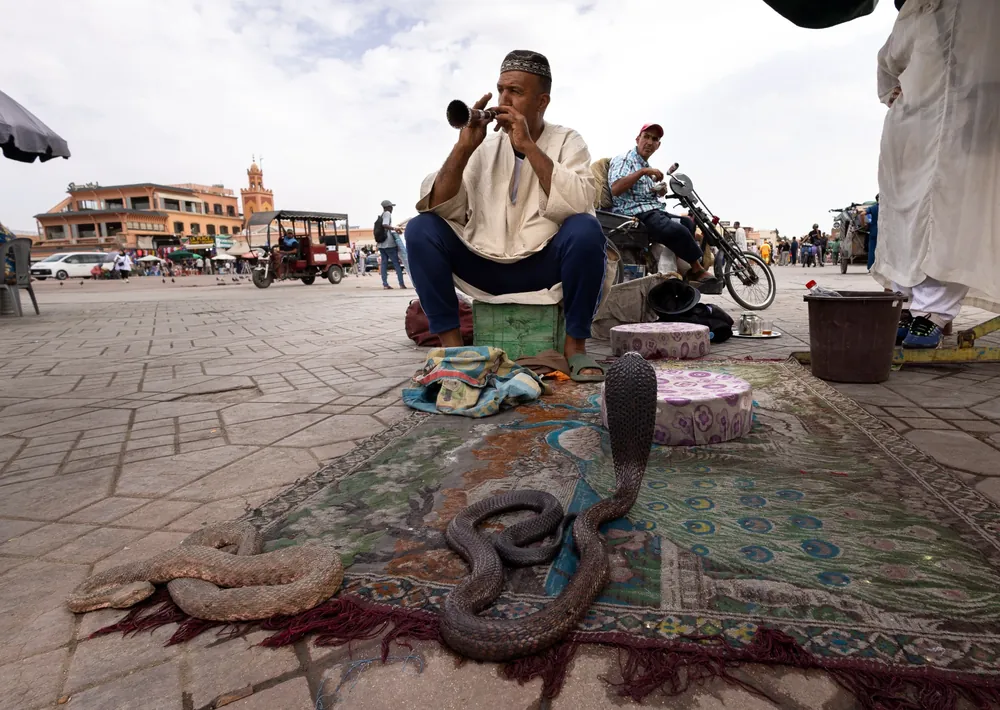
  • Finally, the species is harvested for snake charming. Aissawa snake hunters take roughly 4,400 snakes of all species from the wild in Morocco each year, of which some 3,400 are exhibited by charmers20. Among the venomous species, the Moorish Viper is one of the least used in the performances themselves20. This might be due to the fact that this species is harder to maintain alive by snake charmers (pers. comm. based on a snake charmer’s testimony). The number leaving the wild is another matter: hunters are estimated to remove some 518 a year, roughly three and a half times the number that ultimately appears in performances. Such a gap can be attributed to mortality during transport and captivity, to illegal trade, and to sales to the antivenom laboratories. The harvest is also size-selective: animals held by charmers are the larger ones. So the most productive breeding females might be removed preferentially20.
  • Climate change could also become a threat: the Moorish Viper's low dispersal and low reproductive rate are among the traits that make it vulnerable to climate-driven range shifts16.

  1. Bons, J., & Geniez, P. (1996). Amphibiens et reptiles du Maroc (Sahara Occidental compris). Atlas biogéographique. Asociación Herpetológica Española, via Martínez del Mármol Marín (2013)15.
  2. Chafiq, F., El Hattimy, F., Rhalem, N., Chippaux, J.-P., Soulaymani, A., Mokhtari, A., & Soulaymani-Bencheikh, R. (2016). Snakebites notified to the poison control center of Morocco between 2009 and 2013. Journal of Venomous Animals and Toxins including Tropical Diseases, 22, Article 8. https://doi.org/10.1186/s40409-016-0065-8.
  3. Chedad, A., Bouam, I., El Bouhissi, M., Dahmani, W., Ait Hammou, M., Mebarki, M. T., Mezzi, M., & Sadine, S. E. (2024). Moorish Viper, Daboia mauritanica (Gray, 1849) (Squamata, Viperidae), in Algeria: New provincial records, range extension, and an update on its distribution. Check List, 20(2), 536–543. https://doi.org/10.15560/20.2.536.
  4. Dyugmedzhiev, A., Andonov, K., Todorov, V., Martínez del Mármol, G., & Stanchev, N. (2022). A possible case of syntopy between Bitis arietans and Daboia mauritanica based on new reptile localities in southwestern Morocco. Herpetology Notes, 15, 33–46.
  5. Geniez, P. (2015). Serpents d'Europe, d'Afrique du Nord et du Moyen-Orient. Delachaux et Niestlé, via Chedad et al. (2024)3.
  6. Gruber, U. (1993). Guía de las serpientes de Europa, Norte de África y Próximo Oriente. Omega, via León & Martínez (2013)13.
  7. Henderson, R. W. (1970). Caudal luring in a juvenile Russell's viper. Herpetologica, 26, 276–277, via Martínez del Mármol Marín (2013)15.
  8. Herrmann, H. W., Joger, U., & Nilson, G. (1992). Phylogeny and systematics of viperine snakes. III: Resurrection of the genus Macrovipera (Reuss, 1927) as suggested by biochemical evidence. Amphibia-Reptilia, 13(4), 375–392, via Martínez-Freiría et al. (2017)16.
  9. Jiménez Robles, O., & Martínez del Mármol Marín, G. (2012, March 5). Comments on the large paleartic vipers Macrovipera and Daboia in North Africa. Moroccoherps. Amphibians and reptiles of Morocco and Western Sahara. Updated 23 April 2012. Retrieved 28 July 2026, from https://www.moroccoherps.com/en/vipers-macrovipera-and-daboia-in-north-africa/.
  10. Khourcha, S., Hilal, I., Elbejjaj, I., Karkouri, M., Safi, A., Hmyene, A., & Oukkache, N. (2023). Insight into the toxicological and pathophysiological effects of Moroccan vipers' venom: Assessing the efficacy of commercial antivenom for neutralization. Tropical Medicine and Infectious Disease, 8(6), Article 302. https://doi.org/10.3390/tropicalmed8060302.
  11. Kramer, E., & Schnurrenberger, H. (1963). Systematik, Verbreitung und Ökologie der libyschen Schlangen. Revue Suisse de Zoologie, 70, 453–568, via Martínez-Freiría et al. (2017)16.
  12. Lenk, P., Kalyabina, S., Wink, M., & Joger, U. (2001). Evolutionary relationships among the true vipers (Reptilia: Viperidae) inferred from mitochondrial DNA sequences. Molecular Phylogenetics and Evolution, 19(1), 94–104.
  13. León, R., & Martínez, G. (2013). Encontrados un ejemplar de Daboia mauritanica y su puesta de huevos en un pozo en el suroeste de Marruecos. Boletín de la Asociación Herpetológica Española, 24(2), 58–59.
  14. Makran, B., Fahmi, L., Pla, D., Sanz, L., Oukkache, N., Lkhider, M., Ghalim, N., & Calvete, J. J. (2012). Snake venomics of Macrovipera mauritanica from Morocco, and assessment of the para-specific immunoreactivity of an experimental monospecific and a commercial antivenoms. Journal of Proteomics, 75(8), 2431–2441.
  15. Martínez del Mármol Marín, G. (2013). Daboia mauritanica (Duméril & Bibron, 1848). In G. Martínez, R. León, O. Jiménez-Robles, J. P. González De la Vega, V. Gabari, B. Rebollo, A. Sánchez-Tójar, J. R. Fernández-Cardenete, & J. Gállego (Eds.), Moroccoherps. Amphibians and reptiles of Morocco and Western Sahara. Version 23/10/2013. Retrieved 27 July 2026, from https://www.moroccoherps.com/en/ficha/daboia_mauritanica/.
  16. Martínez-Freiría, F., Crochet, P.-A., Fahd, S., Geniez, P., Brito, J. C., & Velo-Antón, G. (2017). Integrative phylogeographic and ecological analyses reveal multiple Pleistocene refugia for Mediterranean Daboia vipers in north-west Africa. Biological Journal of the Linnean Society, 122(2), 366–384. https://doi.org/10.1093/biolinnean/blx038.
  17. Mateo Miras, J. A., Joger, U., Pleguezuelos, J., & Slimani, T. (2006). Daboia mauritanica. The IUCN Red List of Threatened Species 2006: e.T61494A12481914. Retrieved 27 July 2026, from https://www.iucnredlist.org/species/61494/12481914.
  18. Pleguezuelos, J. M., Brito, J. C., Fahd, S., Feriche, M., Mateo, J. A., Moreno-Rueda, G., Reques, R., & Santos, X. (2010). Setting conservation priorities for the Moroccan herpetofauna: The utility of regional red lists. Oryx, 44(4), 501–508. https://doi.org/10.1017/S0030605310000992.
  19. Pleguezuelos, J. M., & Fahd, S. (2001). Los reptiles del Rif (Norte de Marruecos), II: Anfisbénidos y ofidios. Comentarios sobre la biogeografía del grupo. Revista Española de Herpetología, 15, 13–36, via Martínez del Mármol Marín (2013)15.
  20. Pleguezuelos, J. M., Feriche, M., Brito, J. C., & Fahd, S. (2018). Snake charming and the exploitation of snakes in Morocco. Oryx, 52(2), 374–381. https://doi.org/10.1017/S0030605316000910.
  21. Schleich, H. H., Kästle, W., & Kabisch, K. (1996). Amphibians and reptiles of North Africa. Koeltz Scientific Publishers, via Chedad et al. (2024)3; Martínez del Mármol Marín (2013)15.
  22. Snider, A. T., & Bowler, J. K. (1992). Longevity of reptiles and amphibians in North American collections (2nd ed.). Society for the Study of Amphibians and Reptiles. Cited from AnAge: The Animal Ageing and Longevity Database, Build 15 (03/07/2023), entries for Daboia russelii and Macrovipera lebetina. Retrieved 27 July 2026, from https://genomics.senescence.info/species/.

How to cite

Ruffieux, C., & Vuillemin, R. (2026). Moorish Viper (Daboia mauritanica). In: Castella, C., Iallaten, H., Ruffieux, C., & Vuillemin, R. (Eds.), Fauna Morocco. The Free Encyclopedia: Reptiles & Amphibians of Morocco. Available from https://fauna-morocco.org/encyclopedia/serpentes/viperidae/daboia-mauritanica.html (accessed 7 September 2026).

Published

7 September 2026

Last updated

21 September 2026

Authors

Colin Ruffieux
Rayane Vuillemin

Reviewers

Clément Castella
Haytam Iallaten
Mohamed Taha Aissaoui

Photography

Rayane Vuillemin

Methodology

Each account is a scientific synthesis: we compile the literature, read each paper in full, verify facts against their original sources when possible, and flag uncertainties for expert review. It is written first in English, reviewed by the team, then translated into French and Arabic. Every claim is referenced, and accounts are updated as knowledge advances. If you spot a mistake or an omission, please get in touch so we can fix it.