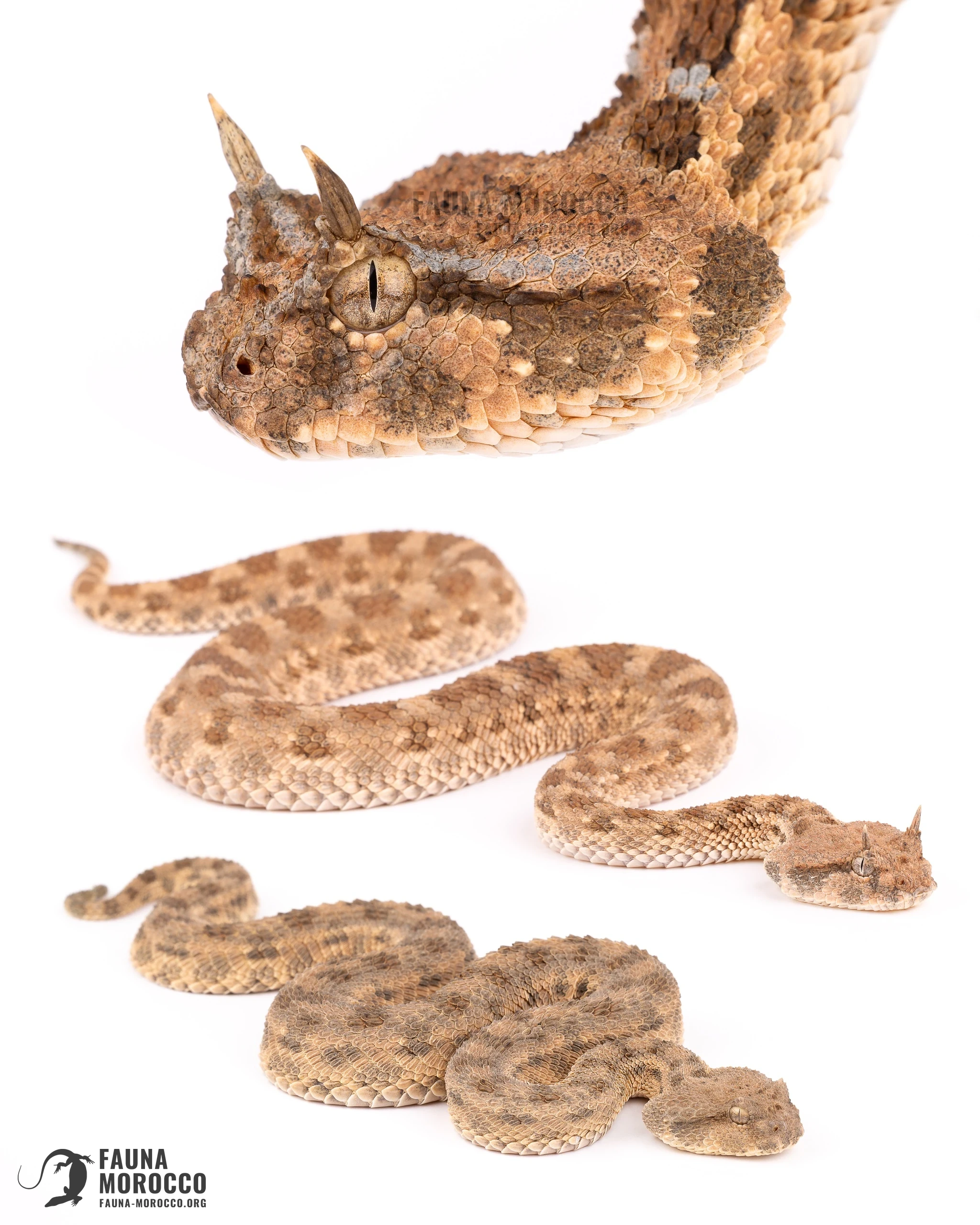
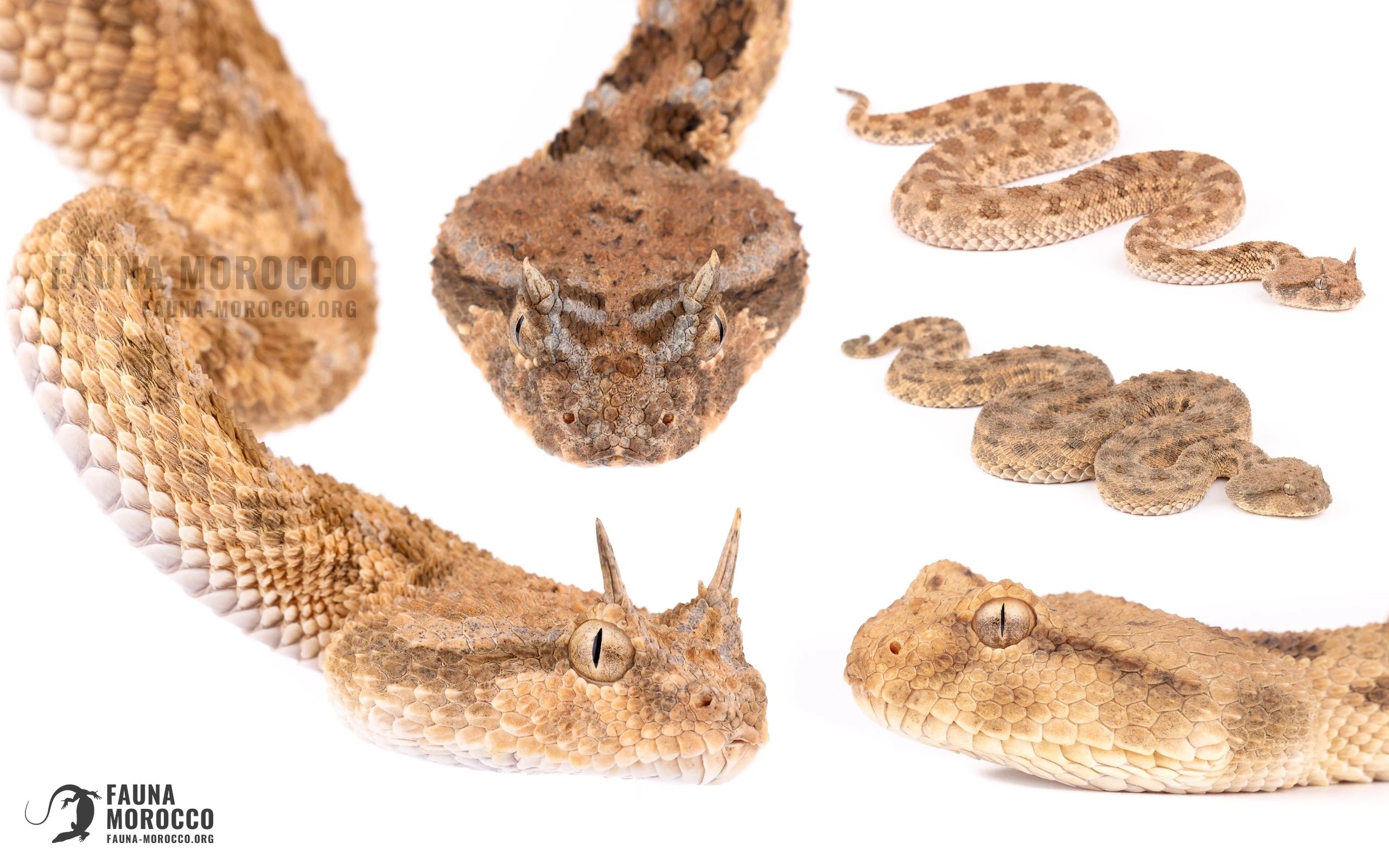
The most common viper of the Moroccan desert, the Sahara Horned Viper (Cerastes cerastes) owes its name to the pair of prominent scales that rise above its eyes like small horns, which make it one of the most emblematic snakes in the world. Not every animal carries them, however, and hornless individuals turn up across the south of the country. The species is also known for burying itself in the sand, leaving only its eyes and horns above the surface, sinking vertically by shovelling sand aside with its ribs. At night it sets out to hunt, moving by sidewinding and leaving a line of parallel, disconnected marks behind it. Unlike its cousin the Sahara Sand Viper, it favours stony plains and rocky ground over the great dunes. When threatened, it rubs its keeled scales together to produce a rasping hiss, a warning worth heeding, as it accounts for a significant share of serious snakebites in Morocco.
The Sahara Horned Viper (Cerastes cerastes), also known as the Desert Horned Viper, is a stocky, medium-sized viper with a short tail and a broad, triangular head clearly set off from the neck, and a short, rounded snout. Adults usually measure between 35 and 60 cm, with a maximum of about 80 cm13373423.
Sexual dimorphism is expressed in weight rather than length. Females are not longer than males but sometimes almost six times heavier. This extreme value is partly explained by the weight gained and lost over a laying cycle34. Males have longer tails relative to body length, which is the easiest way to sex a specimen in the field2 (pers. obs.).
The eyes are set on the sides of the head, with a vertical pupil and an iris close in tone to the body. Above each eye sits a single elongated, horn-shaped scale, which gives the species its name. Hornless animals also occur, and can be encountered around Ouarzazate, Tazenakht and Agdz, but also much further south around Assa, El Borj and Icht22 (pers. obs.). These belong to the so-called mutila morph22. Genome-wide data give no support to this form as a separate lineage26 (see Taxonomy).
The dorsal scales are strongly keeled and matte, and the flank scales are set obliquely. The dentition is solenoglyphous, with two long hinged fangs at the front of the upper jaw20.
Colouration matches the local substrate to a certain extent and ranges from yellowish and sand through pale brown and grey to orange, reddish and pinkish. On this background colour, animals display darker blotches. These blotches are often squarish, rounded or drawn out into transverse bars, larger along the back and smaller and sparser on the flanks. Some animals are nonetheless almost uniform in colouration. A dark band usually runs from the eye to the corner of the mouth. The belly scales are white to cream, and the tip of the short tail is often dark or black. Juveniles tend to have stronger contrast, and their tongue may be tricoloured, black, red and white20.
Several Sahara Horned Vipers (Cerastes cerastes). Bottom right, the hornless mutila morph; elsewhere, typical individuals.
The main taxonomic question regarding the Sahara Horned Viper is its hornless form. Described as Cerastes cerastes mutila (Doumergue, 1901), and long carried as a subspecies, it had already been treated as a simple morph rather than a taxon22. Genome-wide data confirm this, since animals of the mutila type showed no genetic differentiation from other Cerastes cerastes26.
A second open question is that the Sahara Horned Viper is not homogeneous across its vast range. The western African populations, including the Moroccan ones, were found to have a genetic and evolutionary history of their own, for which a taxonomic revision has been called for26, possibly leading to a local subspecies or species.
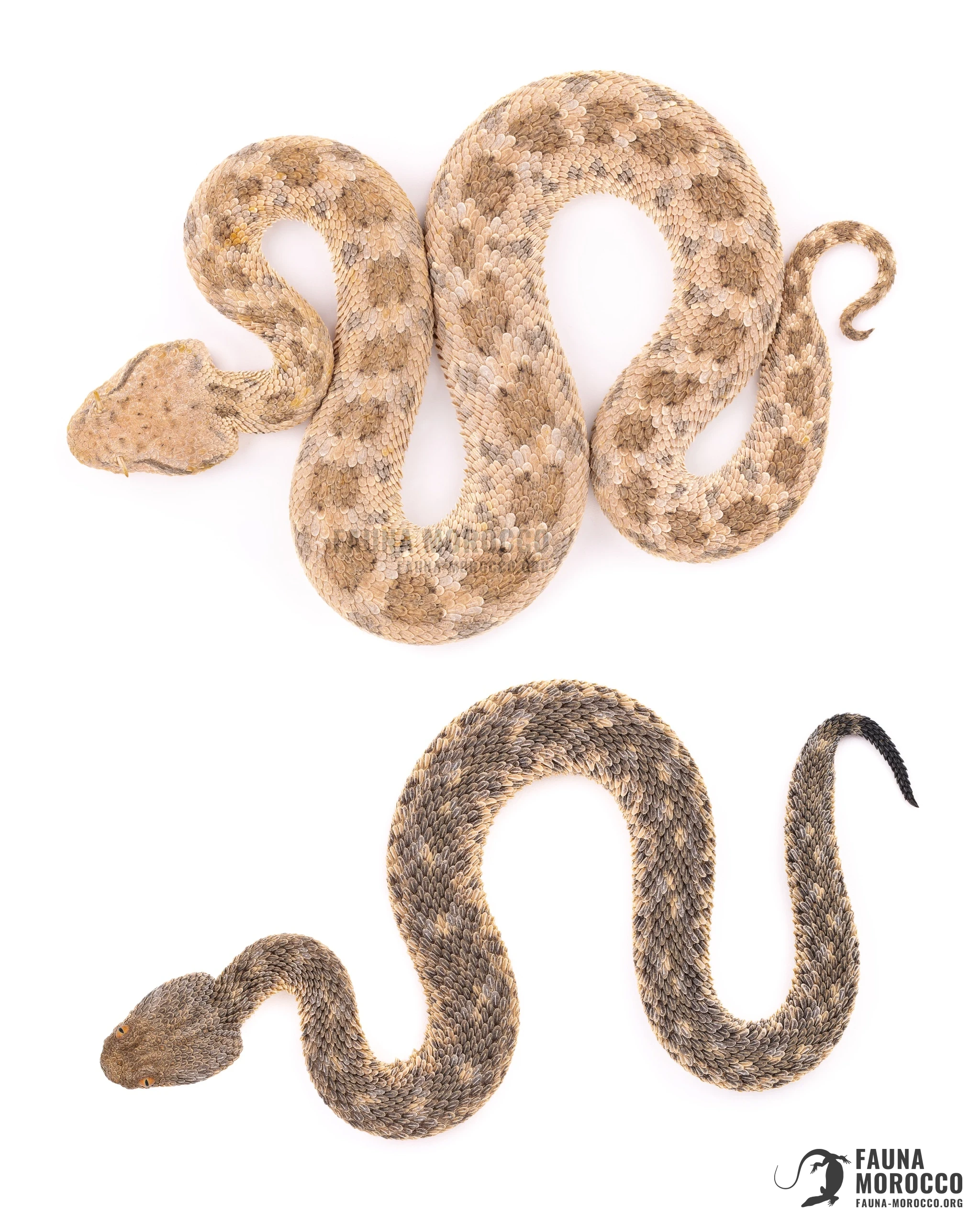
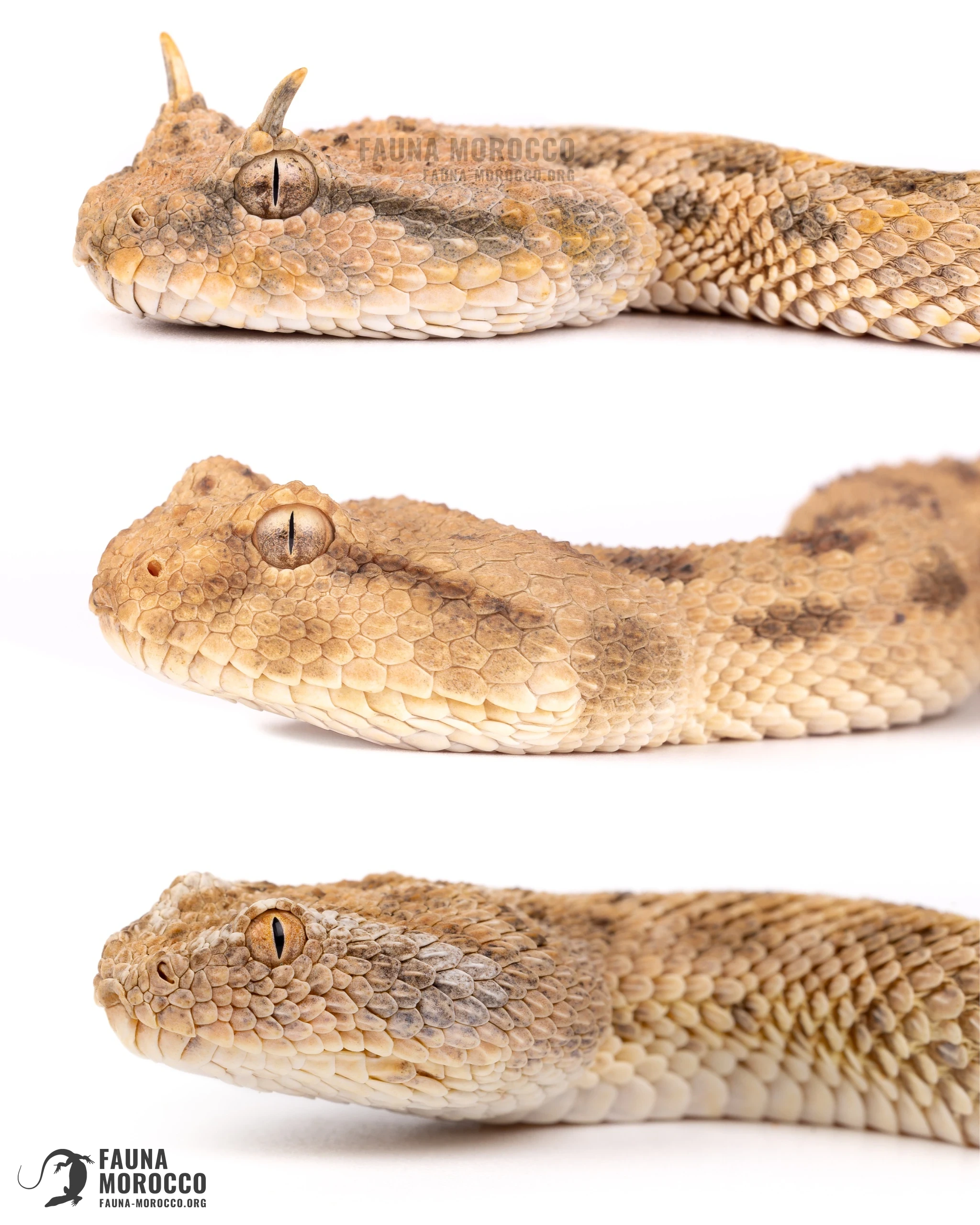
The Sahara Horned Viper (Cerastes cerastes) is a close relative of the Sahara Sand Viper (Cerastes vipera). Despite similar lifestyles and overall appearance, the two can be told apart in several ways.
The Sahara Horned Viper often bears horns, whereas the Sahara Sand Viper never does. The mutila form of the Sahara Horned Viper, which does not bear horns, nonetheless displays bigger and pointy scales above the eyes.
The eyes of the Sahara Horned Viper are positioned on the sides of the head, whereas in the Sahara Sand Viper they are placed on the top of the head.
The head shape differs: for the Sahara Sand Viper, it is less angular and less distinct from the neck, while the Sahara Horned Viper shows a distinctly triangular shape when viewed from above.
The Sahara Horned Viper commonly reaches 60 cm and may approach 80 cm, whereas the Sahara Sand Viper rarely exceeds 45 cm.
A Sahara Horned Viper (Cerastes cerastes) and, below, a Sahara Sand Viper (Cerastes vipera). The simplest way to tell them apart remains the position of the eyes, set on top of the head in Cerastes vipera.
Sahara Horned Vipers (Cerastes cerastes) above, the typical morph first, then the mutila form in the centre. Sahara Sand Viper (Cerastes vipera) below.
01 / 02
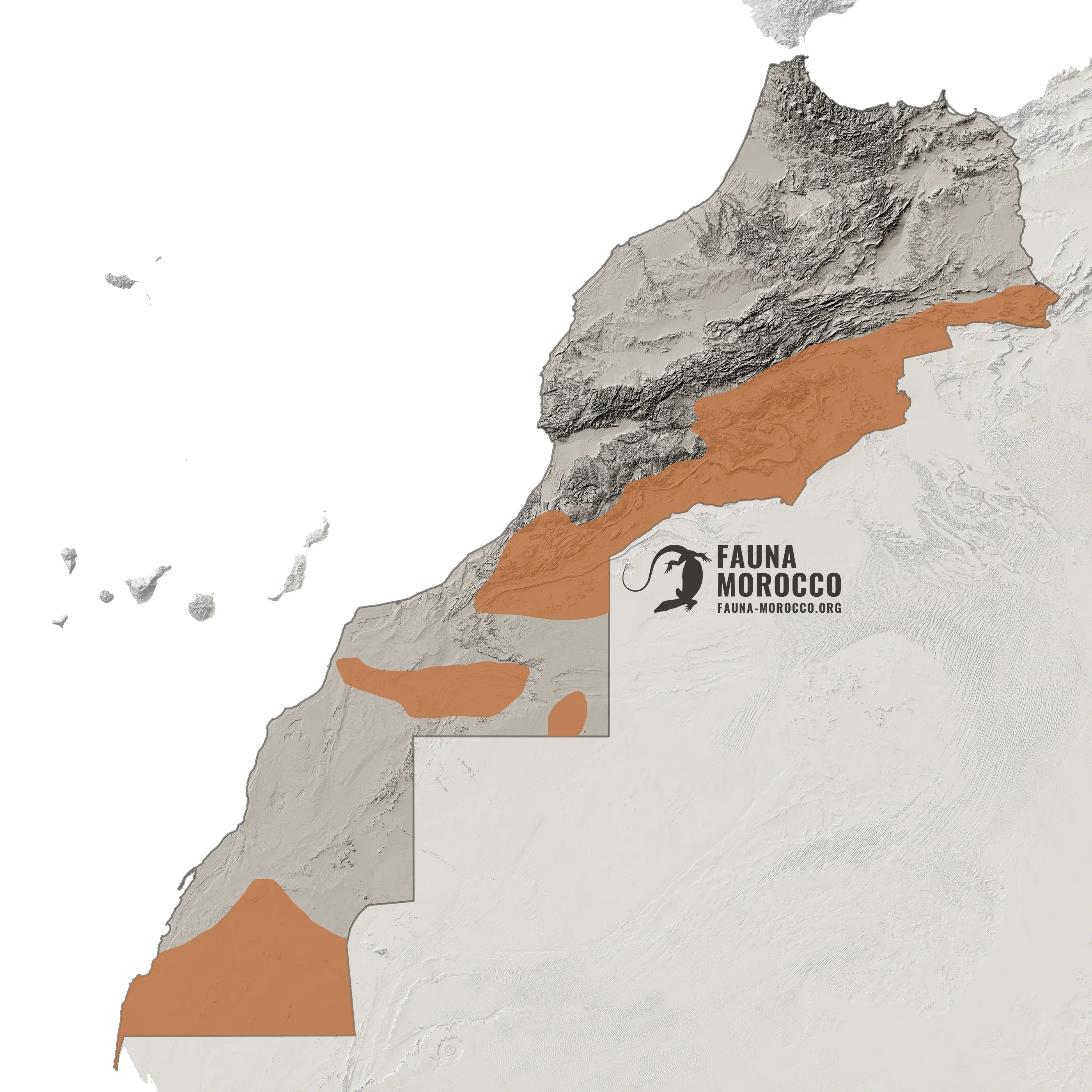
Distribution of Cerastes cerastes in Morocco.About this map
These distribution maps are produced by Fauna Morocco. Ranges are shown as estimates based on published records and our own field observations. They are updated when new data become available.
The Sahara Horned Viper inhabits the desert belt of North Africa, which runs from southern Morocco and Mauritania in the west across Algeria, Tunisia, Libya, Mali, Niger, Chad and Egypt to Palestine. The southern limit lies in Sudan and along the edge of the Sahel. An isolated population, referred to as the subspecies Cerastes cerastes hoofieni, occurs in Yemen and extreme south-western Saudi Arabia. The species is known from sea level to 1,500 m37.
In Morocco the species inhabits the pre-Saharan fringe and much of Atlantic Sahara but is absent or rare from the coastal strip and from the large dune fields5151022 (pers. obs.). Niche modelling agrees with field observations and predicts suitable ground around the periphery of the Sahara, with suitability dropping in the sand seas and the hyper-arid interior7. The Sahara Horned Viper thus appears to be widespread south of the Atlas Mountains, from Dakhla to Figuig. The High Atlas Mountains likely act as the northern barrier for its distribution, and it is absent from the Souss Valley. Guelmim marks its northern limit along the Atlantic coast. Relic populations could persist in the Moulouya basin, given the proximity of the eastern Moroccan plateaux7.
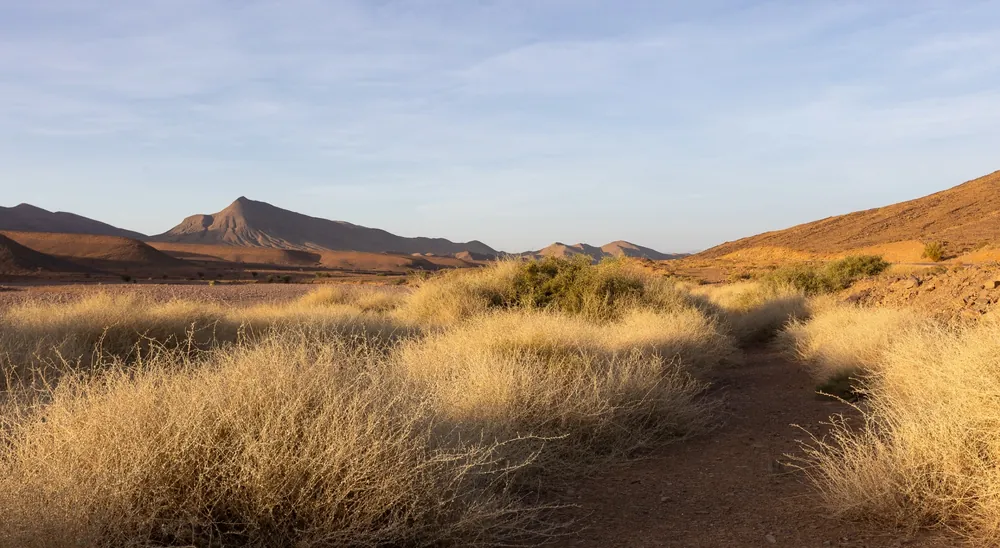
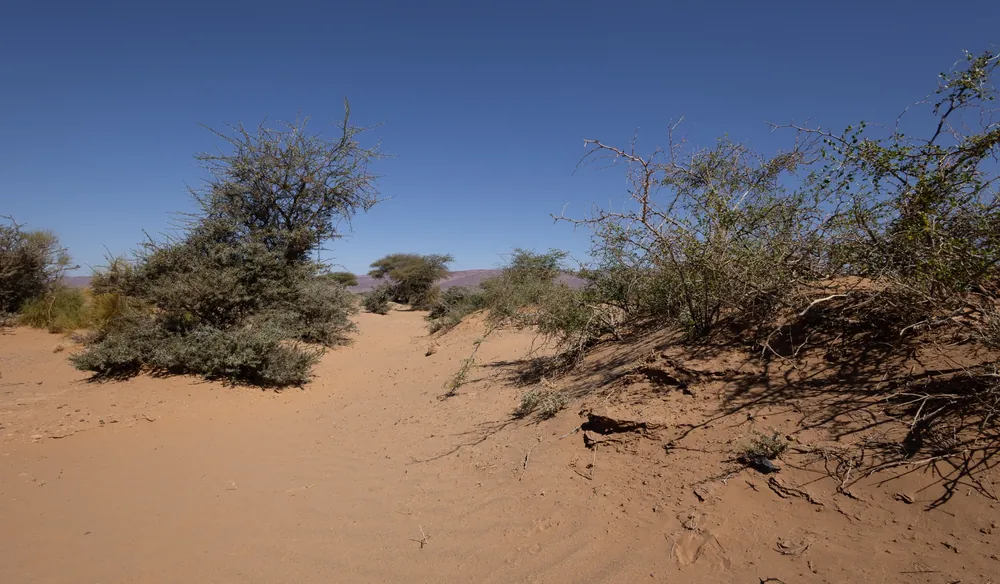
In Morocco, the Sahara Horned Viper (Cerastes cerastes) tolerates a wide variety of habitats and climates, and withstands extreme maximum temperatures7. It has been recorded from vegetated dunes, dunes mixed with rock, stony deserts (regs), stony ground with scattered vegetation and hamadas152237. In general, it is associated with bare and rocky ground, rather than sandy soils7. Some sympatry does however sometimes happen with its sand specialist and close parent the Sahara Sand Viper (Cerastes vipera), where sand dunes merge with rock deserts26.
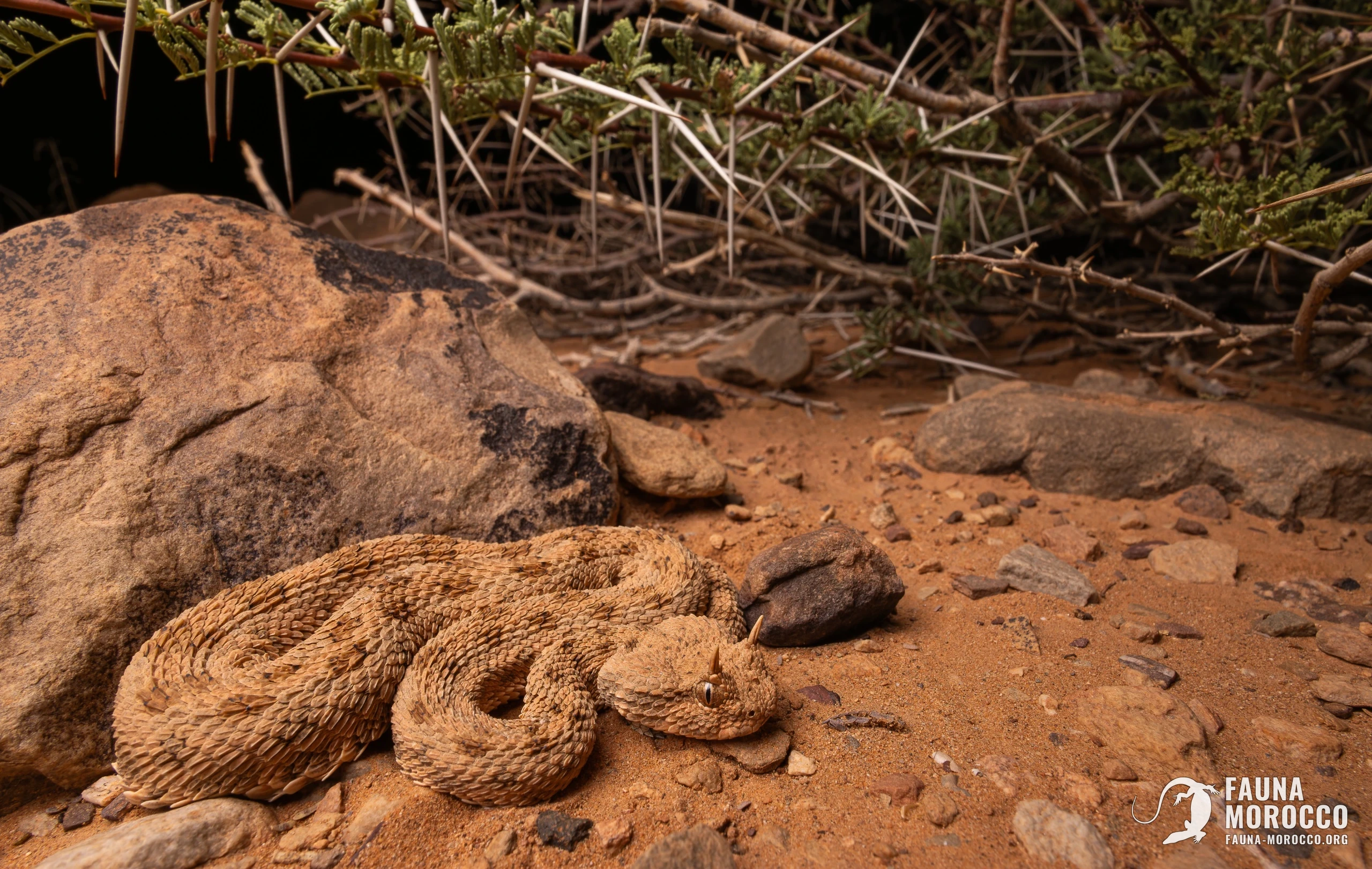
A Sahara Horned Viper (Cerastes cerastes) under an acacia, on a plain of compact sand and abundant stones, north of Assa.
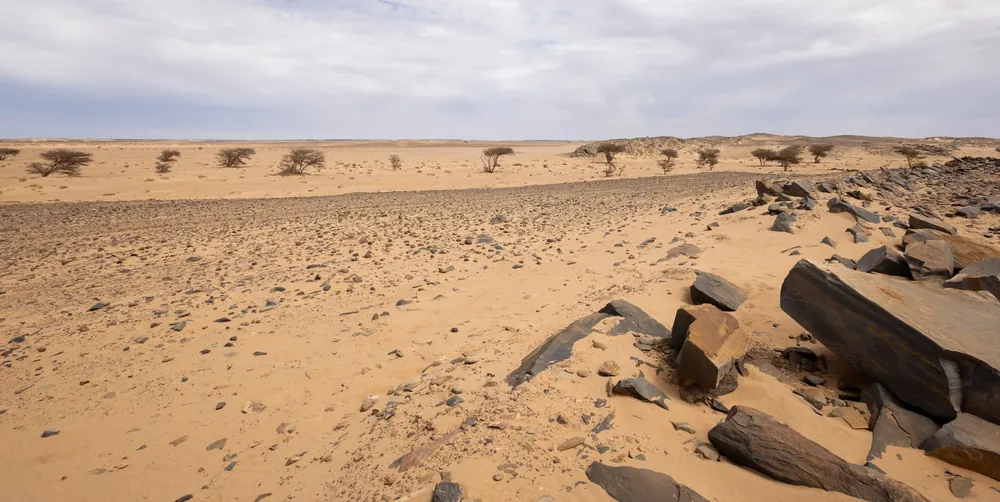
Relatively sandy habitat of the Sahara Horned Viper (Cerastes cerastes) around Smara, which it shares in particular with its close cousin, the Sahara Sand Viper (Cerastes vipera).
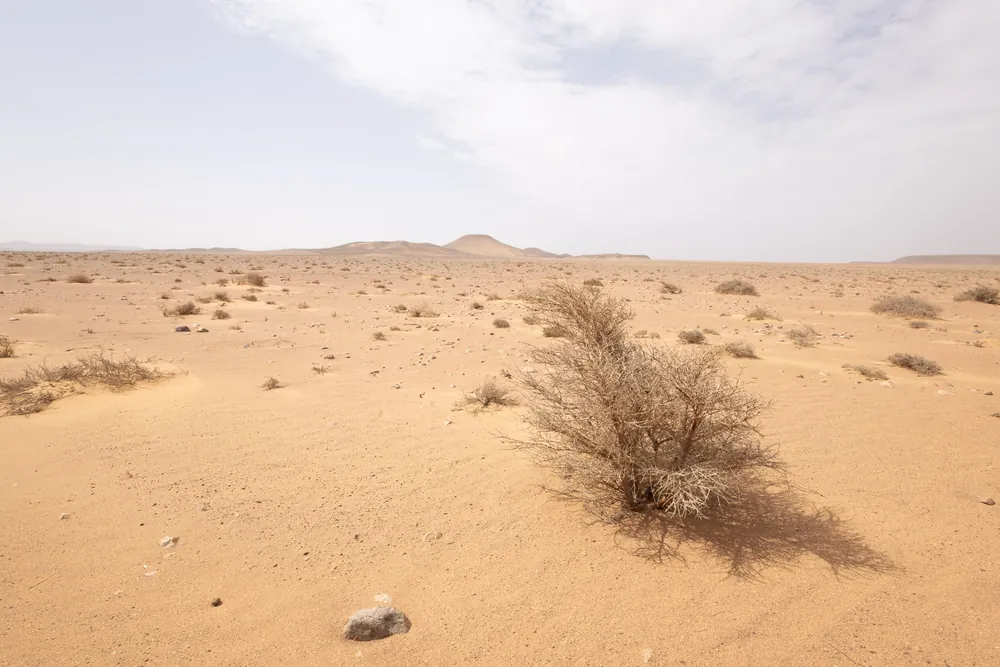
Habitat of the species near Msied, with a substrate of sand and stones and sparse bushes and shrubs.
Habitat of the species near Agdz, with a substrate that is clayey and rocky rather than sandy, and a denser vegetation cover.
Habitat between Assa and Akka, a sandy patch with numerous bushes in the middle of a stony plain.
Activity is chiefly nocturnal and crepuscular. The day is spent buried, in a burrow or beneath scree35. Animals can sometimes be found thermoregulating half-hidden among rocks or in cracks, and moving in the first hours of the morning301622 (pers. obs.). They can however travel across long distances during the night38 (pers. obs.), especially in the first hours after sunset, when the temperature is still relatively high34.
The Sahara Horned Viper moves by sidewinding, which leaves a characteristic trace of parallel and unconnected marks, making its tracks particularly recognisable in the sandier areas. The Sahara Horned Viper has been recorded travelling up to 800 m in a single night and moves furthest in April and May3430.
A key feature of the Sahara Horned Viper is its ability to sink vertically into loose sand by pushing out the ribs on one side only. Their ends, stiffened by expanded calcified cartilages, scrape sand from beneath the animal and move it sideways, and a twist of the vertebral column adds to that transport38.
No quantitative dietary study has been carried out on the Sahara Horned Viper. Field observations nonetheless outline the diet, with recorded prey ranging from small mammals, to birds, reptiles and large invertebrates3724.
The mammals are chiefly gerbils (Gerbillus sp.) and sand rats (Psammomys sp.). The birds are small passerines and larks. The lizards span the genera Ptyodactylus, Stenodactylus, Trapelus, Uromastyx, Scincus, Acanthodactylus and Mesalina, and even include young Desert Monitors (Varanus griseus). One case of ophiophagy is on record, as a Moila False Cobra (Rhagerhis moilensis) was witnessed being eaten by a Sahara Horned Viper30206. Camel spiders are also regularly consumed24.
When it comes to the precise composition of the diet, the nearest usable figures come from the Arabian Horned Viper (Cerastes gasperettii), for which rodents make up 70% of the contents, lizards 10% and arthropods 15%, with the remaining 5% too digested to identify2. It seems reasonable to assume a similar rodent-dominated diet in adult Moroccan animals, with lizards and arthropods taking a larger share in juveniles.
The Sahara Horned Viper uses two foraging modes. In ambush the snake buries itself roughly halfway in the sand and waits coiled, or lies coiled inside a rodent burrow facing the entrance. In active hunting it enters and leaves rodent burrows in search of prey. The balance shifts through the season, with animals actively hunting before August and using ambush more often in autumn3412. Open ground is used for travelling and vegetated ground for hunting34. Caudal luring, which consists of waving the tail tip like a worm to draw a lizard within reach, has not been observed in this species. It remains plausible, given the dark, contrasting tail tip and its documented use elsewhere in the genus3217. In West Africa, animals reportedly stop feeding between December and February, leaving shelter only to bask35.
Recorded predators include the Short-toed Snake Eagle (Circaetus gallicus), the Desert Hedgehog (Paraechinus aethiopicus), Rüppell's Fox (Vulpes rueppellii) and the Desert Monitor (Varanus griseus)20. The Montpellier Snake (Malpolon monspessulanus) is a well-known snake eater whose range overlaps that of the Sahara Horned Viper, and is a likely predator11.
When a potential threat approaches, the Sahara Horned Viper usually first freezes, relying on the match between its pattern and the substrate. The viper sometimes also actively flees, especially if disturbed during the night. If the intruder comes closer still or chases the viper down, it begins to rub its scales together, producing a rasping, hiss-like sound. Only then does it try to crawl away or bite12 (pers. obs.). Defence bites are extremely fast and these vipers can launch themselves quite far, up to 40 cm (pers. obs.).
Dry bites, in which the fangs are used without venom being injected, are part of the defensive repertoire of Moroccan vipers generally. In Morocco, 16.4% of viper bites are dry bites8. It is recommended not to approach or handle this snake.
The Sahara Horned Viper represents between 10 and 16% of the serious snakebites recorded in Morocco819.
A bite brings immediate intense pain and swelling that spreads from the wound, along with nausea and vomiting. In serious cases, internal bleeding, kidney failure and necrosis can occur1327211931.
Two Moroccan cases show what a serious envenomation looks like. A man bitten on the finger developed swelling and bruising across the whole upper right side of his body, severe anaemia and a collapse in blood coagulation. He recovered after antivenom but was readmitted a week after discharge with a clot on the lung. Another man bitten on the foot developed widespread clotting inside the blood vessels and a dangerous fall in blood pressure9333613.
Envenomation can thus be life-threatening, particularly in a child or a person of slight build13, and antivenom is effective at preventing the more serious symptoms192113. Antivenom is however difficult to obtain in remote southern Morocco, as it is stored in major hospitals only. The peripheral health centres are only able to provide limited care8. The consequences show in the national figures: the Souss-Massa-Drâa region concentrates 31.4% of Moroccan snakebites but 72.1% of the deaths4.
The Sahara Horned Viper lays eggs, and clutch size ranges from 10 to 23 eggs3722. Mating likely occurs in April and May and females lay a single clutch through July134. Hatching follows after six to eight weeks, and neonates measure 14 to 17 cm1630.
No longevity estimate exists for the Sahara Horned Viper in the wild. A maximum of 18 years in captivity is however documented3. Wild animals notoriously live shorter lives than captive ones, and Sahara Horned Vipers in Morocco likely live 6 to 12 years (pers. comm.).
The Sahara Horned Viper is assessed as Least Concern globally, on the grounds of a wide distribution, a presumed large population and the absence of any major threat, with a stable population trend and no severe fragmentation37. The Moroccan national assessment reached the same category28. Within Morocco it is described as probably the most common viperid of the desert regions1522.
Despite its Least Concern status, the Sahara Horned Viper nonetheless faces pressures, and substantial numbers of individuals die each year from human-related causes:
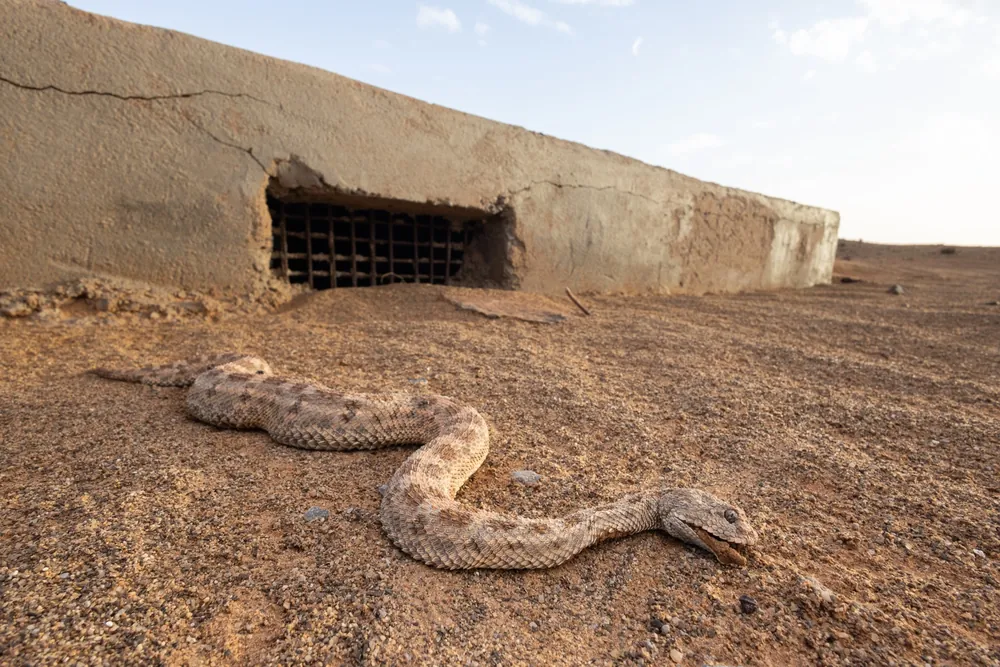
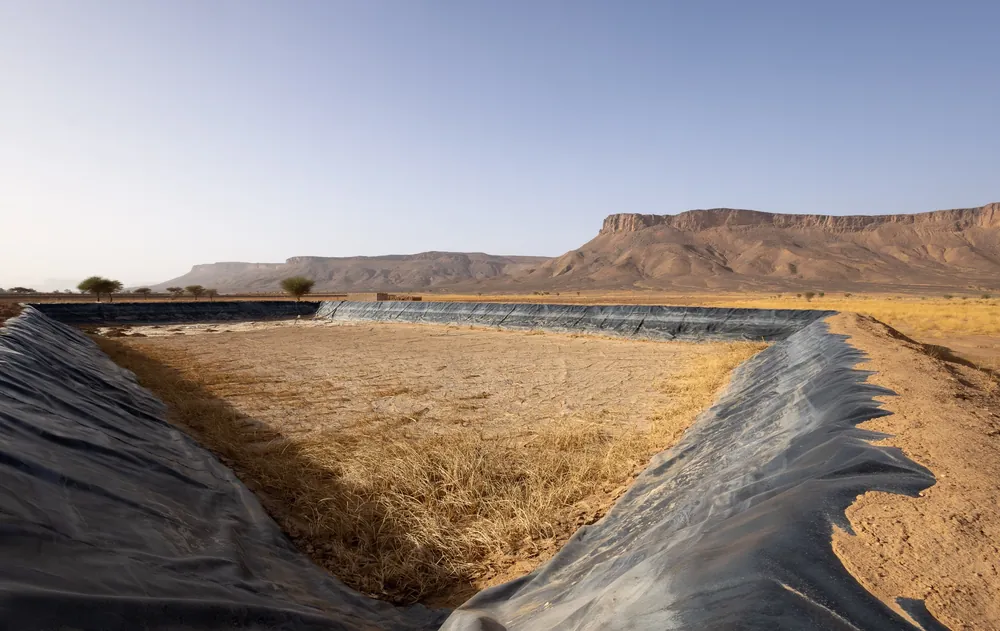
Wells, cisterns and irrigation basins, which act as permanent pitfall traps across the arid zone1423.
Direct killing by humans37.
Local collection by snake charmers (Aïssawa) for exhibitions29, probably in limited numbers compared to other species (pers. comm.). Individuals are also taken from the wild for venom extraction, as well as for the international exotic pet trade181925.
Climate models forecast warming and reduced rainfall for North Africa, which is expected to isolate populations and drive local extinctions among North African vipers7.
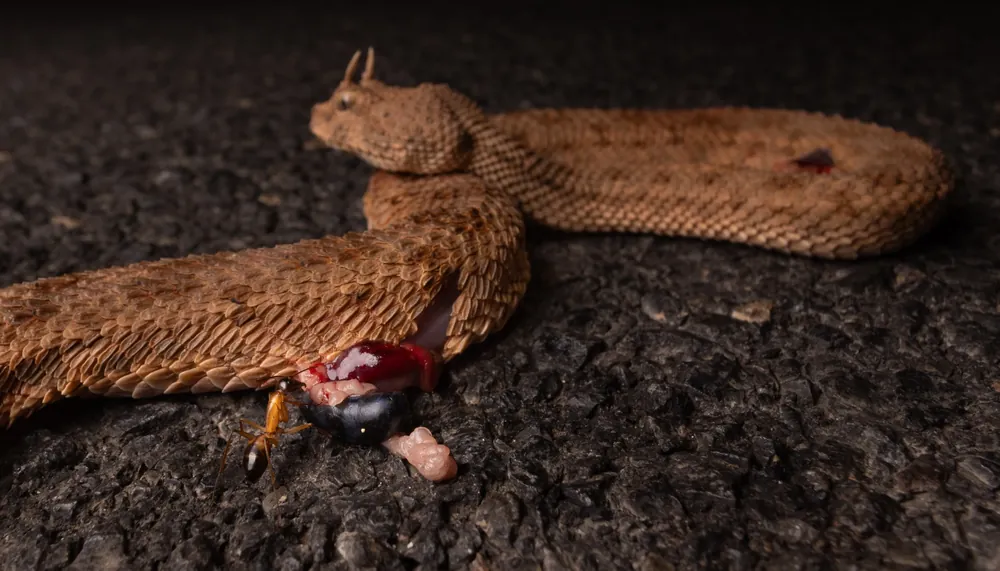
A Sahara Horned Viper (Cerastes cerastes) hit twice over: found beaten to death with sticks at the bottom of a water reservoir, a testament to the two main dangers facing the species in Morocco.
One water retention basin among more than a hundred in a region inhabited by the species, a major problem in Morocco for a great many snakes and reptiles.
A specimen found dead, freshly run over on the road, potentially the largest cause of mortality for the species in Morocco.
01 / 02
Al-Sadoon, M. K., & Kandeal, S. A. (2015). Reproductive biology of the horned viper, Cerastes cerastes gasperettii in the central region of Saudi Arabia. Saudi Journal of Biological Sciences, 22(3), 351-357. https://doi.org/10.1016/j.sjbs.2015.01.009
Al-Sadoon, M. K., & Paray, B. A. (2016). Ecological aspects of the horned viper, Cerastes cerastes gasperettii in the central region of Saudi Arabia. Saudi Journal of Biological Sciences, 23(1), 135-138. https://doi.org/10.1016/j.sjbs.2015.10.010
AnAge. (2023). Cerastes cerastes. In AnAge: The Animal Ageing and Longevity Database, Build 15. Entry citing Frank & Kate's Web Page (ref. 451), sample size small, data quality acceptable. https://genomics.senescence.info/species/entry.php?species=Cerastes_cerastes Retrieved 25 August 2026.
Arfaoui, A., Hmimou, R., Ouammi, L., Soulaymani, A., Mokhtari, A., Chafiq, F., & Soulaymani-Bencheikh, R. (2009). Epidemiological profile of snakebites in Morocco. Journal of Venomous Animals and Toxins including Tropical Diseases, 15(4), 653-666.
Argaz, H., Fahd, S., & Brito, J. C. (2013). Venomous snakes in Morocco: Biogeography and envenomation. ScienceLib Editions Mersenne, 5, Article 130509, via León (2020)20.
Barnestein, J. A. M., Fernández-Carrasco, J. A., González de la Vega, J. P., & Gabari-Boa, V. (2013). Depredación de Cerastes cerastes sobre Luscinia megarhynchos en el Antiatlas marroquí. Boletín de la Asociación Herpetológica Española, 24(2), 25-26, via León (2020)20.
Brito, J. C., Fahd, S., Geniez, P., Martínez-Freiría, F., Pleguezuelos, J. M., & Trape, J.-F. (2011). Biogeography and conservation of viperids from North-West Africa: An application of ecological niche-based models and GIS. Journal of Arid Environments, 75(11), 1029-1037. https://doi.org/10.1016/j.jaridenv.2011.06.006
Chafiq, F., El Hattimy, F., Rhalem, N., Chippaux, J.-P., Soulaymani, A., Mokhtari, A., & Soulaymani-Bencheikh, R. (2016). Snakebites notified to the poison control center of Morocco between 2009 and 2013. Journal of Venomous Animals and Toxins including Tropical Diseases, 22, Article 8. https://doi.org/10.1186/s40409-016-0065-8
Chani, M., L'kassimi, H., Abouzahir, A., Nazi, M., & Mion, G. (2008). Three case-reports of viperin envenoming in Morocco. Annales Françaises d'Anesthésie et de Réanimation, 27(4), 330-334, via Fahmi et al. (2012)13.
Crochet, P.-A., Leblois, R., & Renoult, J. P. (2015). New reptile records from Morocco and Western Sahara. Herpetology Notes, 8, 583-588, via León (2020)20.
Díaz-Paniagua, C. (1976). Alimentación de la culebra bastarda (Malpolon monspessulanus) en el S.O. de España. Doñana, Acta Vertebrata 3: 113-127.
Dorfman, A., Subach, A., & Scharf, I. (2023). Snakes on a slope: Strong anti-gravitactic responses and differential habitat use in the Saharan horned viper (Cerastes cerastes) in the Negev desert. Royal Society Open Science, 10(3), Article 221652. https://doi.org/10.1098/rsos.221652
Fahmi, L., Makran, B., Pla, D., Sanz, L., Oukkache, N., Lkhider, M., Harrison, R. A., Ghalim, N., & Calvete, J. J. (2012). Venomics and antivenomics profiles of North African Cerastes cerastes and C. vipera populations reveals a potentially important therapeutic weakness. Journal of Proteomics, 75(8), 2442-2453. https://doi.org/10.1016/j.jprot.2012.02.021
García-Cardenete, L, Pleguezuelos, J. M., Brito, J. C., Jiménez-Cazalla, F., Pérez-García, M. T., & Santos, X. (2014). Water cisterns as death traps for amphibians and reptiles in arid environments. Environmental Conservation, 41(4), 341-349.
Geniez, P., Mateo, J. A., Geniez, M., & Pether, J. (2004). The amphibians and reptiles of the Western Sahara (former Spanish Sahara) and adjacent regions. Edition Chimaira, via León (2020)20.
Gruber, U. (1993). Guía de las serpientes de Europa, Norte de África y Próximo Oriente. Omega, via León (2020)20.
Heatwole, H., & Davison, E. (1976). A review of caudal luring in snakes with notes on its occurrence in the Saharan sand viper, Cerastes vipera. Herpetologica, 32(3), 332-336, via León (2020)20.
Jensen, T. J., Auliya, M., Burgess, N. D., Aust, P. W., Pertoldi, C., & Strand, J. (2019). Exploring the international trade in African snakes not listed on CITES: Highlighting the role of the internet and social media. Biodiversity and Conservation, 28, 1-19, via Wagner et al. (2021)37.
Khourcha, S., Hilal, I., Elbejjaj, I., Karkouri, M., Safi, A., Hmyene, A., & Oukkache, N. (2023). Insight into the toxicological and pathophysiological effects of Moroccan vipers' venom: Assessing the efficacy of commercial antivenom for neutralization. Tropical Medicine and Infectious Disease, 8(6), Article 302. https://doi.org/10.3390/tropicalmed8060302
León, R. (2020). Cerastes cerastes (Linnaeus, 1758). In G. Martínez, R. León, O. Jiménez-Robles, J. P. González De la Vega, V. Gabari, B. Rebollo, A. Sánchez-Tójar, J. R. Fernández-Cardenete, & J. Gállego (Eds.), Moroccoherps. Anfibios y reptiles de Marruecos y Sáhara Occidental. Version 10/04/2020. https://www.moroccoherps.com/ficha/cerastes_cerastes/ Retrieved 25 August 2026.
Makran, B., Fahmi, L., Boussada, L., Oukkache, N., Chgoury, F., Benomar, H., Ghalim, N., & Lkhider, M. (2020). Comparative toxicological characterization of venoms of Cerastes cerastes and Macrovipera mauritanica from Morocco and neutralization by monospecific antivenoms. Toxin Reviews, 39(4), 382-396. https://doi.org/10.1080/15569543.2018.1540012
Martínez del Mármol, G., Harris, D. J., Geniez, P., de Pous, P., & Salvi, D. (2019). Amphibians and reptiles of Morocco. Edition Chimaira, via León (2020)20.
Martínez-Freiría, F., Flores Stols, V., & García-Cardenete, L. (2016). Human-mediated syntopy between Cerastes cerastes and Daboia mauritanica in the lower Drâa Valley, Morocco. Boletín de la Asociación Herpetológica Española, 27(2), 27-29.
Mebarki, M. T., Guezoul, O., Soutou, K., Marniche, F., Bouzid, A., & Sadine, S. E. (2021). Report of camel spiders (Solifugae: Galeodidae) predation by Saharan horned viper Cerastes cerastes (Linnaeus, 1758) in Northern Algerian Sahara. Serket, 18(1), 22-26.
Mesmoudi, N., Chakir, S., Ammouch, K., Chahir, R., Aassila, H., Moustaghfir, A., Karkouri, M., & Oukkache, N. (2026). Preliminary evaluation of a monovalent antivenom targeting Cerastes cerastes envenomation in North Africa: Feasibility and specificity assessment. Frontiers in Pharmacology, 17, Article 1719611. https://doi.org/10.3389/fphar.2026.1719611
Mochales-Riaño, G., Burriel-Carranza, B., Barros, M. I., Velo-Antón, G., Talavera, A., Spilani, L., Tejero-Cicuéndez, H., Sanmartín-Villar, I., Martínez-Freiría, F., Brito, J. C., Els, J., Ait Hammou, M., Al-Hazmi, S., Simó-Riudalbas, M., & Carranza, S. (2024). Hidden in the sand: Phylogenomics unravel an unexpected evolutionary history for the desert-adapted vipers of the genus Cerastes. Molecular Phylogenetics and Evolution, 191, Article 107979. https://doi.org/10.1016/j.ympev.2023.107979
Oukkache, N., Lalaoui, M., & Ghalim, N. (2012). General characterization of venom from the Moroccan snakes Macrovipera mauritanica and Cerastes cerastes. Journal of Venomous Animals and Toxins including Tropical Diseases, 18(4), 411-420.
Pleguezuelos, J. M., Brito, J. C., Fahd, S., Feriche, M., Mateo, J. A., Moreno-Rueda, G., Reques, R., & Santos, X. (2010). Setting conservation priorities for the Moroccan herpetofauna: The utility of regional red lists. Oryx, 44(4), 501-508. https://doi.org/10.1017/S0030605310000992
Pleguezuelos, J. M., Feriche, M., Brito, J. C., & Fahd, S. (2018). Snake charming and the exploitation of snakes in Morocco. Oryx, 52(2), 374-381. https://doi.org/10.1017/S0030605316000910
Schleich, H. H., Kästle, W., & Kabisch, K. (1996). Amphibians and reptiles of North Africa. Koeltz Scientific Books, via León (2020)20.
Schneemann, M., Cathomas, R., Laidlaw, S. T., El Nahas, A. M., Theakston, R. D. G., & Warrell, D. A. (2004). Life-threatening envenoming by the Saharan horned viper (Cerastes cerastes) causing micro-angiopathic haemolysis, coagulopathy and acute renal failure: Clinical cases and review. QJM: An International Journal of Medicine, 97(11), 717-727, via Fahmi et al. (2012)13.
Schweiger, M. (2012). Cerastes vipera (Linnaeus, 1758). In G. Martínez, R. León, O. Jiménez-Robles, J. P. González De la Vega, V. Gabari, B. Rebollo, A. Sánchez-Tójar, J. R. Fernández-Cardenete, & J. Gállego (Eds.), Moroccoherps. Amphibians and reptiles of Morocco and Western Sahara. Version 02/08/2012. https://www.moroccoherps.com/en/ficha/Cerastes_vipera/ Retrieved 25 August 2026, via León (2020)20.
Shulzinska H, Keynan A, Dvilansky A. (1978) Effect of Cerastes cerastes snake bite on coagulation. Harefuah;94:323–4, via Fahmi et al. (2012)13.
Subach, A., Dorfman, A., Avidov, B., Domer, A., Samocha, Y., & Scharf, I. (2022). Foraging behaviour, habitat use and population size of the desert horned viper in the Negev desert. Royal Society Open Science, 9(6), Article 220326. https://doi.org/10.1098/rsos.220326
Trape, J.-F., & Mané, Y. (2006). Guide des serpents d'Afrique occidentale: Savane et désert. IRD Éditions.
Valenta J, Stach Z, Svítek M. (2010) Acute pancreatitis after viperid snake cerastes cerastes envenoming: a case report. Prague Med Rep;111:69–75, via Fahmi et al. (2012)13.
Wagner, P., Wilms, T., Niagate, B., Joger, U., Geniez, P., Mateo, J. A., El Mouden, E. H., Slimani, T., Nouira, M. S., Baha El Din, S., Busais, S. M. S., & Al Jumaily, M. M. (2021). Cerastes cerastes. The IUCN Red List of Threatened Species 2021: e.T197465A2486896. https://dx.doi.org/10.2305/IUCN.UK.2021-3.RLTS.T197465A2486896.en Accessed on 25 August 2026.
Young, B. A., & Morain, M. (2003). Vertical burrowing in the Saharan sand vipers (Cerastes). Copeia, 2003(1), 131-137. https://doi.org/10.1643/0045-8511(2003)003[0131:VBITSS]2.0.CO;2
How to cite
Ruffieux, C., & Vuillemin, R. (2026). Sahara Horned Viper (Cerastes cerastes). In: Castella, C., Iallaten, H., Ruffieux, C., & Vuillemin, R. (Eds.), Fauna Morocco. The Free Encyclopedia: Reptiles & Amphibians of Morocco. Available from https://fauna-morocco.org/encyclopedia/serpentes/viperidae/cerastes-cerastes.html (accessed 18 September 2026).
Published
18 September 2026
Last updated
21 September 2026
Authors
Colin Ruffieux Rayane Vuillemin
Reviewers
Clément Castella Haytam Iallaten Mohamed Taha Aissaoui
Photography
Rayane Vuillemin
Methodology
Each account is a scientific synthesis: we compile the literature, read each paper in full, verify facts against their original sources when possible, and flag uncertainties for expert review. It is written first in English, reviewed by the team, then translated into French and Arabic. Every claim is referenced, and accounts are updated as knowledge advances. If you spot a mistake or an omission, please get in touch so we can fix it.