North African Mountain Viper

Conservation status:VUVulnerable
Population trend:Decreasing
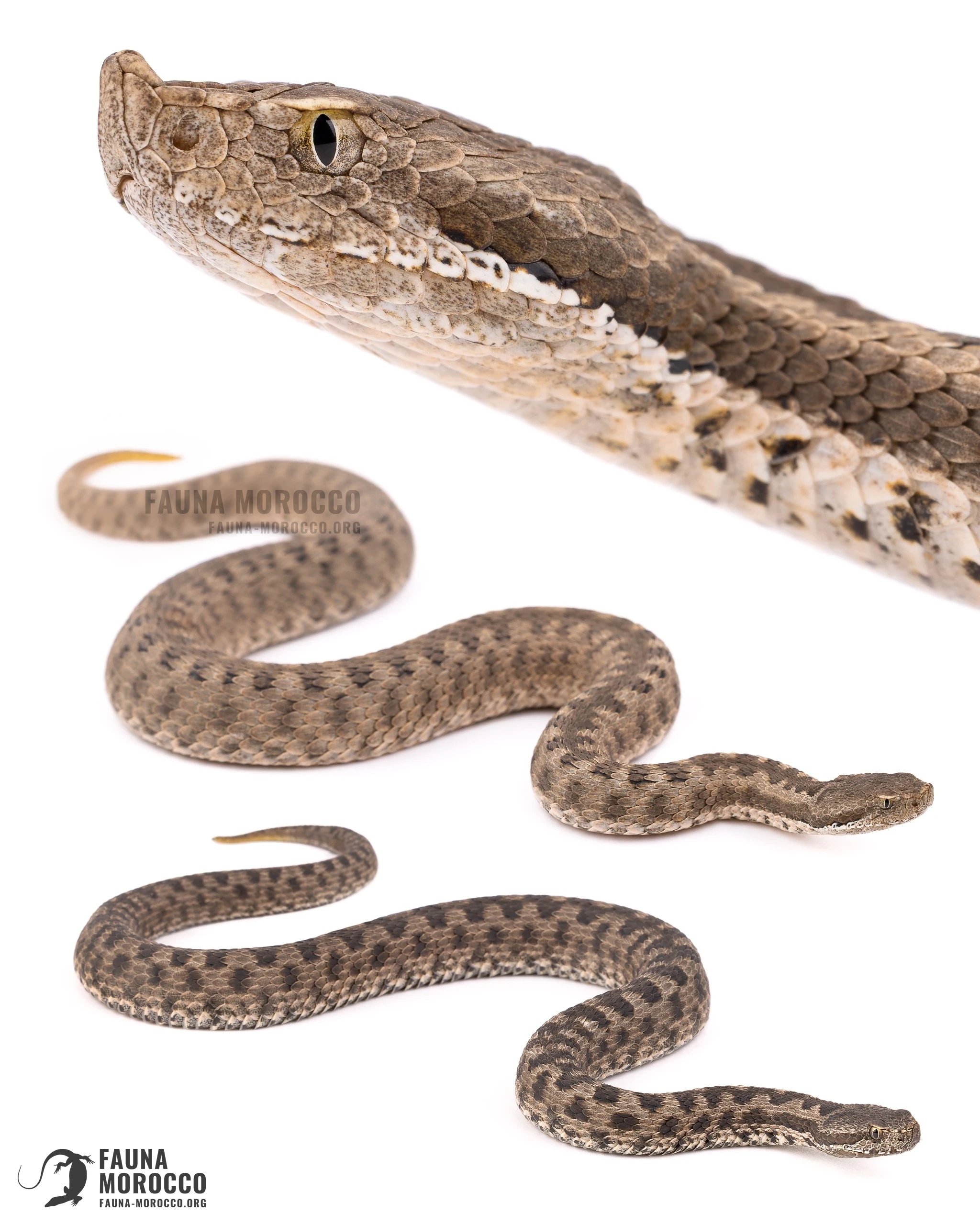
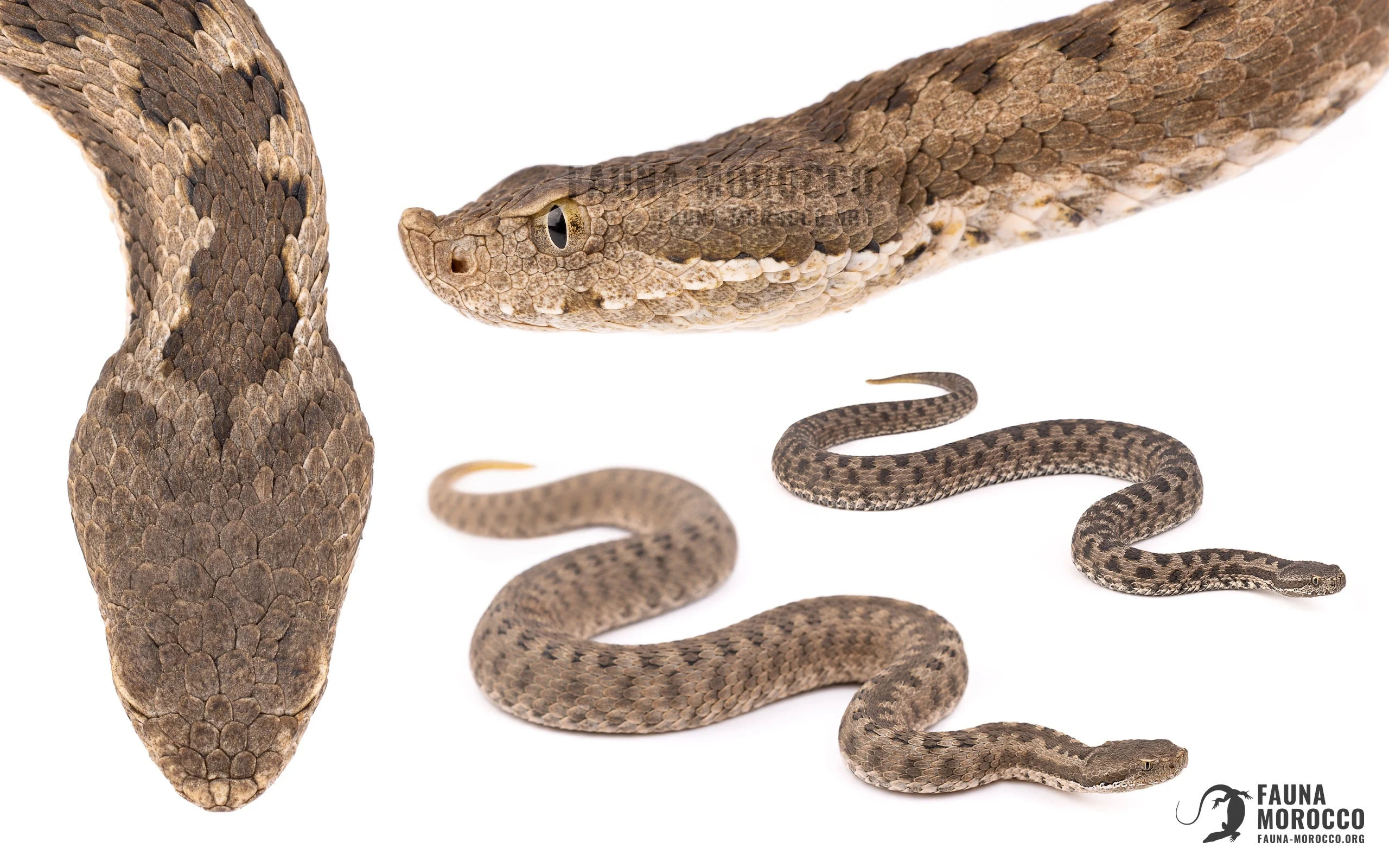
North African Mountain Viper (Vipera monticola) on white, head in profile and two whole individuals, Morocco

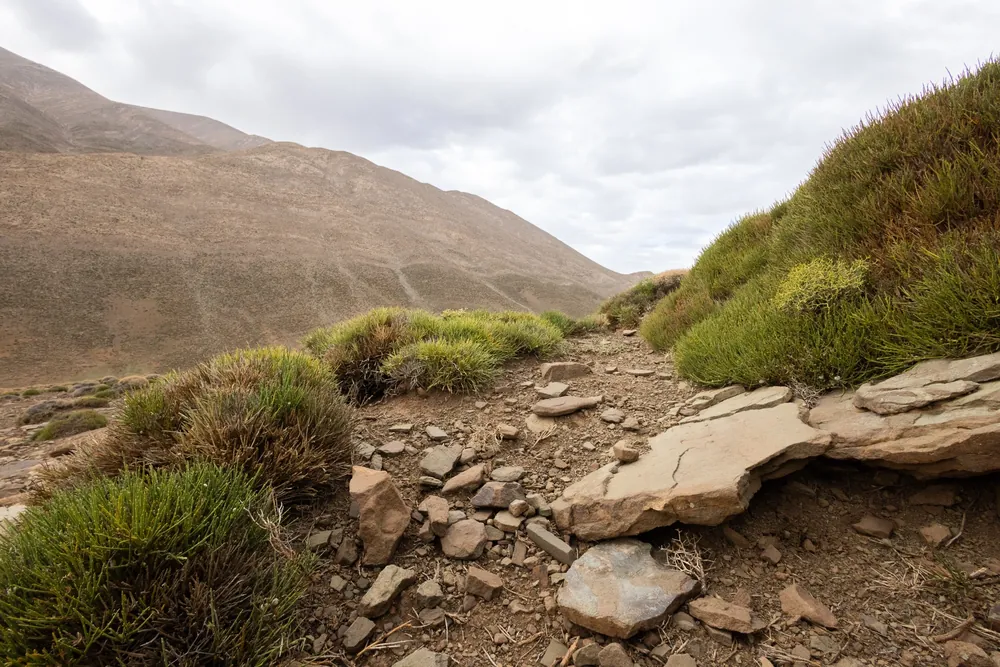
The North African Mountain Viper, more commonly known as the Atlas Dwarf Viper, is the only member of the genus Vipera in Africa, and the smallest of them all. It lives higher than any other snake in Morocco, on the bare ridges of the High Atlas, sheltering in the spiny cushion shrubs rooted among the screes. It is remarkably cold-tolerant, emerging to bask on clear winter days with snow still lying around it.

But it is not only an alpine snake, ranging also at lower elevations in the northern part of the country. Until recently, the species could even be found down to near sea level, in the coastal dunes of Salé and Saidia. Sadly, these populations are likely extinct due to the rapid development of tourism in these areas. Most remaining populations can be found at the higher altitude, although it is no real refuge: climate warming and overgrazing are pushing the species ever higher up the mountains, towards summits beyond which it has nowhere left to go.

The North African Mountain Viper (Vipera monticola) is a small viper, and the High Atlas populations include the smallest animals in the genus Vipera27.

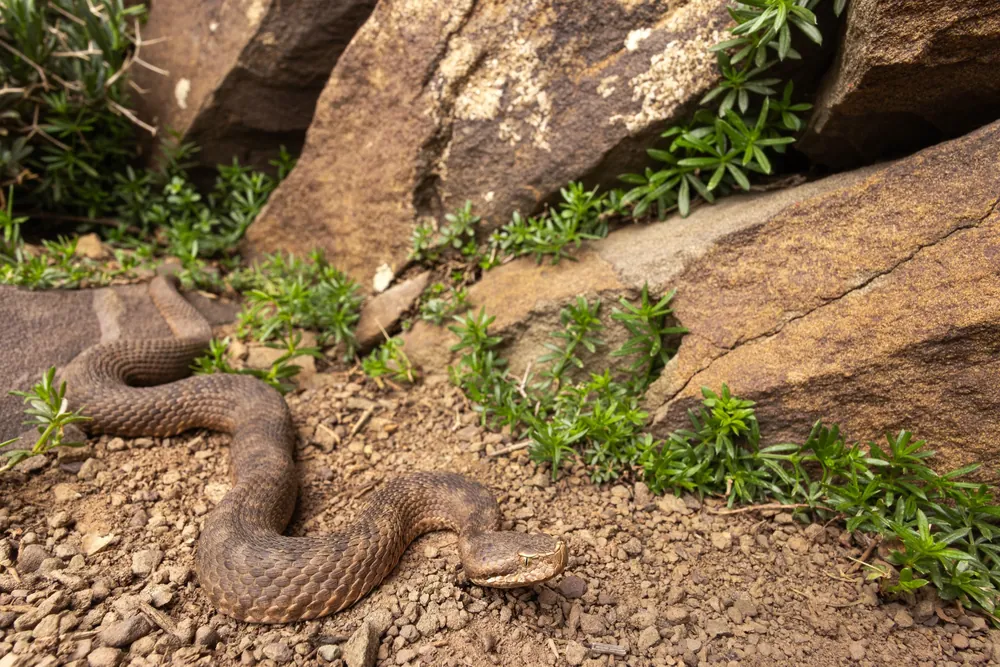
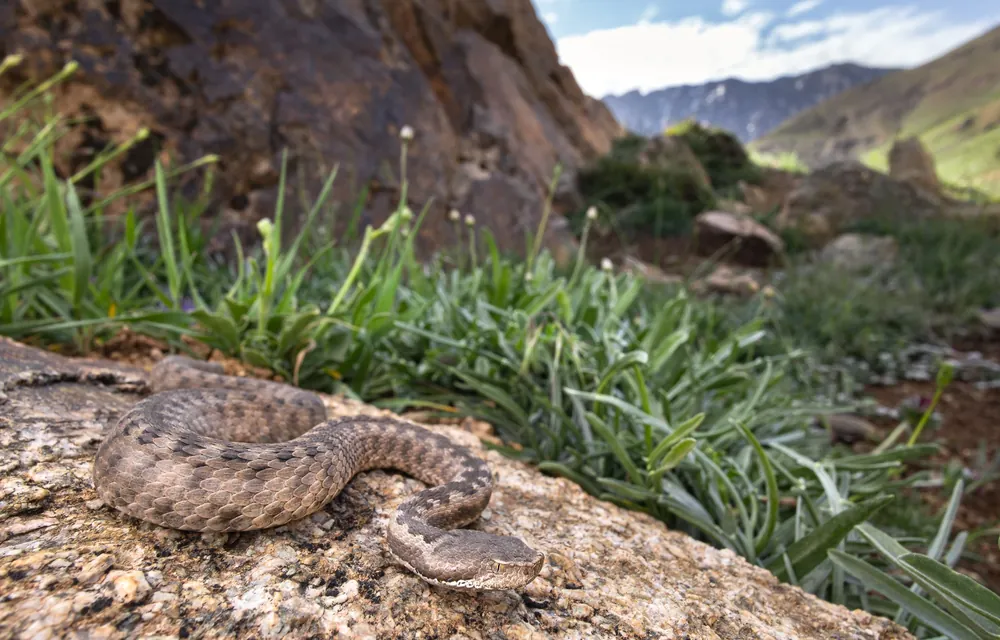
The build is stocky, the head broad and clearly set apart from the neck. The eyes are rather small and overhung by a prominent scale, giving the North African Mountain Viper a specific “mean” look (pers. obs.). The iris is coppery, and the pupil is vertical. The snout carries a characteristic enlarged horn-like rostral scale16.

The tail is short, and its tip is yellowish in about 94% of individuals, and black in the remainder20.

Males are usually greyish and females brownish16. In general, in the Atlas Mountains, females display only a very faintly marked pattern on a pale background, whereas males have a more contrasted pattern24 (pers. obs.). Sexes do not differ in body length, but the tail is longer in males620.

The dorsal pattern and body size vary among the three subspecies20.

  • 72% of Vipera monticola monticola and Vipera monticola atlantica carry a barred pattern, in which a continuous vertebral line is crossed by transverse bars. These two subspecies measure between 30 and 34 cm snout-to-vent on average20.
  • Vipera monticola saintgironsi shows angular or rounded zigzags, and measures on average 41 cm snout-to-vent, sometimes exceeding 50 cm in parts of the Middle Atlas and the Rif. In the eastern High Atlas, only dwarf populations of Vipera monticola saintgironsi have been reported20.

For most of the twentieth century, the vipers of the Moroccan mountains were divided by their external appearance. Those of the central High Atlas are smaller, rarely reaching 40 cm, with a barred back rather than a zigzag. Those of the Rif, the Middle Atlas and the eastern High Atlas are of the size of most European vipers (40-50 cm). The dwarf vipers of the High Atlas were named Vipera latastei montana in 1953, renamed monticola the following year, and raised to full species status, Vipera monticola, in 1986. The normal-sized vipers in northern Morocco were still considered as Vipera latastei, the viper species present in Southern Spain27292.

Further measurements of specimens confirmed that the central High Atlas Dwarf Vipers, then considered as Vipera monticola, are consistently distinctive. However, normal-sized vipers were also found in the eastern High and Middle Atlas, blurring the line the species had been built on6.

DNA then overturned this arrangement. Sequencing showed that all the Moroccan populations belong to one North African group, and that the dwarf vipers of the central High Atlas are not genetically distinct enough from the other normal-sized Moroccan vipers to be considered two separate species33. Wider sampling revealed that the Western Atlas population is a distinct genetic lineage of its own, and that the Eastern Atlas and the Rif animals belong to the same lineage13. In other words, size was not a reliable diagnostic criterion. Moreover, at this stage, all Moroccan lineages were subsumed under the Iberian Lataste's Viper, Vipera latastei, and Vipera monticola was thus abolished.

A 2021 study combining genetics, morphology and ecology showed that the North African vipers had in fact been separated from the Iberian ones since the Strait of Gibraltar reopened about five million years ago. Therefore, North African Mountain Vipers are best treated as a species in their own right. Vipera monticola was considered valid again. It now covers all North African Mountain Vipers, and Vipera latastei became an Iberian endemic. Three subspecies were recognised, matching three genetic lineages and, roughly, three parts of the country: Vipera monticola saintgironsi in the Rif, the Middle Atlas and the eastern High Atlas, Vipera monticola monticola in the central High Atlas, and Vipera monticola atlantica in the western High Atlas20. Genomic data have since supported this arrangement11.
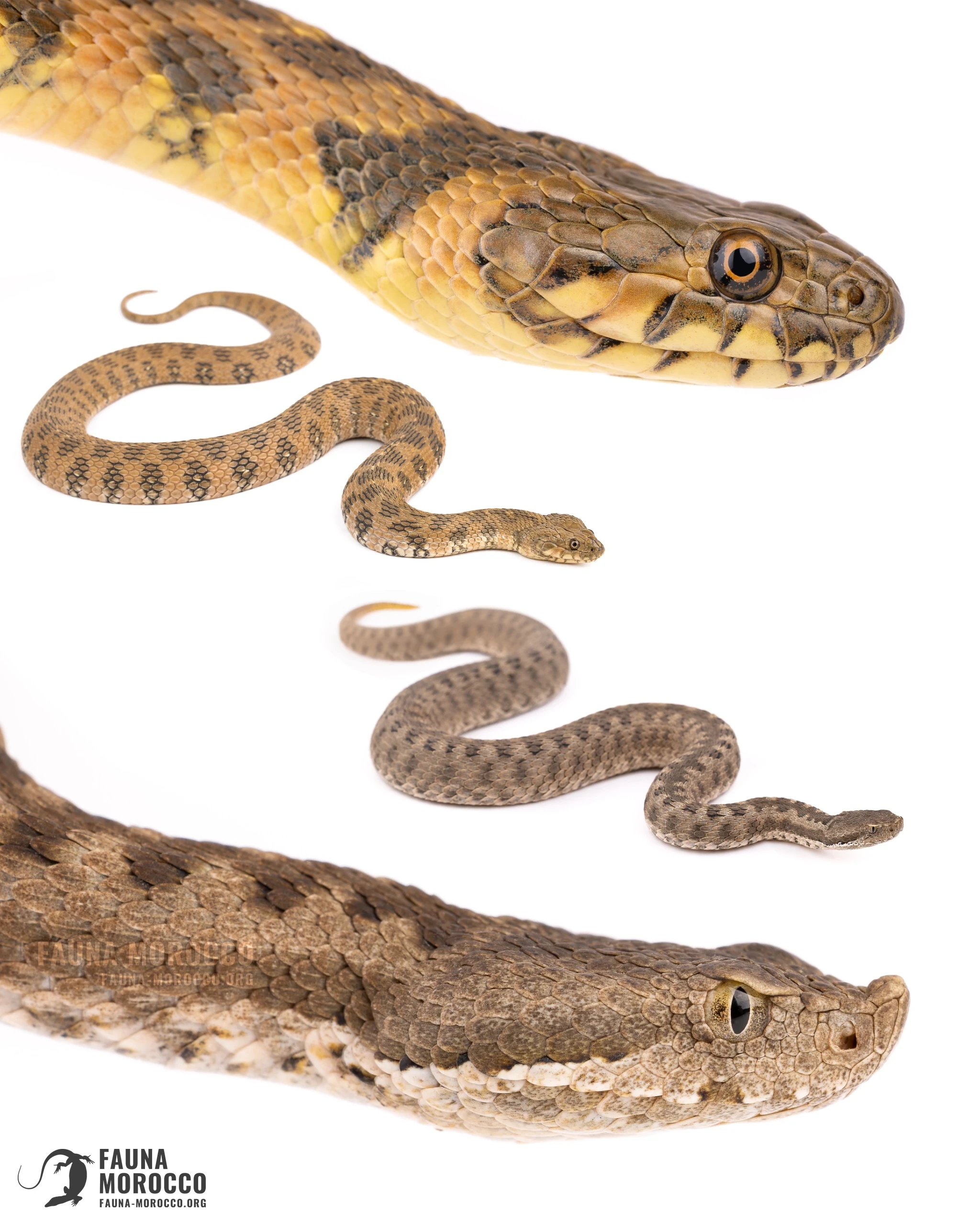
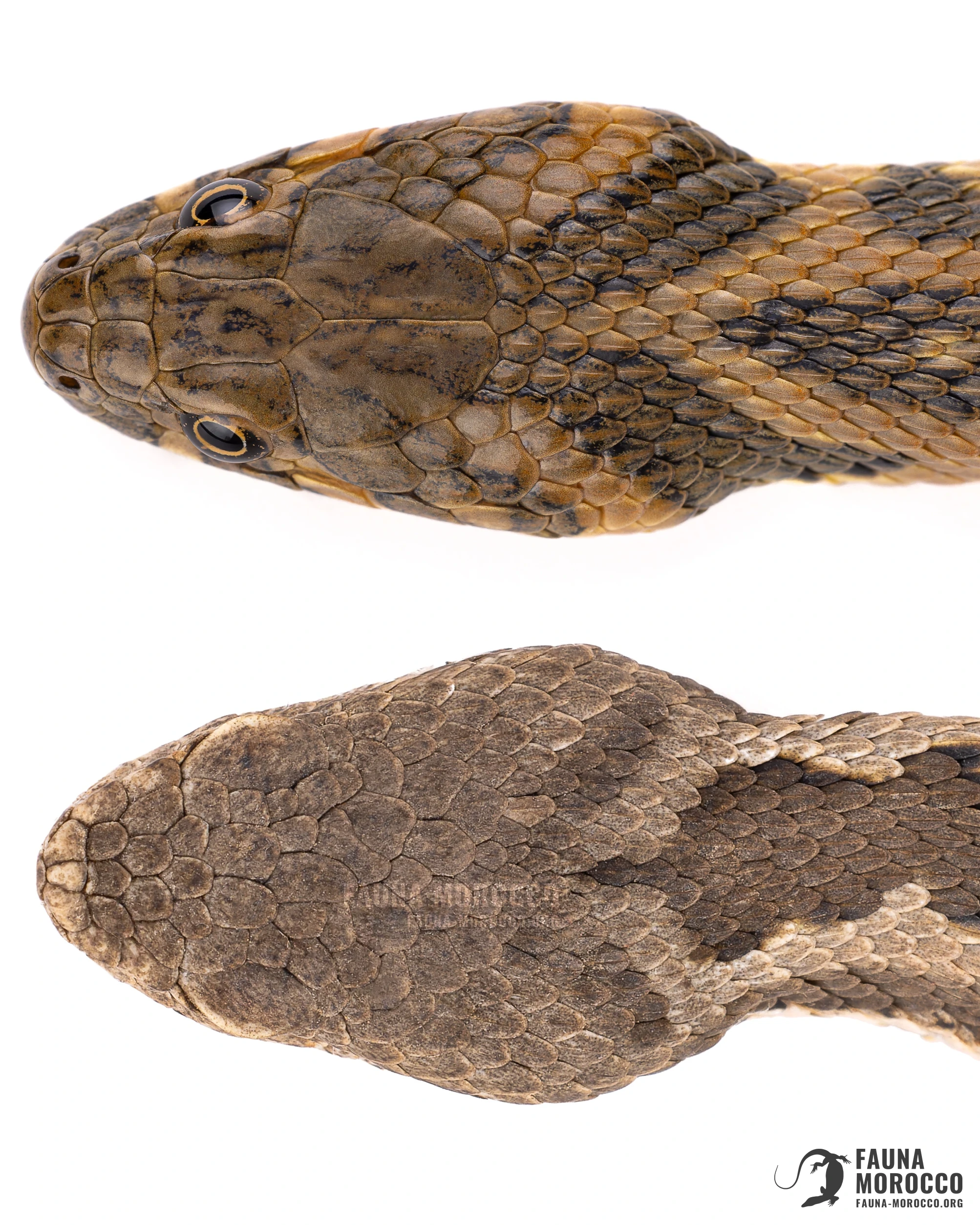
The North African Mountain Viper (Vipera monticola) can be confused with the Viperine Water Snake (Natrix maura) and the Moorish Viper (Daboia mauritanica). All of them carry zigzag-like patterns on the back and can show a triangular head when threatened. The Moorish Viper and the Viperine Water Snake can easily be told apart from it by the enlarged rostral scale, which both of them lack.

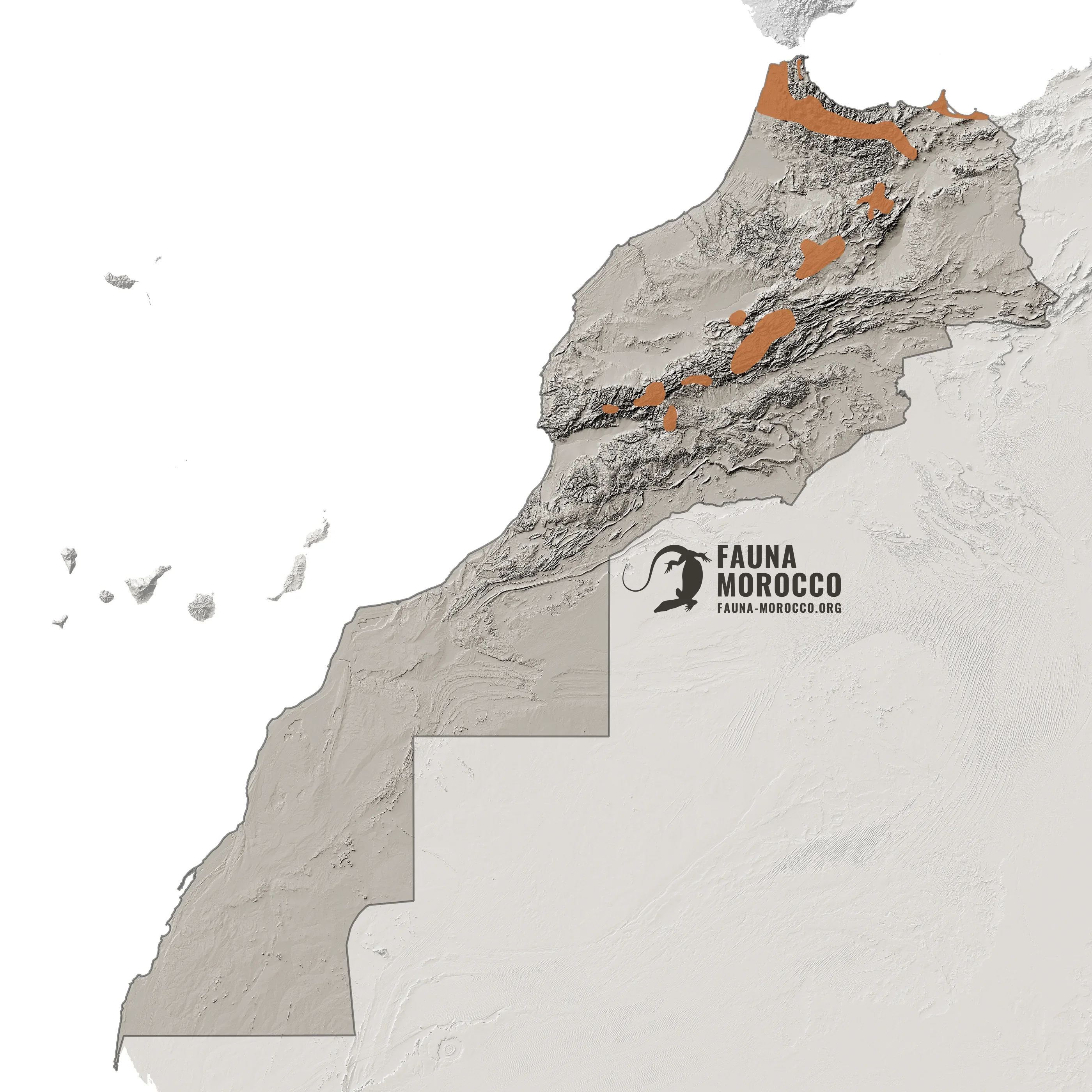
The North African Mountain Viper (Vipera monticola) is endemic to north-west Africa and is the only African representative of the genus Vipera2018. Its range consists of a set of mountain “islands” rather than a continuous area. Several isolated populations are thus found in the Moroccan mountains, and a disjunct one in eastern Algeria19. Historical records also place the North African Mountain Viper in Tunisia. However, it has not been found there for more than half a century despite targeted searches of the historical localities132019. Morocco holds most of the records, and two of the three subspecies are national endemics18.

Within Morocco, the three subspecies occupy distinct mountain ranges.

  • Vipera monticola monticola is endemic to the central High Atlas, including the Toubkal massif and the Jbel Sirwa. There, it occurs between 2,600 and 3,650 m2019.
  • Vipera monticola atlantica is known from a single population on the Tichka plateau, in the western High Atlas at 2,750 m, with a known range of less than 30 km²20118.
  • Vipera monticola saintgironsi has by far the widest range, spanning the eastern High Atlas, the Middle Atlas and the Rif, from sea level to 3,400 m20. It formerly reached the north-eastern coast around Nador and Saidia. It may still persist around Nador, but around Saidia the coastal dune habitat has been heavily disturbed by tourism and the viper is most likely extinct there (pers. obs.).

Our knowledge about the distribution of this viper in Morocco is still improving rapidly. At low elevations, the distribution has contracted drastically in the last decades. The coastal Moroccan populations at Salé, the Moulouya and Loukkos mouths and the Tangier peninsula are believed extinct, lost to tourism development1319, along with persecution (pers. comm.). By contrast, at higher altitudes, the range is probably underestimated, because this viper is highly elusive and occurs in low densities18. Access difficulties and low sampling effort also explain part of the deficit, since many of the massifs carrying suitable ground lie several days' walk from the nearest track241. Recent fieldwork and citizen-science records have extended the known Moroccan range by about 8.8%18, highlighting the under-sampling in the region.

In the High Atlas, the dwarf populations of the North African Mountain Viper are strict high-mountain animals20. The climate is cold, sunny and dry. The type locality of Vipera monticola atlantica has a mean annual temperature of 8 °C, 7 mm of rain in the dry season and 70 mm in the wet one, and powerful solar radiation. Snow covers the ground for up to five months a year201. The typical vegetation growing in this High Atlas habitat consists of cushion plants such as the Broom (Cytisus purgans balansae) and the Hedgehog Plant (Erinacea anthyllis), alongside the Spiny Madwort (Alyssum spinosum), growing on bare rocky terrain2024. The interior of the cushions buffers the extreme day-to-night swings in temperature and humidity of the High Atlas, holding temperatures higher and air humidity greater than outside12. North African Mountain Vipers thus rely on these plants both to thermoregulate and for shelter2421 (pers. obs.).

The larger populations of Vipera monticola saintgironsi from the Rif and Middle Atlas live under a milder climate. There, the North African Mountain Viper occupies evergreen forest of Atlas Cedars (Cedrus atlantica) or Moroccan Firs (Abies maroccana), deciduous oak (Quercus sp.) woodland as well as scrub and herbaceous vegetation, usually with abundant rock. Across the whole species, occurrence is most strongly related to slope and to annual precipitation, with animals concentrated on slopes of 12% to 20% and in areas receiving 1,000 to 1,500 mm a year13.

The North African Mountain Viper occurred in and around the coastal sand dunes near Salé and Saidia, where it is most likely extinct today20. The local habitat has largely disappeared under tourism development.

The species is terrestrial and almost certainly exclusively diurnal16 (pers. obs.). It is extremely cold-tolerant. Winter dormancy thus seems confined to the coldest weeks. Animals have been found active in the High Atlas in March and April with most of the surrounding ground still under snow, and as late as November at 1,800 m in the Rif1016 (pers. comm.). Winter emergence on snow-free patches on sunny days had already been reported for Moroccan reptiles generally28. In captivity, animals have been observed basking during high-pressure spells at air temperatures as low as 6 °C, in December and January24. This strategy allows these vipers to optimise activity in areas covered by snow for four to five months1424. The earliest such record is an animal basking at about 2,900 m in the High Atlas on 6 March 2007, with snow still lying nearby34.

The elusiveness of this viper21 explains why only a few of the species' life-history traits are known20.

The diet of the North African Mountain Viper is known from anecdotal records only20, but the picture they give is consistent. Smaller specimens are specialist lizard-eaters, taking lacertids, skinks and diurnal geckos, with the Atlas Day Gecko (Quedenfeldtia trachyblepharus) being the main prey. Invertebrates might also be a part of the diet32152416. Bigger animals also take small mammals or birds151624. Amphibians have also been listed among the prey19.

Caudal luring has been recorded in the Lataste's Viper (Vipera latastei), the sister species of the North African Mountain Viper (Vipera monticola). The tail was held erect 5 to 12 cm above the ground, and the black tip curved above and behind the head23. Lataste Vipers have conspicuously black tail tips, whereas the tip is yellowish in about 94% of North African Mountain Vipers20. A coloured tail tip is generally read as an adaptation for luring, consistent with such behaviour in the North African Mountain Viper.

No predator has been recorded for the North African Mountain Viper16, and the impenetrability of the cushion shrubs it shelters in, preventing predation, has been offered as one reason why such a slow-reproducing species maintains itself24. A few potential predators can nevertheless be considered. The Montpellier Snake (Malpolon monspessulanus) has been recorded preying on the Iberian sister species22 and has recently been found within the range of the North African Mountain Viper, along with the Horseshoe Whip Snake (Hemorrhois hippocrepis)31. These records come from Oukaimeden (central High Atlas) and the Tichka plateau, between about 2,600 and 2,700 m31. We have also observed the Montpellier Snake at Jbel Sirwa, at 2,750 m (pers. obs.). The Southern Smooth Snake (Coronella girondica), along with raptors, and crows are local potential predators32.

The North African Mountain Viper is a rather shy snake. Camouflage is its first line of defence. Its small size, background colour, as well as back markings help it blend in against rock (pers. obs.). It also has the habit of remaining hidden inside cushion shrubs24. When a threat presses closer, the usual response is flight and the snake hurries to the nearest refuge. Only if flight is prevented does it adopt the standard viperine sequence of coiling, hissing and striking at the intruder16. During our expeditions, we photographed multiple individuals. None of them tried to bite (pers. obs.). If provoked hard enough or accidentally stepped on, the North African Mountain Viper will bite. Dry bites (bites without venom) can happen, but venomous bites should be treated as the norm. If encountered, the North African Mountain Viper should be left alone and not handled, as bites can lead to serious consequences.

The World Health Organization lists the North African Mountain Viper among the six medically important snakes of Morocco9. However, none of the 873 snakebites notified to the Moroccan poison control centre between 2009 and 2013 could be attributed to this species8. The likely causes are that this snake is small with short fangs, has a small venom yield, has a flight-first temperament and, for the two dwarf subspecies, occupies high ground where few people live, visited mainly by shepherds and their herds in summer (pers. obs.). An absence of records does not imply an absence of bite, but we can infer that bites most likely do not cause symptoms severe enough to send people to hospital.

The venom itself was characterised for the first time in 2024, from animals collected in the Atlas and the Rif. Its toxin families are comparable to those of most Eurasian vipers. It contains enzymes that act on blood clotting (19 to 31%) as well as enzymes that break down tissue and the walls of blood vessels (6 to 13%). Most notably, the venom of the North African Mountain Viper contains a high proportion of phospholipases, enzymes that can cause a wide variety of symptoms, including neurotoxic effects9.

As no bites have been recorded, the effects of the venom can only be deduced from the toxins. The abundance of the three main families suggests a bite would cause the ordinary viperine picture of local tissue damage and disturbed clotting. The predominance of phospholipases could cause neurotoxic symptoms, such as muscle weakness and breathing difficulties. Phospholipases also produce tissue-damaging and blood effects9. No antivenom has ever been raised against Vipera monticola venom. In practice, a bite anywhere in the Atlas or the Rif should be treated as an envenomation of unknown severity and taken to hospital.

The North African Mountain Viper is viviparous, meaning females give birth to live young. Litter size is still unsettled. While captive evidence points to litters not exceeding three or four young even in the largest females302432, more recent analyses indicate litters of typically two to eight, occasionally a single young15. It is likely that litter size correlates with female size, with bigger animals found in the Rif producing larger litters than dwarf specimens of the High Atlas4.

A recent synthesis places parturition in April and May15, while older records place births between September and October24. Reproduction timing thus probably varies between subspecies and altitude. Newborns measure roughly 40% of adult length, about 13 cm24, which is very large for a viper. A litter can represent up to a quarter of the female's weight24. Having few large young is the expected strategy for a short activity season in which small neonates would have little chance of reaching a viable size before their first winter (pers. comm.). This impressive ratio can be explained by the constraint of producing large neonates while remaining small enough to avoid predation4.

Longevity has never been studied in the North African Mountain Viper. The closest figures come from the Iberian sister species (Vipera latastei) and estimate a maximal lifespan between 15 and 21 years4. The other European vipers fall in the same range or above it, between 13 and 20 years2637.

The longevity of the vipers living high in the Atlas Mountains could be somewhat longer, as their metabolism is active during a shorter period of the year (pers. comm.).

The North African Mountain Viper (Vipera monticola) was assessed as Vulnerable in 2024 by the IUCN, replacing a Near Threatened listing that dated from 2005 and covered only the High Atlas populations. The historical area of occupancy is 1,160 km², while recent records indicate a total area of occupancy of less than 500 km². The populations are treated as severely fragmented, given low dispersal ability and a patchy distribution even inside suitable montane habitat. A continuing decline has been observed in the extent and quality of habitat in both Morocco and Algeria. A range-wide decline from climate change is also anticipated. The IUCN assessors add that further research may show the species warrants an “Endangered” listing19. The 2010 national assessment of Morocco for the North African Mountain Viper is now outdated, as Vipera monticola was partially considered as Vipera latastei25.

The pressures threatening the North African Mountain Vipers are the following:

  • Habitat degradation is the main pressure. More than 98% of the suitable habitat is in human-modified landscapes, chiefly rangeland, cropland and villages. Rangeland dominates in the Moroccan Atlas, while cropland and villages dominate in the Rif and the Algerian Tell Atlas13. The mechanisms of this habitat modification have been described in detail. Deforestation proceeds by wood extraction and wildfire, and by the replacement of oak woodland with pine plantations at mid-elevations. Aridification follows from water extraction to irrigate cannabis in the Rif and from the overexploitation of water bodies by sheep and goats in the Middle and High Atlas. Overgrazing has intensified through increases in both herd size and grazing frequency13.
  • Climate change also slowly pushes species further up in altitude. New predators colonise the range of the North African Mountain Vipers31. The vipers themselves also slowly climb in altitude, with the limit eventually reaching the summit of the mountains5. A particularly alarming case is the Jbel Sirwa, a somewhat isolated massif at the southern edge of the range where the climate is warmer and drier21. There, the vipers already appear close to their upper elevational limit (pers. obs.).
  • Persecution is also believed to occur20, as the species shares much of its range with shepherds and their herds through the summer (pers. obs.).

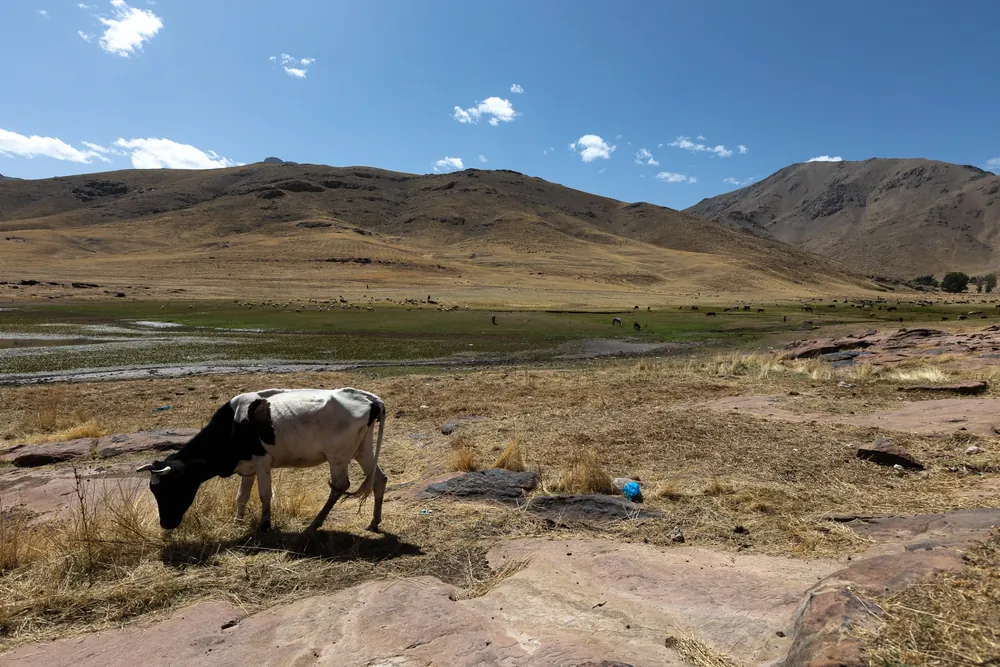
As a result, sampling failed to find the species at localities with records from the previous decade, and all localities showed these forms of degradation2118. During our expeditions to find this species, we were often struck by the degree of overgrazing we witnessed. We also searched for the North African Mountain Viper around Lake Tislit, which is located in a national park. There, the vegetation was almost completely dead, and the terrain was dramatically eroded. Almost no structured habitat was left in the landscape (pers. obs.).

This trend is unfortunately not slowing down. Niche models for the northern populations project losses of 56.9% of core suitable habitat by 2050 and 89% by 2080, with no new suitable areas appearing. Models for the High Atlas give losses of 31 to 35% by 2050 and 37 to 55% by 208051719.

  1. Avella, I., Lucchini, N., Enriquez-Urzelai, U., Corga, F., & Martínez-Freiría, F. (2019). New records for the reptile fauna of the Tichka plateau (western High Atlas, Morocco). Boletín de la Asociación Herpetológica Española, 30(2), 42–47.
  2. Beerli, P., Billing, H., & Schätti, B. (1986). Taxonomischer Status von Vipera latasti monticola Saint Girons 1953 (Serpentes, Viperidae). Salamandra, 22, 101–104, via Brito et al. (2006)6.
  3. Braña, F. (1978). Algunos datos sobre morfología y biología de Vipera seoanei Lataste 1878 en Asturias. Suplemento de Ciencias del Boletín del Instituto de Estudios Asturianos, 23, 143–153, via Brito & Rebelo (2003)4.
  4. Brito, J. C., & Rebelo, R. (2003). Differential growth and mortality affect sexual size dimorphism in Vipera latastei. Copeia, 2003(4), 865–871.
  5. Brito, J. C., Fahd, S., Martínez-Freiría, F., Tarroso, P., Larbes, S., Pleguezuelos, J. M., & Santos, X. (2011). Climate change and peripheral populations: Predictions for a relict Mediterranean viper. Acta Herpetologica, 6(1), 105–118.
  6. Brito, J. C., Santos, X., Pleguezuelos, J. M., Fahd, S., Llorente, G. A., & Parellada, X. (2006). Morphological variability of the Lataste's Viper (Vipera latastei) and the Atlas Dwarf Viper (Vipera monticola): Patterns of biogeographical distribution and taxonomy. Amphibia-Reptilia, 27(2), 219–240. https://doi.org/10.1163/156853806777239940
  7. Castanet, J. (1974). Étude histologique des marques squelettiques de croissance chez Vipera aspis (L.) (Ophidia, Viperidae). Zoologica Scripta, 3, 137–151, via Brito & Rebelo (2003)4.
  8. Chafiq, F., El Hattimy, F., Rhalem, N., Chippaux, J.-P., Soulaymani, A., Mokhtari, A., & Soulaymani-Bencheikh, R. (2016). Snakebites notified to the poison control center of Morocco between 2009 and 2013. Journal of Venomous Animals and Toxins including Tropical Diseases, 22, Article 8. https://doi.org/10.1186/s40409-016-0065-8
  9. Damm, M., Avella, I., Merzara, R., Lucchini, N., Buldain, J., Corga, F., Bouazza, A., Fahd, S., Süssmuth, R. D., & Martínez-Freiría, F. (2024). Venom variation among the three subspecies of the North African Mountain Viper Vipera monticola Saint Girons 1953. Biochimie, 227, 152–160. https://doi.org/10.1016/j.biochi.2024.07.008
  10. Donaire, D., Klusmeyer, B., & Jowers, M. J. (2017). On the presence of Lataste's Viper Vipera latastei Boscá, 1878 in the Central Rif, Morocco. Butlletí de la Societat Catalana d'Herpetologia, 24, 39–41.
  11. Dufresnes, C., Ghielmi, S., Halpern, B., Martínez-Freiría, F., Mebert, K., Jelić, D., Crnobrnja-Isailović, J., Gippner, S., Jablonski, D., Joger, U., & Laddaga, L. (2024). Phylogenomic insights into the diversity and evolution of Palearctic vipers. Molecular Phylogenetics and Evolution, 197, Article 108095. https://doi.org/10.1016/j.ympev.2024.108095, via Martínez-Freiría et al. (2024)19.
  12. Fennane, M. (1987). La Grande Encyclopédie du Maroc: Flore et végétation. La végétation des hautes montagnes. GEM, via Pillet (1994)24.
  13. Freitas, I., Fahd, S., Velo-Antón, G., & Martínez-Freiría, F. (2018). Chasing the phantom: Biogeography and conservation of Vipera latastei-monticola in the Maghreb (North Africa). Amphibia-Reptilia, 39(2), 145–161. https://doi.org/10.1163/15685381-17000197
  14. Haroni, A. S., Alifriqui, M., & Ouhammou, A. (2009). La diversité floristique des pelouses humides d'altitude: Cas de quelques sites du Haut Atlas marocain. Acta Botanica Malacitana, 34, 91–106, via Avella et al. (2019)1.
  15. Martínez del Mármol, G., Harris, D. J., Geniez, P., de Pous, P., & Salvi, D. (2019). Amphibians and reptiles of Morocco. Edition Chimaira, via Martínez-Freiría et al. (2024)19.
  16. Martínez del Mármol Marín, G. (2023). Vipera monticola Saint Girons, 1953. In G. Martínez, R. León, O. Jiménez-Robles, J. P. González De la Vega, V. Gabari, B. Rebollo, A. Sánchez-Tójar, J. R. Fernández-Cardenete, & J. Gállego (Eds.), Moroccoherps. Amphibians and reptiles of Morocco and Western Sahara. Version 06/10/2023. Retrieved 30 July 2026, from https://www.moroccoherps.com/en/ficha/vipera_monticola/
  17. Martínez-Freiría, F., Argaz, H., Fahd, S., & Brito, J. C. (2013). Climate change is predicted to negatively influence Moroccan endemic reptile richness. Implications for conservation in protected areas. Naturwissenschaften, 100(9), 877–889. https://doi.org/10.1007/s00114-013-1088-4
  18. Martínez-Freiría, F., Bouazza, A., Buldain, J., Freitas, I., Avella, I., Scaramuzzi, A., Sioumpoura, K., Oliveira, D., & Fahd, S. (2023). Fieldwork campaigns and citizen science data increase the distributional range of the elusive Vipera monticola in Morocco. Basic and Applied Herpetology, 37, 95–105. https://doi.org/10.11160/bah.249
  19. Martínez-Freiría, F., Fahd, S., Bouazza, A., Crochet, P.-A., & Beddek, M. (2024). Vipera monticola (errata version published in 2026). The IUCN Red List of Threatened Species 2024: e.T221202628A288364174. Retrieved 30 July 2026, from https://dx.doi.org/10.2305/IUCN.UK.2024-2.RLTS.T221202628A288364174.en
  20. Martínez-Freiría, F., Freitas, I., Velo-Antón, G., Lucchini, N., Fahd, S., Larbes, S., Pleguezuelos, J. M., Santos, X., & Brito, J. C. (2021). Integrative taxonomy reveals two species and intraspecific differentiation in the Vipera latastei–monticola complex. Journal of Zoological Systematics and Evolutionary Research, 59(8), 2278–2306. https://doi.org/10.1111/jzs.12534
  21. Martínez-Freiría, F., García-Cardenete, L., Alaminos, E., Fahd, S., Feriche, M., Flores Stols, V., Jiménez-Cazalla, F., Pérez, A., Pleguezuelos, J. M., Santos, X., & Velo-Antón, G. (2017). Contribution to the knowledge on the reptile fauna of Jebel Sirwa (Morocco), with some insights into the conservation status of Vipera latastei-monticola. Boletín de la Asociación Herpetológica Española, 28(1), 54–60.
  22. Meijide, M. (2017). Primera cita de depredación de Malpolon monspessulanus sobre Vipera latastei. Boletín de la Asociación Herpetológica Española, 28(1), 26–28, via Scaramuzzi et al. (2022)31.
  23. Parellada, X., & Santos, X. (2002). Caudal luring in free-ranging adult Vipera latasti. Amphibia-Reptilia, 23(3), 343–347.
  24. Pillet, J.-M. (1994). Nouvelles données sur la répartition et l'écologie de la Vipère naine du Haut Atlas Vipera monticola Saint Girons, 1954 (Reptilia, Viperidae). Revue suisse de Zoologie, 101(3), 645–653. https://doi.org/10.5962/bhl.part.79921
  25. Pleguezuelos, J. M., Brito, J. C., Fahd, S., Feriche, M., Mateo, J. A., Moreno-Rueda, G., Reques, R., & Santos, X. (2010). Setting conservation priorities for the Moroccan herpetofauna: The utility of regional red lists. Oryx, 44(4), 501–508. https://doi.org/10.1017/S0030605310000992
  26. Prestt, I. (1971). An ecological study of the viper Vipera berus in southern Britain. Journal of Zoology, 164, 373–418, via Brito & Rebelo (2003)4.
  27. Saint Girons, H. (1953a). Une vipère naine: Vipera latastei montana. Bulletin de la Société Zoologique de France, 78, 24–28, via Pillet (1994)24.
  28. Saint Girons, H. (1953b). Note sur les périodes de latence des reptiles au Maroc. Bulletin de la Société Zoologique de France, 78(5–6), 377–381, via Pillet (1994)24.
  29. Saint Girons, H. (1954). Note rectificative au sujet de Vipera latastei montana, n. subsp. Bulletin de la Société Zoologique de France, 78, 475, via Pillet (1994)24.
  30. Saint Girons, H. (1973). Nouvelles données sur la Vipère naine du Haut Atlas, Vipera latastei monticola. Bulletin de la Société des Sciences Naturelles et Physiques du Maroc, 53, 111–118, via Pillet (1994)24.
  31. Scaramuzzi, A., Avella, I., Lansari, A., Bouazza, A., & Martínez-Freiría, F. (2022). New high-elevation records of Malpolon monspessulanus and Hemorrhois hippocrepis from the High Atlas Mountains (Morocco). Boletín de la Asociación Herpetológica Española, 33, 14–18.
  32. Schleich, H. H., Kästle, W., & Kabisch, K. (1996). Amphibians and reptiles of North Africa. Koeltz Scientific Publishers.
  33. Velo-Antón, G., Godinho, R., Harris, D. J., Santos, X., Martínez-Freiría, F., Fahd, S., Larbes, S., Pleguezuelos, J. M., & Brito, J. C. (2012). Deep evolutionary lineages in a Western Mediterranean snake (Vipera latastei/monticola group) and high genetic structuring in Southern Iberian populations. Molecular Phylogenetics and Evolution, 65(3), 965–973. https://doi.org/10.1016/j.ympev.2012.08.016
  34. Westerström, A. (2010). Early record of the elusive Atlas Dwarf Viper Vipera monticola Saint Girons, 1953, in the Moroccan High Atlas. Herpetozoa, 23(1/2), 103–104.

How to cite

Ruffieux, C., & Vuillemin, R. (2026). North African Mountain Viper (Vipera monticola). In: Castella, C., Iallaten, H., Ruffieux, C., & Vuillemin, R. (Eds.), Fauna Morocco. The Free Encyclopedia: Reptiles & Amphibians of Morocco. Available from https://fauna-morocco.org/encyclopedia/serpentes/viperidae/vipera-monticola.html (accessed 18 September 2026).

Published

18 September 2026

Last updated

21 September 2026

Authors

Colin Ruffieux
Rayane Vuillemin

Reviewers

Clément Castella
Haytam Iallaten
Mohamed Taha Aissaoui

Photography

Rayane Vuillemin

Methodology

Each account is a scientific synthesis: we compile the literature, read each paper in full, verify facts against their original sources when possible, and flag uncertainties for expert review. It is written first in English, reviewed by the team, then translated into French and Arabic. Every claim is referenced, and accounts are updated as knowledge advances. If you spot a mistake or an omission, please get in touch so we can fix it.