White-bellied Carpet Viper

Conservation status:LC(global)·VU(Morocco)
Population trend:Unknown
White-bellied Carpet Viper (Echis leucogaster), Morocco

Once considered one of Morocco’s rarest snakes, the White-bellied Carpet Viper (Echis leucogaster) is a discreet inhabitant of the country’s southern stony plains, oases and dry river beds.

Threatened, it does something few snakes do. Rather than hiss, it draws into tight coils and grinds its saw-edged flank scales against one another, producing a dry, grating rasp. That warning sound is what gives the saw-scaled vipers their name.

A Sahelian species at the northern edge of its range, it survives along the Drâa valley, potentially isolated from the rest of its kin in the Sahel. It stands as a witness to a greener past, when the Sahara was covered in savannah and Sahelian life reached far further north than it does today.

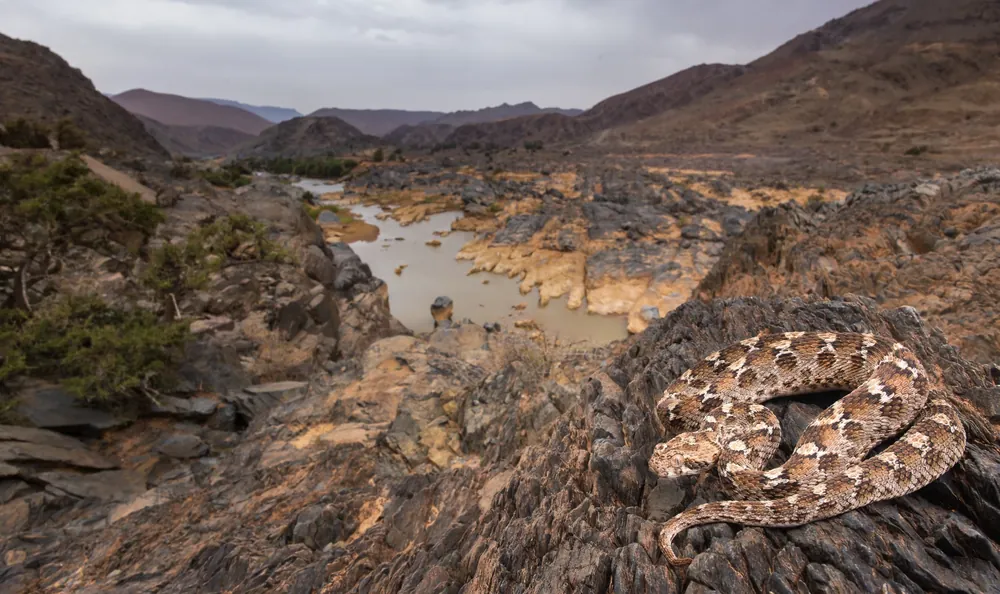
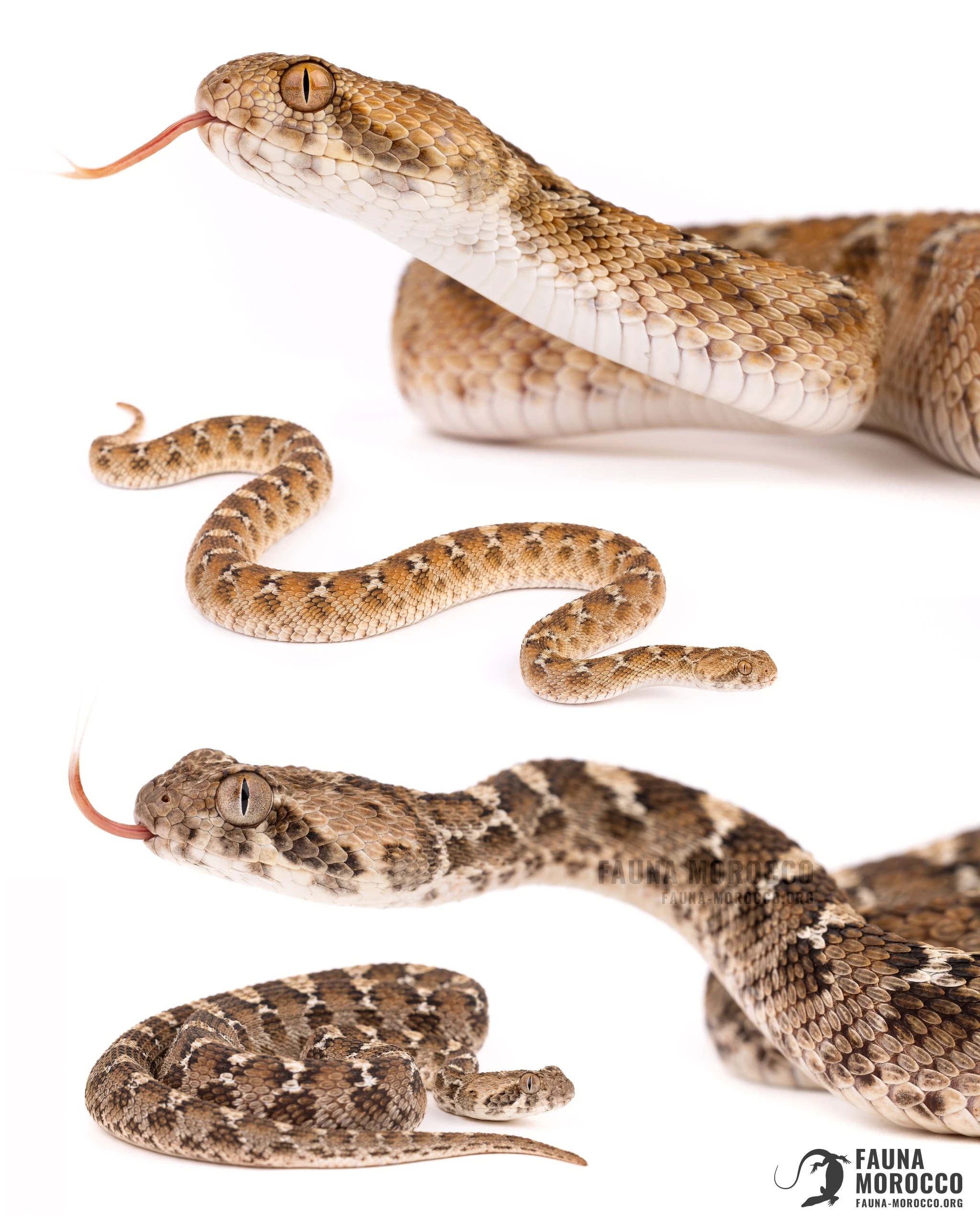
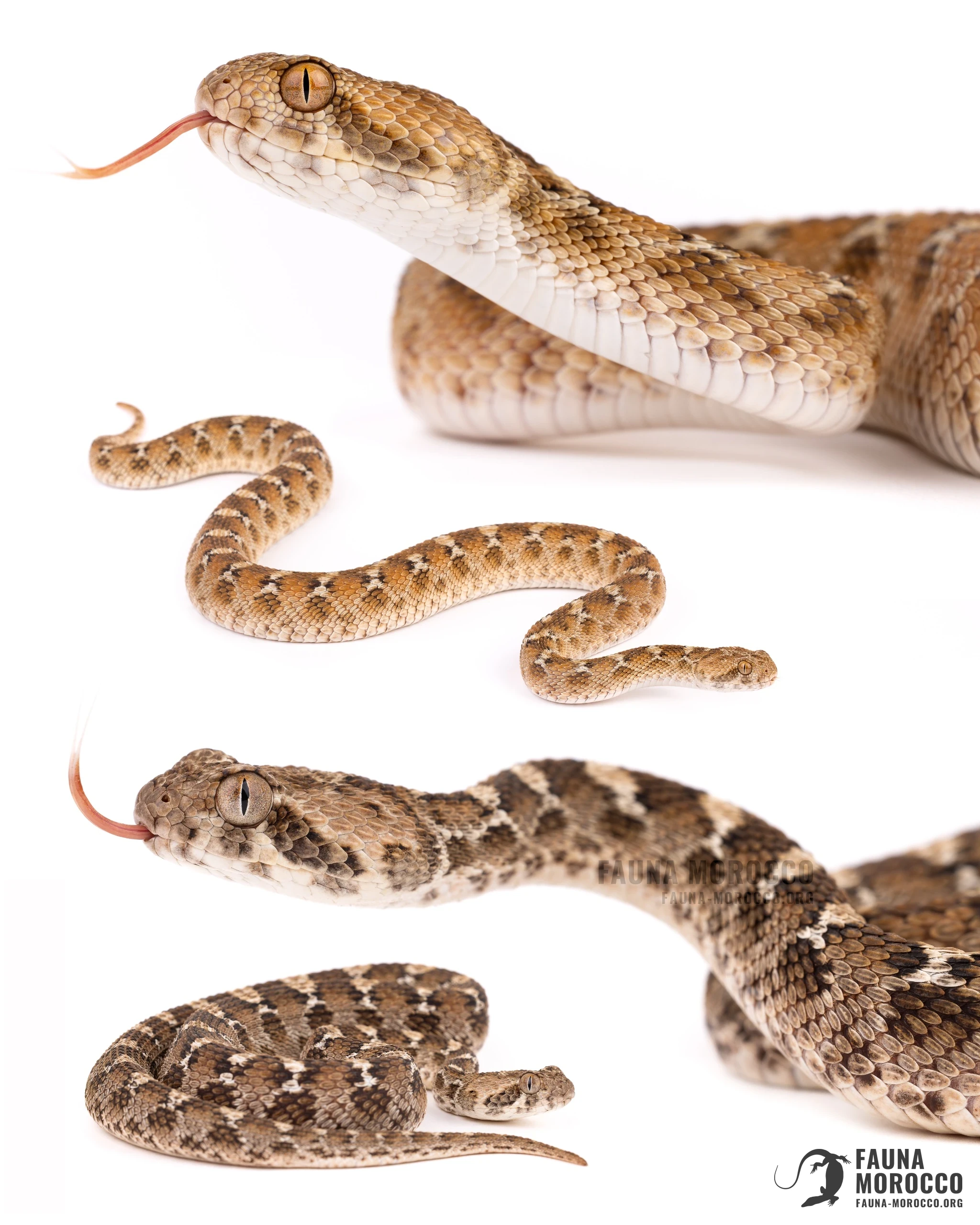
The White-bellied Carpet Viper (Echis leucogaster), also known as Roman’s saw-scaled viper, is a small to medium-sized snake. In Morocco, measured individuals range from about 20 cm in juveniles to around 60 cm in adults322, and are slender for a viperid25. The species can exceptionally reach 83 to 87 cm338. The head is pear-shaped, only slightly flattened and clearly set off from a thin neck. The eyes are large and prominent, with a vertical pupil and, in Moroccan animals, an intensely orange iris1121.

As in all vipers, the dentition is solenoglyphous: a pair of large, hollow, hinged fangs at the front of the upper jaw delivers the venom25. The crown of the head bears only small scales. Every dorsal scale is strongly keeled, and on the flanks the keels are serrated rather than smooth. These obliquely set, saw-edged flank scales are rubbed against one another to produce the rasping sound that gives saw-scaled vipers their name11.

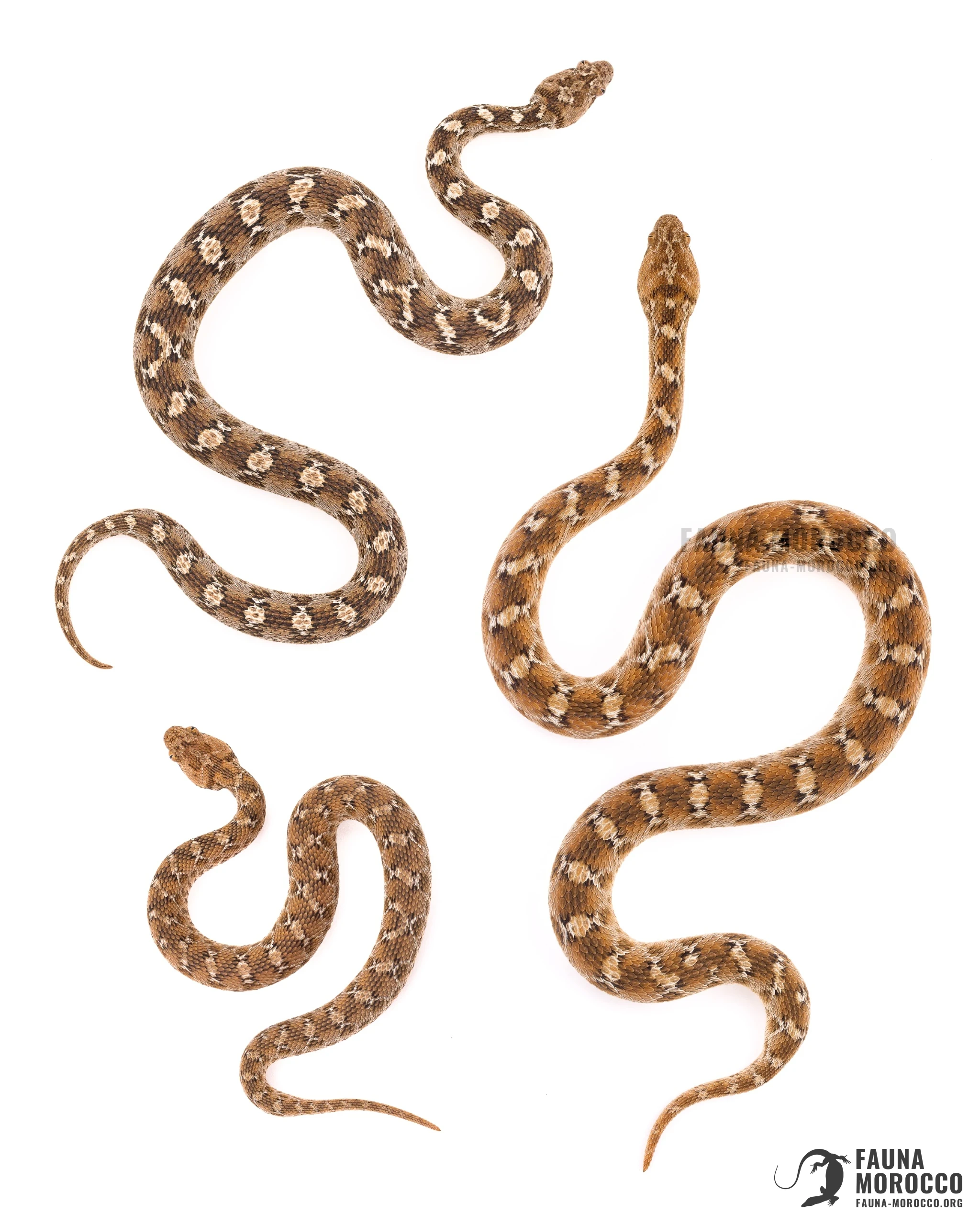
The dorsal pattern is made of pale, whitish transverse blotches alternating with darker brown or grey ones. The ground colour ranges from beige to orange and fades down the flanks to almost white on the belly. Tone varies with population and substrate, from the yellowish-brown animals typical of Morocco to grey or reddish individuals elsewhere25. The venter is uniform and unmarked, white to ivory2125. Variation within a single locality can be considerable, animals found on the same night differed markedly from one another in both colour and the contrast of their markings (pers. obs.)25.

The taxonomical status of the White-bellied Carpet Viper (Echis leucogaster) has always been subject to contestation.

Roman described this snake in 1972 as a subspecies of Echis carinatus and raised it to species rank himself three years later32.

It sits inside the Echis pyramidum group, very close to Echis pyramidum itself, and morphology gives no help: the white belly that names the White-bellied Carpet Viper (E. leucogaster) also occurs in Egyptian and Kenyan E. pyramidum. Several authors therefore treat it as Echis pyramidum leucogaster13413.

The genus-wide phylogeny places it within the Echis pyramidum complex as an independently evolving lineage whose species status still needs confirming29.

The practical result is that authorities disagree. The Reptile Database and the IUCN Red List keep Echis leucogaster as a full species, and recent modelling work uses that name427. Others retain Echis pyramidum and treat leucogaster as a subspecies25. A 2025 mitochondrial study of the genus recovered the Echis pyramidum complex as paraphyletic, with up to four candidate lineages. This leaves the internal taxonomy of the complex, and with it the status of leucogaster, unresolved. The authors caution that mitochondrial data alone cannot settle it, and that nuclear or genomic data are still needed20.
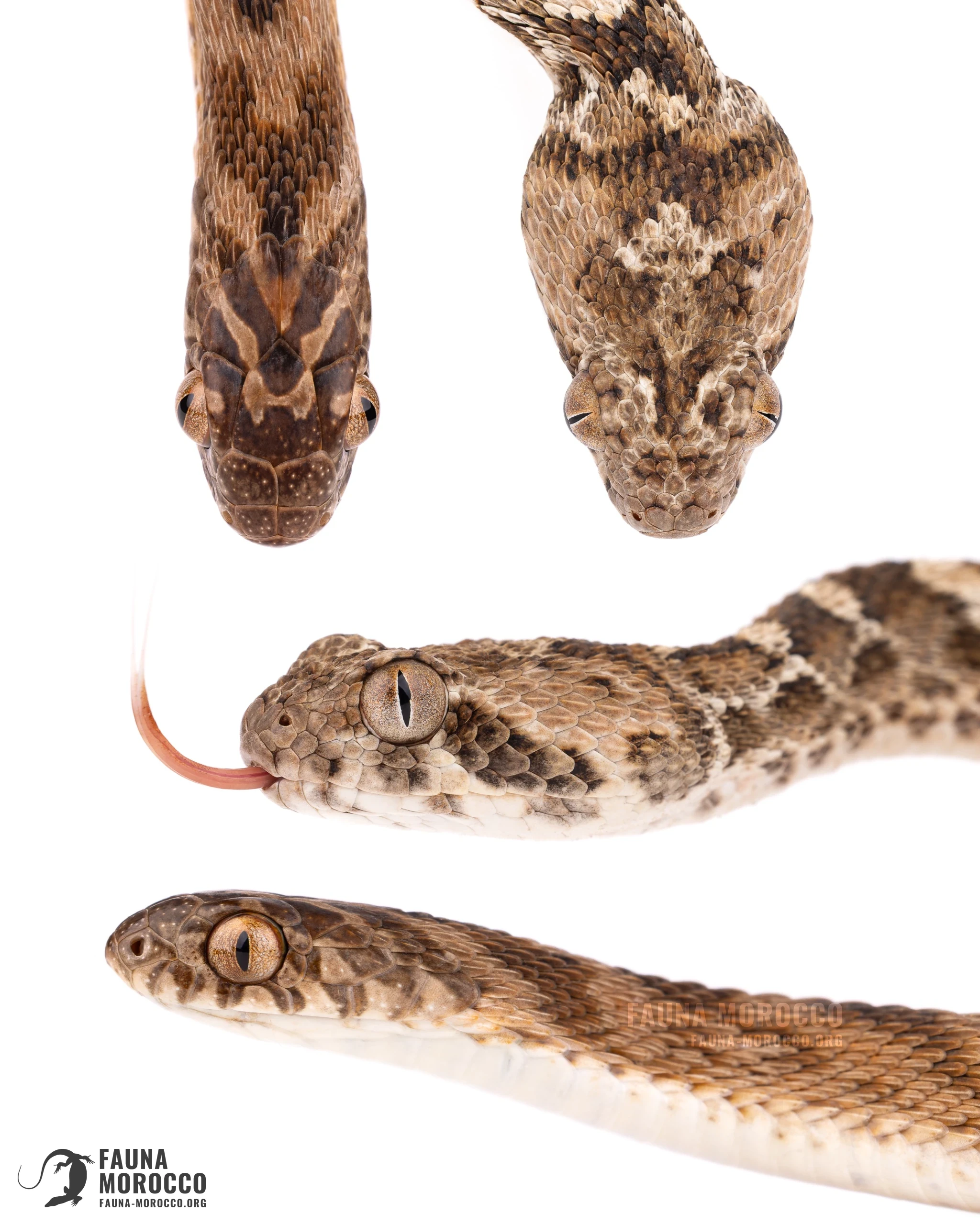
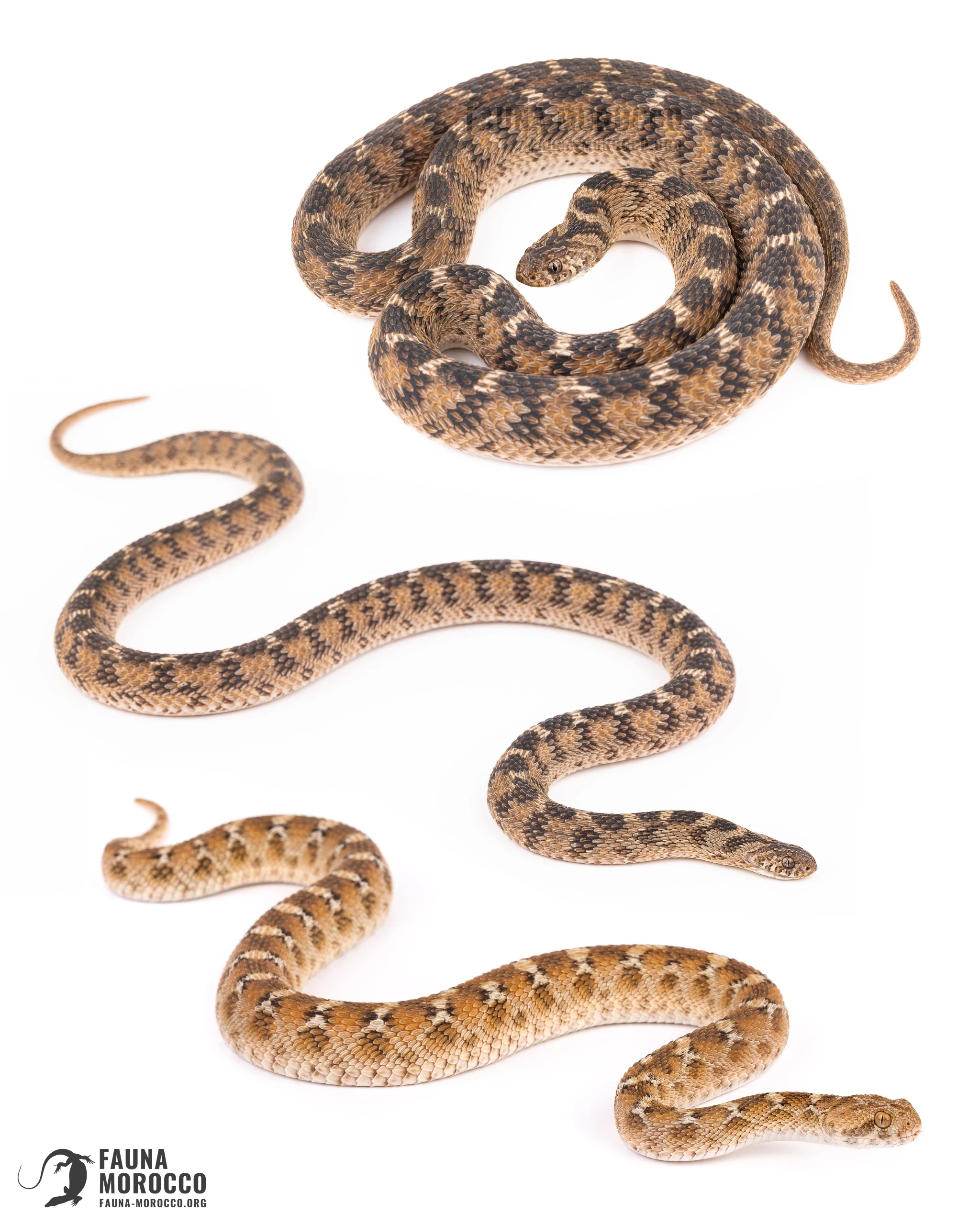
The White-bellied Carpet Viper can be confused with the Sahel egg-eating snake (Dasypeltis sahelensis), but the two are easily separated by head size relative to body girth. The carpet viper has a head distinctly wider than the neck and covered in small scales. The egg-eating snake has a very small head, barely wider than the neck and covered in large scales. The carpet viper almost always shows a whitish blotch on the head, which the egg-eating snake lacks. Their ranges do not overlap in Morocco: the carpet viper occurs near the Drâa basin, while the egg-eating snake does not range south of Guelmim.

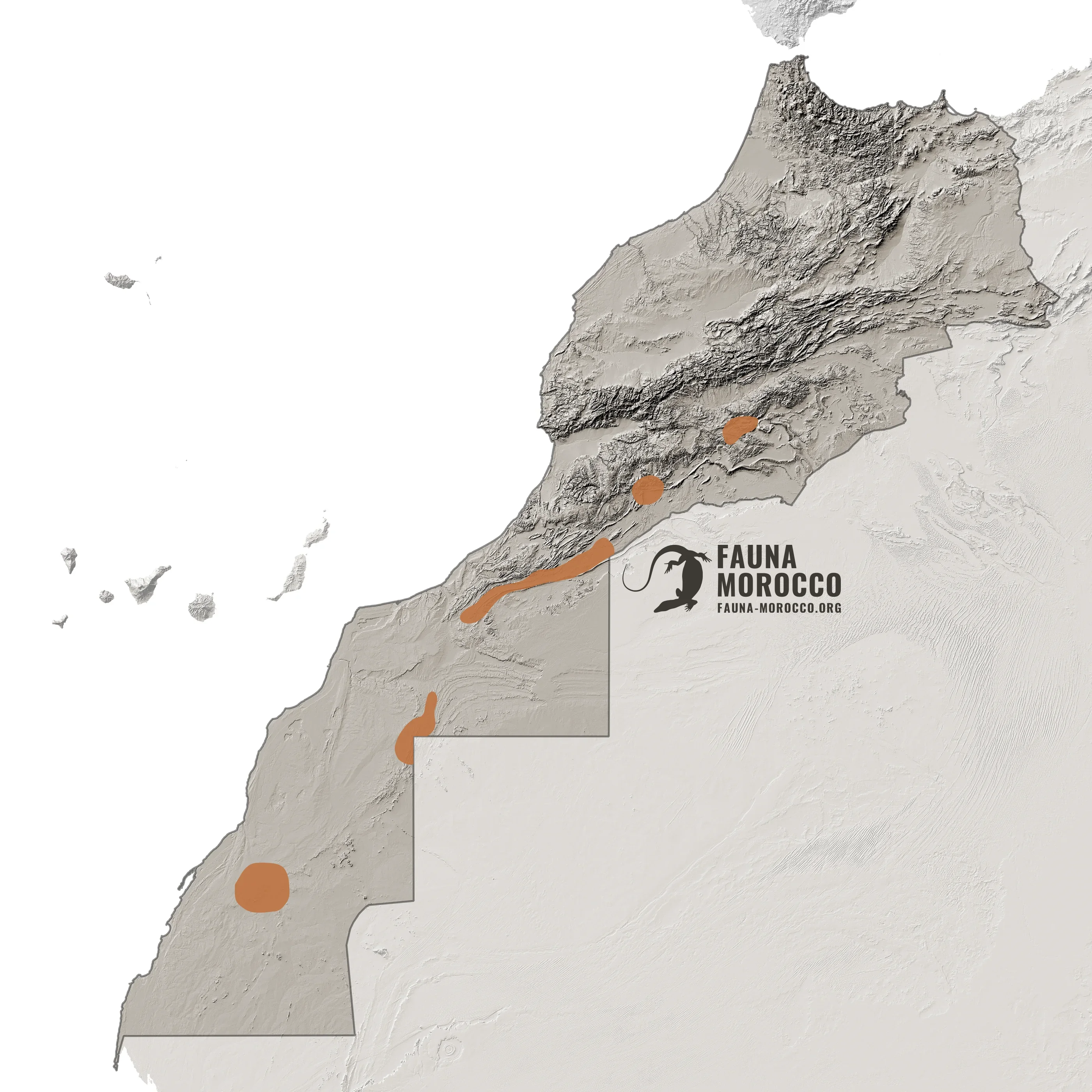
The White-bellied Carpet Viper is largely a Sahelian species, ranging more or less continuously from Mauritania and Senegal to Chad, with relict, apparently isolated populations along the southern edge of the Atlas in Morocco, Tunisia and Algeria, and possibly a single locality on the western border of Libya4238. A further such population occurs in the Algerian Hoggar3. Whether the northern disjunction reflects genuine isolation or merely uneven sampling has been debated since the 1990s and remains unsettled117. The assessed elevation range is 100 to 1,000 m42, and the northernmost Moroccan specimen was found at 1,059 m11.

In Morocco the picture is still incomplete, and records long accumulated slowly. Until 1999 the species was known from two localities barely apart, west of Assa, where it was first found in 196356. On that basis it was called one of the rarest reptiles in Morocco. Two further localities were then found near Ouarzazate and Tiglit2418, and a specimen from the Zemmour region in the far south suggested a bridge towards the Mauritanian populations of the Adrar3. As of 2004, only ten records in all attested the species north of the Tropic of Cancer3.

Records then grew more frequent. In 2009 a road-killed animal was collected 10 km south-west of Agdz, at 1,059 m on a barren stony plateau. This remains the northernmost record anywhere11. Five more animals were reported that year2, one at Tata followed in 201226, and two near Assa in 201722. The westernmost Moroccan record lies roughly 50 km from the Atlantic, north of the Jbel Ouarkziz21.

Genetic studies found that animals from Morocco and Mauritania are still very closely related, suggesting that there is still a continuity, or that it was broken only very recently11.

Niche models predict a broadly continuous belt along the western edge of the Sahara117. The isolated Zemmour populations fall on largely unsuitable ground and appear genuinely relict8.

It is therefore quite possible that the species occupies most of the Moroccan-Algerian border country, following the Drâa. Recent fieldwork supports this: we and other herpetologists have found these vipers at new localities along the Drâa, gradually closing the gaps (pers. comm.)25.

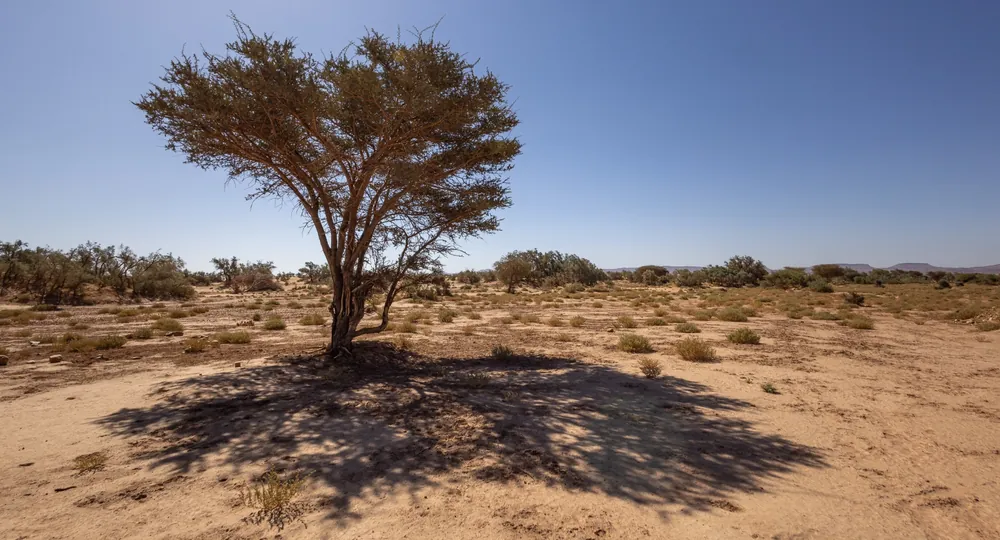
The habitat picture has broadened with every new record. Early accounts placed the species on stony hillsides615. Since then it has been found on dry, rocky ground2211 but also in the moist, vegetated bottoms of watercourses and in cultivated land with umbrella thorn acacias (Acacia tortilis)263, and even between crops in an oasis26. At Assa the animals live in a dry riverbed with sparse vegetation22. Such dry oued beds hold high humidity and, with it, dense scorpion populations, one of the viper’s prey (see Diet)25. The same link with oases and irrigation channels holds in southern Mauritania25.

Animals in the dry oueds seem to exploit the deep cracks in the sun-baked clay21, which presumably serve as refuges where nothing else is available. Built structures are used too: one animal was moving along a wall when found3. On our expeditions we found vipers sheltering in artificial stone piles, where densities can be very high. On one favourable night we counted about seven individuals in fifteen minutes (pers. obs.).

How the species partitions the landscape with other vipers is unstudied. One suggestion is that the White-bellied Carpet Viper holds the shrubby, humid oued beds while the Sahara Horned Viper (Cerastes cerastes) takes rocky desert and rock-and-sand ground, where gerbils are more plentiful, the two long thought to meet only in oases and along oued margins2527. Whether this reflects competition, prey specialisation or simply different moisture needs is still unclear22. Our own fieldwork qualifies this: we have found the carpet viper and the Sahara Horned Viper in the same habitat at several localities, and seen the two species within minutes of each other, indicating probable syntopy (pers. obs.).

The White-bellied Carpet Viper is essentially terrestrial and nocturnal, moving slowly over the ground where it also hunts38. Every timed Moroccan observation falls at night or just before it311262221, though diurnal activity has been reported in the colder months2.

Dated Moroccan records span April to November31911262221, but this distribution reflects when herpetologists visit the region and should not be read as an activity curve. Three animals were recorded in early March at an ambient temperature of about 13 °C, the lowest at which the species has been found active in Morocco (pers. obs.).

As for temperament, older accounts stress irritability and strike speed, calling Echis unremarkable-looking snakes that strike readily16. Observers who have handled Moroccan animals describe them instead as calm and evasive, turning defensive only once disturbed, and as shy and elusive overall2625. This matches our own experience: of the many animals we encountered, all were shy and quick to flee, striking only when cornered (pers. obs.).

Much of the species’ biology remains unknown: nothing is documented on its thermal biology, home range, seasonal movements or dispersal7. No predation on any Echis appears to have been published, so predators can only be inferred from the sympatric fauna, most plausibly the Desert Monitor (Varanus griseus), a known ophiophage, together with short-toed snake eagles (Circaetus gallicus), common kestrels (Falco tinnunculus) and brown-necked ravens (Corvus ruficollis), all recorded taking small vipers elsewhere3630.

White-bellied Carpet Vipers hunt at night and take mostly rodents, lizards and arthropods381137. Mammals alone make up as much as a third of the prey, and arthropods more than half, with scorpions accounting for 15% of prey items4. Centipedes also form a large share37. Reptiles and amphibians together come to about 7%4. No clear link between age and prey type was found, and the venom appears specifically adapted to subduing scorpions4.

The single Moroccan dietary record fits this pattern: parts of a large-clawed scorpion (Scorpio sp.) were recovered from the stomach of a road-killed animal11. While searching for the species in the field we also noted potential prey nearby, such as the Algerian Sand Gecko (Tropiocolotes algericus) and Stenodactylus geckos (Stenodactylus sp.) (pers. obs.).

In captive feeding trials, the closely related saw-scaled viper (Echis carinatus) struck the scorpion and released it at once, then delivered one or two further bites at intervals of 3 to 40 minutes, and did not begin to feed until the prey had stopped moving altogether, on average 43 minutes after the first bite. Even at high venom doses the scorpions took 43 to 64 minutes to die, so arthropod prey may have to be tracked for some time after envenomation4.

The White-bellied Carpet Viper relies first on camouflage against the substrate, and the ambush posture beneath vegetation serves defence as well as it serves foraging. When a threat presses closer, the snake gives the display typical of the genus: it draws into C-shaped coils and moves them against one another so that the serrated flank keels rasp together, producing a loud grating warning, sometimes with a slight gape. This is true stridulation, not a hiss (pers. obs.)38311. If the display fails, the snake strikes hard and repeatedly (pers. obs.)1125. No dry-bite stage has been described for the species, and none is assumed here.

The display is effective enough to have been mimicked: the harmless Sahel egg-eating snake (Dasypeltis sahelensis), which also occurs in Morocco, has independently evolved serrated flank keels and reproduces both the sound and the coiling of the carpet viper25.

The White-bellied Carpet Viper is one of five African saw-scaled vipers placed by the World Health Organization in Category 1, the tier reserved for snakes whose bites cause the most death and disability17. The genus probably kills more people than any other, accounting for most of the roughly 20,000 annual snakebite deaths in Africa, with untreated mortality put at 7 to 15%9104039. This species in particular is the leading cause of snakebite death in Mali and among the leading causes in Burkina Faso41.

The clinical picture is dominated by bleeding. Local swelling is heavy, and the blood loses its ability to clot, so bleeding starts spontaneously from the gums, the gut, the urinary tract and any wound or injection site. Severe cases add tissue death around the bite, blistering and circulatory collapse1617.

Bites do occur in Morocco. Two cases were reported from Aouinet Lahna and its surroundings: in the first, a young man related that his mother had died of an untreated bite. In the second, a man fell seriously ill and survived only after several injections3. A third Moroccan case, with no serious consequences, is also on record26. The species occurs in and around well-visited oases26.

Treatment after a bite is the real difficulty. No specific antivenom against this viper is produced or available in Morocco3, and it is unknown whether products raised on Mauritanian animals would work on Moroccan ones, since venom composition varies markedly between populations and antivenom efficacy is correspondingly narrow3125.

For southern Morocco the practical conclusion is stark: a bite is a medical emergency, the nearest hospital with a blood bank may be hours away, and the antivenom that eventually arrives may be the wrong one. Better awareness and treatment have been called for in the areas where the species occurs3. It should not be approached, and certainly not handled without proper equipment and skills25.

The species is oviparous23.

Beyond the mode of reproduction, little is known: clutch size, laying date, incubation period and age at maturity are all undocumented.

Juvenile observations give only a rough guide to hatching time. One animal of about 20 cm was found in Morocco on 5 May 201722 and another on 30 April 201226. Both are consistent with hatching in the late summer or autumn of the previous year, but two records are too few to be firm.

No longevity estimate exists for the White-bellied Carpet Viper in the wild or in captivity. Its close relative the saw-scaled viper (Echis carinatus) is reported to live up to 23.8 years in captivity35.

Globally the species is assessed as Least Concern by the IUCN, on the grounds of a wide range, a presumed large population and no decline fast enough to qualify for a threatened category42. Two caveats matter more than that headline. First, the assessment itself notes that in north-western Africa, where the species occurs only as isolated relict subpopulations, it should be regarded as regionally Endangered: the extent of occurrence is small, the population severely fragmented, and a continuing decline in mature individuals is likely through harvesting and persecution42. Second, the assessment dates from 2012 and predates most of the Moroccan records, so its distributional basis is now out of date.

Nationally, the White-bellied Carpet Viper is listed as Vulnerable28. It belongs to a small group of Afrotropical snakes (the Puff Adder Bitis arietans, the Sahel egg-eating snake Dasypeltis sahelensis, the African House Snake Boaedon fuliginosus and the Egyptian Cobra Naja haje) that reach north of the Sahara only in south-western Morocco. These sub-Saharan relicts were judged seriously threatened with extinction, and further study of the species’ status was called for so that protective measures could follow3.

How rare the species really is in Morocco has been revised more than once. Long called one of the country’s rarest reptiles on the strength of two records from a single area14633, it has been shown otherwise by the steady accumulation of records since25. It is best described as locally common but regionally scarce.

Five main threats are documented, though none has yet been quantified.

  • Wells, cisterns and other water-holding structures act as pitfall traps2125. This is among the most serious hazards facing Moroccan herpetofauna generally12.
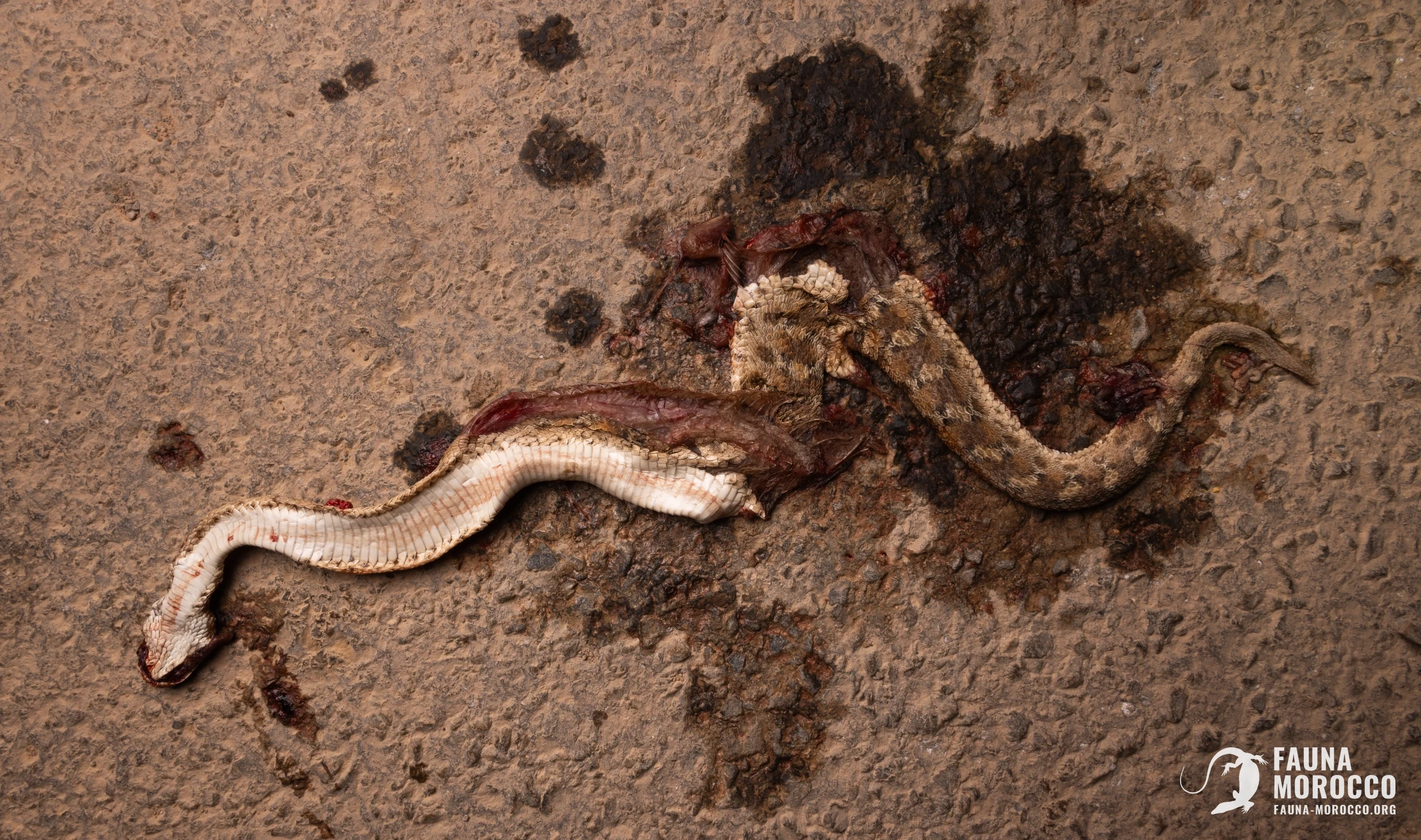
  • Animals are also killed on roads, and the expanding road network in south-western Morocco is expected to bring both habitat loss and road mortality8. Two of the Moroccan records in the literature were themselves road casualties2411, and we recorded another during our expeditions (pers. obs.).
  • Collection for the pet trade is more insidious: the species is taken occasionally in the north of its range, and where a dense population is found most of its animals are usually removed42. This does not yet seem to have reached Morocco, but it could, now that dense and easily accessible populations have been discovered (pers. comm.).
  • Deliberate killing cannot be ignored either, as killed individuals have already been recorded19.
  • Herping tourism can also harm known populations. We have seen several herping groups visit the same site on consecutive evenings, handling and stressing animals repeatedly with no scientific justification, amounting to gratuitous disturbance. Its effect is hard to gauge and remains unassessed (pers. obs.).

  1. Arnold, N., Robinson, M., & Carranza, S. (2009). A preliminary analysis of phylogenetic relationships and biogeography of the dangerously venomous Carpet Vipers, Echis (Squamata, Serpentes, Viperidae) based on mitochondrial DNA sequences. Amphibia-Reptilia, 30(2), 273-282. https://doi.org/10.1163/156853809788201090
  2. Aymerich, M. (2010). Vipère des pyramides ou Échide à ventre blanc (Echis leucogaster). In L. Mahraoui, M. Aymerich, E. Borof-Aymerich, M. Tarrier, J. Delacre, & L. Marseault (Founders), Groupe d'Étude et de Recherches des Écologistes Sahariens. www.geres-asso.org Retrieved 15 August 2026.
  3. Aymerich, M., Borof-Aymerich, E., & Geniez, P. (2004). Neufunde der seltenen Weißbäuchigen Sandrasselotter Echis leucogaster Roman, 1972 in Marokko (Serpentes: Viperidae). Herpetozoa, 16(3/4), 157-162.
  4. Barlow, A., Pook, C. E., Harrison, R. A., & Wüster, W. (2009). Coevolution of diet and prey-specific venom activity supports the role of selection in snake venom evolution. Proceedings of the Royal Society B: Biological Sciences, 276(1666), 2443-2449. https://doi.org/10.1098/rspb.2009.0048
  5. Bons, J., & Dakka, M. (1963). Capture au Maroc de la vipère des Pyramides Echis carinatus (Schneider, 1801). Comptes Rendus de la Société des Sciences Naturelles et Physiques du Maroc, 29(2), 55-57, via Aymerich et al. (2004)3.
  6. Bons, J., & Geniez, P. (1996). Amphibiens et reptiles du Maroc (Sahara Occidental compris). Atlas biogéographique. Asociación Herpetológica Española, via Aymerich et al. (2004)3 & Brito et al. (2011)8.
  7. Bouam, I., Khelfaoui, F., & Saoudi, M. (2022). Inferring probable distributional gaps and climate change impacts on the medically important viper Echis leucogaster in the western Sahara-Sahel: An ecological niche modeling approach. Biodiversitas, 23(10), 5175-5183. https://doi.org/10.13057/biodiv/d231025
  8. Brito, J. C., Fahd, S., Geniez, P., Martínez-Freiría, F., Pleguezuelos, J. M., & Trape, J.-F. (2011). Biogeography and conservation of viperids from North-West Africa: An application of ecological niche-based models and GIS. Journal of Arid Environments, 75(11), 1029-1037. https://doi.org/10.1016/j.jaridenv.2011.06.006
  9. Chippaux, J.-P. (1998). Snake-bites: Appraisal of the global situation. Bulletin of the World Health Organization, 76, 515-524, via Pook et al. (2009)29.
  10. Chippaux, J.-P. (2006). Les serpents de l'Afrique occidentale et centrale (3rd ed.). IRD Éditions, via Pook et al. (2009)29.
  11. Escoriza, D., Metallinou, M., Donaire-Barroso, D., Amat, F., & Carranza, S. (2009). Biogeography of the White-bellied carpet viper Echis leucogaster Roman, 1972 in Morocco, a study combining mitochondrial DNA data and ecological niche modeling. Butlletí de la Societat Catalana d'Herpetologia, 18, 55-68.
  12. Garcia-Cardenete, L., Pleguezuelos, J. M., Brito, J. C., Jimenez-Cazalla, F., Perez-Garcia, M. T., & Santos, X. (2014). Water cisterns as death traps for amphibians and reptiles in arid environments. Environmental Conservation, 41(4), 341-349, via Kane et al. (2019)21.
  13. Geniez, P. (2015). Serpents d'Europe, d'Afrique du Nord et du Moyen-Orient. Delachaux et Niestlé, via Koleska et al. (2018)22.
  14. Geniez, P., Ineich, I., Ben Kirane, C., & Bons, J. (1992). Les serpents venimeux du Maroc: Position systématique et état des connaissances sur leur distribution. Actes de l'Institut Agronomique et Vétérinaire, 12(1), 37-48, via Aymerich et al. (2004)3.
  15. Geniez, P., Mateo, J. A., Geniez, M., & Pether, J. (2004). The amphibians and reptiles of the Western Sahara (former Spanish Sahara) and adjacent regions. Edition Chimaira, via Brito et al. (2011)8.
  16. Gillissen, A., Theakston, R. D. G., Barth, J., May, B., Krieg, M., & Warrell, D. A. (1994). Neurotoxicity, haemostatic disturbances and haemolytic anaemia after a bite by a Tunisian saw-scaled or carpet viper (Echis 'pyramidum'-complex): Failure of antivenom treatment. Toxicon, 32(8), 937-944. https://doi.org/10.1016/0041-0101(94)90372-7
  17. Gómez, A., Sánchez, A., Durán, G., Cordero, D., Segura, Á., Vargas, M., Solano, D., Herrera, M., Chaves-Araya, S., Villalta, M., Sánchez, M., Arguedas, M., Díaz, C., Gutiérrez, J. M., & León, G. (2022). Intrageneric cross-reactivity of monospecific rabbit antisera against venoms of the medically most important Bitis spp. and Echis spp. African snakes. PLOS Neglected Tropical Diseases, 16(8), e0010643. https://doi.org/10.1371/journal.pntd.0010643
  18. Herrmann, H.-W., Herrmann, P. A., & Geniez, P. (2000). Zur Verbreitung von Echis leucogaster Roman, 1972 in Marokko. Salamandra, 36(3), 203-207, via Aymerich et al. (2004)3.
  19. Herrmann, P. A., & Herrmann, H.-W. (2003). New records and natural history notes for amphibians and reptiles from southern Morocco. Herpetological Review, 34, 76-77.
  20. Highland, D. K., & Myers, E. A. (2025). Mitochondrial phylogeny and molecular-based species delimitation illuminate cryptic diversity in saw-scaled vipers (Viperidae: Echis). Herpetological Journal, 35(4), 333-340. https://doi.org/10.33256/35.4.333340
  21. Kane, D., Goodwin, S., Verspui, G. J., Tump, A., & Martínez del Mármol Marín, G. (2019). Reptile diversity of southern Morocco: Range extensions and the role of the Djebel Ouarkziz as a biogeographical barrier. Herpetology Notes, 12, 787-793.
  22. Koleska, D., Karhánek, J., Martínez del Mármol Marín, G., & Sassoè-Pognetto, M. (2018). New records of Echis leucogaster in Morocco. Herpetology Notes, 11, 655-657.
  23. Mallow, D., Ludwig, D., & Nilson, G. (2003). True vipers: Natural history and toxinology of Old World vipers. Krieger Publishing Company, via Pook et al. (2009)29.
  24. Maran, J., & Geniez, P. (1999). Nouvelles observations sur l'herpétofaune du Maroc, 7. Redécouverte de l'Échide à ventre blanc, Echis leucogaster Roman, 1972 (Reptilia, Serpentes, Viperidae) au Maroc. Bulletin de la Société Herpétologique de France, 90, 63-64, via Aymerich et al. (2004)3.
  25. Martínez del Mármol Marín, G. (2023). Echis pyramidum (Geoffroy Saint-Hilaire, 1827). In G. Martínez, R. León, O. Jiménez-Robles, J. P. González De la Vega, V. Gabari, B. Rebollo, A. Sánchez-Tójar, J. R. Fernández-Cardenete, & J. Gállego (Eds.), Moroccoherps. Anfibios y reptiles de Marruecos y Sahara Occidental. Version 26/06/2023. https://www.moroccoherps.com/ficha/echis_pyramidum/ Retrieved 26 July 2026.
  26. Martínez del Mármol Marín, G., & Rebollo Fernández, B. (2012). An important new record of Echis leucogaster Roman, 1972 from Morocco. Herpetology Notes, 5, 229-231.
  27. Martínez del Marmol, G., Rebollo Fernandez, B., Clerc, S., Håkonsen, T., Acierno, S., & Sassoè-Pognetto, M. (2019). New cases of sympatry between vipers in southwestern Morocco. Herpetology Notes, 12, 337–342.
  28. Pleguezuelos, J. M., Brito, J. C., Fahd, S., Feriche, M., Mateo, J. A., Moreno-Rueda, G., Reques, R., & Santos, X. (2010). Setting conservation priorities for the Moroccan herpetofauna: The utility of regional red lists. Oryx, 44(4), 501-508. https://doi.org/10.1017/S0030605310000992
  29. Pook, C. E., Joger, U., Stümpel, N., & Wüster, W. (2009). When continents collide: Phylogeny, historical biogeography and systematics of the medically important viper genus Echis (Squamata: Serpentes: Viperidae). Molecular Phylogenetics and Evolution, 53(3), 792-807. https://doi.org/10.1016/j.ympev.2009.08.002
  30. Radovics, D., Szabolcs, M., Lengyel, S., & Mizsei, E. (2023). Hide or die when the winds bring wings: Predator avoidance by activity shift in a mountain snake. Frontiers in Zoology, 20, 17. https://doi.org/10.1186/s12983-023-00497-w
  31. Rogalski, A., Soerensen, C., Op den Brouw, B., Lister, C., Dashevsky, D., Arbuckle, K., Gloria, A., Zdenek, C. N., Casewell, N. R., Gutiérrez, J. M., Wüster, W., Ali, S. A., Masci, P., Rowley, P., Frank, N., & Fry, B. G. (2017). Differential procoagulant effects of saw-scaled viper (Serpentes: Viperidae: Echis) snake venoms on human plasma and the narrow taxonomic ranges of antivenom efficacies. Toxicology Letters, 280, 159-170. https://doi.org/10.1016/j.toxlet.2017.08.020
  32. Roman, B. (1975). La vipère Echis carinatus leucogaster Roman, 1972 de Haute-Volta et du Niger élevée au rang d'espèce: Echis leucogaster. Notes et Documents Voltaïques, 8(4), 20 pp, via Pook et al. (2009)29.
  33. Schleich, H. H., Kästle, W., & Kabisch, K. (1996). Amphibians and reptiles of North Africa. Koeltz Scientific Books, via Aymerich et al. (2004)3.
  34. Sindaco, R., Venchi, A., & Grieco, C. (2013). The reptiles of the Western Palearctic. Vol. 2: Annotated checklist and distribution atlas of the snakes of Europe, North Africa, Middle East and Central Asia. Edizioni Belvedere, via Koleska et al. (2018)22.
  35. Snider, A. T., & Bowler, J. K. (1992). Longevity of reptiles and amphibians in North American collections (2nd ed.). Society for the Study of Amphibians and Reptiles. Retrieved 27 July 2026, from https://genomics.senescence.info/species/, via AnAge (entry for Echis carinatus).
  36. Tsellarius, A. Yu., Tsellarius, E. Yu., & Men'shikov, Yu. G. (1997). Notes on the diet and foraging of Varanus griseus. Russian Journal of Herpetology, 4(2), 170–181. https://doi.org/10.30906/1026-2296-1997-4-2-170-181
  37. Trape, J.-F. (2023). Les vipères. Famille des Viperidae. In Guide des serpents d’Afrique occidentale, centrale et d’Afrique du Nord. Marseille: IRD Éditions. https://doi.org/10.4000/books.irdeditions.48051
  38. Trape, J.-F., & Mané, Y. (2006). Guide des serpents d'Afrique occidentale: Savane et désert. IRD Éditions.
  39. Warrell, D. A., & Arnett, C. (1976). The importance of bites by the saw-scaled or carpet viper (Echis carinatus): Epidemiological studies in Nigeria and a review of the world literature. Acta Tropica, 33, 307-341, via Gillissen et al. (1994)16.
  40. Warrell, D. A., Davidson, N. McD., Greenwood, B. M., Ormerod, L. D., Pope, H. M., Watkins, B. J., & Prentice, R. M. (1977). Poisoning by bites of the saw-scaled or carpet viper (Echis carinatus) in Nigeria. Quarterly Journal of Medicine, 181, 33-63, via Gillissen et al. (1994)16.
  41. WHO Regional Office for Africa. (2010). Guidelines for the prevention and clinical management of snakebite in Africa. World Health Organization, via Martínez del Mármol Marín & Rebollo Fernández (2012)26.
  42. Wilms, T., Wagner, P., Joger, U., Geniez, P., Mateo, J. A., El Mouden, E. H., Slimani, T., & Nouira, M. S. (2013). Echis leucogaster. The IUCN Red List of Threatened Species 2013: e.T197483A2488871. https://dx.doi.org/10.2305/IUCN.UK.2013-1.RLTS.T197483A2488871.en Accessed on 26 July 2026.

How to cite

Ruffieux, C., & Vuillemin, R. (2026). White-bellied Carpet Viper (Echis leucogaster). In: Castella, C., Iallaten, H., Ruffieux, C., & Vuillemin, R. (Eds.), Fauna Morocco. The Free Encyclopedia: Reptiles & Amphibians of Morocco. Available from https://fauna-morocco.org/encyclopedia/serpentes/viperidae/echis-leucogaster.html (accessed 8 September 2026).

Published

8 September 2026

Last updated

21 September 2026

Authors

Colin Ruffieux
Rayane Vuillemin

Reviewers

Clément Castella
Haytam Iallaten
Mohamed Taha Aissaoui

Photography

Rayane Vuillemin

Methodology

Each account is a scientific synthesis: we compile the literature, read each paper in full, verify facts against their original sources when possible, and flag uncertainties for expert review. It is written first in English, reviewed by the team, then translated into French and Arabic. Every claim is referenced, and accounts are updated as knowledge advances. If you spot a mistake or an omission, please get in touch so we can fix it.