Psammophiids of Morocco
Fast, alert and harmless
Psammophiids, often called sand snakes though that name belongs to Psammophis alone, are the ones you see moving in the open, in full sun. Morocco has four, from the Montpellier Snake, longest in the country at over 2 metres, to the pencil thin Schokari Sand Racer. Fast and alert, they lift the front of the body straight up to read the ground ahead, a behaviour known as periscoping.
species
to humans
These snakes are harmless, even though they do have a weak venom: they are opisthoglyphous, their fangs set far back in the jaw and their venom made for lizards, not for people. Like most Moroccan snakes they are killed on sight all the same: the Montpellier Snake first, abundant across the country and taken for a cobra by an untrained eye, then the Moila False Cobra, which spreads a hood good enough to pass for the Egyptian Cobra.
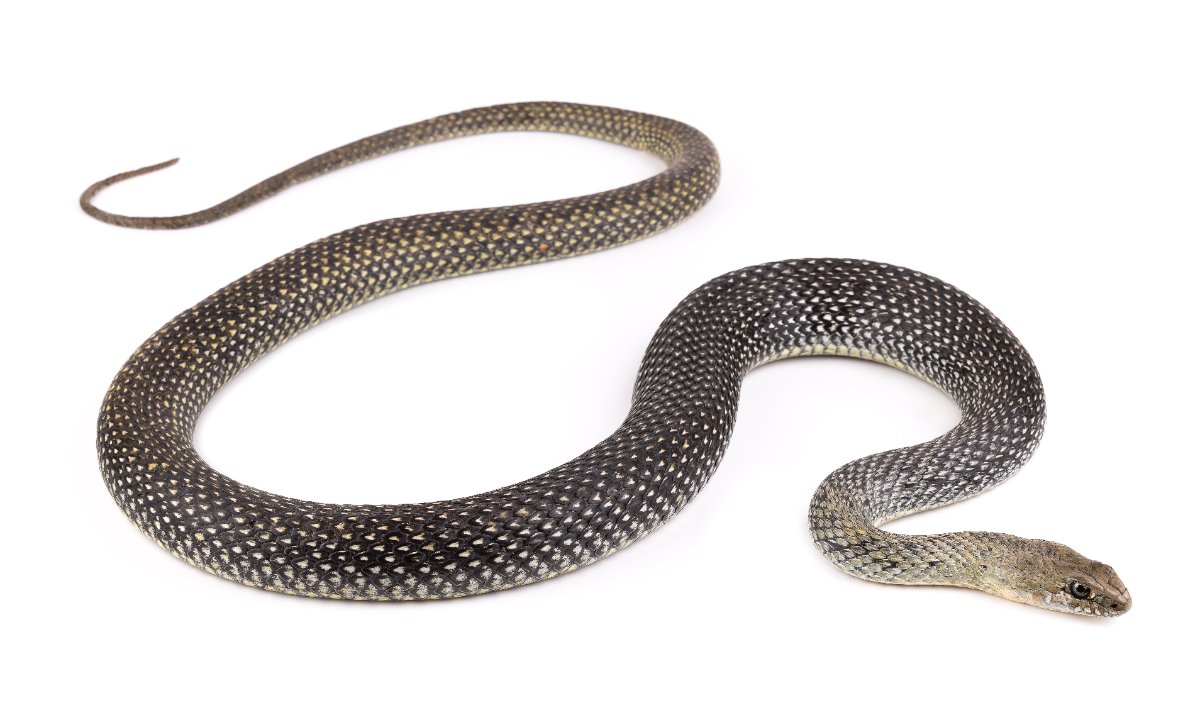
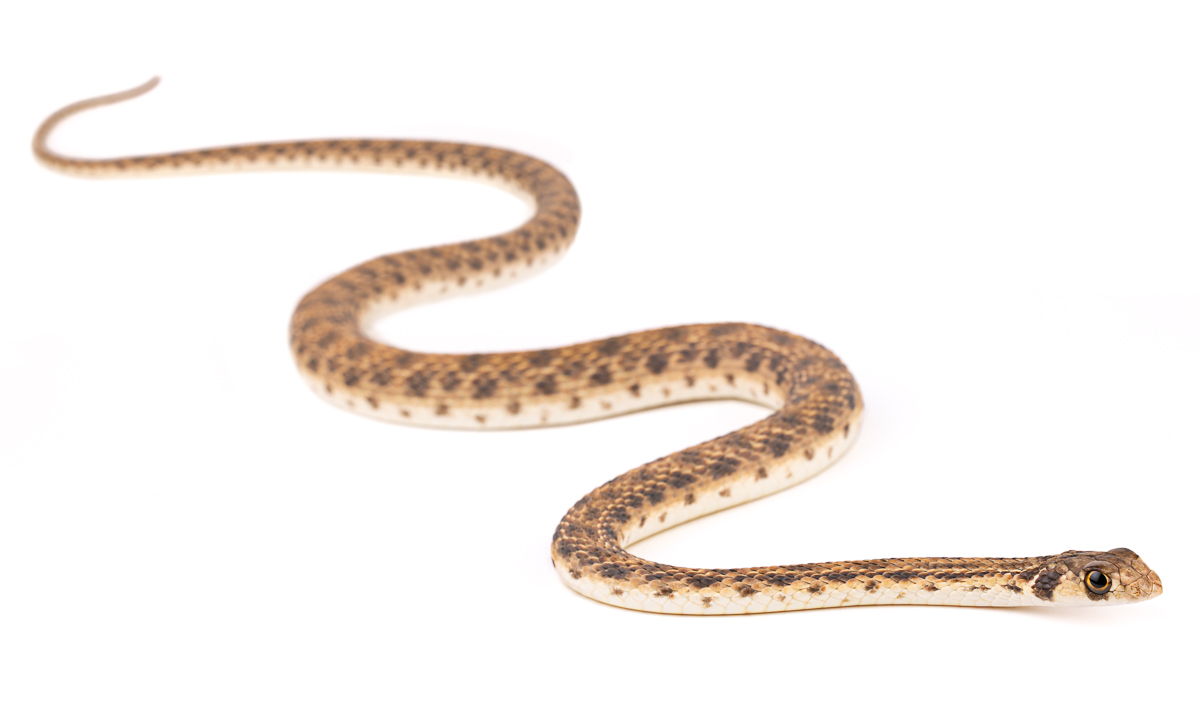
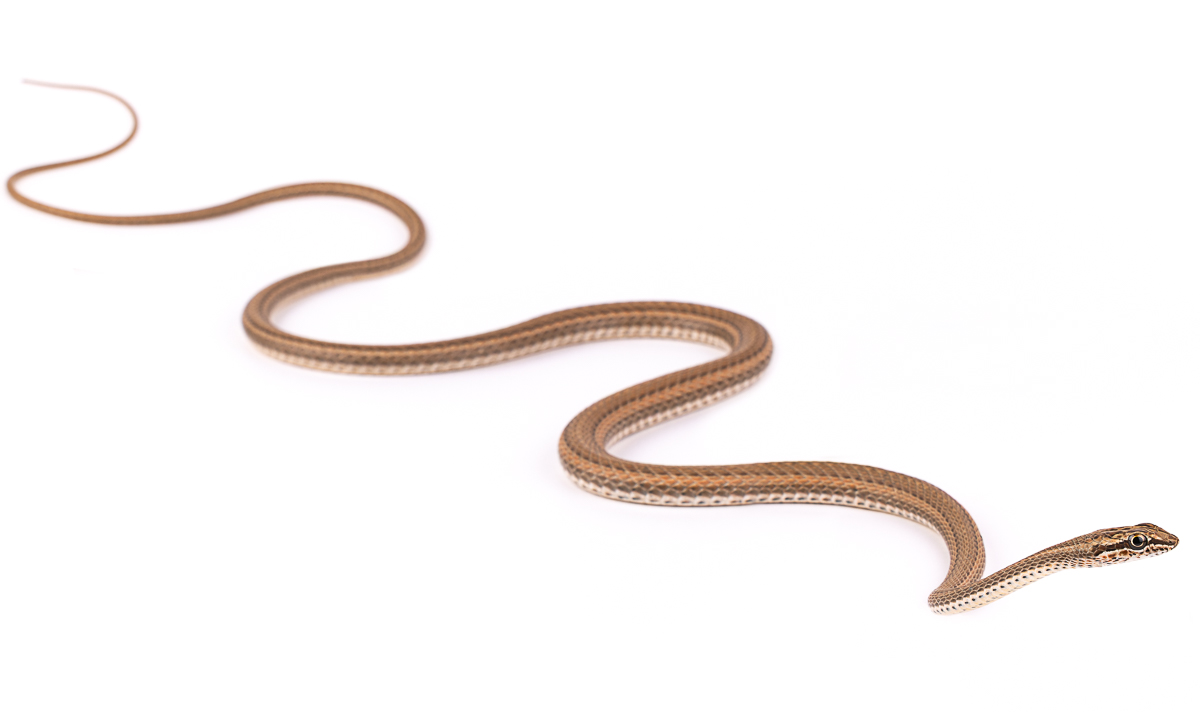 Malpolon monspessulanusMontpellier Snake
How to identify a sand snake in Morocco
Morocco's four Psammophiids are harmless. Keep your distance, this guide is for identification, not to encourage the handling of harmless species.
1 Is it really a sand snake?
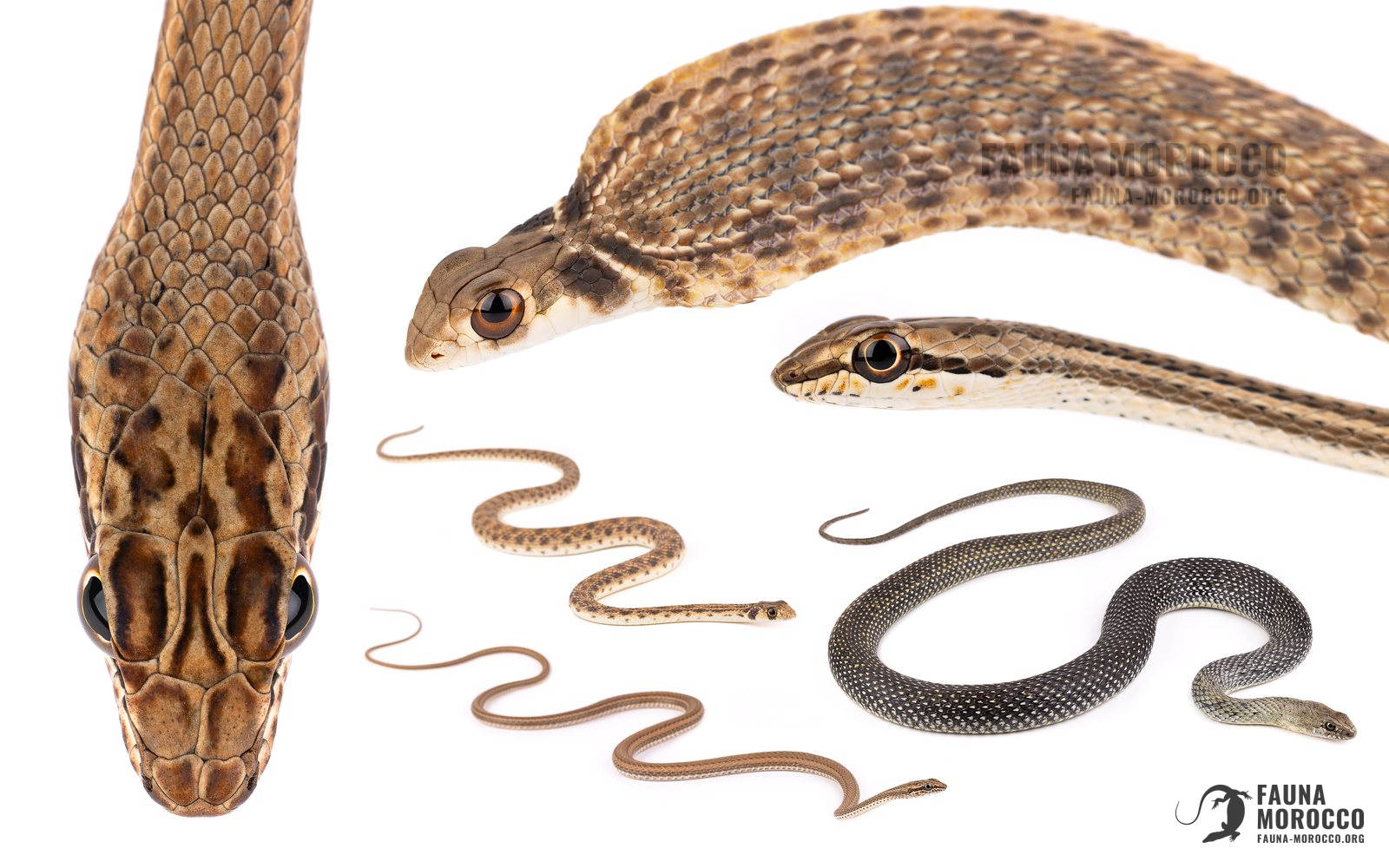 COLLAGE: Three quick checks
Three quick checks
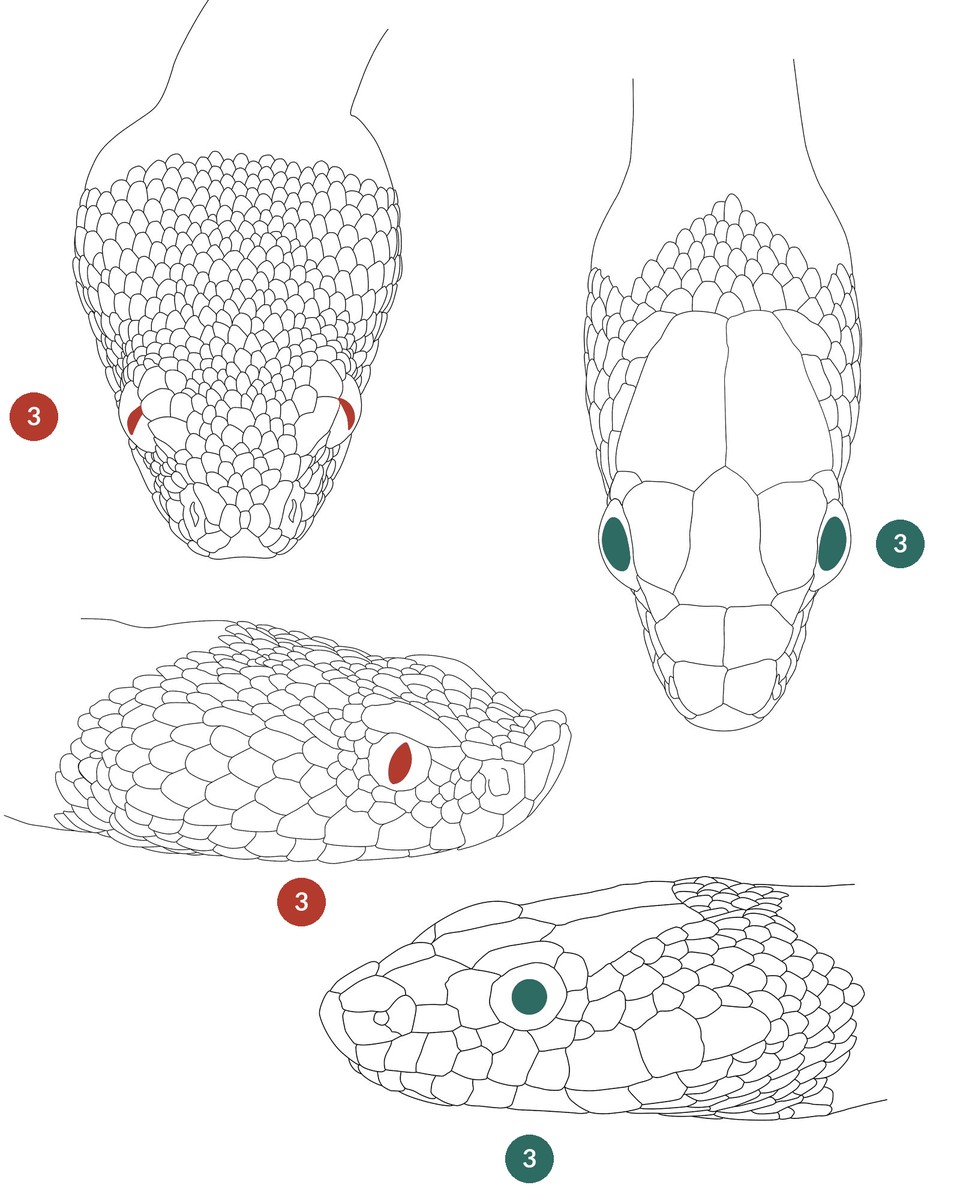
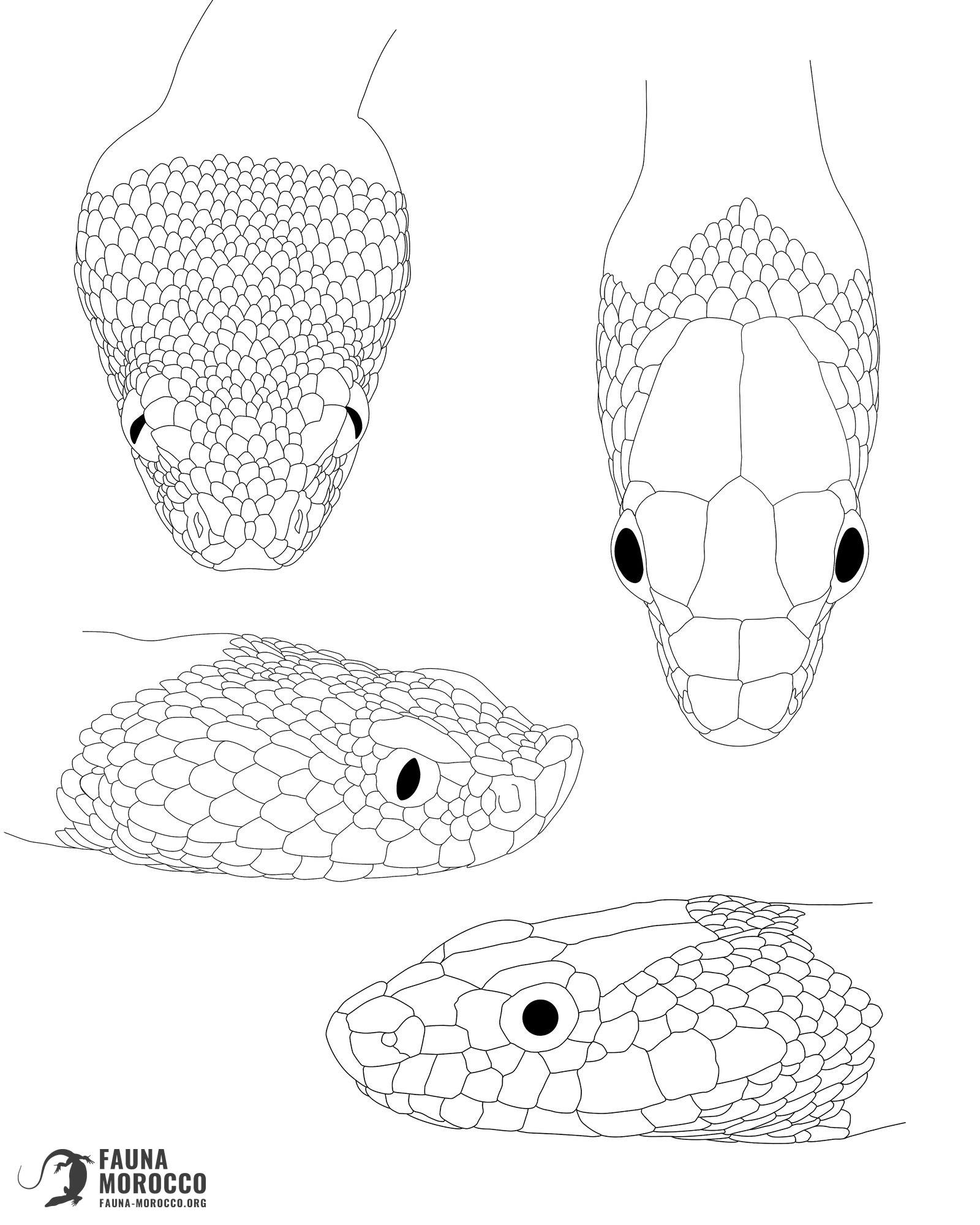
- Round pupil ringed with yellow to orange
- Pointed snout, narrow and alert head
- Slender and fast, active in full daylight
2 Which group?
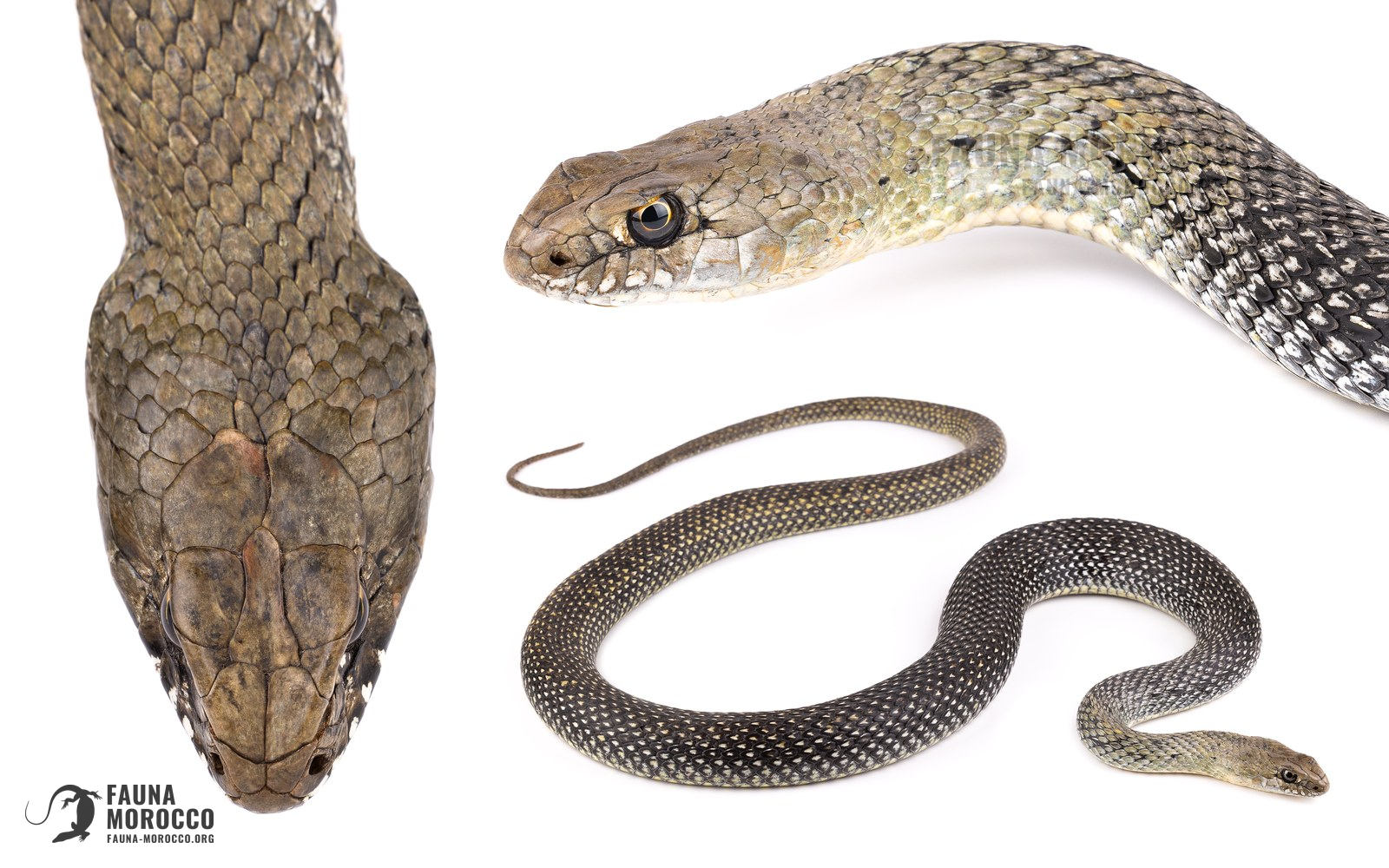
Montpellier Snakes
Malpolon · 2 species
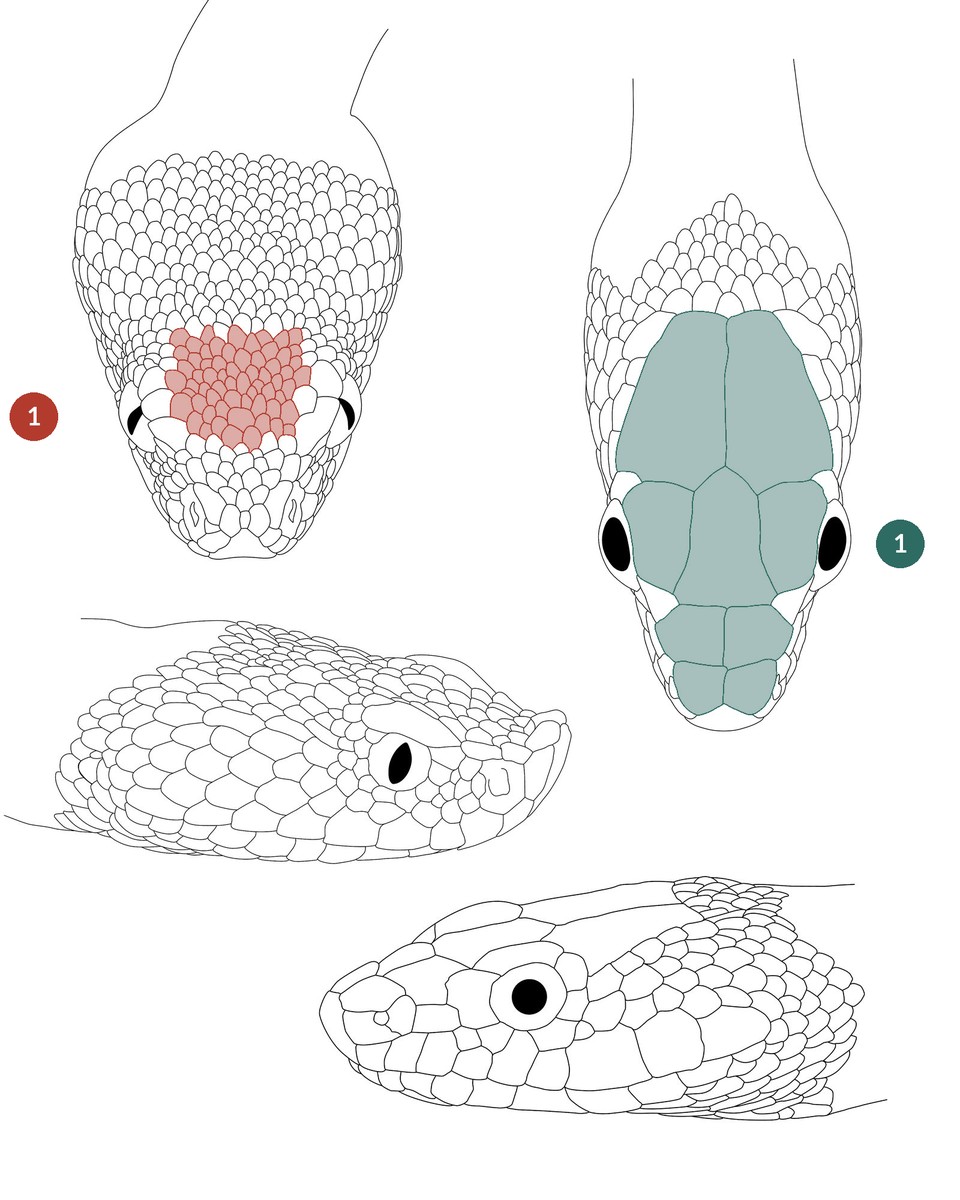
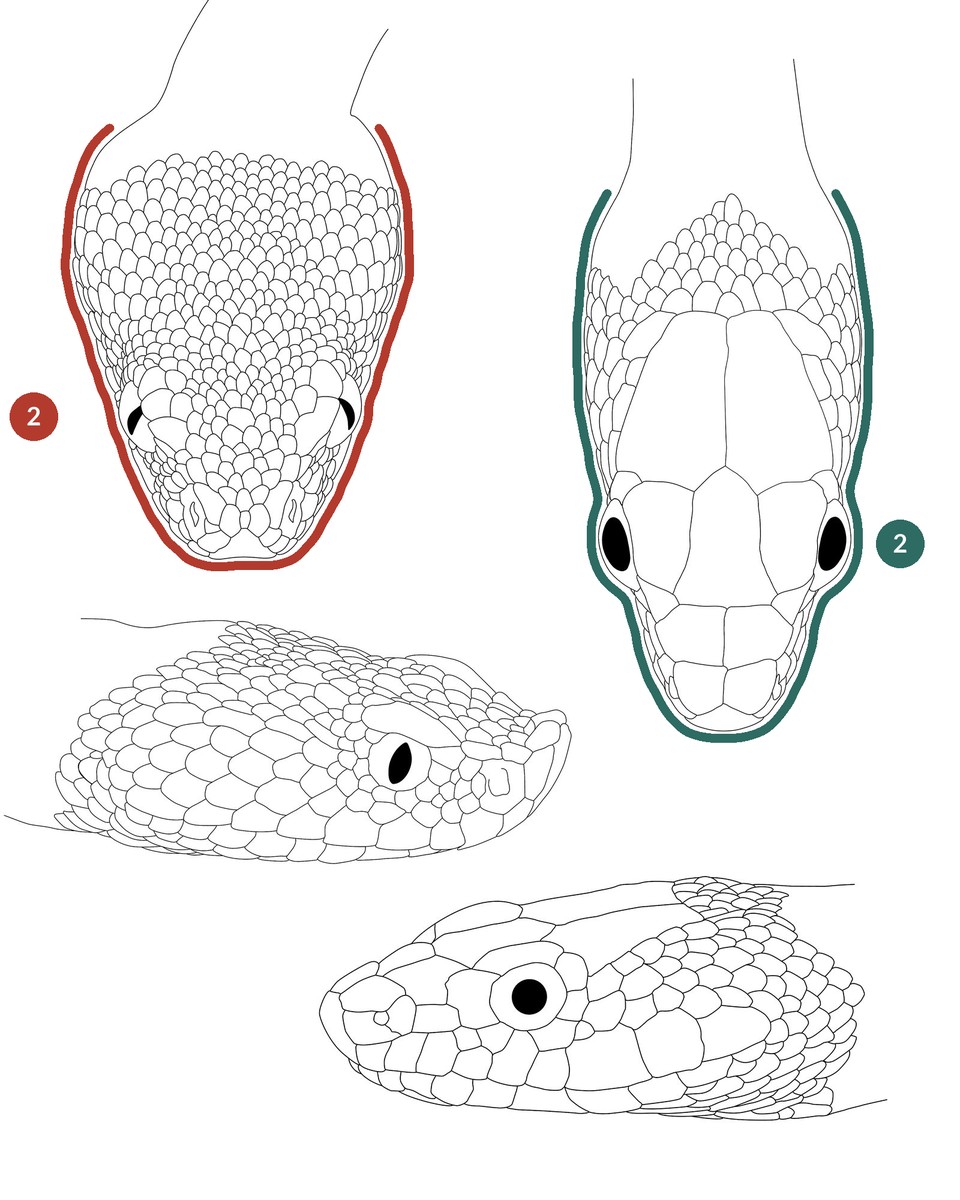
- Ridged scale above the eye
- Large, up to and past 2 m
- Mostly dark, often white-speckled on the head or flanks
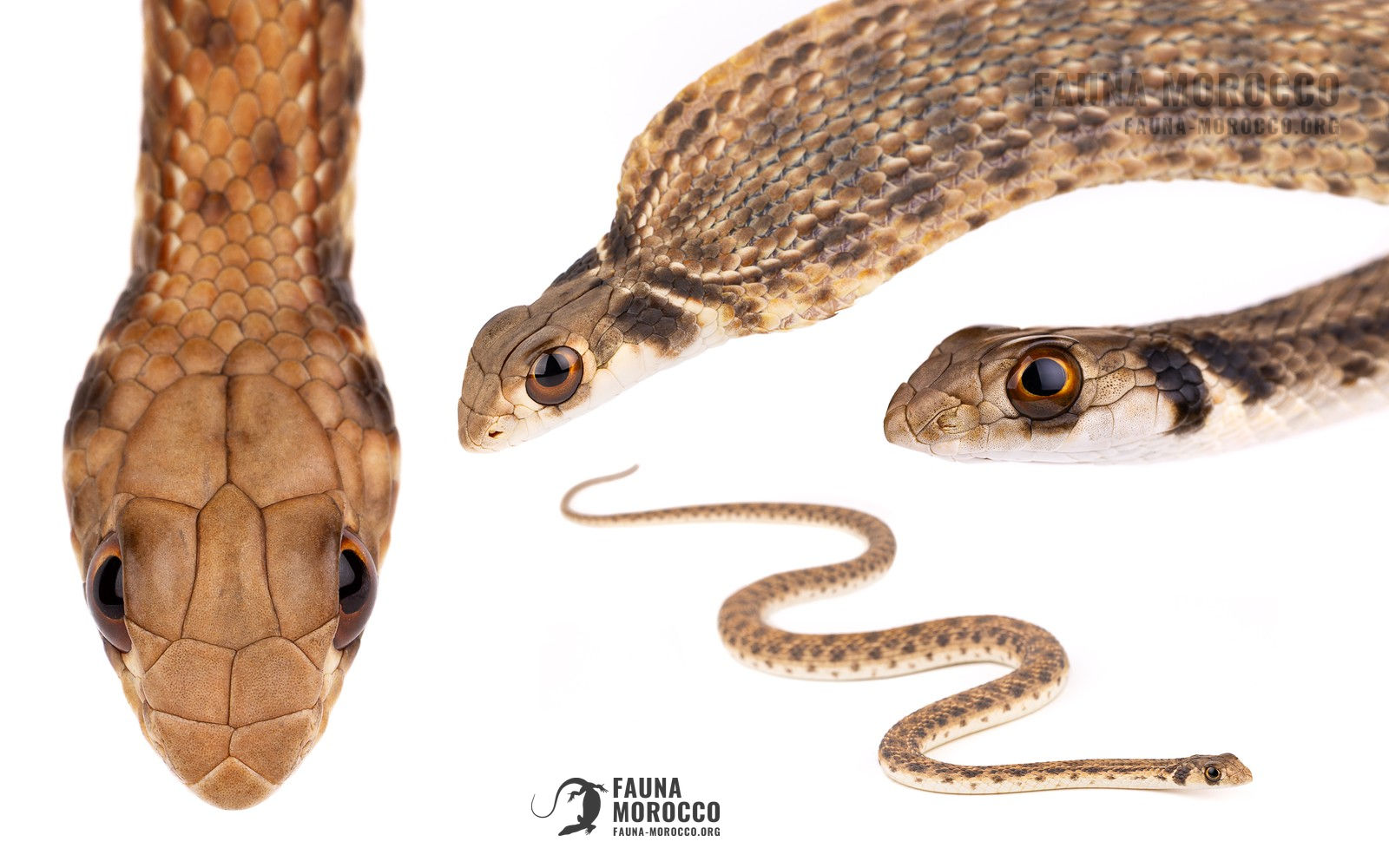
False Cobra
Rhagerhis · 1 species
- Spreads a small hood when threatened
- Very large eyes, pointed snout, short stocky body
- Sandy, with a dark collar and blotches on the back
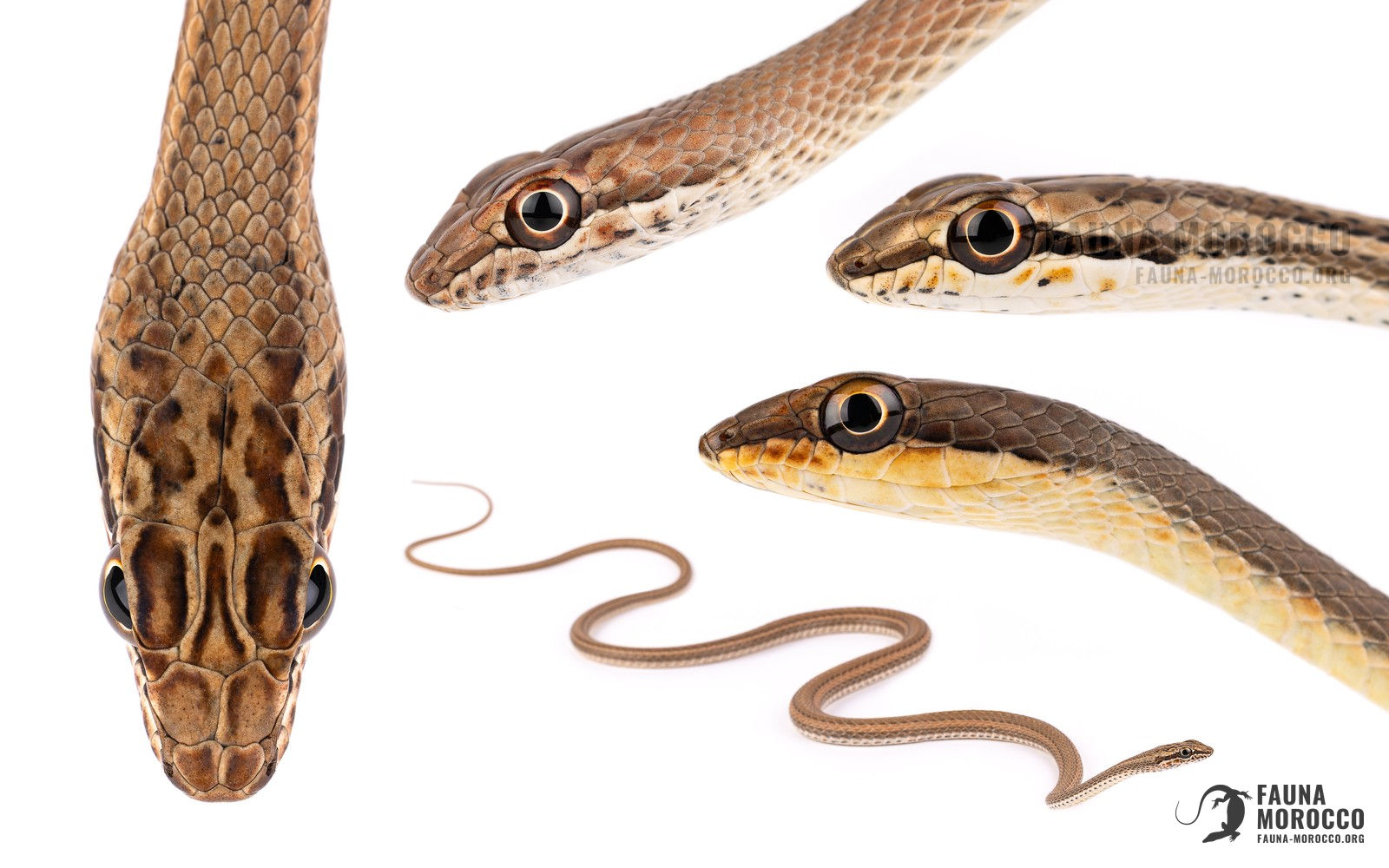
Sand Racer
Psammophis · 1 species
- Very long, pencil-thin body, whip-like tail
- Striped or plain
- Climbs bushes, active in full sun
Venomous or harmless?
Psammophiids of Morocco
Are sand snakes venomous? Are they dangerous?
Morocco's four sand snakes carry a mild venom delivered by grooved fangs set far back in the mouth. It works on lizards and small mammals. None of them is considered dangerous to people, and none is aggressive: their first move is always to flee as fast as possible.
What is the largest snake in Morocco?
The Montpellier Snake (Malpolon monspessulanus), which sometimes passes 2 metres. It is a powerful, day-active hunter with impressive eyesight and a ridge above the eye that gives it a permanent frown. In the east of the country it is replaced by its close relative the Eastern Montpellier Snake (Malpolon insignitus).
What happens if a Montpellier Snake bites me?
Very little, in almost every case. The fangs sit at the back of the mouth, so venom only enters the wound if the snake chews on a finger for a long time. The few documented envenomations caused local swelling, numbness and, in one case, temporary difficulty swallowing, all of which resolved on their own.
Wash the bite, keep an eye on it and see a doctor if symptoms spread. If you did not identify the snake clearly, follow the bite guide on our snakes page instead.
How do I recognise a sand snake?
Three clues: a round pupil ringed with pale yellow to orange, a pointed snout, and large symmetrical plates on the top of the head. The body is slender and the animal is usually seen moving fast in the open, in broad daylight. Our identification guide compares them with the colubrids they are most often confused with.
I saw a very fast, very thin snake. What was it?
Most likely the Schokari Sand Racer (Psammophis schokari), the sprinter of Moroccan snakes. It is pencil thin, striped or plain depending on the region, active in full sun, and it climbs bushes to hunt lizards. It is harmless, and it will be gone before you can even take a photo.
Why do sand snakes rub their nose on their own body?
Sand snakes have a gland on the snout and smear its secretion over their skin, which is thought to limit water loss in dry heat. Few snakes in the world do this, and it is one of the family's characteristics.
Where and when can I see sand snakes in Morocco?
They are the snakes you are most likely to meet, because they hunt by day. Look in open steppe, stony plains, dunes and the edges of oases, in spring and early autumn. In high summer they shift to the first hours of the morning. Watch from a distance and leave them be.
How do you say "sand snake" in Arabic and Moroccan Darija?
These species fall under حنش (hanch) in Standard Arabic and l'hanch in Darija, the general word for a snake that is not a viper. Psammophis schokari is حنش الرمال, literally the snake of the sands.
Haven’t found an answer to your question?
Ask usThe 4 psammophiids of Morocco
Montpellier Snake
Malpolon monspessulanus
Page coming soonMoila False Cobra
Rhagerhis moilensis
Page coming soonSchokari Sand Racer
Psammophis schokari
Page coming soon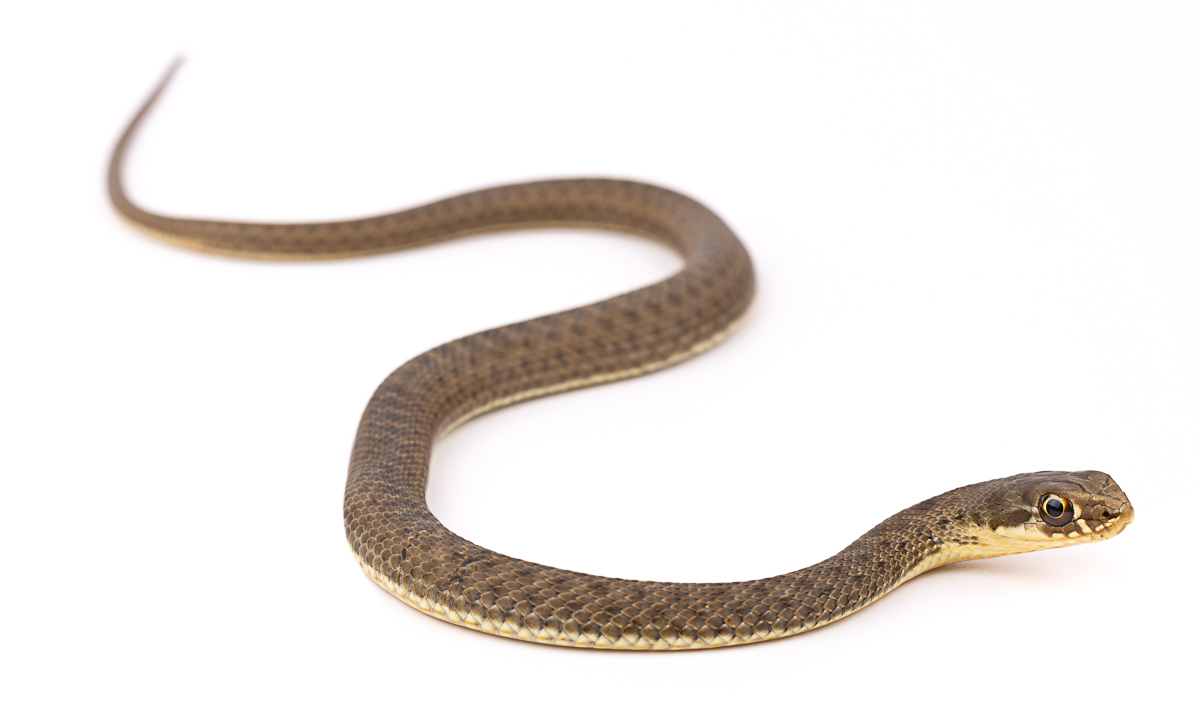
Eastern Montpellier Snake
Malpolon insignitus
Page coming soonNo species matches that. Try the Latin name, or clear the search.
The full list of Morocco's 4 psammophiids. All are opisthoglyphous and harmless to people.
About this checklist
Our list follows the most recent reference checklist of Moroccan herpetofauna (Bouazza et al., 2021). We revise and expand it as new studies appear. For a small number of species, we have drawn our own conclusions in light of the latest data (endemism status, species boundaries).