Viperine Water Snake

Conservation status:LCLeast Concern
Population trend:Decreasing
Viperine Water Snake (Natrix maura), Morocco

Wherever water lingers in Morocco, from the streams of the Rif to the last pools of a oued on the edge of the Sahara, the Viperine Water Snake is rarely far away. It is entirely harmless, yet it dresses and behaves like a viper: cornered, it flattens its head, coils and hisses. Like most snakes, it is often killed on sight, and its resemblance to a viper only makes matters worse.

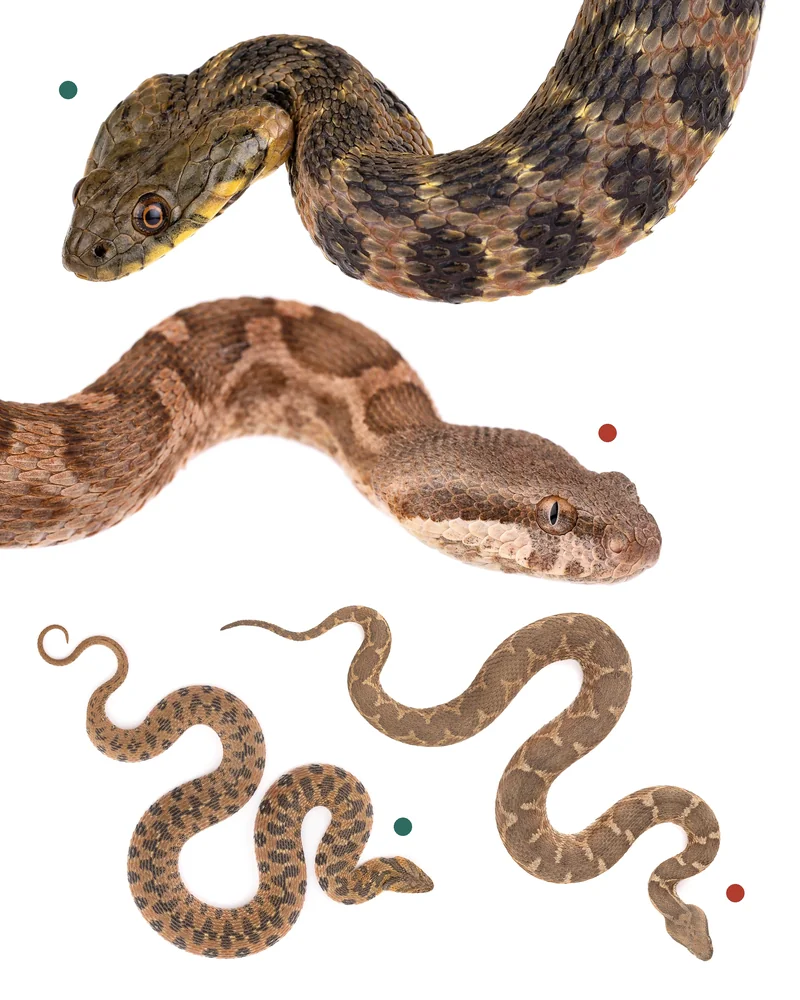
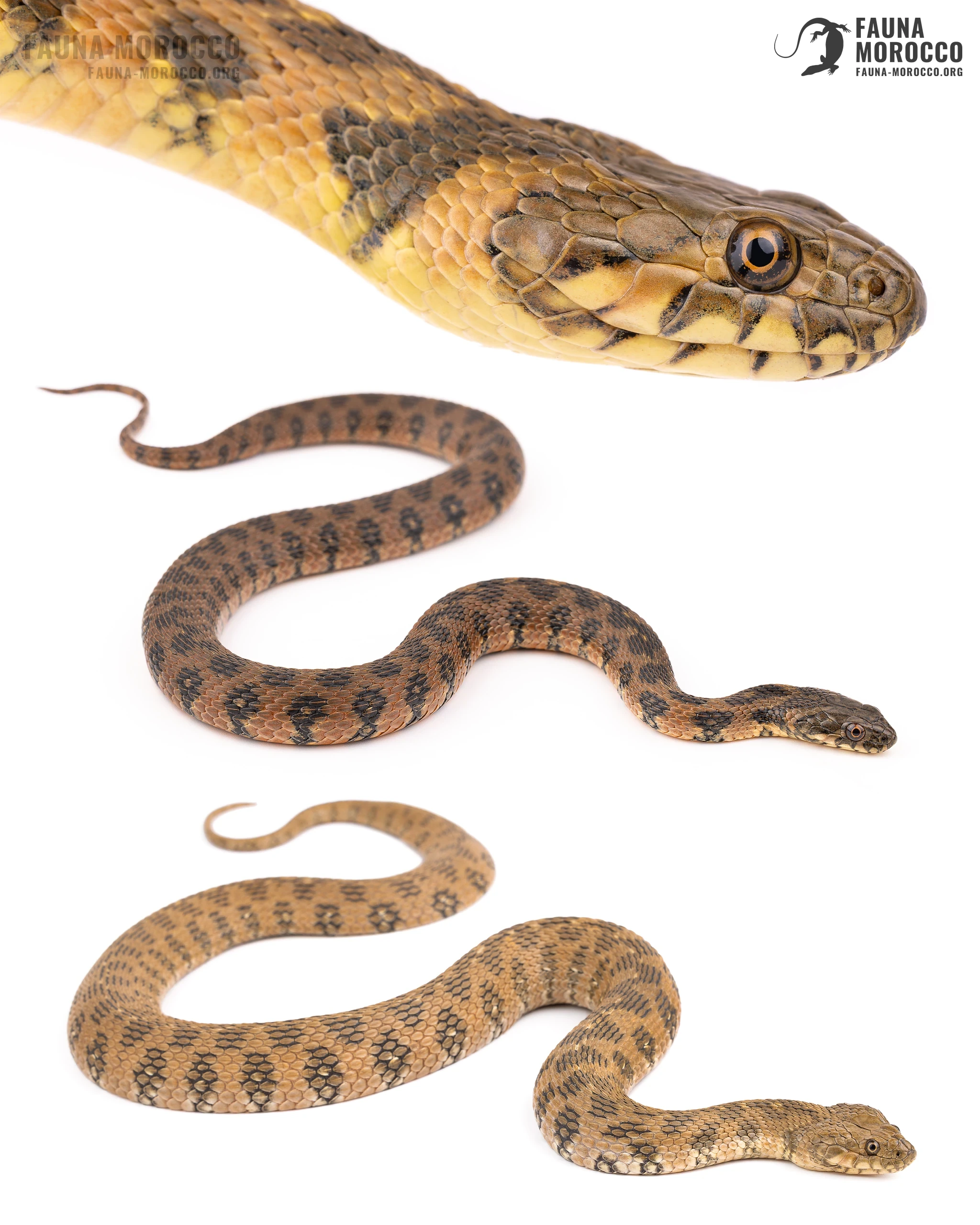
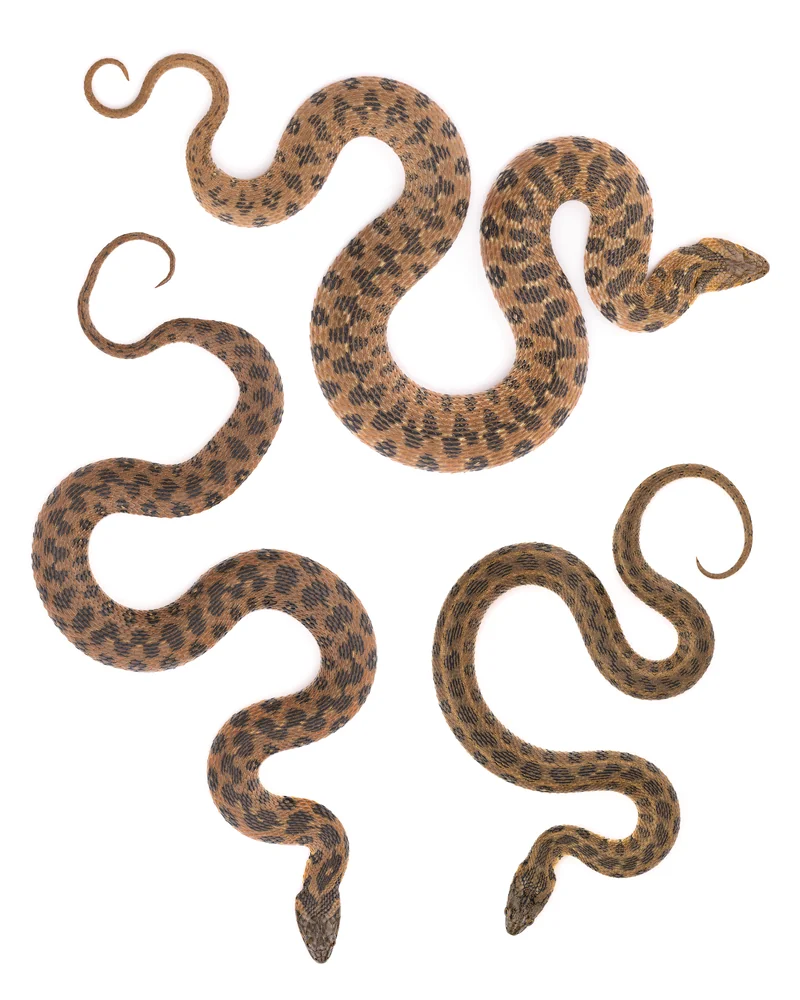
The Viperine Water Snake (Natrix maura) is a medium-sized, thick-bodied water snake with a short tail and a head that is distinctly wider than the neck. Its total length usually stays under 1 m53. Body size follows a latitudinal gradient, with African animals growing larger than Iberian ones4114. Females are larger than males. In a sample of Moroccan animals, maximum total lengths were about 90 cm in females against 54 cm in males5453.

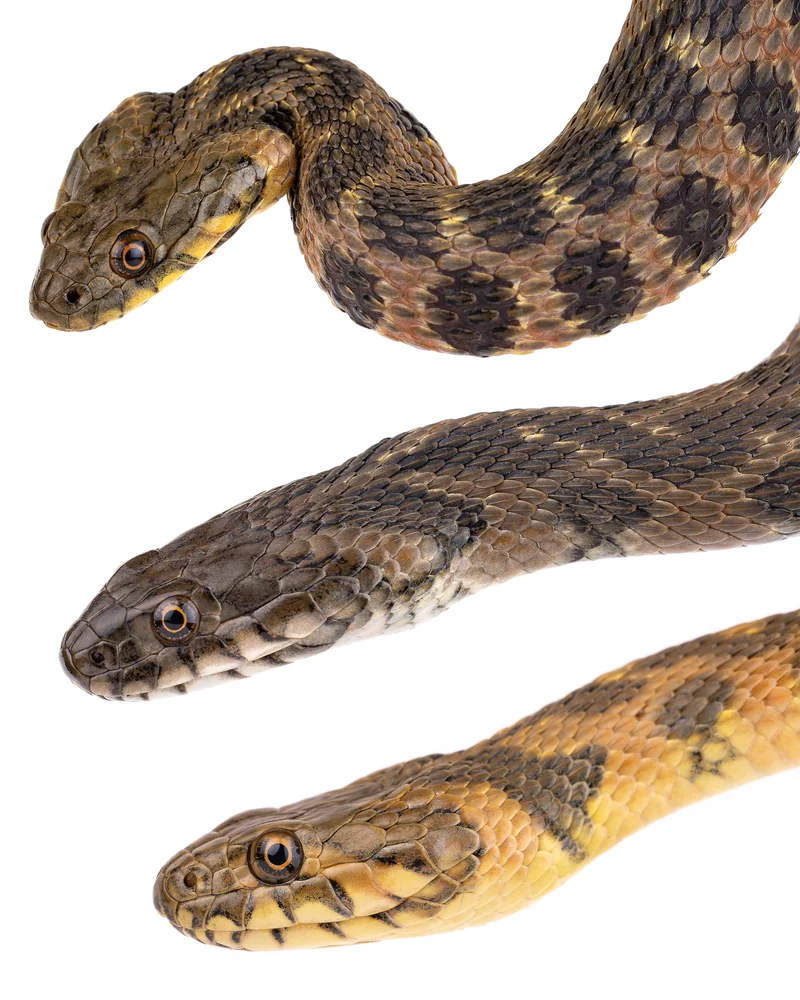
The pupil is round and the inner margin of the iris is bordered by a pale ring53. The dentition is aglyphous, with no venom fangs29.

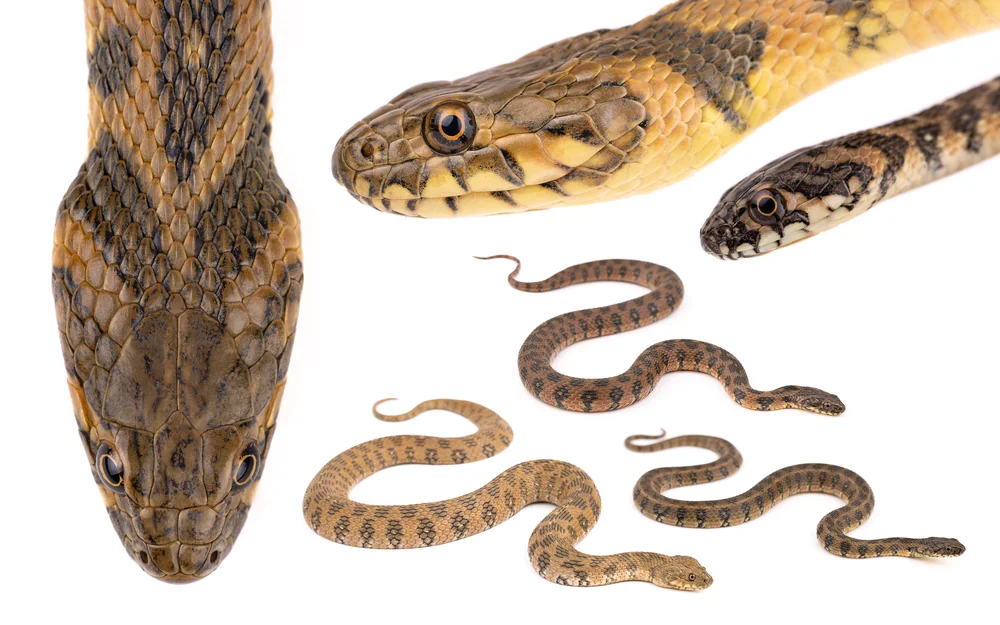
Dorsal scales are heavily keeled except for the rows in contact with the ventrals53. The background colour is olive, brown or grey, sometimes reddish. The dorsal pattern is made of alternating dark round or square blotches along the vertebral line, which sometimes fuse into a zigzag. Lateral spots alternate with the dorsal ones and often form ocelli with a whitish centre. Labial scales are pale with darker outlines. The belly is grey to yellowish with black spots53.

A second, rarer striped morph, known as bilineata, adds two pale dorsolateral bands to the dorsal pattern, in some individuals alongside the zigzag5451.

Albino and melanistic animals have both been found in the wild55.

The Viperine Water Snake (Natrix maura) is currently treated as monotypic, although a split has been proposed and remains unresolved. Three, and probably four, major genetic lineages exist, corresponding to Morocco, Tunisia (with Sardinia) and Europe, with a possible fourth in southern Spain20. Further sampling in north-western Africa placed animals from the mouth of the Moulouya (eastern Morocco) with central and western Algeria rather than with the rest of Morocco4, so the country holds two lineages rather than one.

All these lineages have evolved separately for about 5 million years, and the African lineages occupy a basal position, which suggests an African origin for the species. Such divergence could justify treating these lineages as subspecies, or even species, but this would require further analyses and sampling20. The Viperine Water Snake is the sister species of all other Natrix, from which it diverged in the early Miocene, about 21.5 million years ago57.
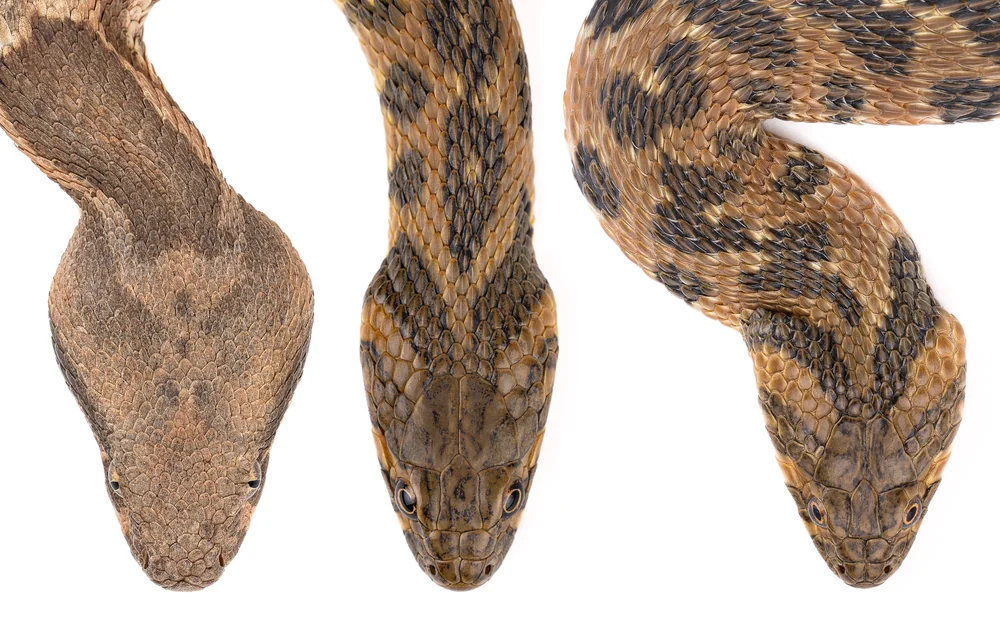
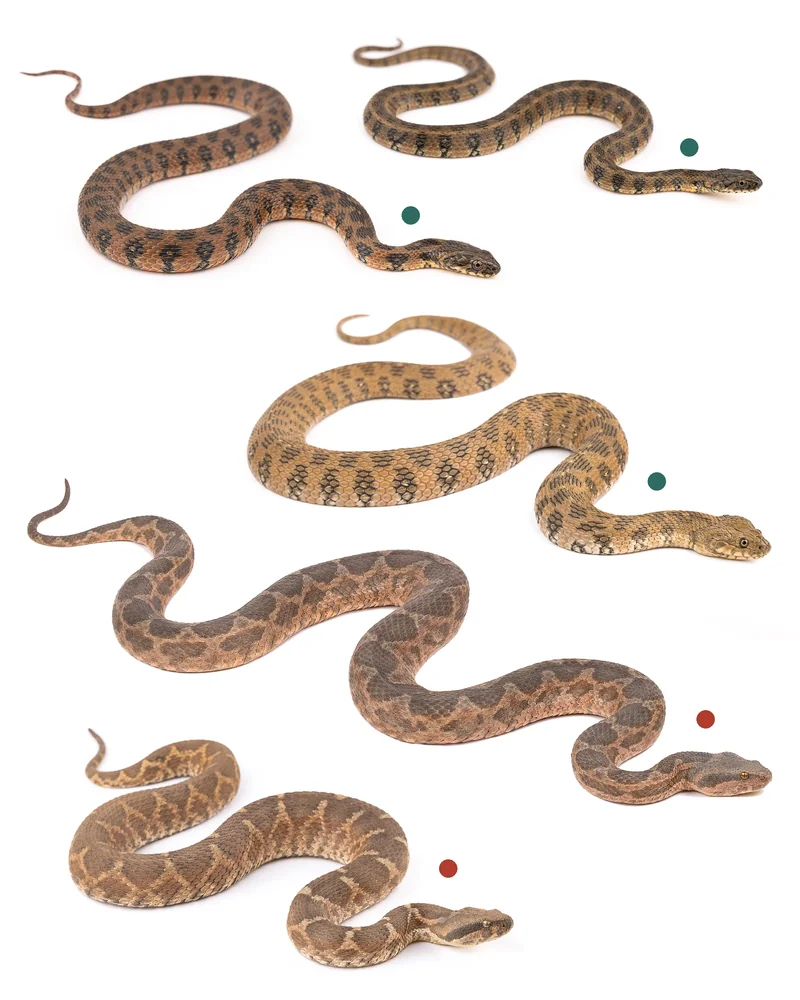
The Viperine Water Snake (Natrix maura) can be confused with true vipers, such as the North African Mountain Viper (Vipera monticola) and the Moorish Viper (Daboia mauritanica). It is easily distinguished from them by its large, upward-facing eyes with round pupils and its large head scales, whereas vipers have smaller eyes with vertical pupils and small head scales29. Visit our Venomous or Harmless guide.

In the humid mountains of the north, it can also be confused with the Red-eyed Grass Snake (Natrix astreptophora), which lives in the same area. The Red-eyed Grass Snake has red or orange eyes, set on the sides of the head rather than on top, and a more uniform, greyish background colour19.

Hybrids between the two species are extremely rare. Three possible hybrids are known from Andalusia, one of them confirmed genetically198, and none from Morocco.

The Viperine Water Snake (Natrix maura) is confined to the western Mediterranean. In Europe it occupies Spain, Portugal, France, south-western Switzerland and north-western Italy. In Africa it occurs in Morocco, Algeria, Tunisia and coastal Libya53.

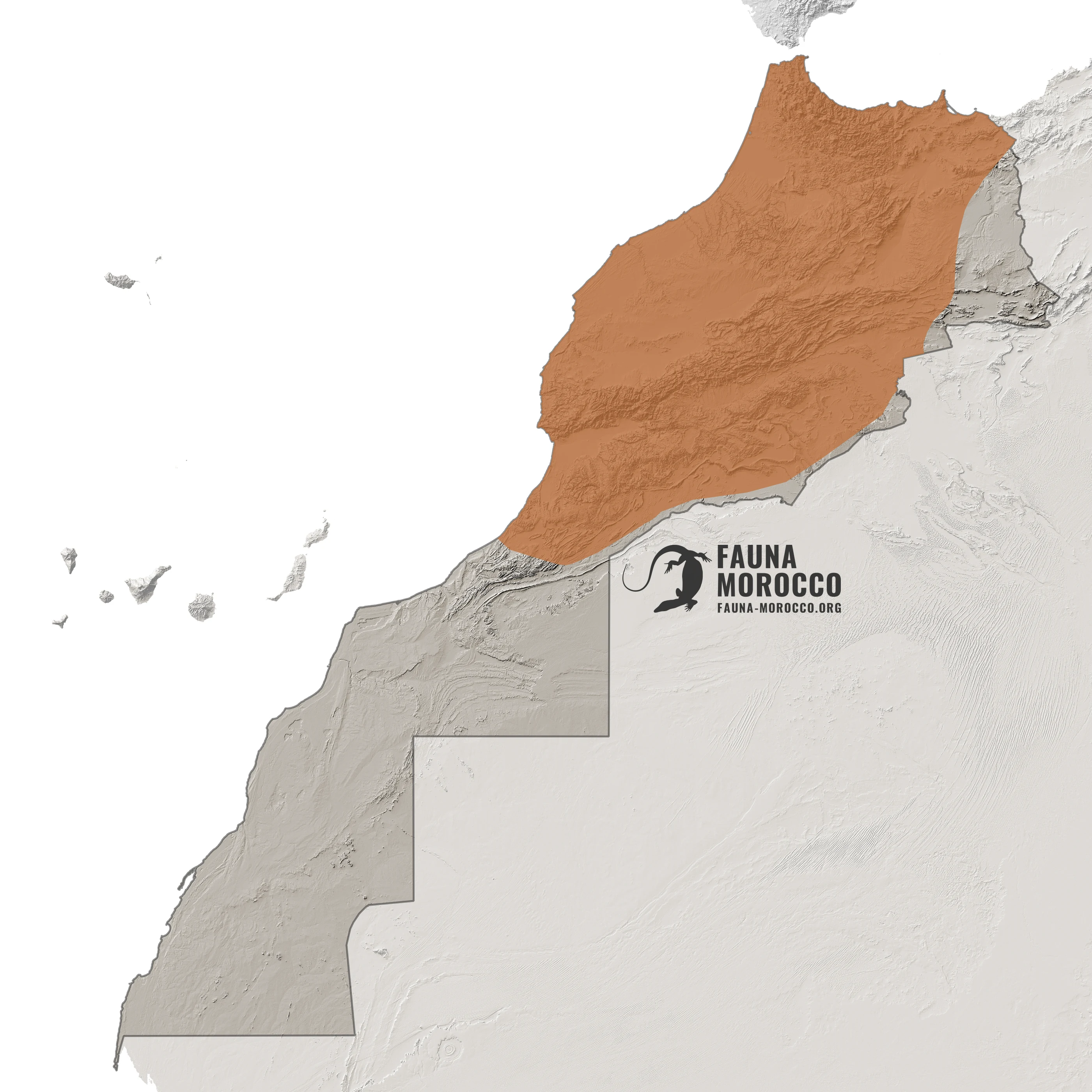
In Morocco, the species is found across most of the country but is largely absent from desert areas31. Morocco holds 18.9% of the global range39, and the species is one of the most abundant snakes in the country5. In the north of the country, it is widely distributed throughout the Rif15. In the east, the Moulouya valley is an extensive arid zone, too dry for the species except near the Mediterranean coast4. It ranges from sea level to 2,600 m in the High Atlas5, and up to about 2,700 m on Jbel Sirwa32.

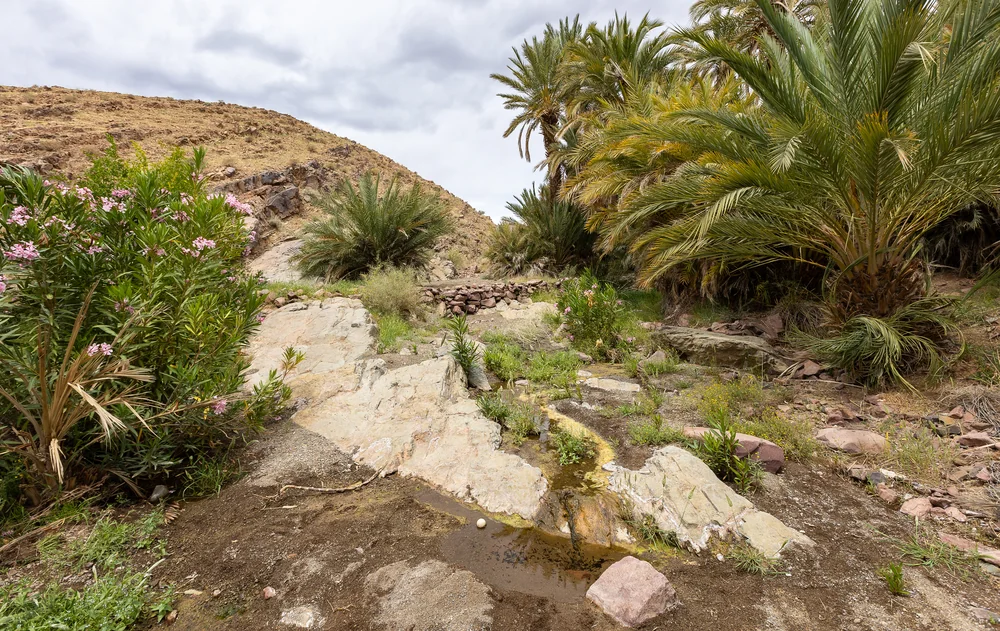
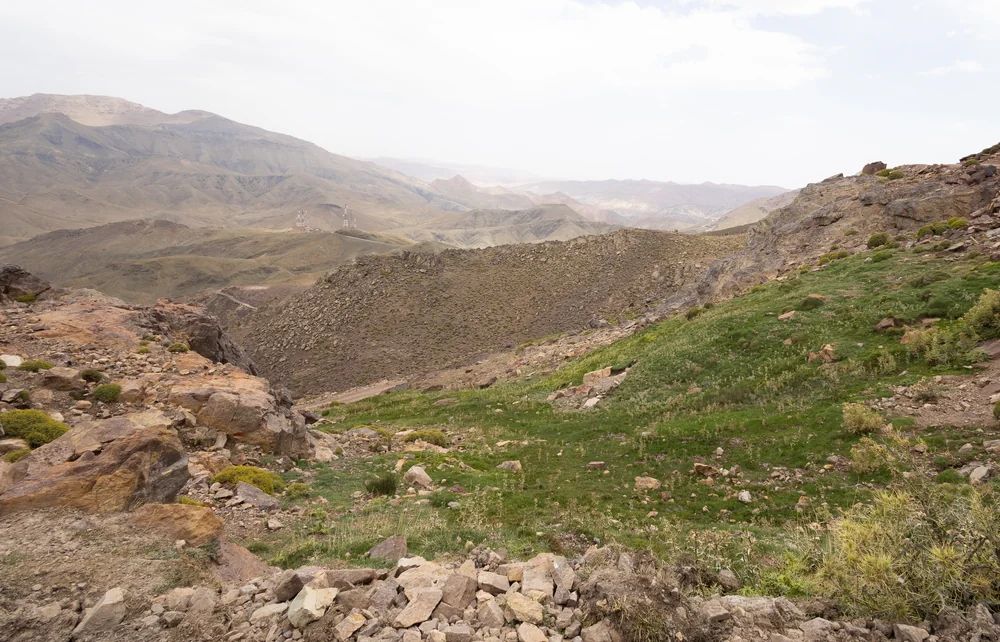
The southern limit of the range is set by the aridity of the Sahara, but populations persist up to the edge of the desert wherever water is permanent. Viperine Water Snakes can thus be found along oueds such as the Oued Ziz and the Oued Drâa3154, around small water bodies556, and at isolated saline lakes. South of the Anti-Atlas the distribution becomes discontinuous and follows small oueds and oases40. The southernmost known population of the whole range is at Assa, in Morocco954. One Algerian record, from Sebkhet El Melah, 370 km into the Sahara, is the most extreme case of a population persisting at an isolated humid site in the desert6.

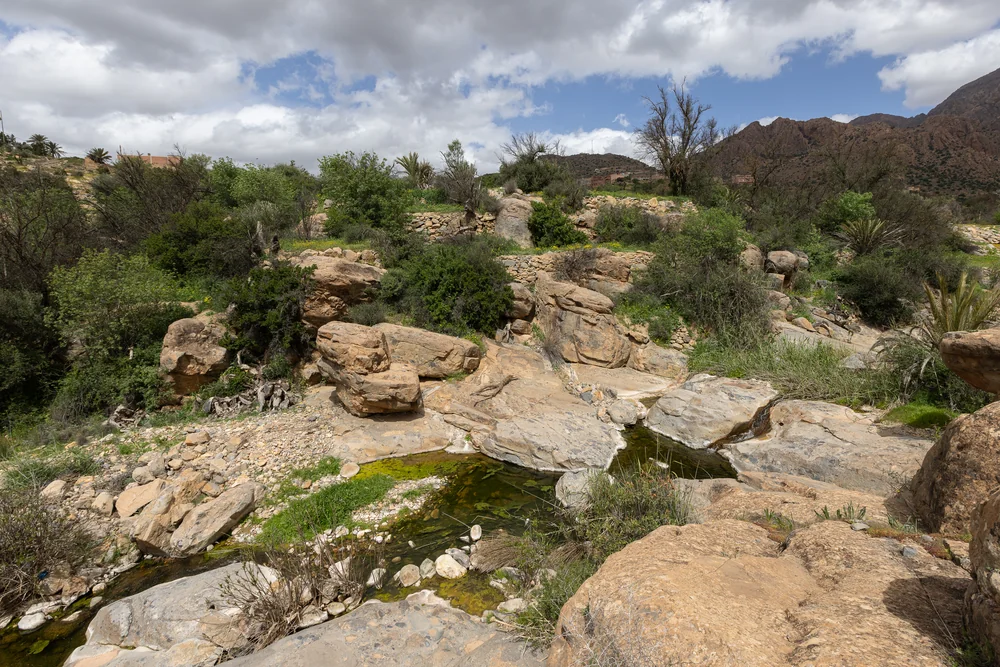
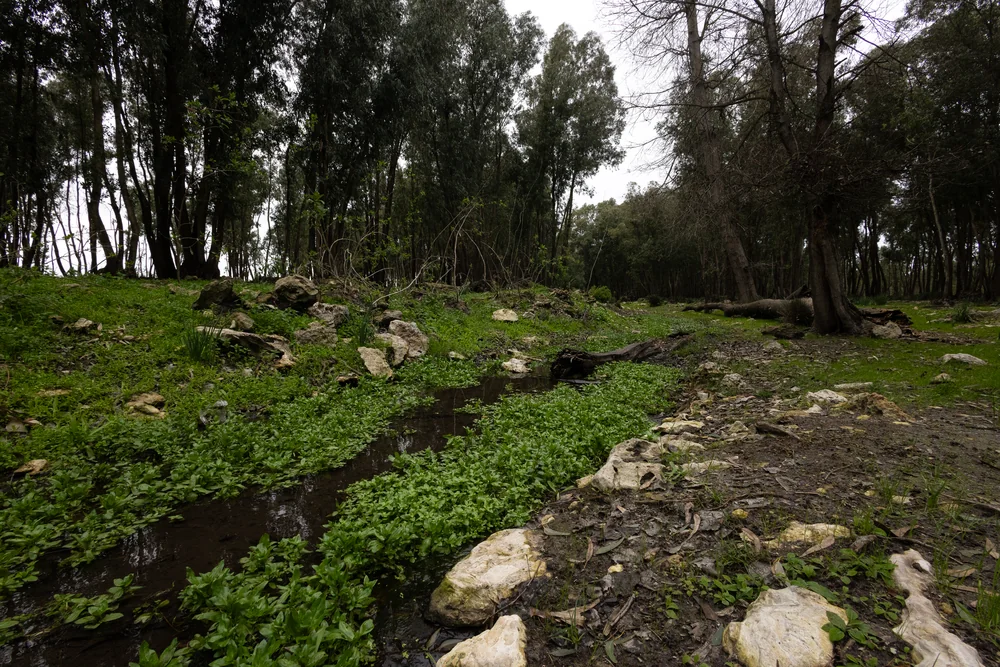
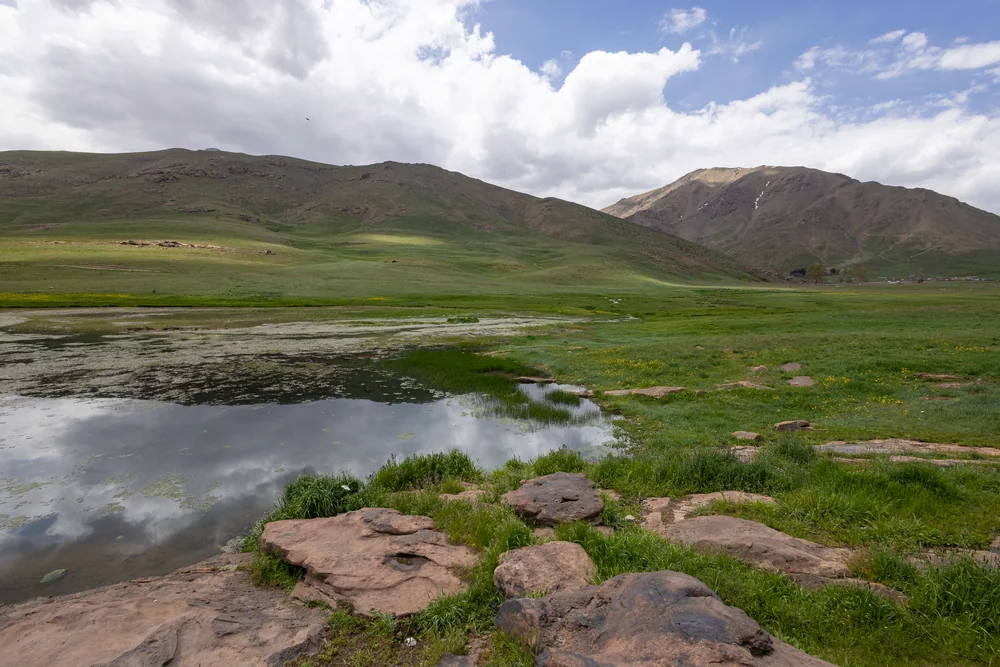
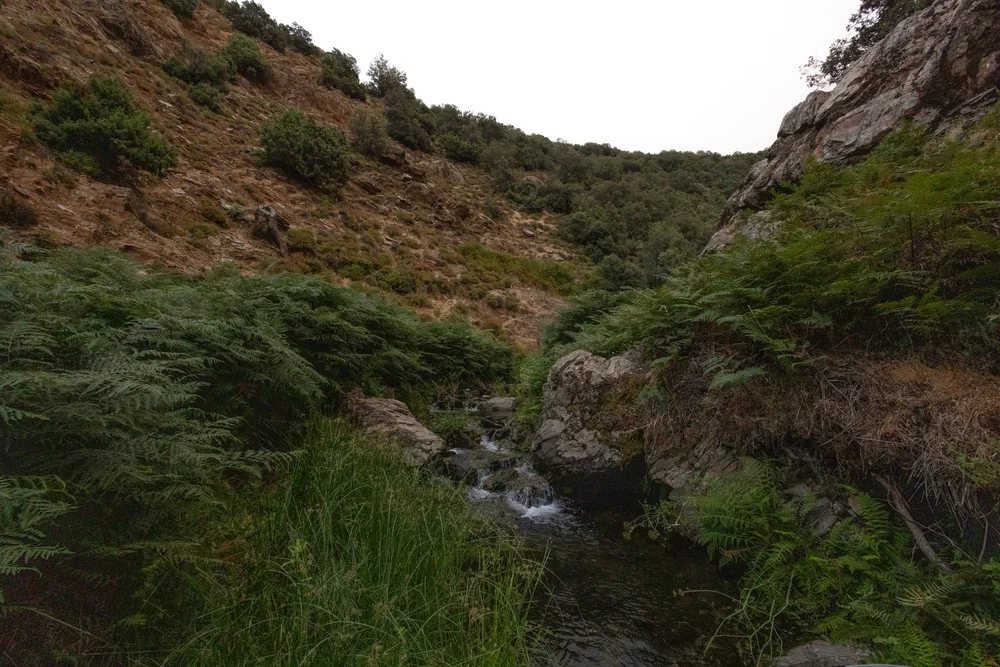
In Morocco, the Viperine Water Snake (Natrix maura) occupies every kind of fresh water across humid to arid climates. In the arid parts of the country, it is strictly tied to sites where water is permanent, principally oueds and oases55612. Artificial water bodies are used as readily as natural ones, including irrigation ponds and channels, fountains, ditches, pools and reservoirs, and new ones are colonised quickly when suitable prey is present53. Even brackish water in coastal marshes and on rocky shores is occupied53. The species is a habitat generalist13.

In the Rif, it occupies the thermomediterranean to supramediterranean belts (from 1 to 1,500 m), including districts with high rainfall and cold winters15. Its presence depends on water alone, regardless of slope, lithology and vegetation, and animals are usually found in the immediate vicinity of water15, while resting animals shelter under stones and in burrows29 (pers. obs.).

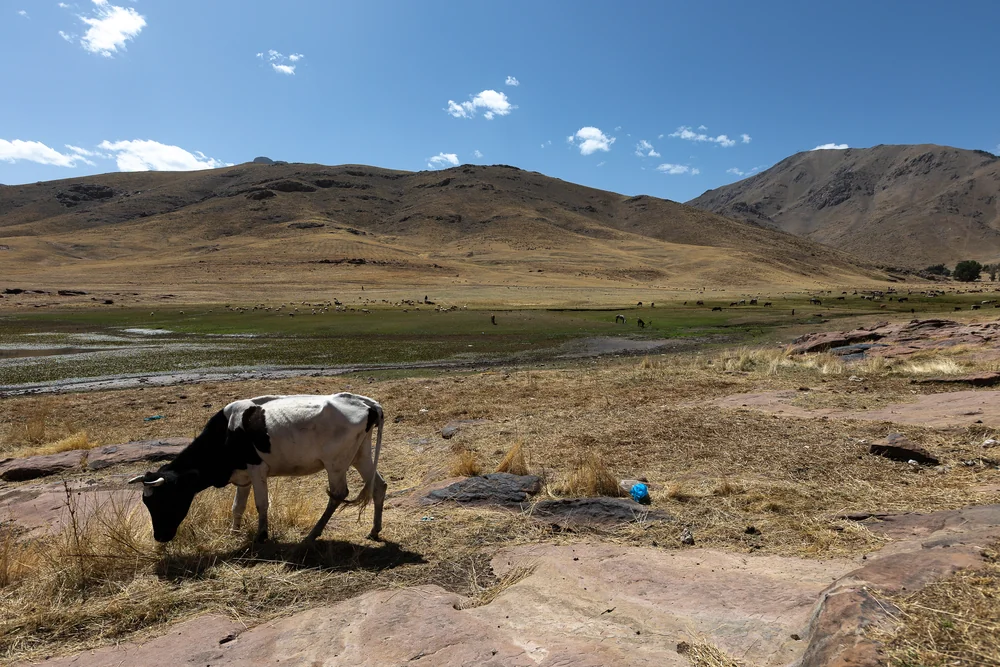
During our expeditions, we found many individuals across a wide variety of landscapes, including almost dried-out oueds in arid regions, streams in alpine environments at 2,600 m, farmland and many types of forest. Viperine Water Snakes were found in both running and still water (pers. obs.).

The Viperine Water Snake shares Moroccan waters with the Red-eyed Grass Snake (Natrix astreptophora) in the humid mountain zones of the Rif and Middle Atlas. With increasing altitude, the former is progressively replaced by the latter15.

The Viperine Water Snake (Natrix maura) emerges from hibernation in March, or in April in colder regions, and may be seen basking on sunny winter days. Activity peaks in spring, with mating, and again in autumn, with hatching1846. During the hot summer, snakes spend long periods in the water or become more nocturnal2337. In the south of its range the species can be almost fully nocturnal during the hottest part of the year59.

Body temperature, closely tied to the aquatic lifestyle of the species, ranges from roughly 14 to 35 °C in active animals27284226, with a preferred temperature between 24.7 and 29 °C5822. Reproductive females reach higher body temperatures than other adults42, probably to speed up the development of the eggs. Digestion appears to require a body temperature above 10 to 15 °C24. When submerged, the snake behaves as a thermoconformer, its body temperature matching that of the water272842.

On land, thermoregulatory behaviour shifts with the seasons. In spring, the snakes bask in the open to absorb as much solar heat as possible. In summer, when ambient temperatures are high enough, they prefer to shelter under sun-warmed stones and take up heat from them42. Basking probably also serves to speed up digestion24.

Radio-tracked males in Spain moved modestly, with home ranges averaging 5.8 ha in May, during the mating period, against 0.7 ha in July, and longer distances covered in spring than in summer44. Where summer drought concentrates prey into residual pools, long foraging movements become unnecessary43.

The Viperine Water Snake (Natrix maura) eats mainly fish and amphibians taken in the water455411. The proportion of fish to amphibians reflects local prey availability, so the species is a rather opportunistic feeder53. Invertebrates are also eaten, especially by juveniles, for which earthworms and tadpoles make up a large part of the diet2154. Small mammals and reptiles are taken occasionally3861.

No dietary study has been carried out in Morocco. As elsewhere in its range, its diet there probably follows local prey availability53.

Two main foraging modes are used. In ambush hunting, the commonest mode in larger snakes, the animal waits motionless on the bottom of the water or among debris and vegetation, and strikes at passing fish. This technique relies mostly on sight, but also on touch, since the snakes strike at objects that touch them, including non-prey21. Smaller snakes forage actively more often, moving slowly over damp ground and through shallow water while tongue-flicking and using their sense of smell21.

The balance between the two hunting modes also depends on water temperature. Ambush is used more often in water colder than about 14 °C, and active hunting in water warmer than about 20 °C3. The active mode is thus particularly common in shallower and warmer water213. Several variants have been described: luring fish with the tongue, ambushing from the bank while partly suspended over the water, and climbing leaves to take tree frogs36331. Large fish are carried to land before being swallowed, and these snakes have also been seen holding aquatic prey out of the water until it died35373.

Prey can be very large relative to the snake. Adults can swallow prey of up to 80% of their own body size49, and most fish (87%) are swallowed head first21. In some populations, gravid females continue to feed despite the space taken up by the eggs1649.

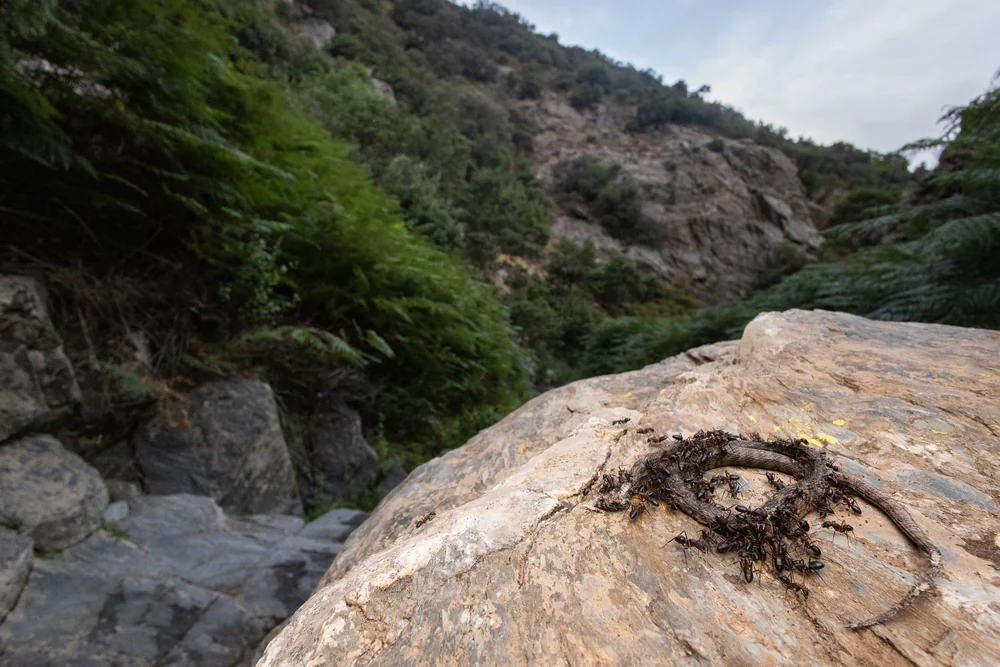
Predation pressure is heavy and comes mostly from birds and mammals. Herons, storks and raptors are probably the main predators, while the mammals include otters, beech martens and other small carnivores, as well as wild boar53. The Montpellier Snake (Malpolon monspessulanus), common in Morocco, also preys on the species5029. The Egyptian Mongoose (Herpestes ichneumon) is a probable predator in parts of the range (pers. comm.). The frequency of tail breakage, a sign of failed predation attempts, reached 18.7% in three natural Iberian populations50.

The first response of the Viperine Water Snake (Natrix maura) is to reach water and swim or dive away. Larger animals tend to flee, while some remain motionless on the bottom of a pool, a response more frequent in small, starved or cold snakes722.

The characteristic defence, and the source of the common name, is Batesian mimicry of the vipers. The head is flattened into a triangle, the body is coiled and visibly inflated, and the snake hisses2. It then lunges at the aggressor with its head and forebody, without opening its mouth or making any real attempt to bite29. Bites are in fact extremely rare29 (pers. obs.). Handled animals discharge a noxious secretion from the cloacal glands, and often regurgitate freshly caught prey53. The secretion is often mixed with faeces, and the snake wags its tail to spread this foul-smelling paste over its attacker. The smell is very strong and can persist for several hours, even after rinsing with water (pers. obs.).

In field trials testing the protective value of the dorsal pattern with plasticine models, birds attacked 19% of those carrying the typical zigzag pattern, against 25% of unpatterned controls and 35% of striped models51. Striped Viperine Water Snakes also tend to flee further when startled51. The zigzag may work both as camouflage and as a warning signal51.

The Viperine Water Snake (Natrix maura) is egg-laying. Mating begins as soon as the snakes emerge from hibernation, with males using sperm stored over the winter47. A second mating period may occur in autumn10. Mating aggregations occur, one documented ball containing eight animals of which probably only one was a female60. Depending on the population, 70 to 100% of mature females reproduce each year and lay a single clutch per season in the wild53.

Eggs measure 28 to 37 by 14 to 19 mm and incubation lasts 40 to 45 days, so that neonates appear in August with a total length between 146 and 220 mm1047. The timing of hatching probably varies with altitude and climate. Clutch size ranges from 2 to 27 with an average of 7.3 and increases with female size53. Males mature at two or three years and 220 to 250 mm snout-vent length (SVL), females at four to six years and 312 to 350 mm17.

Growth rate, and therefore size at a given age, probably follows the length of the feeding season17. The oldest wild individual on record, aged by skeletochronology, was 22 years old17. Growth slows at about 19 years, roughly a year earlier in males than in females17.

The Viperine Water Snake (Natrix maura) is assessed globally as Least Concern with a decreasing population trend by the IUCN, on the grounds of its wide distribution and presumed large population. The 2009 assessment described it as extremely common, but perhaps declining locally in parts of North Africa34. It is also listed as Least Concern on the regional Red List proposed for Morocco, which recorded no threat to the species there39. The documented decline comes mainly from Europe, where numbers fell by 55% in southern France between 1980 and 2018, while the Spanish trend was stable. None of these data concern Morocco52.

Although the species is not considered threatened, several factors may affect its populations in Morocco:

  • Aquatic pollution, which acts mainly through the loss of the fish the species feeds on3440.
  • Deliberate killing by people who mistake it for a viper, despite its complete harmlessness405325.
  • Road mortality, probably significant in Morocco as in Catalonia, where Viperine Water Snakes made up 18% of the snakes found dead on roads30.
  • Accumulation of man-made pollutants through its prey, as expected in a long-lived aquatic predator (several pesticides and other pollutants have been detected in Iberian animals)48.
  • Prolonged droughts and the drying-up of oueds through water pumping, which could lead to local extinctions in southern Morocco5340.
  • Drowning or starvation in water-storage structures it can enter but not leave, such as large plastic-lined basins and tanks with vertical walls29.

Maps

  • Bons, J., & Geniez, P. (1996). Amphibiens et reptiles du Maroc (Sahara Occidental compris). Atlas biogéographique. Asociación Herpetológica Española.
  • Martínez del Mármol, G., Harris, D. J., Geniez, P., de Pous, P., & Salvi, D. (2019). Amphibians and Reptiles of Morocco. Frankfurt Contributions to Natural History, 74. Edition Chimaira.
  1. Alarcos, G., Flechoso, F., Codesal, R., & Lizana, M. (2012). Comportamiento trepador de Natrix maura para capturar un ejemplar adulto de Hyla arborea. Boletín de la Asociación Herpetológica Española, 23(2), 43–45. — via Santos et al. (2024)53.
  2. Aubret, F., & Mangin, A. (2014). The snake hiss: Potential acoustic mimicry in a viper-colubrid complex. Biological Journal of the Linnean Society, 113(4), 1107–1114. https://doi.org/10.1111/bij.12374 — via Santos et al. (2024)53.
  3. Aubret, F., Tort, M., & Sarraude, T. (2015). Evolution of alternative foraging tactics driven by water temperature and physiological constraints in an amphibious snake. Biological Journal of the Linnean Society, 115(2), 411–422.
  4. Barata, M., Harris, D. J., & Castilho, R. (2008). Comparative phylogeography of northwest African Natrix maura (Serpentes: Colubridae) inferred from mtDNA sequences. African Zoology, 43(1), 1–7. https://doi.org/10.1080/15627020.2008.11407400
  5. Bons, J., & Geniez, P. (1996). Amphibiens et reptiles du Maroc (Sahara Occidental compris). Atlas biogéographique. Asociación Herpetológica Española.
  6. Bouam, I., Chedad, A., & Sadine, S. E. (2024). Swimming in the Sahara: A new locality record and range extension of Natrix maura (Linnaeus, 1758) (Squamata, Colubridae) from central Algeria. Arxius de Miscel·lània Zoològica, 22, 129–142. https://doi.org/10.32800/amz.2024.22.0129 — via Santos et al. (2024)53.
  7. Braña, F. (1998). Natrix maura. In A. Salvador (Coord.) & M. A. Ramos et al. (Eds.), Fauna Ibérica, vol. 10, Reptiles (pp. 440–454). Museo Nacional de Ciencias Naturales, CSIC. — via Santos (2015)43.
  8. Criado-Flórez, A., González de la Vega, J. P., Martínez del Marmol, G., & Fritz, U. (2025). A genetically confirmed hybrid between Natrix astreptophora and N. maura, two deeply divergent and ancient snake species. Herpetozoa, 38, 21–24. https://doi.org/10.3897/herpetozoa.38.e140551
  9. de Lepiney, J., & Nemeth, F. (1945-47). Notes zoologiques marocaines. Bulletin de la Société des Sciences Naturelles et Physiques du Maroc, 25–27, 227–233. — via Santos et al. (2024)53.
  10. Duguy, R., & Saint-Girons, H. (1966). Cycle annuel d'activité et reproduction de la couleuvre vipérine Natrix maura (L.), d'après les notes manuscrites de Rollinat et des observations personnelles. La Terre et la Vie, 4, 423–457. https://doi.org/10.3406/revec.1966.4474 — via Santos et al. (2024)53.
  11. Escoriza, D. (2018). Patterns of occurrence of semi-aquatic reptiles in highly invaded Mediterranean rivers. NeoBiota, 38, 23–35. https://doi.org/10.3897/neobiota.38.23940
  12. Escoriza, D., & Ben Hassine, J. (2017). Niche separation among north-west African semi-aquatic reptiles. Hydrobiologia, 797, 47–56. https://doi.org/10.1007/s10750-017-3157-8
  13. Escoriza, D., & Pascual, G. (2021). Habitat occupancy by semi-aquatic reptiles on an aridity gradient in the western Mediterranean. River Research and Applications, 37(9), 1233–1242.
  14. Fahd, S. (2001). Biogéographie, morphologie et écologie des ophidiens du Rif (Nord du Maroc) [Thèse de doctorat d'État]. Université Abdelmalek Essaâdi, Tétouan. — via Santos et al. (2024)53.
  15. Fahd, S., & Pleguezuelos, J. M. (2001). Los reptiles del Rif (Norte de Marruecos), II: Anfisbenios y ofidios. Comentarios sobre la biogeografía del grupo. Revista Española de Herpetología, 15, 13–36.
  16. Feriche, M., & Pleguezuelos, J. M. (1999). Características de la reproducción de la culebra viperina, Natrix maura (Linnaeus, 1758), en la Depresión de Granada (sureste ibérico). Revista Española de Herpetología, 13, 37–48. — via Santos et al. (2024)53.
  17. Filippakopoulou, A., Santos, X., Feriche, M., Pleguezuelos, J. M., & Llorente, G. A. (2014). Effect of prey availability on growth-rate trajectories of an aquatic predator, the viperine snake Natrix maura. Basic and Applied Herpetology, 28, 35–50. https://doi.org/10.11160/bah.14001
  18. Galán, P. (1988). Segregación ecológica en una comunidad de ofidios. Doñana, Acta Vertebrata, 15, 59–78. — via Santos et al. (2024)53.
  19. González de la Vega, J. P., Barnestein, J. A. M., Martínez del Marmol, G., & Mebert, K. (2021). Hybridization between Natrix astreptophora and Natrix maura: Potential cases from Andalusia, Spain. Boletín de la Asociación Herpetológica Española, 32(2), 115–123.
  20. Guicking, D., Joger, U., & Wink, M. (2008). Molecular phylogeography of the viperine snake Natrix maura (Serpentes: Colubridae): Evidence for strong intraspecific differentiation. Organisms Diversity & Evolution, 8(2), 130–145. https://doi.org/10.1016/j.ode.2007.05.001
  21. Hailey, A., & Davies, P. M. C. (1986a). Diet and foraging behaviour of Natrix maura. Herpetological Journal, 1, 53–61.
  22. Hailey, A., & Davies, P. M. C. (1986b). Effects of size, sex, temperature and condition on activity metabolism and defence behaviour of the viperine snake, Natrix maura. Journal of Zoology, 208(4), 541–558. — via Santos et al. (2024)53; Santos et al. (2018)51.
  23. Hailey, A., & Davies, P. M. C. (1986c). Lifestyle, latitude and activity metabolism of natricine snakes. Journal of Zoology, 209(4), 461–476. — via Santos et al. (2024)53.
  24. Hailey, A., & Davies, P. M. C. (1987a). Digestion, specific dynamic action, and ecological energetics of Natrix maura. Herpetological Journal, 1, 159–166.
  25. Hailey, A., & Davies, P. M. C. (1987b). Growth, movement and population dynamics of Natrix maura in a drying river. Herpetological Journal, 1, 185–194.
  26. Hailey, A., & Davies, P. M. C. (1987c). Activity and thermoregulation of the snake Natrix maura. 1. R and K thermoregulation. Journal of Zoology, 213, 71–80. — via Santos et al. (2024)53.
  27. Hailey, A., Davies, P. M. C., & Pulford, E. (1982). Lifestyle and thermal ecology of natricine snakes. British Journal of Herpetology, 6, 261–268. — via Santos et al. (2024)53.
  28. Jaén, M. J., & Pérez-Mellado, V. (1989). Temperaturas corporales y ritmos de actividad en una población de Natrix maura (L.) del Sistema Central. Doñana, Acta Vertebrata, 16, 203–217. — via Santos et al. (2024)53.
  29. León Vigara, R. (2013). Natrix maura (Linnaeus, 1758). In G. Martínez, R. León, O. Jiménez-Robles, J. P. González de la Vega, V. Gabari, B. Rebollo, A. Sánchez-Tójar, J. R. Fernández-Cardenete & J. Gállego (Eds.), Moroccoherps. Anfibios y reptiles de Marruecos y Sahara Occidental. Version 16/06/2013.
  30. Llorente, G. A., Garriga, N., Montori, A., Richter-Boix, A., & Santos, X. (2005). Incidència de les carreteres sobre els amfibis i rèptils de Catalunya. Departament de Política Territorial i Obres Públiques, Generalitat de Catalunya. — via Santos et al. (2024)53.
  31. Martínez del Mármol, G., Harris, D. J., Geniez, P., de Pous, P., & Salvi, D. (2019). Amphibians and reptiles of Morocco. Edition Chimaira. — via Pleguezuelos et al. (2025)40; Santos et al. (2024)53.
  32. Martínez-Freiría, F. et al. (2017). Contribution to the knowledge on the reptile fauna of Jebel Sirwa (Morocco), with some insights into the conservation status of Vipera latastei-monticola. Boletín de la Asociación Herpetológica Española, 28(1), 103–108.
  33. Martorell, E. (1990). Natrix maura: ¿Posibilidad de aprendizaje? Boletín de la Asociación Herpetológica Española, 1, 24. — via Santos et al. (2024)53.
  34. Mateo Miras, J. A., Cheylan, M., Saïd Nouira, M., Joger, U., Sá-Sousa, P., Pérez-Mellado, V., Schmidt, B., Meyer, A., Sindaco, R., Romano, A., & Martínez-Solano, I. (2009). Natrix maura. The IUCN Red List of Threatened Species 2009: e.T61538A12510365. https://dx.doi.org/10.2305/IUCN.UK.2009.RLTS.T61538A12510365.en Accessed on 19 August 2026.
  35. Meijide, M., & Salas, R. (1989). Observaciones sobre el comportamiento depredativo de algunos colúbridos ibéricos en estado salvaje. Doñana, Acta Vertebrata, 16, 329–332. — via Santos et al. (2024)53.
  36. Naulleau, G. (1964). Premières observations sur le comportement de chasse et de capture chez les vipères et les couleuvres. La Terre et la Vie, 1, 54–76. — via Santos et al. (2024)53.
  37. Pleguezuelos, J. M., & Feriche, M. (2003). Anfibios y reptiles. Los Libros de la Estrella nº 18, Guías de la Naturaleza. Diputación de Granada. — via Santos et al. (2024)53.
  38. Pleguezuelos, J. M., & Moreno, M. (1989). Alimentación primaveral de Natrix maura (Linné, 1758) (Ophidia, Colubridae) en el SE de la Península Ibérica. Revista Española de Herpetología, 3, 221–236. — via Santos et al. (2024)53.
  39. Pleguezuelos, J. M., Brito, J. C., Fahd, S., Feriche, M., Mateo, J. A., Moreno-Rueda, G., Reques, R., & Santos, X. (2010). Setting conservation priorities for the Moroccan herpetofauna: The utility of regional red lists. Oryx, 44(4), 501–508. https://doi.org/10.1017/S0030605310000992
  40. Pleguezuelos, J.M., Santos, X., Carretero, M., Crochet, P.-A., Halpern, B., Martínez-Freiría, F., Mebert, K., Speybroeck, J., Bauer, A.M., Kalboussi, M., Bouazza, A., Martínez del Mármol, G. & Ouni, R. (2025). Natrix maura. The IUCN Red List of Threatened Species 2025: e.T61538A137854248. . Accessed on 21 September 2026.
  41. Saint Girons, H. (1956). Les serpents du Maroc. Variétés Scientifiques de la Société des Sciences Naturelles et Physiques du Maroc, 8, 1–29. — via Santos et al. (2024)53.
  42. Santos, X. (2000). Ecología de la culebra viperina, Natrix maura (Linnaeus, 1758), en el Delta del Ebro [Tesis doctoral]. Universitat de Barcelona. — via Santos et al. (2024)53.
  43. Santos, X. (2015). Culebra viperina – Natrix maura. In A. Salvador & A. Marco (Eds.), Enciclopedia Virtual de los Vertebrados Españoles. Museo Nacional de Ciencias Naturales. http://www.vertebradosibericos.org/ Accessed on 19 August 2026.
  44. Santos, X., & Llorente, G. A. (1997). Actividad de Natrix maura en el Delta del Ebro, analizada mediante técnicas de telemetría. Revista Española de Herpetología, 11, 63–70. — via Santos et al. (2024)53.
  45. Santos, X., & Llorente, G. A. (1998). Sexual and size-related differences in the diet of the snake Natrix maura from the Ebro Delta, Spain. Herpetological Journal, 8, 161–165.
  46. Santos, X., & Llorente, G. A. (2001a). Actividad estacional y diaria en una población de culebra viperina, Natrix maura, del Delta del Ebro. Boletín de la Asociación Herpetológica Española, 12, 22–24. — via Santos et al. (2024)53.
  47. Santos, X., & Llorente, G. A. (2001b). Seasonal variation in reproductive traits of the oviparous water snake, Natrix maura, in the Ebro Delta of northeastern Spain. Journal of Herpetology, 35(4), 653–660. — via Santos et al. (2024)53.
  48. Santos, X., Pastor, D., Llorente, G. A., & Albaigés, J. (1999). Organochlorine levels in viperine snake Natrix maura carcasses from the Ebro Delta (NE Spain): Sexual and size-related differences. Chemosphere, 39, 2641–2650. — via Santos et al. (2024)53.
  49. Santos, X., Vilardebó, E., Casals, F., Llorente, G. A., Vinyoles, D., & de Sostoa, A. (2006). Wide food availability favours intraspecific trophic segregation in predators: The case of a water snake in a Mediterranean river. Animal Biology, 56(3), 299–309. — via Santos et al. (2024)53.
  50. Santos, X., Feriche, M., León, R., Filippakopoulou, A., Vidal-García, M., Llorente, G. A., & Pleguezuelos, J. M. (2011). Tail breakage frequency as an indicator of predation risk for the aquatic snake Natrix maura. Amphibia-Reptilia, 32(3), 375–383. https://doi.org/10.1163/017353711X587264
  51. Santos, X., Azor, J. S., Cortés, S., Rodríguez, E., Larios, J., & Pleguezuelos, J. M. (2018). Ecological significance of dorsal polymorphism in a Batesian mimic snake. Current Zoology, 64(6), 745–753. https://doi.org/10.1093/cz/zox058
  52. Santos, X., Pleguezuelos, J. M., Chergui, B., Geniez, P., & Cheylan, M. (2022). Citizen-science data shows long-term decline of snakes in southwestern Europe. Biodiversity and Conservation, 31, 1609–1625. https://doi.org/10.1007/s10531-022-02415-8
  53. Santos, X., Pleguezuelos, J. M., & Mebert, K. (2024). Viperine snake Natrix maura (Linnaeus, 1758). In J. C. M. Murphy (Ed.), Aquatic snakes, diversity and natural history (pp. 456–463). JCM Natural History with Herpetological Conservation International. Updated June 2025.
  54. Schätti, B. (1982). Bemerkungen zur Ökologie, Verbreitung und intraspezifischen Variation der Vipernatter, Natrix maura (Linné, 1758) (Reptilia, Serpentes). Revue Suisse de Zoologie, 89(2), 521–542. https://doi.org/10.5962/bhl.part.82458
  55. Schätti, B. (1999). Natrix maura (Linnaeus, 1758), Vipernatter. In W. Böhme (Ed.), Handbuch der Reptilien und Amphibien Europas, Band 3/IIA: Schlangen II (pp. 483–503). Aula-Verlag. — via Santos et al. (2024)53.
  56. Schleich, H. H., Kästle, W., & Kabisch, K. (1996). Amphibians and reptiles of North Africa. Koeltz Scientific Books.
  57. Schöneberg, Y. et al. (2023). Genomics reveals broad hybridization in deeply divergent Palearctic grass and water snakes (Natrix spp.). Molecular Phylogenetics and Evolution, 184, 107787. — via Criado-Flórez et al. (2025)8.
  58. Spellerberg, I. F. (1977). Reptile body temperatures. 2. Examples of reptile voluntary temperature levels. The Herptile, 2, 20–37. — via Santos et al. (2024)53.
  59. Speybroeck, J., Beukema, W., Bok, B., & Van Der Voort, J. (2016). Field guide to the amphibians and reptiles of Britain and Europe. Bloomsbury. — via Pleguezuelos et al. (2025)40.
  60. Torres-Porras, J. (2008). Apareamiento grupal de la culebra viperina (Natrix maura). Boletín de la Asociación Herpetológica Española, 19, 37. — via Santos et al. (2024)53.
  61. Vericad, J. R., & Escarré, A. (1976). Datos de alimentación de ofidios en el Levante sur ibérico. Mediterránea, 1, 3–32. — via Santos et al. (2024)53.

How to cite

Ruffieux, C., & Vuillemin, R. (2026). Viperine Water Snake (Natrix maura). In: Castella, C., Iallaten, H., Ruffieux, C., & Vuillemin, R. (Eds.), Fauna Morocco. The Free Encyclopedia: Reptiles & Amphibians of Morocco. Available from https://fauna-morocco.org/encyclopedia/serpentes/colubridae/natrix/natrix-maura.html (accessed 24 October 2026).

Published

24 October 2026

Last updated

24 October 2026

Authors

Colin Ruffieux
Rayane Vuillemin

Reviewers

Haytam Iallaten
Mohamed Taha Aissaoui

Photography

Rayane Vuillemin

Methodology

Each account is a scientific synthesis: we compile the literature, read each paper in full, verify facts against their original sources when possible, and flag uncertainties for expert review. It is written first in English, reviewed by the team, then translated into French and Arabic. Every claim is referenced, and accounts are updated as knowledge advances. If you spot a mistake or an omission, please get in touch so we can fix it.