Vipers of Morocco
Shy, slow and feared
Six viper species, from five genera, live in Morocco. They range from the diminutive North African Mountain Viper of the high mountains to the secretive Sahara Horned Viper and the large, widespread Moorish Viper. Each occupies its own habitats, from the Saharan seas of stone and sand to the rocky slopes of the Atlas.
species
subspecies
Because every viper is venomous, they are feared across Morocco. Yet most are rarely seen and go out of their way to avoid people. Far from aggressive, they bite only when cornered, handled, or stepped on by accident. That fear drives needless persecution, which, ironically, causes most bites, since they happen when people try to kill or move the snake.
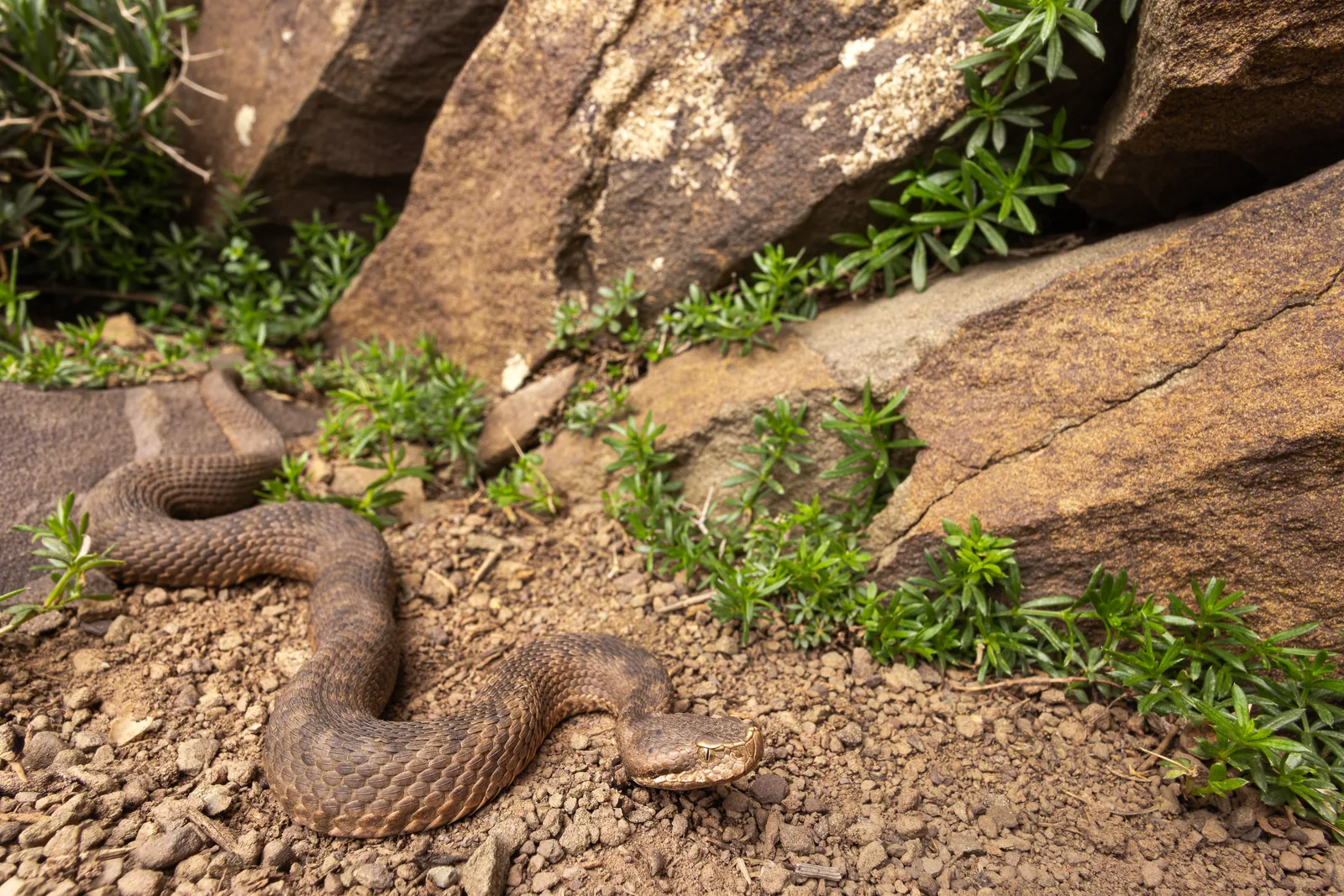
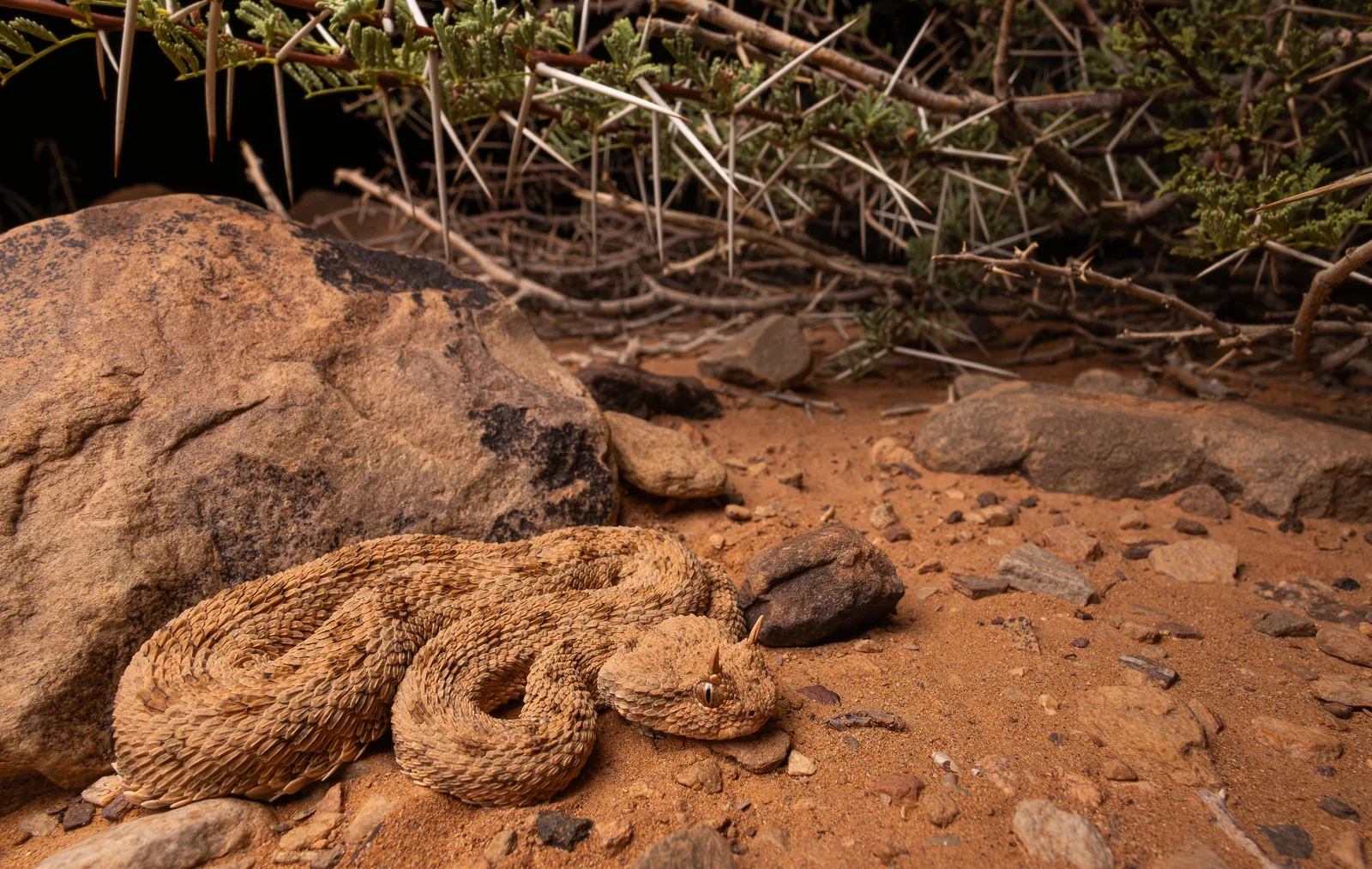
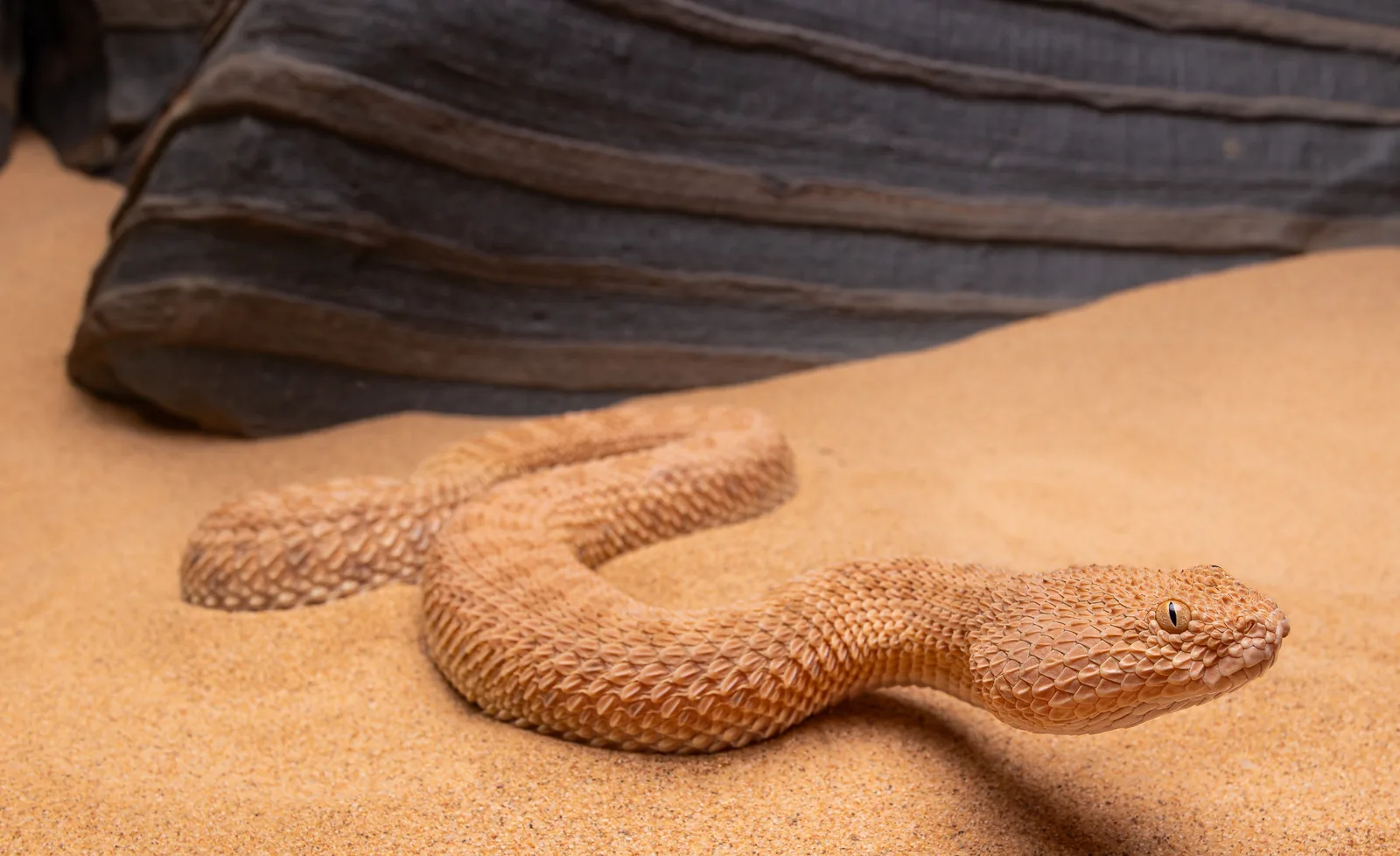
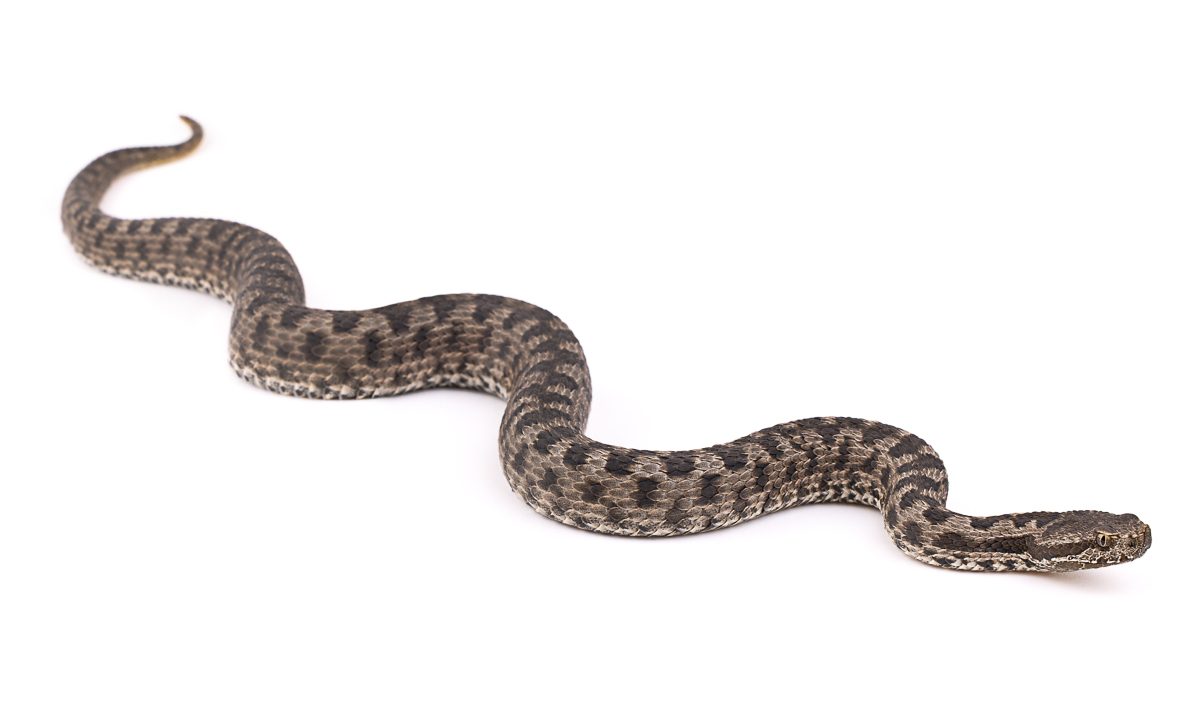
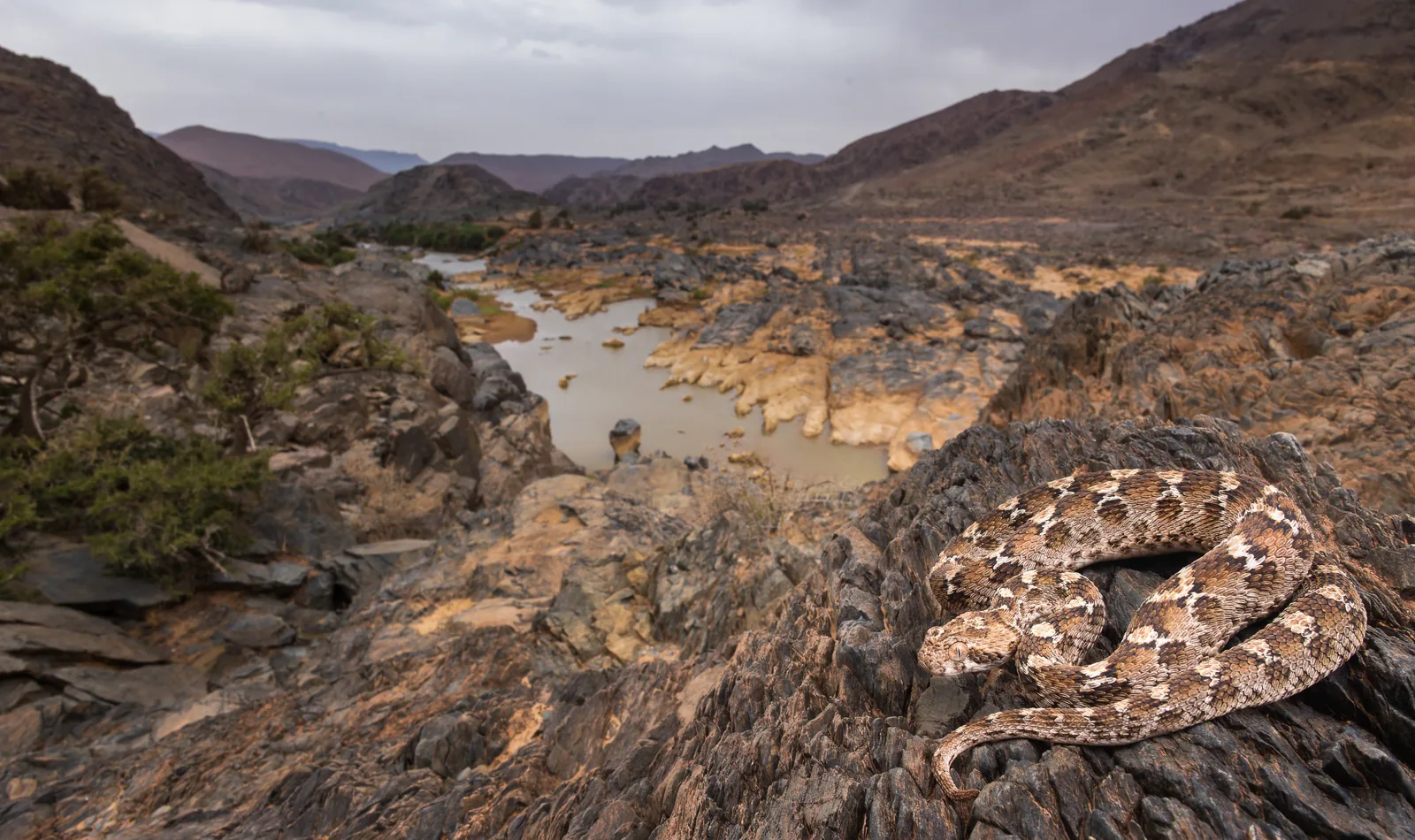 Vipera monticolaNorth African Mountain Viper
How to identify a Viper in Morocco
Morocco's six Vipers are venomous. Keep your distance, this guide is for identification, not to encourage handling.
1 Is it really a Viper?
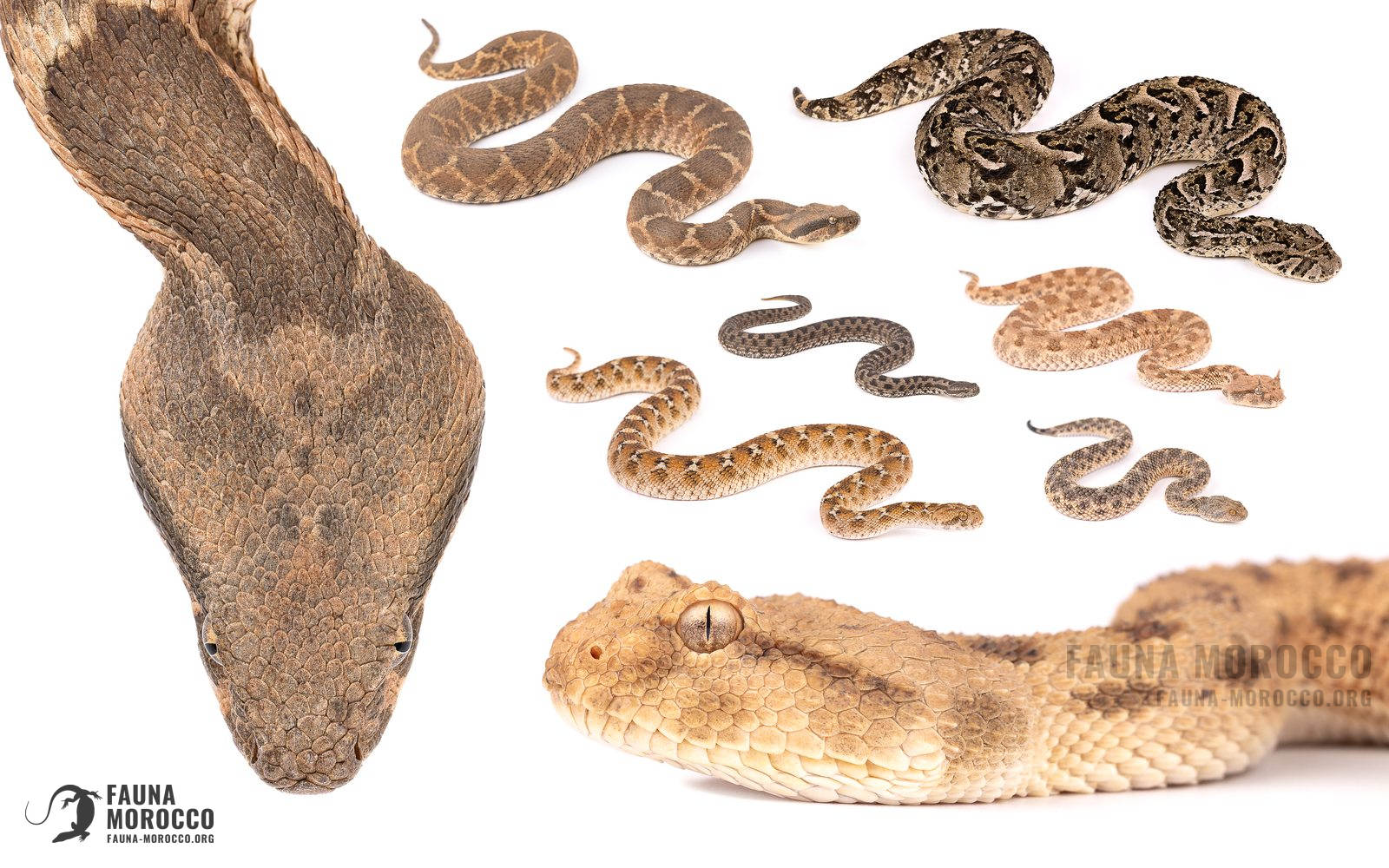 COLLAGE: viper head (lateral) + full body on white
Three quick checks
- Broad, triangular head, clearly wider than the neck.
- Short, thick body with rough (keeled) scales.
- Vertical, slit-like pupil.
2 Which viper species?
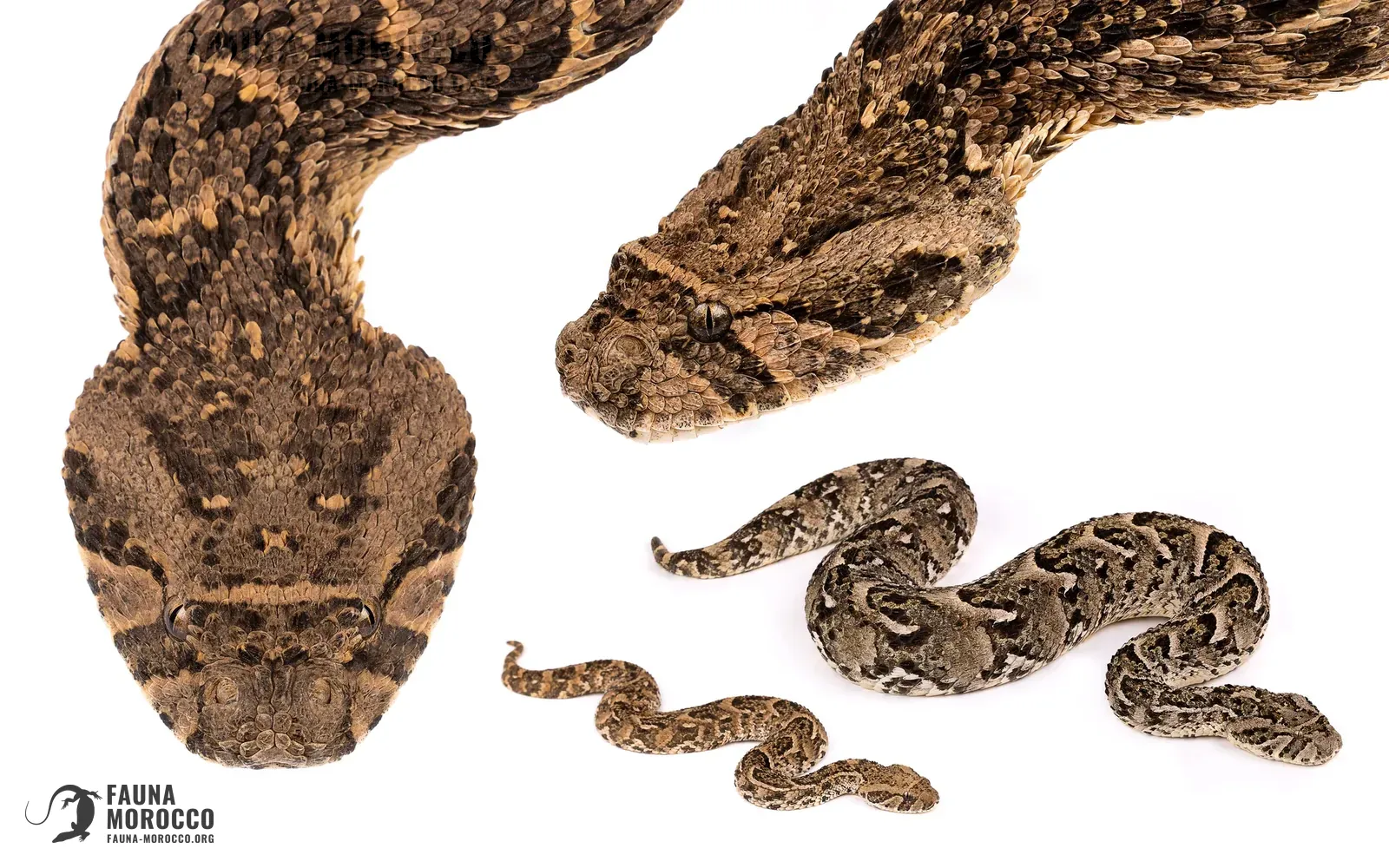
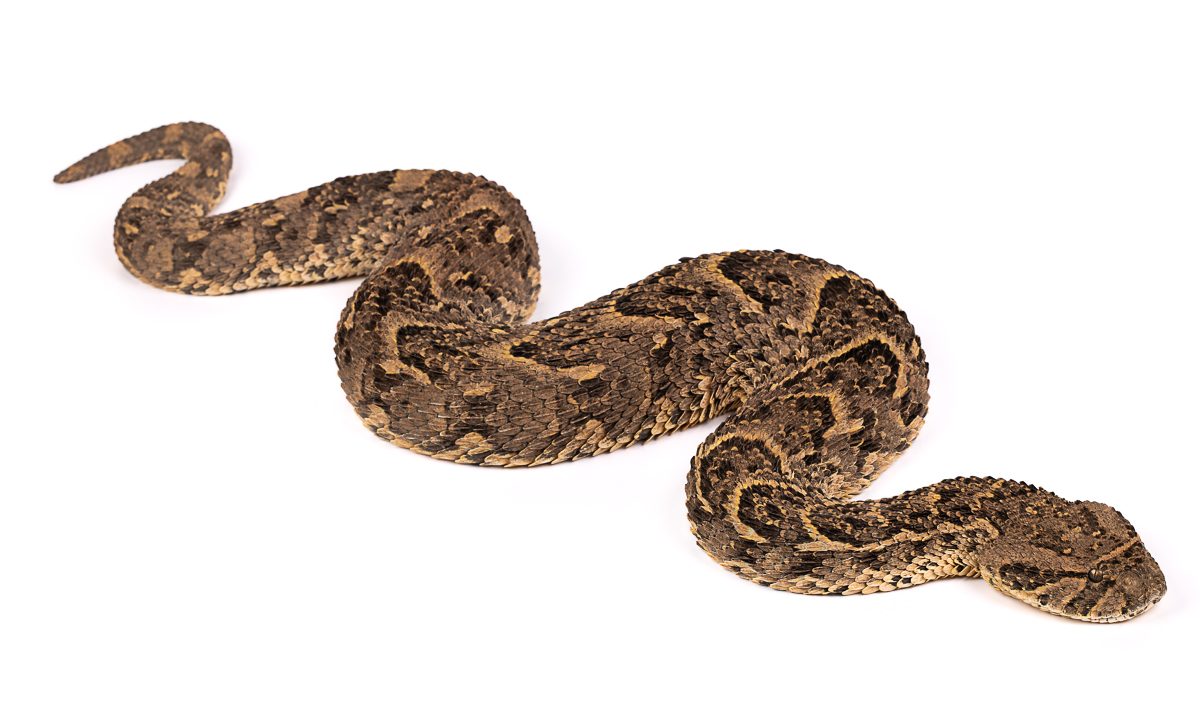
Puff Adder
Bitis arietans
- 1Broad, flat and triangular head
- 2Thick body with contrasted chevron patterns
- 3Tan to brown coloration, sometimes greenish
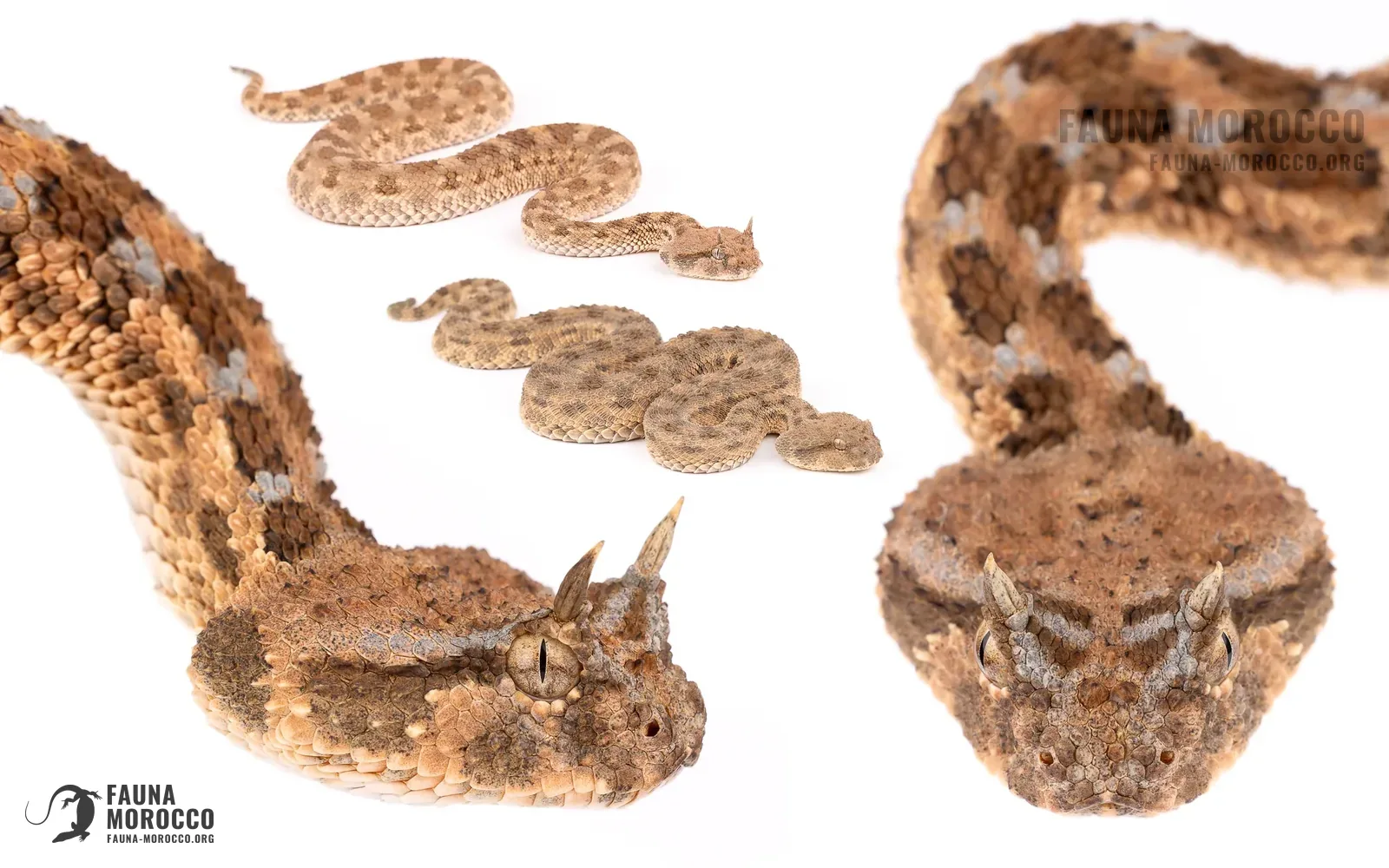
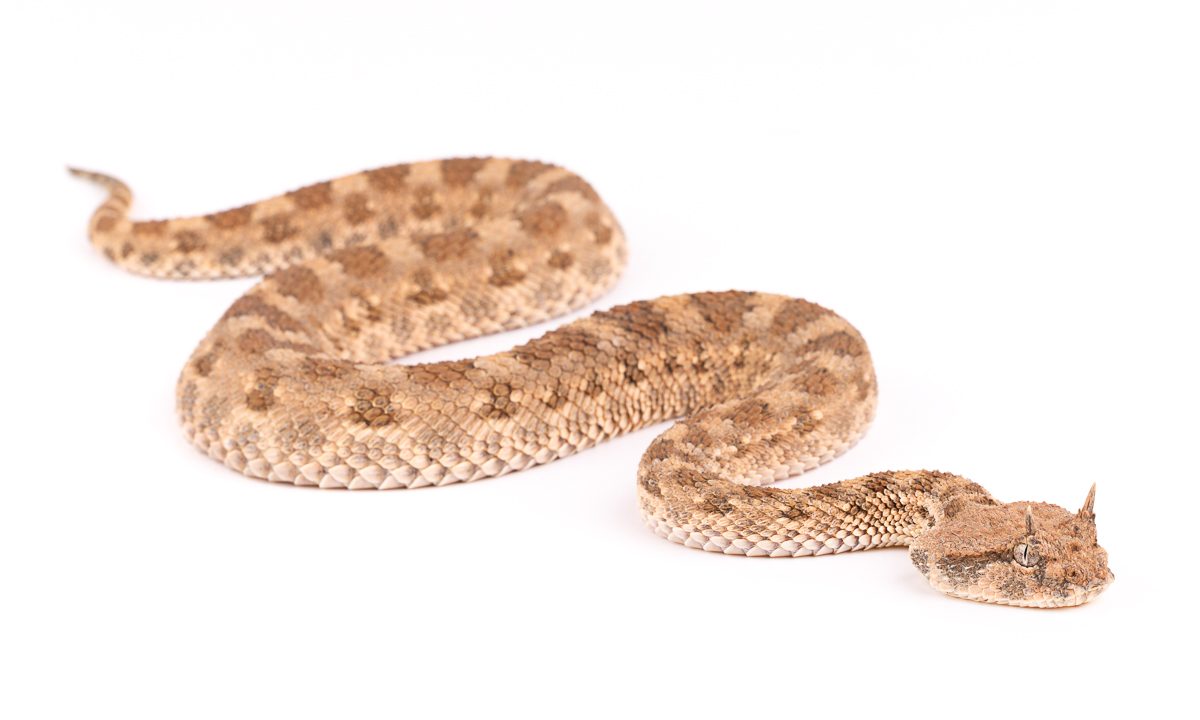
Sahara Horned Viper
Cerastes cerastes
- 1A pair of horns above the eyes
- 2Eyes on the side of the head
- 3Pink, beige or orange, with markings on the back
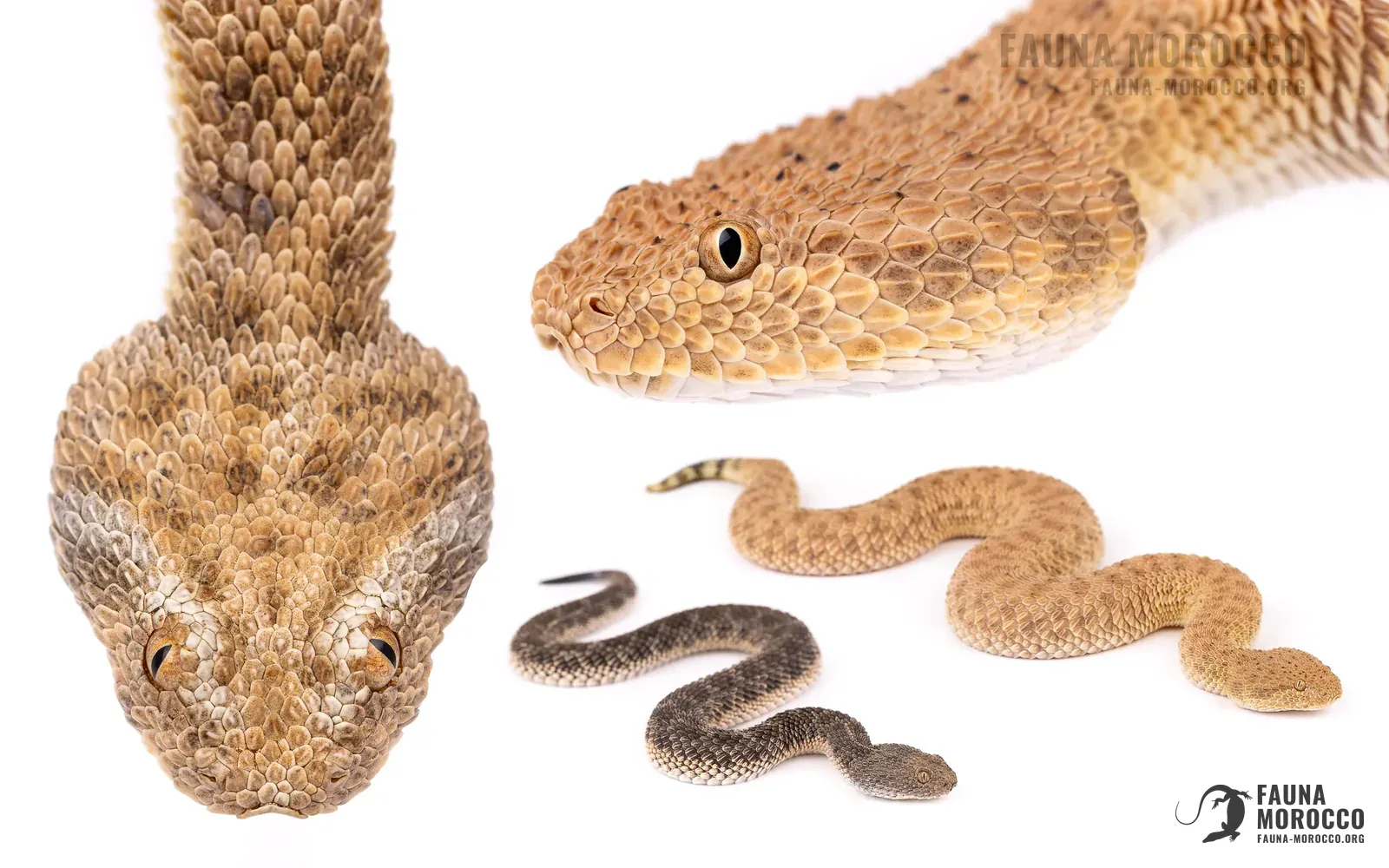
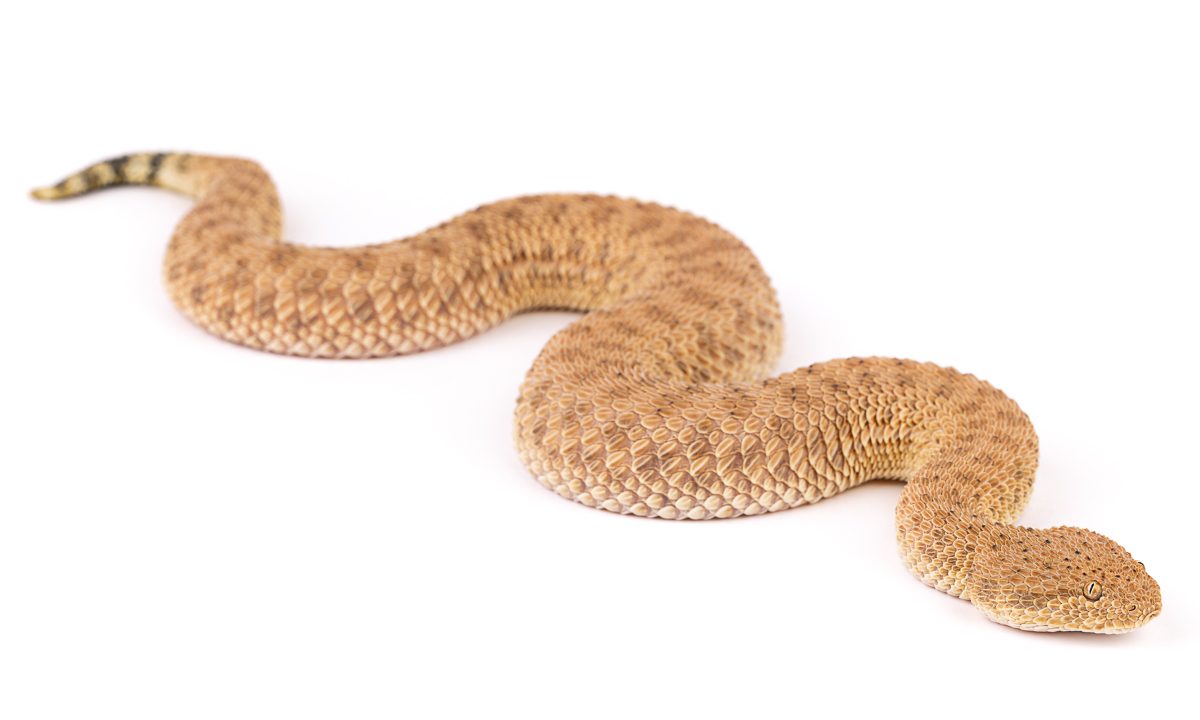
Sahara Sand Viper
Cerastes vipera
- 1No horns above the eyes
- 2Eyes on top of the head
- 3Beige in coloration inland, darker in coastal populations
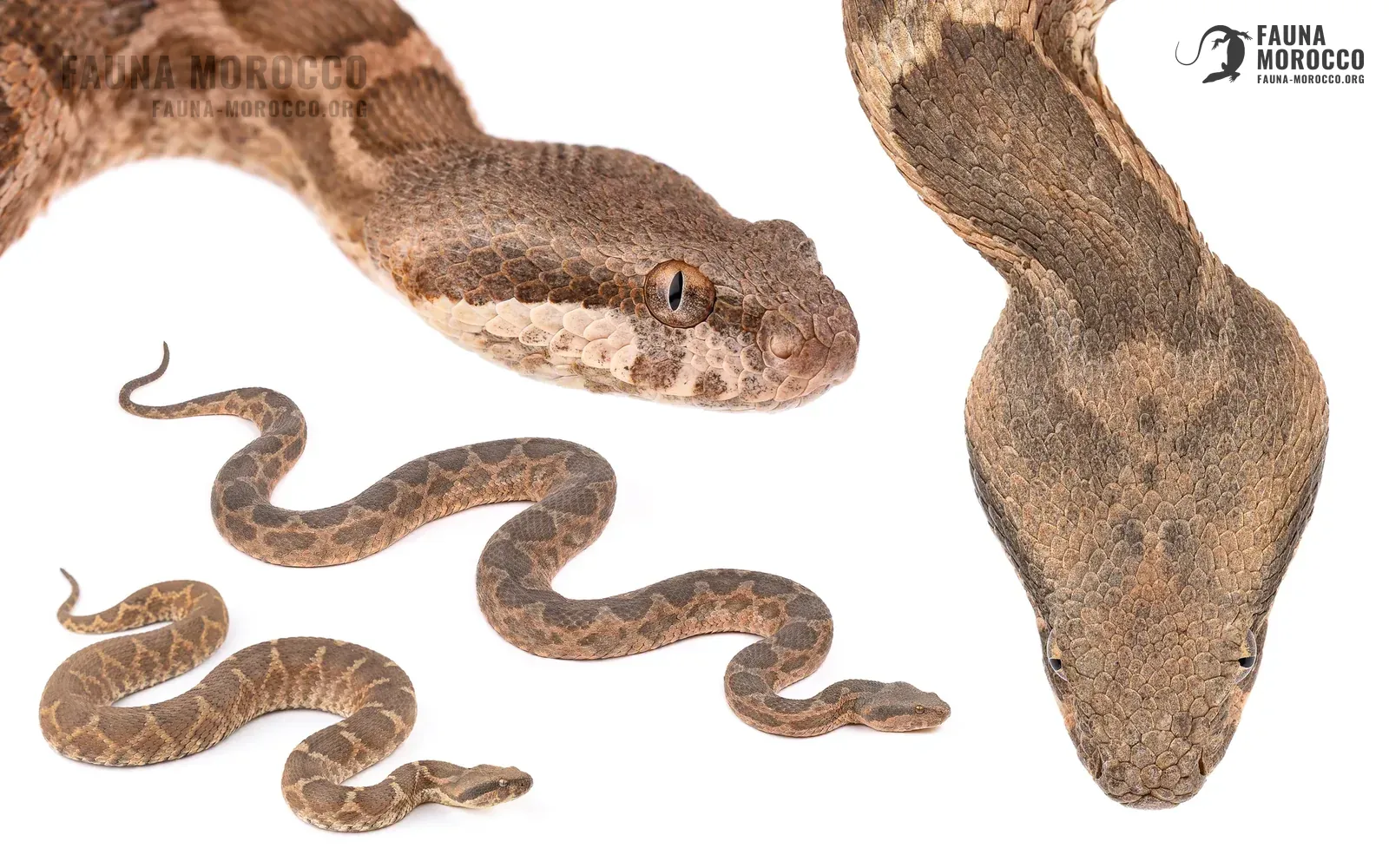
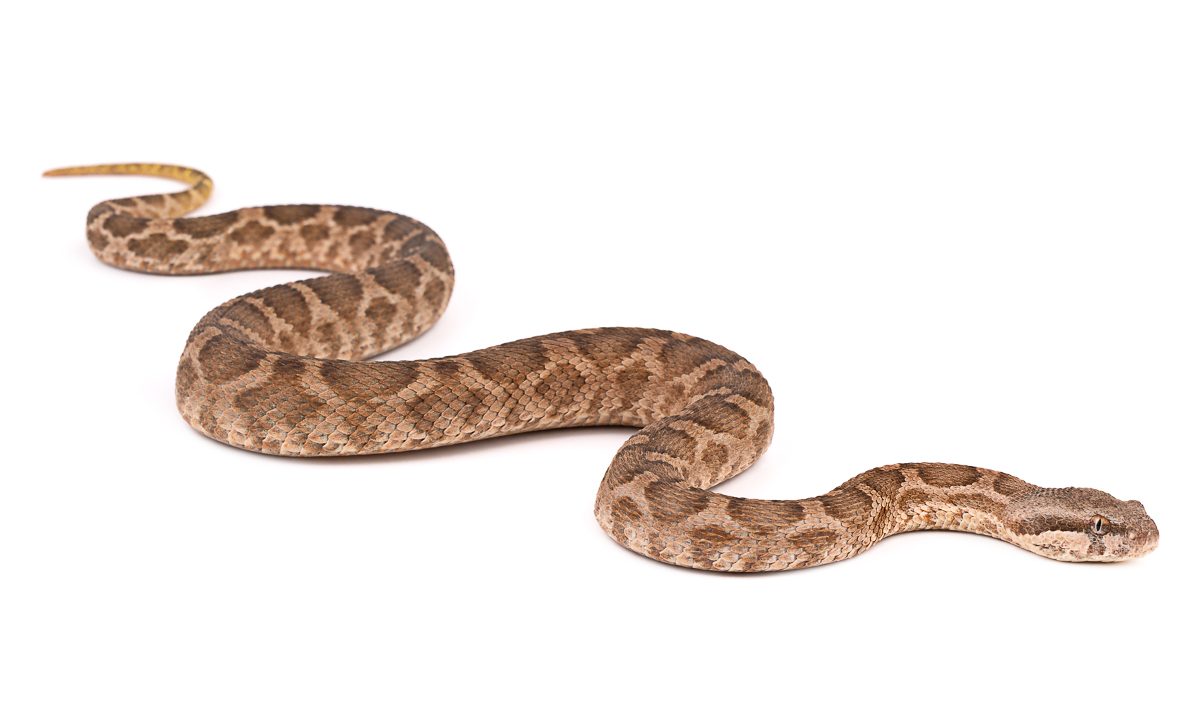
Moorish Viper
Daboia mauritanica
- 1Uniform head coloration
- 2A darker line behind the eyes
- 3Variable in coloration but usually patterns on the back
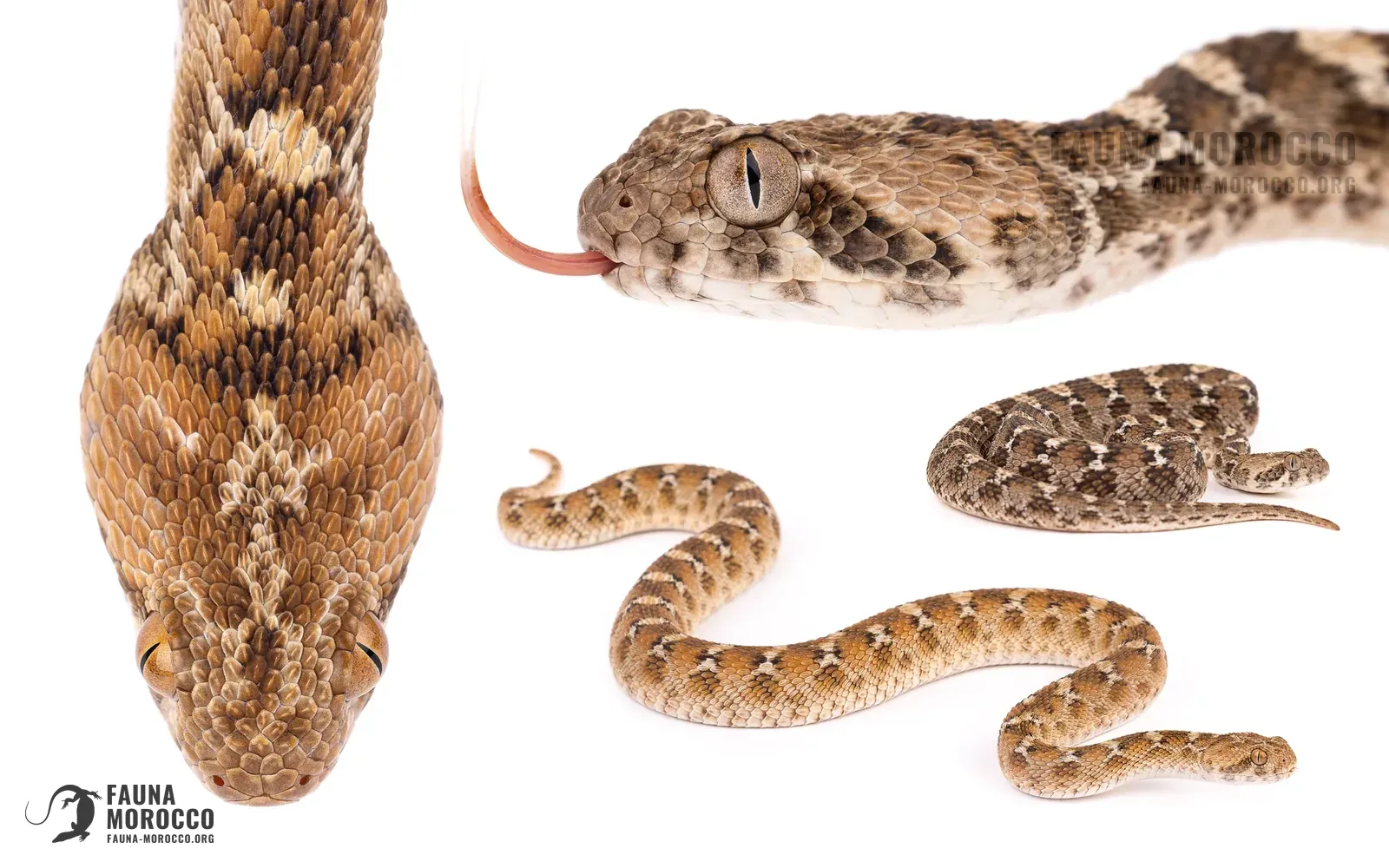
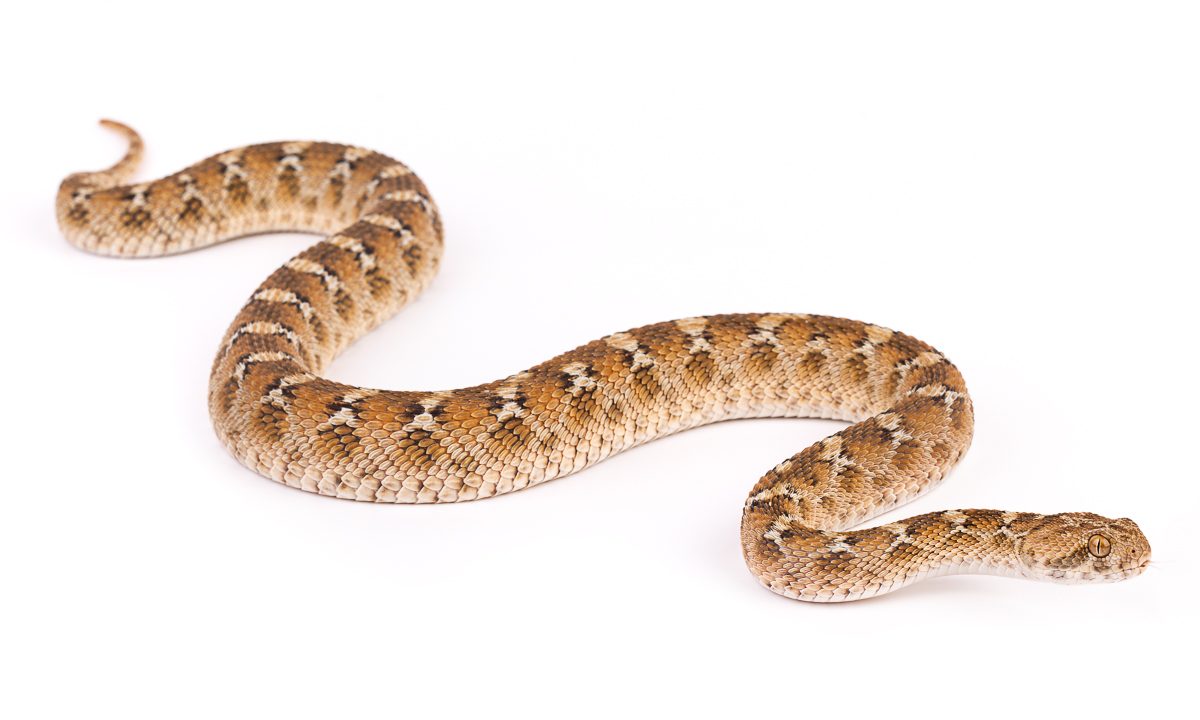
White-bellied Carpet Viper
Echis leucogaster
- 1Big round eyes
- 2White markings on top of the head
- 3White spots on the back
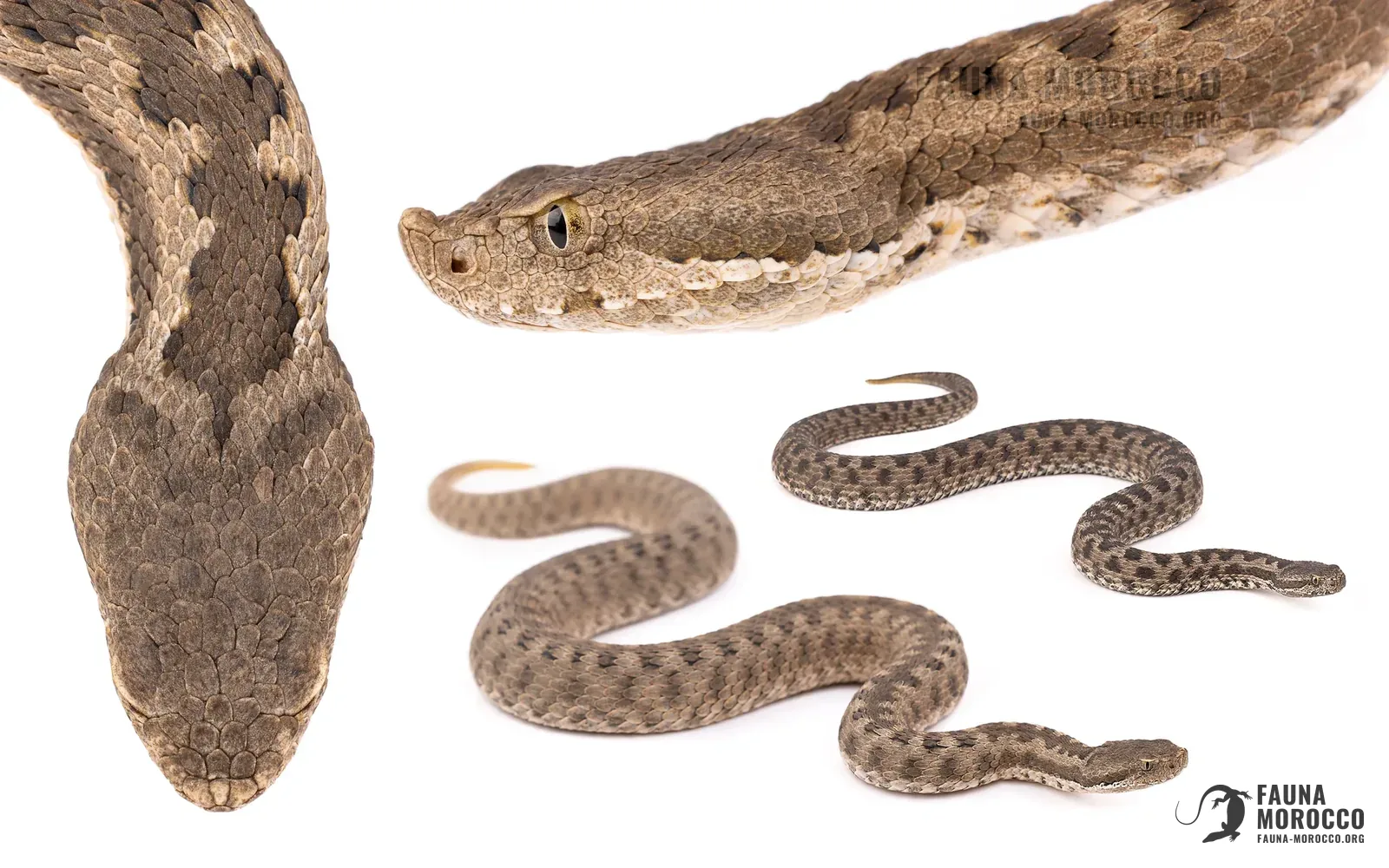
North African Mountain Viper
Vipera monticola
- 1Upturned nose
- 2Grey to brown, with brown to black markings on the back
- 3Very small head
What to do if bitten by a Viper or Cobra
A bite from a Viper or Cobra is a medical emergency. Call right away.
- Move away from the snake and stay calm.
- Remove rings, watches and anything tight.
- Keep the bitten limb still, splint it if you can.
- If possible, carry the person for any movement, do not let them walk.
- Get to a hospital as fast as possible: only proper medical treatment works.
- If it is safe, note the time and take a photo. Never try to catch or kill the snake.
Do not cut, suck, apply a tourniquet, ice, alcohol or coffee.
General information based on the WHO, provided for guidance only. It is not medical advice and does not replace professional care. Source: WHO
Vipers of Morocco
How many vipers are there in Morocco, and are they all venomous?
Morocco has 6 viper species, all of them venomous. A few simple habits remove almost all risk of a bite: don't walk barefoot in nature, watch where you put your hands and feet, use a light at night, and never leave your shoes outside after dark.
What is the most dangerous viper in Morocco?
The vipers of greatest medical importance are the Puff Adder (Bitis arietans) and the Moorish Viper (Daboia mauritanica). Any viper bite should be treated as a medical emergency.
How can I recognise a viper?
The three main clues are a broad, triangular head wider than the neck, a short, thick body with rough (keeled) scales, and a vertical, slit-like pupil. Our illustrated guide walks you through it and helps you tell the six species apart.
What should I do if a viper bites me?
Get to a hospital as fast as you can, stay calm and keep the bitten limb still. For the full do's and don'ts, see our What to do if bitten guide.
Which is the smallest and which is the largest viper?
The smallest is the Atlas Dwarf Viper (Vipera monticola), a tiny snake endemic to Morocco's high mountains. The largest is the Moorish Viper (Daboia mauritanica), found in many regions across Morocco.
Are there horned vipers in Morocco?
Yes. The Sahara Horned Viper (Cerastes cerastes) usually has a raised horn over each eye. Its close relative the Sahara Sand Viper (Cerastes vipera) also lives in arid areas but is usually hornless.
When and where is the best time to see vipers in Morocco?
Spring and early autumn, on warm sunny days, are best. In high summer the heat pushes activity to the first hours of the morning and the still-warm hours of the night. The arid regions, their oases and dry riverbeds hold the greatest diversity. Whenever you find one, watch it from a respectful distance and never try to handle it.
How do you say "viper" in Arabic and Moroccan Darija?
In Standard Arabic a viper is أفعى (af'â). In Moroccan Darija it is commonly lafâa. Several species also carry their own Darija names, sometimes varying from region to region; see our species list for more.
Haven’t found an answer to your question?
Ask usThe 6 vipers of Morocco
No species matches that. Try the Latin name, or clear the search.
The full list of Morocco's 6 viper species. All are venomous.
Viperidae · 6 speciesHighly venomous
Bitis arietansPuff Adderالأفعى النفاثةLCRead accountCerastes cerastesSahara Horned Viperالأفعى القرناءLCRead accountCerastes viperaSahara Sand Viperالأفعى القَرعَاءLCRead accountDaboia mauritanicaMoorish Viperالأفعى الموريطانيةNTRead accountEchis leucogasterWhite-bellied Carpet Viperأفعى الأهرامLCRead accountAbout this checklist
Our list follows the most recent reference checklist of Moroccan herpetofauna (Bouazza et al., 2021). We revise and expand it as new studies appear. For a small number of species, we have drawn our own conclusions in light of the latest data (endemism status, species boundaries).