Sharp-ribbed Newt

Conservation status:LC(global)·NT(Morocco)
Population trend:Decreasing
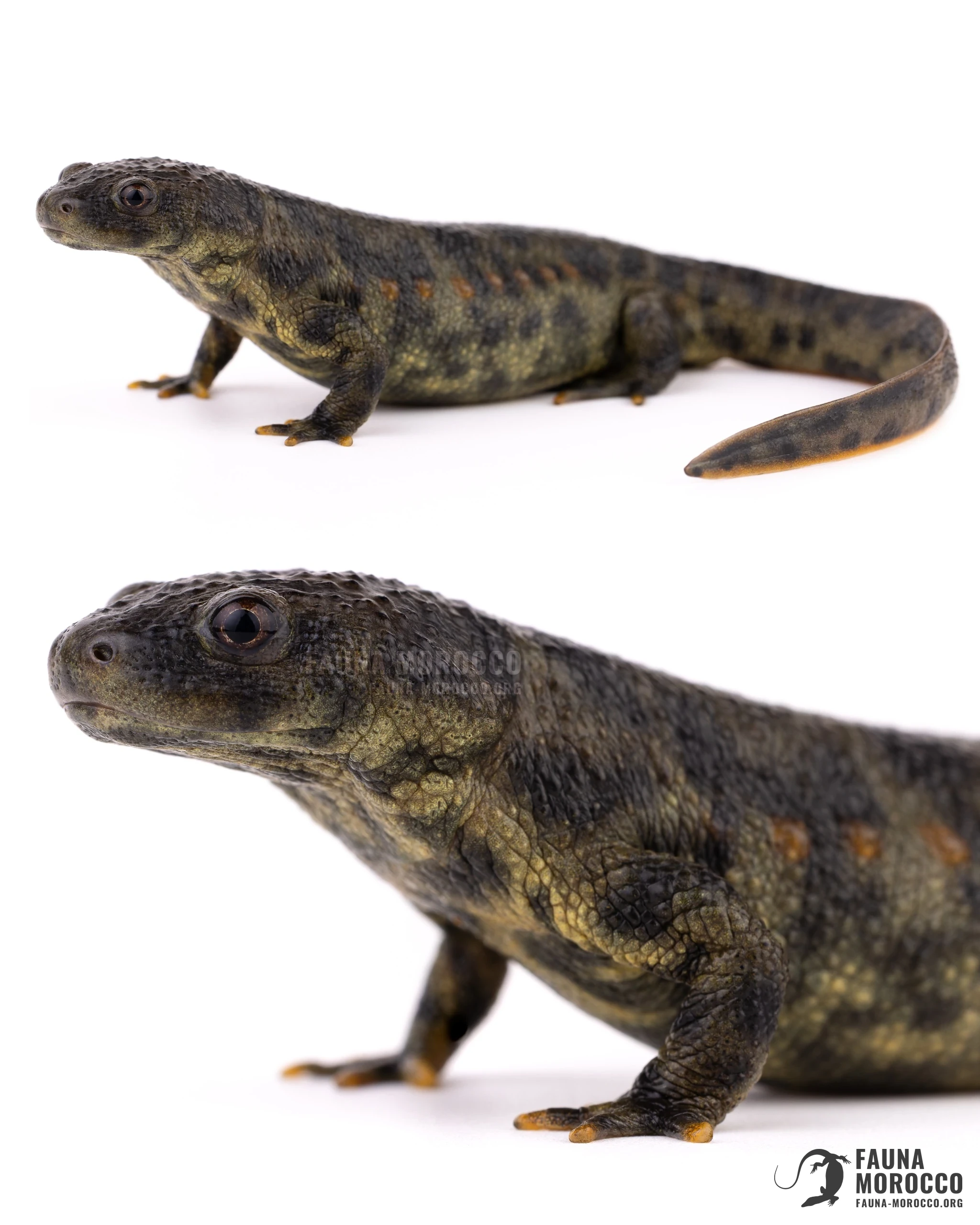
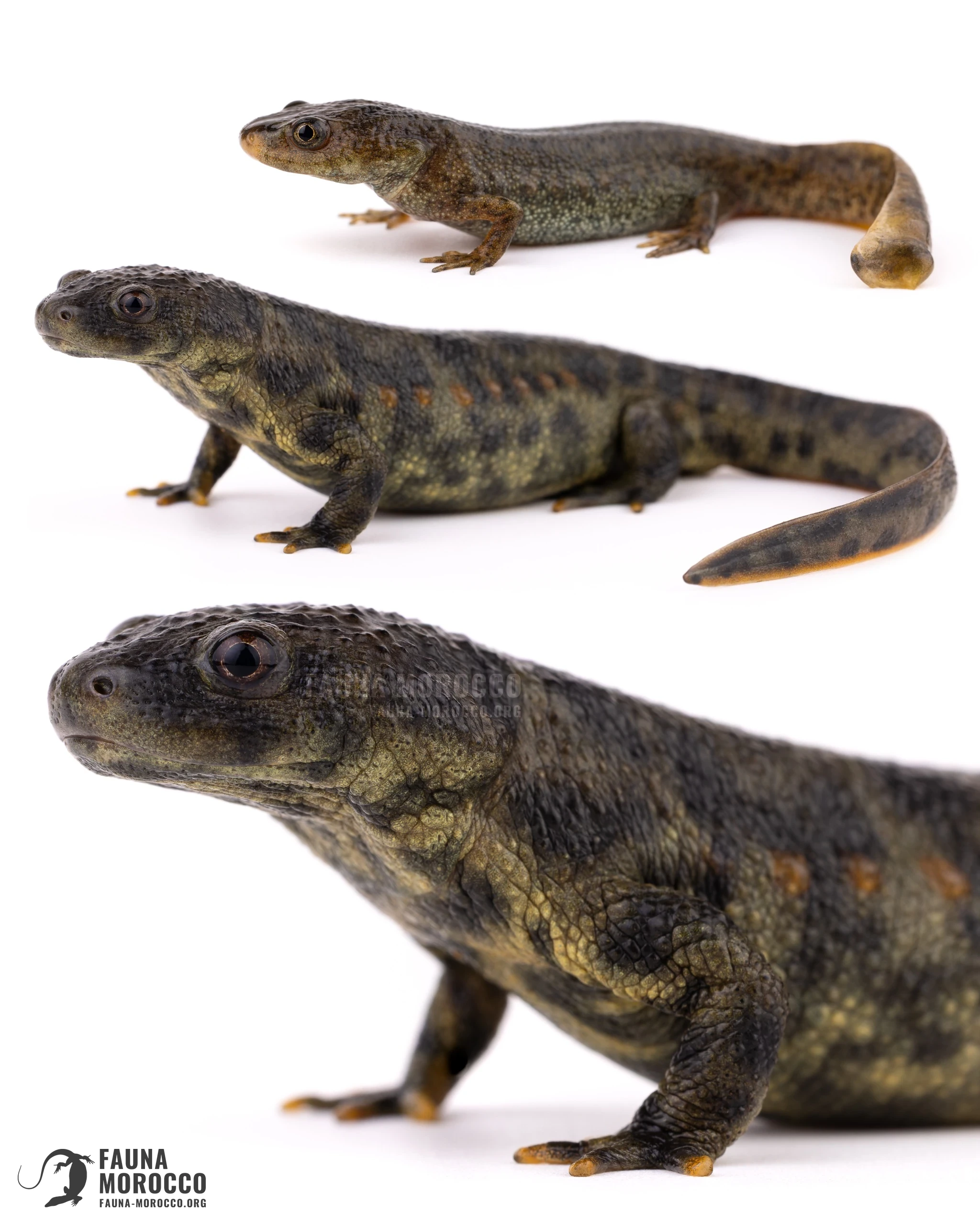
Sharp-ribbed Newt (Pleurodeles waltl), adult, northern Morocco

The Sharp-ribbed Newt (Pleurodeles waltl) carries one of the strangest weapons in the animal world: when attacked, it pushes its own sharp ribs out through the skin of its flanks, and a toxin on the skin turns each exposed rib tip into a poison-coated spine8. It reached North Africa long ago from the Iberian Peninsula, just across the Strait of Gibraltar. It is also one of the very few animals ever sent into space, where it was studied and even bred aboard orbiting stations4.

Today it is at once a living reminder of Morocco’s ancient wildlife link with Europe and a quiet witness to the fate of the country’s wet areas, which are shrinking under the combined pressure of human development and drought.

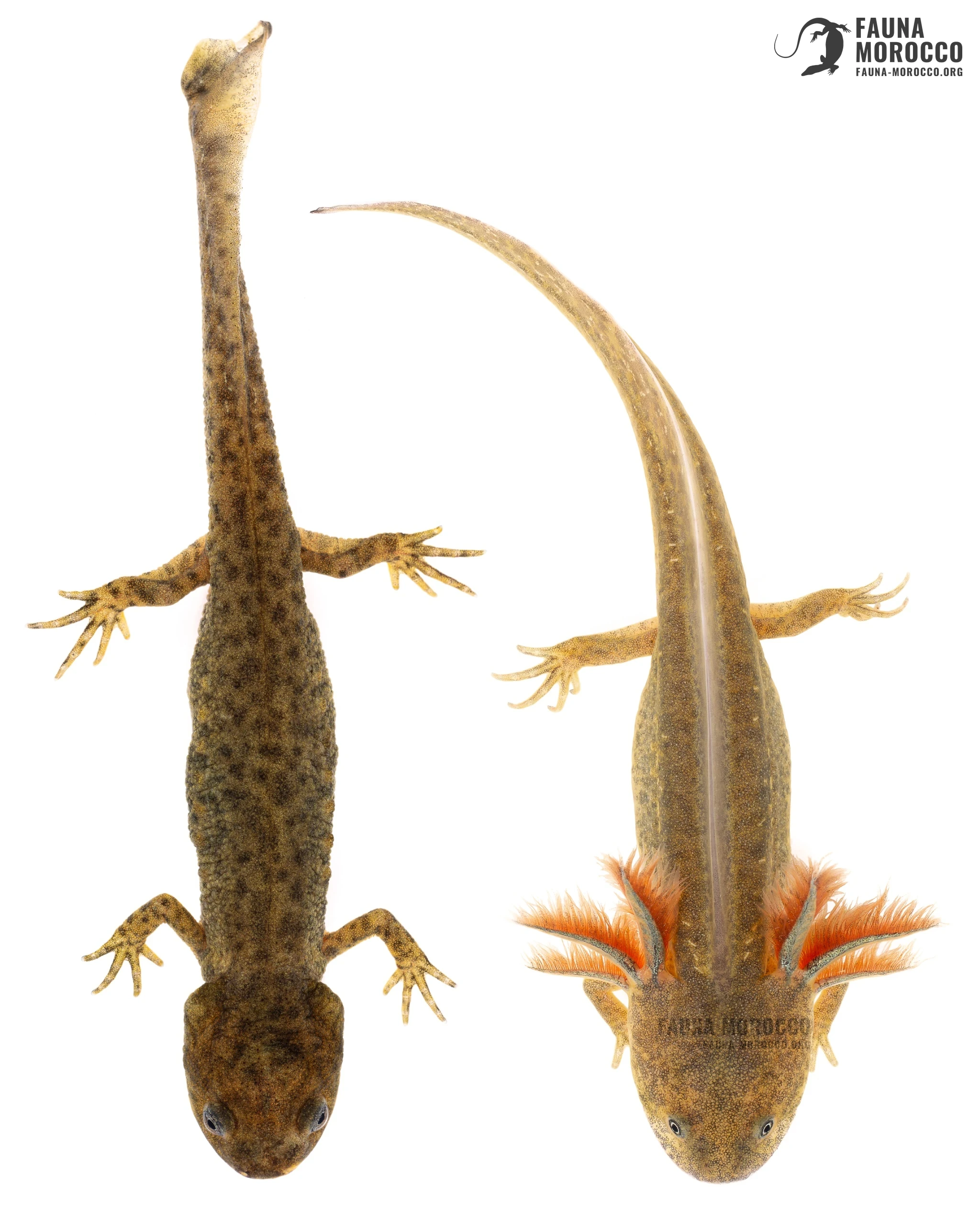
The Sharp-ribbed Newt (Pleurodeles waltl) is a large newt, reaching up to around 30 cm in total length, though specimens over 20 cm are already rare. The back is grey with darker markings and the underside paler. On land the colours become duller and slightly darker1. A row of small orange warts runs along each flank, sitting directly over the rib tips and marking the points where they can pierce the skin, the poison-coated ribs the newt uses in defence8. A faint orange line is sometimes visible along the top of the tail, and the larvae are light grey1.

Sexual dimorphism is modest: females grow larger, while males have proportionally longer limbs and a longer tail1. Moroccan animals are on average smaller than Iberian ones, with females from the Maâmora forest near Rabat averaging about 17 cm in total length (up to 27 cm) and males about 13 cm2.

The genus Pleurodeles contains three species, but only the Sharp-ribbed Newt (Pleurodeles waltl) occurs in Morocco and the Iberian Peninsula. The other two, Pleurodeles nebulosus and Pleurodeles poireti, are restricted to the eastern Maghreb (Algeria and Tunisia). Early Moroccan records were mistakenly assigned to Pleurodeles poireti, and a supposed second species near Rabat was later disproved: all Moroccan newts are Pleurodeles waltl2.

Genetically, the species splits into two main lineages, Western and Eastern. The Moroccan newts belong to the Eastern one and are most closely related to those of southern and eastern Spain, having crossed the Strait of Gibraltar at least twice. Northern Morocco holds some of the species’ highest genetic diversity6.
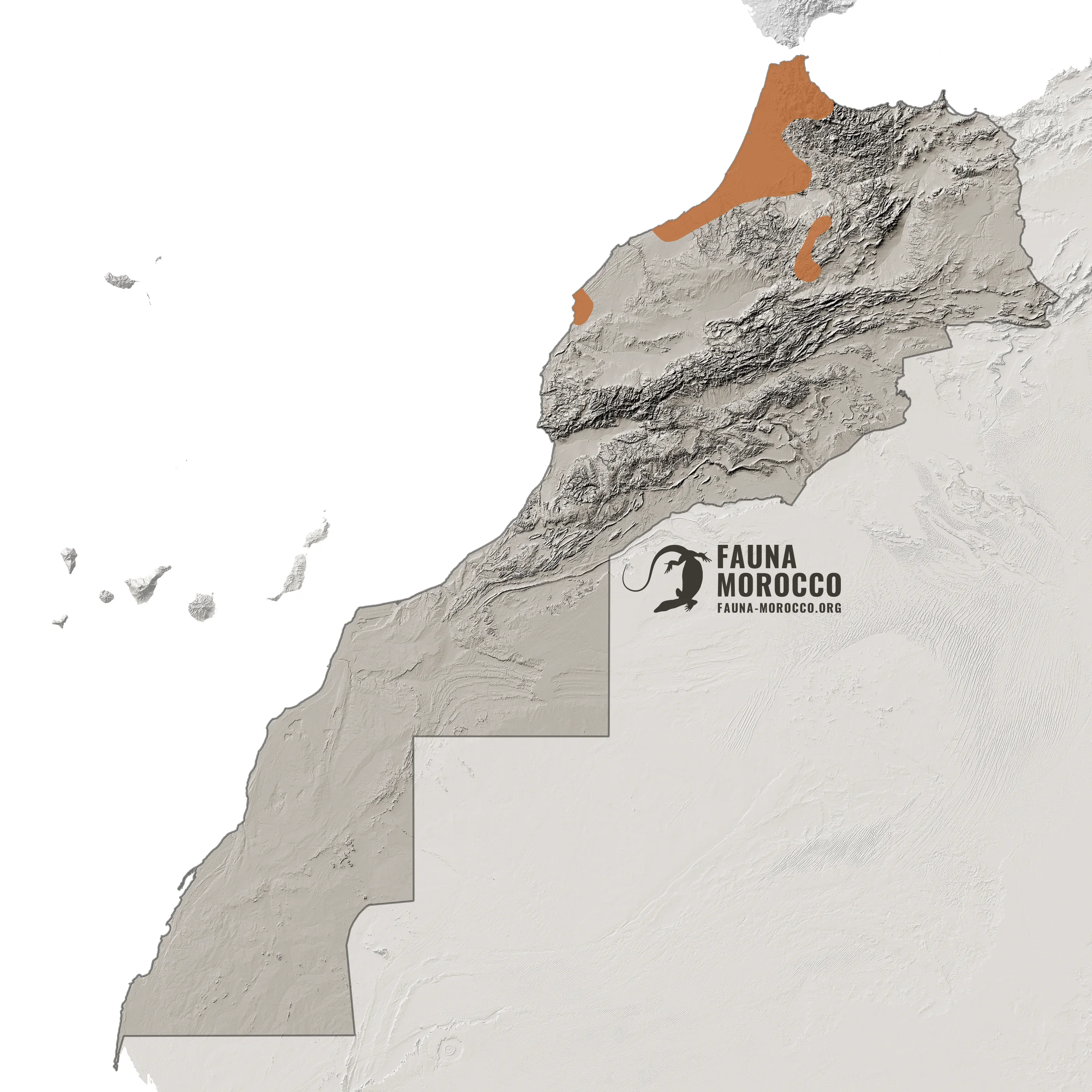
The Sharp-ribbed Newt ranges across the southern half of the Iberian Peninsula and northern Morocco, and is absent from heavily built-up areas such as much of the Moroccan coast2. In Morocco it lives mainly in the Atlantic lowlands, from the Tangier region in the north to the Essaouira area in the south, its southern limit, with strongholds in the cork oak forests of the Maâmora, Temara and Ben-Slimane near Rabat and across the Doukkala plain between El Jadida and Safi27. It is not confined to the lowlands, however: scattered populations occur in the western Rif near Chefchaouen and in the Middle Atlas lakes, such as Daït Ifrah and Daït Aoua near Ifrane (the latter at about 1,500 m)10, so the species ranges from the coast well up into the mountains92. A single adult was even found at Col du Zad (Khénifra) at 2,100 m in 2019, the highest elevation recorded for the species anywhere in its range and evidence that it reaches the alpine zone10. An unconfirmed report from the eastern Rif (Talamagaït), well outside the known range, rests only on local accounts and could not be verified despite targeted survey12.

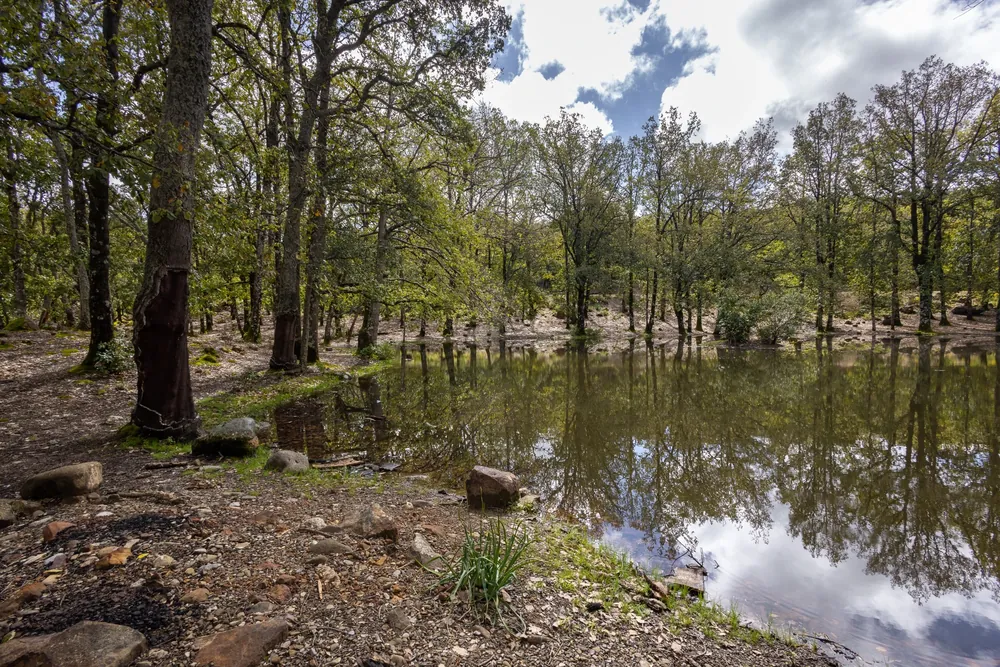
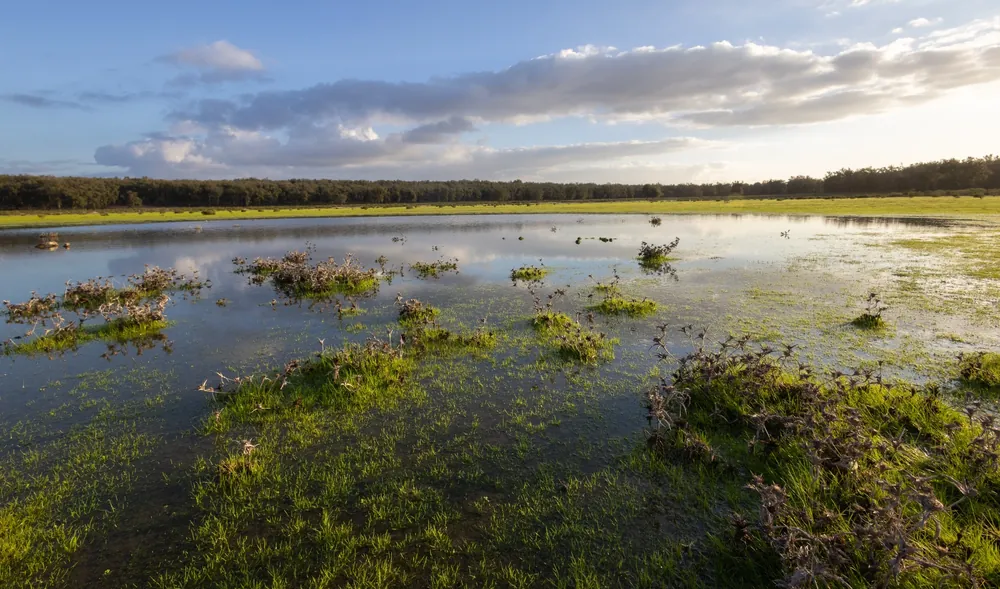
The Sharp-ribbed Newt is strongly tied to still water, typically deep ponds (permanent or temporary), flooded fields and lakes set within suitable terrestrial habitat such as forest or grassland. Aquatic vegetation is not required2. It is far from purely aquatic, however: it often comes onto land even when water is available, and sometimes overwinters underground in burrows or soil cracks (comm. pers.). The young in particular spend their first years on land, taking to the water only once they are old enough to breed2. When the pools dry out in summer, the adults too shelter on land, under stones and logs or in cracks in the clay soil72, and in Morocco the species has even been found inside caves, on bare clay ground9.

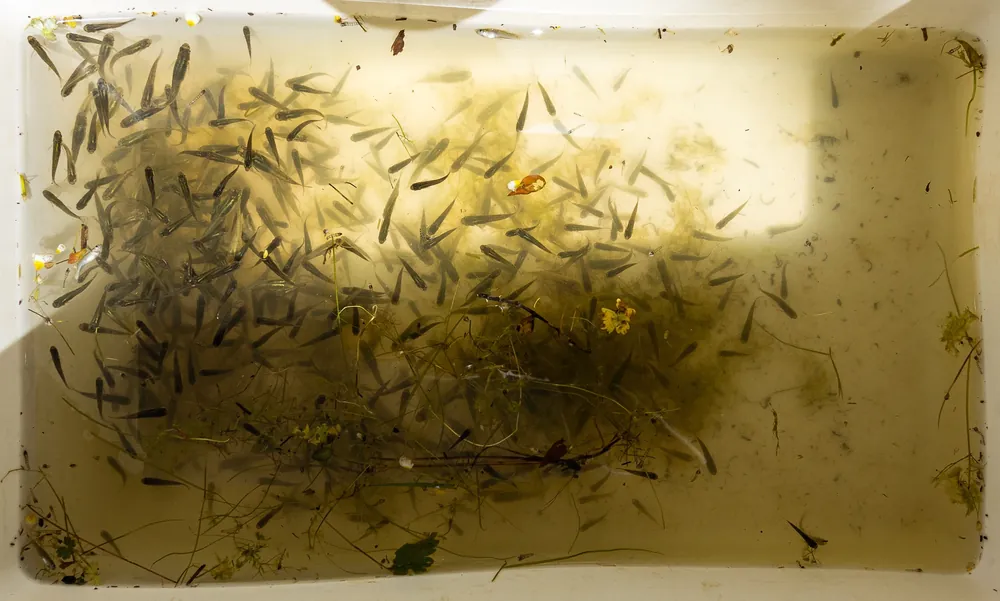
The larvae are opportunistic, feeding on whatever tiny aquatic animals are available and taking larger prey such as insect and amphibian larvae as they grow1. A pond is richest in food in the first weeks after it floods, and newly-hatched larvae depend on that early flush of small crustaceans. The newts that lay earliest therefore give their young the best start, which is why breeding success hinges on laying as early as possible5.

The Sharp-ribbed Newt defends itself through a mechanism unique among amphibians: it combines toxic skin secretions with sharp, mobile ribs that pierce its own skin without lasting harm. When the animal is threatened, the ribs swing forward until their tips break through the skin at the orange warts and project as rows of spines. The skin is pierced anew each time, and the toxic slime coating the body covers the spines, so that a predator biting down poisons itself. The mechanism is completely harmless to people handling the animal8. A newt that is picked up may also give a faint distress squeak, though Moroccan animals rarely do so13.

Mating takes place in winter and spring, when the males develop enlarged dorsal and ventral tail fins2, and dark nuptial pads on the forelimbs that help them keep their grip on the female during mating1. The male grips the female with his front limbs and manoeuvres her over a sperm packet he has deposited, a process that can last from a few hours to several days. The female then lays up to about 1,300 eggs, each around 5 mm across, in small clusters on submerged plants or objects. The larvae hatch after about two weeks at roughly 1 cm and metamorphose into land-living juveniles after some four months, once they reach 5 to 10 cm1. In Morocco, breeding follows the winter rains and the flooding of the pools, and also occurs in permanent waters such as the Middle Atlas lakes. Its timing depends on altitude, beginning later at the higher, colder mountain sites than in the lowlands, where larvae appear as early as January2.

Once fully grown, these newts can live up to about 20 years in the wild, though 8 to 10 years is already a long life1.

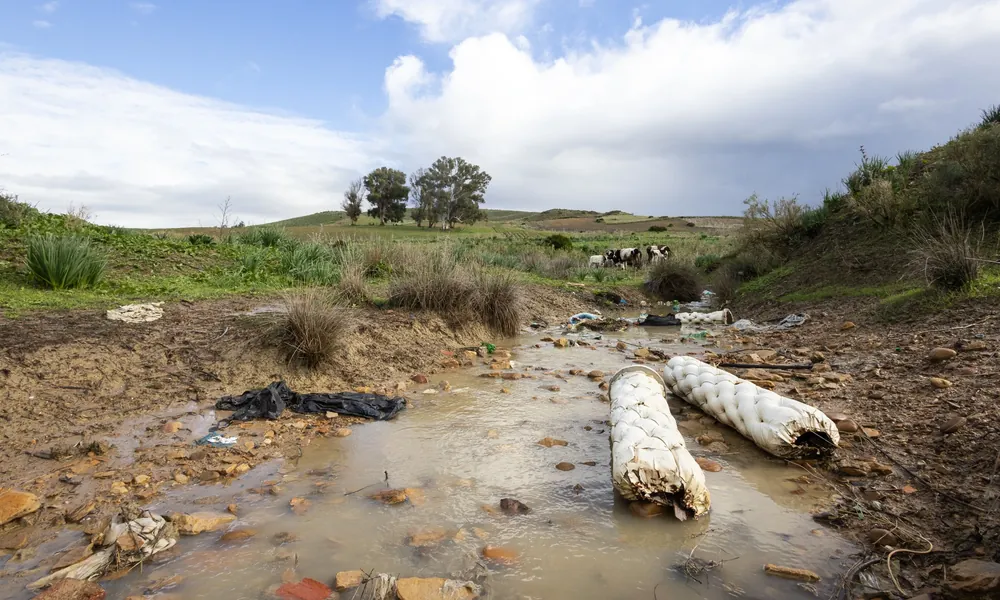
Globally, the Sharp-ribbed Newt is listed as Least Concern in the latest IUCN assessment (2023), having been Near Threatened in the earlier 2006 and 2009 assessments11. In Morocco it is considered Near Threatened14. Its numbers are falling mainly through the loss of breeding sites, as wet areas are built over or dry out under urbanization, climate change and drainage. Heavy water pollution, sometimes linked to livestock, is a further threat, and introduced fish and the Red Swamp Crayfish (Procambarus clarkii) prey on the eggs, reducing recruitment1114. The Mosquitofish (Gambusia sp.), introduced to control mosquitoes (pers. obs.), also preys on amphibian eggs and larvae15. In the north-western Rif it is the rarest amphibian of the Mediterranean Intercontinental Biosphere Reserve, and most of its known sites there lie outside the existing protected areas3.

  1. AmphibiaWeb (2025). Pleurodeles waltl. University of California, Berkeley. https://amphibiaweb.org (consulté le 25 février 2025).
  2. Beukema, W., de Pous, P., Donaire-Barroso, D., Bogaerts, S., Garcia-Porta, J., Escoriza, D., Arribas, O.J., El Mouden, E.H., & Carranza, S. (2013). Review of the systematics, distribution, biogeography and natural history of Moroccan amphibians. Zootaxa, 3661(1): 1-60.
  3. Boudajbir, C., Martínez-Freiría, F., Chergui, B., Fahd, S., & Brito, J.C. (2025). Atlas of amphibians and reptiles in the Moroccan section of the Mediterranean Intercontinental Biosphere Reserve: distribution patterns and habitat use. Basic and Applied Herpetology, 39: 27-43.
  4. Dournon, C., Durand, D., Tankosic, C., Membre, H., Gualandris-Parisot, L., & Bautz, A. (2001). Effects of microgravity on the larval development, metamorphosis and reproduction of the urodele amphibian Pleurodeles waltl. Development, Growth & Differentiation, 43: 315-326.
  5. Garcia-de-Lomas, J., Torres, J.M., Reques, R., & Hernández, I. (2012). Pleurodeles waltl newt larvae diet regarding available prey: choice or mere coincidence? Copeia, 2012(4): 756-761.
  6. Gutiérrez-Rodríguez, J., Barbosa, A.M., & Martínez-Solano, Í. (2017). Integrative inference of population history in the Ibero-Maghrebian endemic Pleurodeles waltl (Salamandridae). Molecular Phylogenetics and Evolution, 112: 122-137.
  7. Harris, D.J., Carretero, M.A., Brito, J.C. et al. (2008). Data on the distribution of the terrestrial herpetofauna of Morocco: records from 2001-2006. Herpetological Bulletin, 103: 19-28.
  8. Heiss, E., Natchev, N., Salaberger, D., Gumpenberger, M., Rabanser, A., & Weisgram, J. (2010). Hurt yourself to hurt your enemy: new insights on the function of the bizarre antipredator mechanism in the salamandrid Pleurodeles waltl. Journal of Zoology, 280(2): 156-162.
  9. Hernández, A. (2018). Salamandra algira splendens and Pleurodeles waltl in Moroccan caves; new distributional records. Herpetological Bulletin, 144: 19-21.
  10. Hernández, A., & Escoriza, D. (2020). Pleurodeles waltl Michahelles, 1830. Geographical Distributions. African Herp News, 73.
  11. IUCN SSC Amphibian Specialist Group (2023). Pleurodeles waltl. The IUCN Red List of Threatened Species 2023: e.T59463A89708437. https://dx.doi.org/10.2305/IUCN.UK.2023-1.RLTS.T59463A89708437.en
  12. Mediani, M., Brito, J.C., & Fahd, S. (2015). Atlas of the amphibians and reptiles of northern Morocco: updated distribution and patterns of habitat selection. Basic and Applied Herpetology, 29: 81-107.
  13. Pasteur, G. (1958). Sur la systématique des espèces du genre Pleurodeles (Salamandridés). Bulletin de la Société des Sciences Naturelles et Physiques du Maroc, via Beukema et al. (2013).
  14. Pleguezuelos, J.M., Brito, J.C., Fahd, S., Feriche, M., Mateo, J.A., Moreno-Rueda, G., Reques, R., & Santos, X. (2010). Setting conservation priorities for the Moroccan herpetofauna: the utility of regional red lists. Oryx, 44(4): 501-508.
  15. Cabrera-Guzmán, E., Díaz-Paniagua, C., & Gómez-Mestre, I. (2017). Competitive and predatory interactions between invasive mosquitofish and native larval newts. Biological Invasions 19(5): 1449–1460.

How to cite

Ruffieux, C., & Vuillemin, R. (2026). Sharp-ribbed Newt (Pleurodeles waltl). In: Castella, C., Iallaten, H., Ruffieux, C., & Vuillemin, R. (Eds.), Fauna Morocco. The Free Encyclopedia: Reptiles & Amphibians of Morocco. Available from https://fauna-morocco.org/encyclopedia/caudata/pleurodeles-waltl.html (accessed 4 September 2026).

Published

4 September 2026

Last updated

21 September 2026

Authors

Colin Ruffieux
Rayane Vuillemin

Reviewers

Clément Castella
Haytam Iallaten
Mohamed Taha Aissaoui

Photography

Rayane Vuillemin

Methodology

Each account is a scientific synthesis: we compile the literature, read each paper in full, verify facts against their original sources when possible, and flag uncertainties for expert review. It is written first in English, reviewed by the team, then translated into French and Arabic. Every claim is referenced, and accounts are updated as knowledge advances. If you spot a mistake or an omission, please get in touch so we can fix it.