Salamander mission
Northern MoroccoDecember 2024
11species
photographed
5new
species
Reported by Valentin Peguiron & Rayane Vuillemin
Mission objectives
A third test expedition, in northern Morocco, closing the exploratory phase of our project.
We carried out two test expeditions at the beginning of the Fauna Morocco project. Their purpose was simple: first, to assess the feasibility of the project, and then to create a pilot version in order to publicize it and raise funds to finance its completion.
After these first two trips to the Atlas Mountains and southern Morocco (in April and then in August and September 2024), we decided to organize a third one, again at our own expense, this time in the north of the country.
Although winter is not the ideal season for observing reptiles, it does mark the beginning of the amphibian breeding period, triggered by the first cold rains at the end of the year. It is precisely in northern Morocco that most of the amphibian species still missing from our inventory are found.
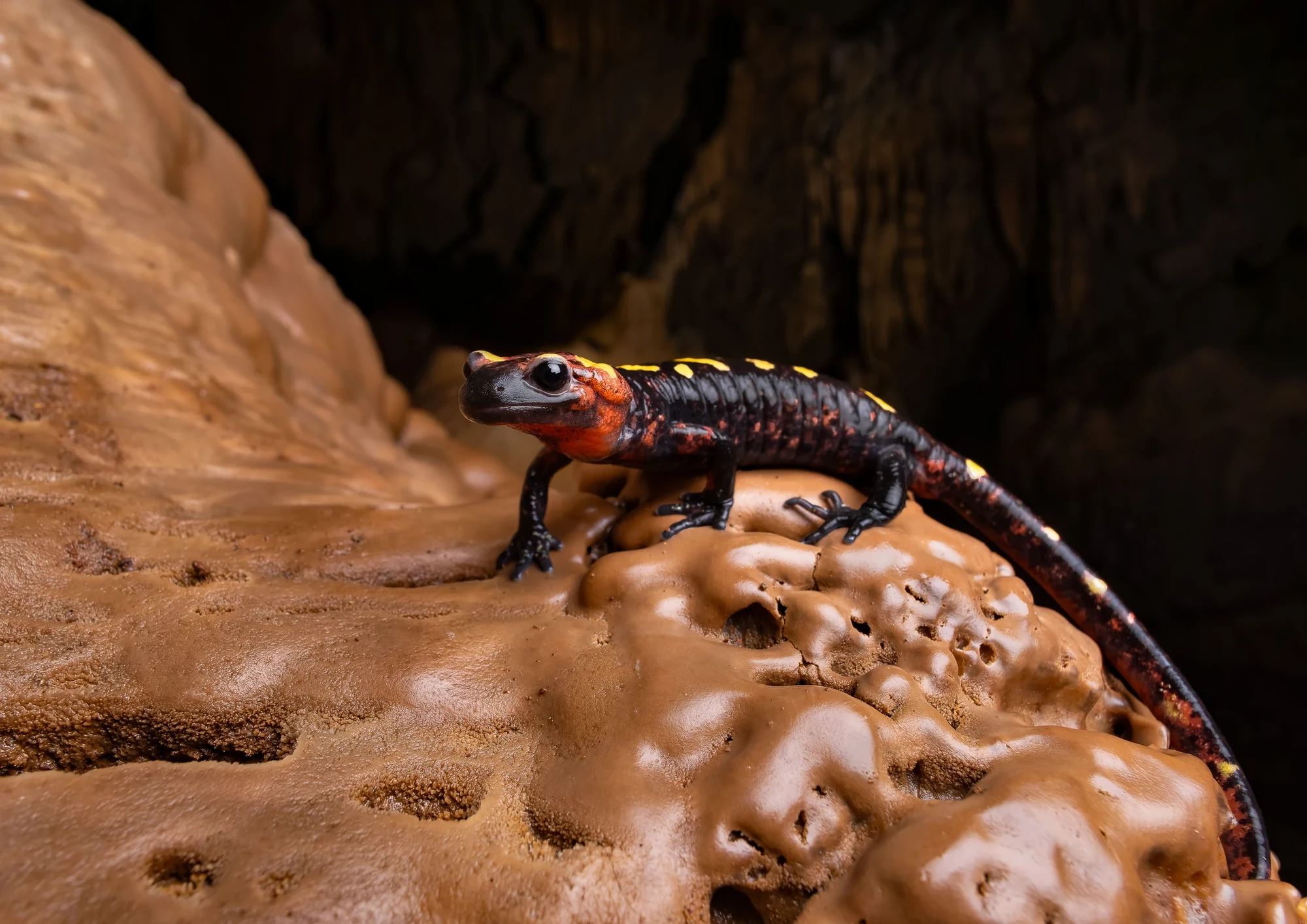
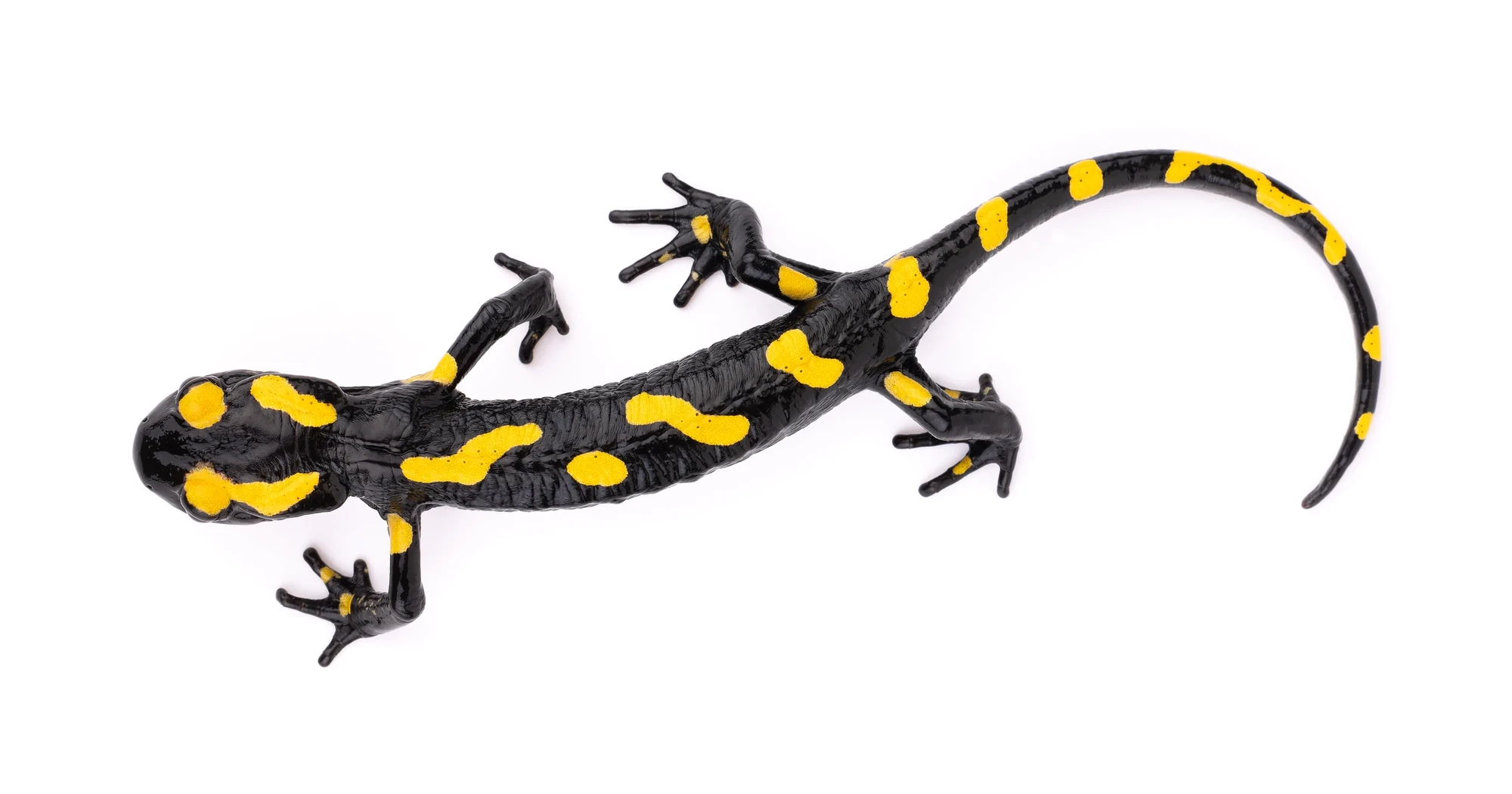
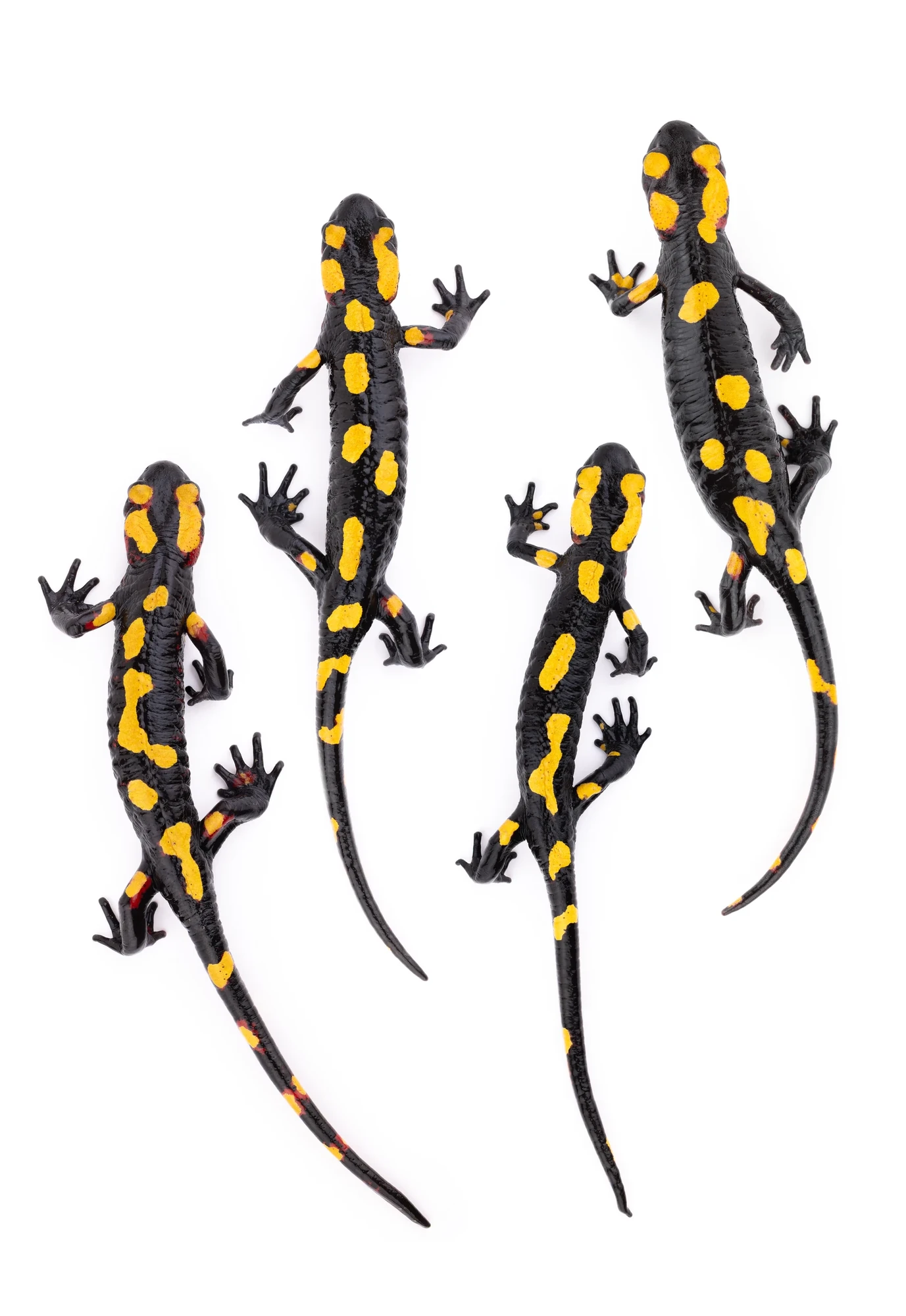
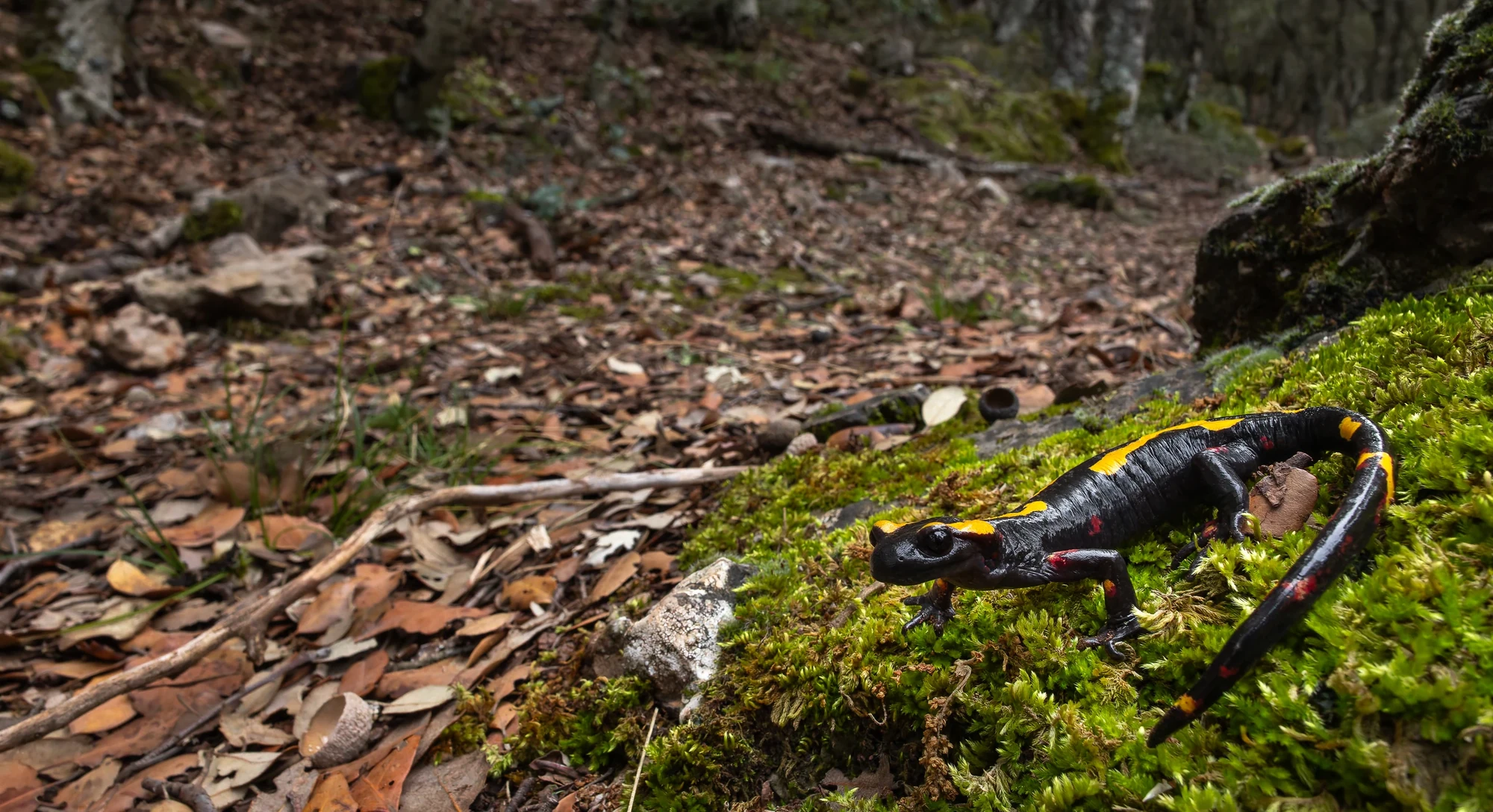
An emblematic species of the Maghreb mountains, the North African Fire Salamander (Salamandra algira) was the main target of this expedition. With its four subspecies present in Morocco, its distinct genetic clades, and a surprising variability between localities, we built our entire itinerary around it.
Our goal was clear from the start: to search for the four subspecies and the known genetic clades, while identifying their habitats in order to prepare future, more targeted missions.
This final trip marks an essential milestone in the development of the Fauna Morocco project: it concludes our exploratory phase and opens the door to seeking funding and partnerships to continue the project.



Mission objectives
The itinerary was designed so that we would spend at least one evening in each salamander locality visited. Rather than trying at all costs to observe individuals at every site, our main goal was to understand the habitat characteristics specific to each subspecies. The schedule, dense and precise, therefore left very little room for improvisation.
Our journey begins in Rabat, in mid-December.
We first focus on the populations of the Tingitane Peninsula, before gradually heading up through the Rif, and then continuing toward the Algerian border to explore the Beni Snassen massif.
Finally, we descend toward the Atlas Mountains to search for the last salamanders of the trip, before reaching Marrakech, from where Valentin will fly back to Switzerland for the holidays.
Field journal
We arrive in Rabat late in the morning, pleased to see that it had rained during our flight. The sky is now perfectly clear, but we hope that those few drops were enough to trigger amphibian activity, and that it also rained outside of Rabat.
We pick up the car and head straight to the Maâmora Forest, without much expectation but with the overflowing energy that comes with the start of a trip.
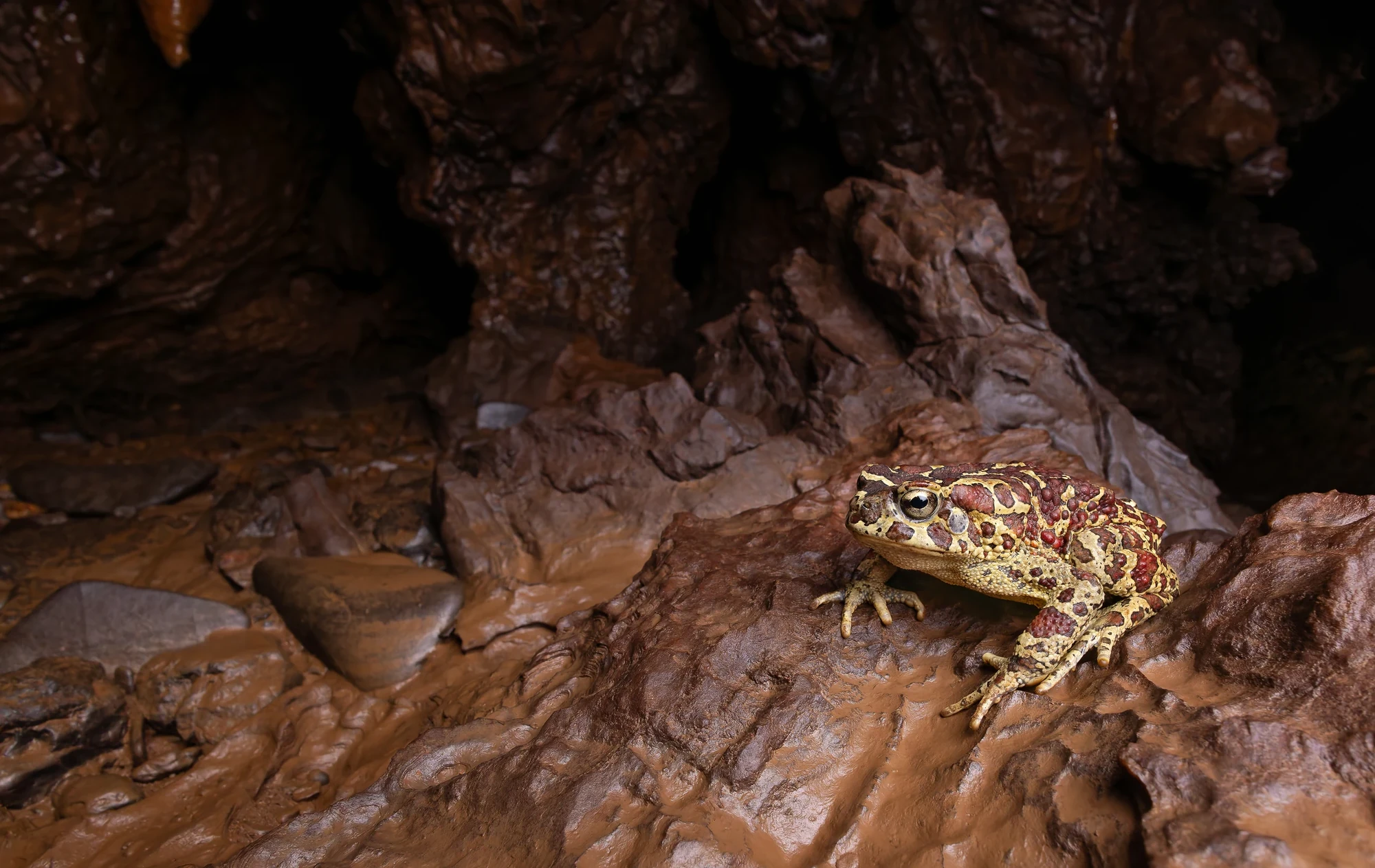
Maâmora is the best place in Morocco to observe Moroccan Spadefoot Toad (Pelobates varaldii). Given how dry the forest is, we have no real chance of finding one, but we do come across a few Moorish Tortoises (Testudo graeca marokkensis), as well as our first Moorish Toad (Sclerophrys mauritanica) of the journey.
With the heart of the Tingitane Peninsula as our destination for the day, and the intention of searching for our first salamanders that same evening, there is no time to waste.
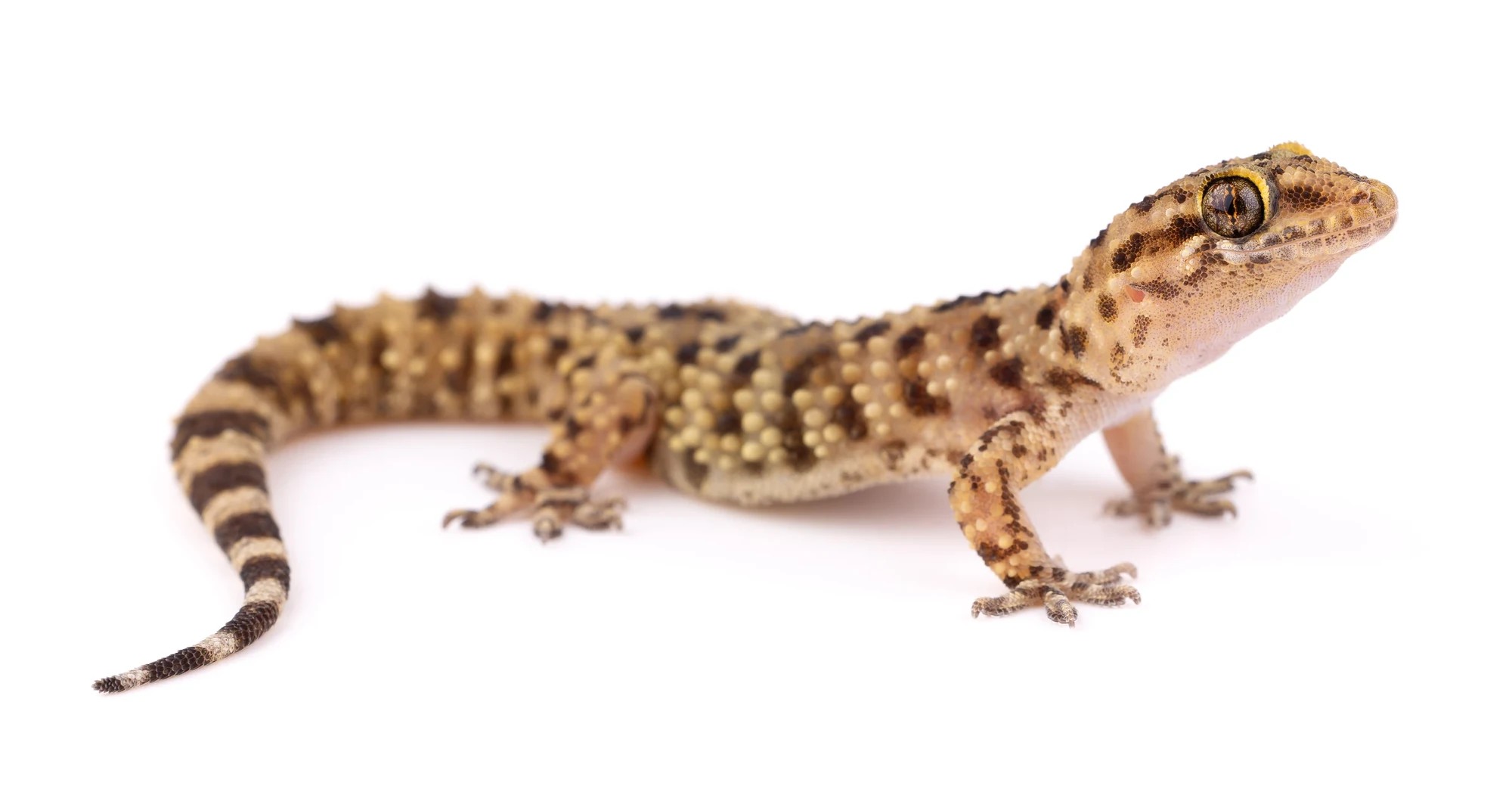
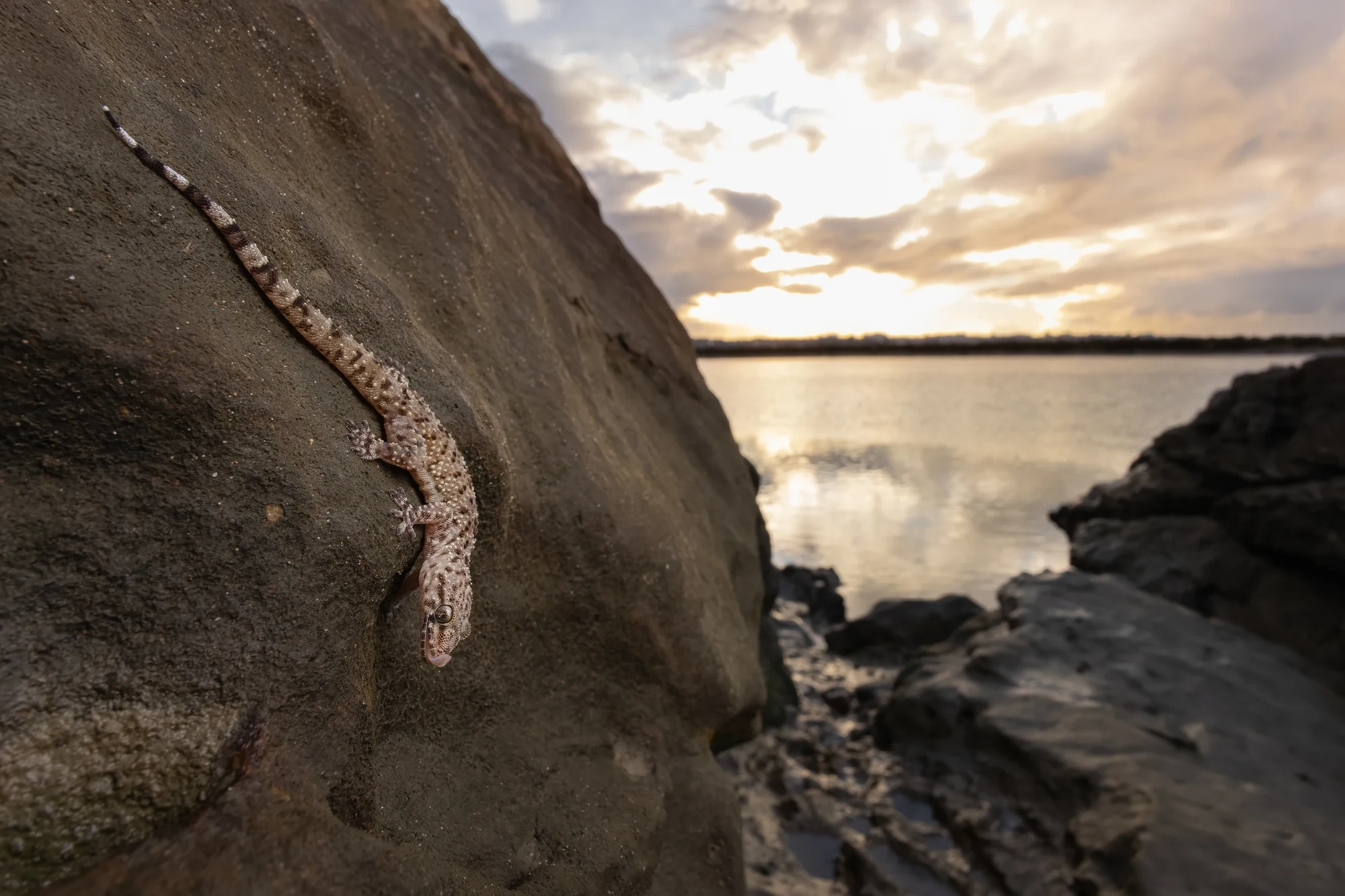
Still, we make a stop near Larache to visit the archaeological site of Lixus, on the banks of the Loukkos River, where we find some Mediterranean House Geckos (Hemidactylus turcicus), a new species for the project.
We get back on the road without delay, since we have not yet explored the sites planned for our night searches.
Our first stop proves disappointing, a new Moorish Toad (Sclerophrys mauritanica) found by the roadside, nothing more. The air is humid, but we do not know where to look for salamanders.
We move to a second spot. The hill is green, the bushes damp, and the only sound reaching our ears is the traffic on the road below. It is already late, so we decide to start searching seriously.
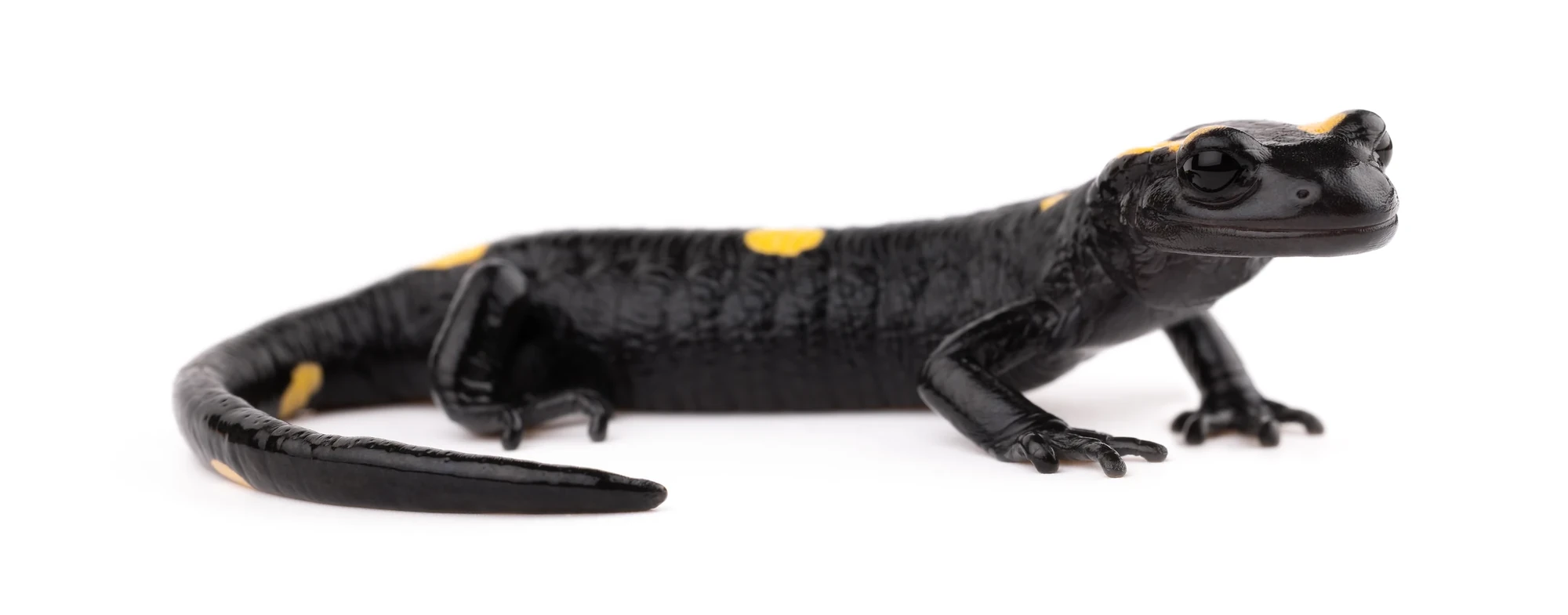
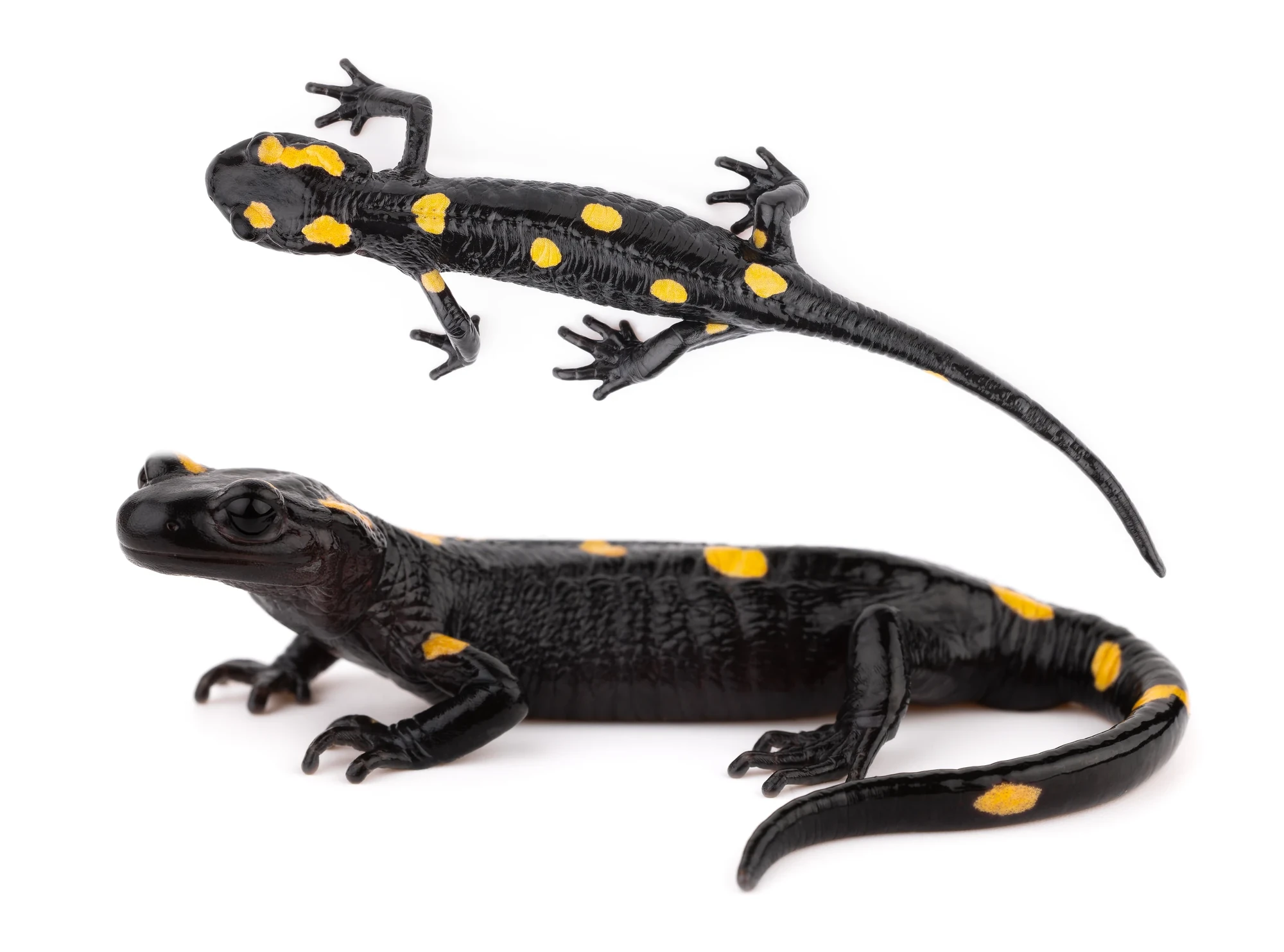
The quest begins, and in barely ten minutes, Valentin shouts, “Salamander!” In front of him, a dark individual spotted with yellow. We had been skeptical about finding salamanders on the first night!
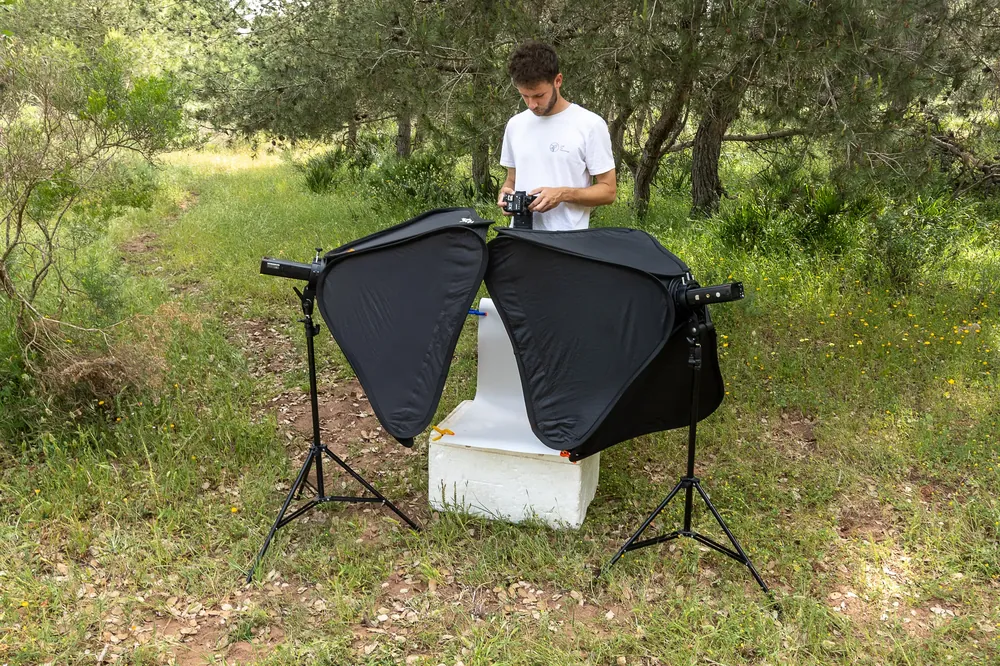
I set up the camera equipment while Valentin goes back to look for more individuals.
He returns quickly, headlamp off, with two men behind him without lights, armed with baseball bats.
The trip starts with a bang. Fortunately, the tension eases quickly, it is the mouqadam, the head of the neighboring village, concerned about the lights on the hill. His friend spins his bat while we explain ourselves, then reassured, they leave.
We find a second individual a few minutes later.
Field journal
After an intense but motivating first day, we now hope to maintain the results while reducing the element of unpleasant surprises.
The day is therefore focused on a lot of scouting, with the aim of selecting a spot that seems suitable for the evening, and of notifying the relevant authorities so that we can carry out our work peacefully.
The first sites we check prove disappointing for various reasons, but they allow us to discover and, above all, appreciate the magnificent landscapes of the Tingitane Peninsula. The clouds diffuse a beautiful light throughout the afternoon, revealing a green and peaceful Morocco.
It is only toward the end of the day that we finally come across a promising spot.
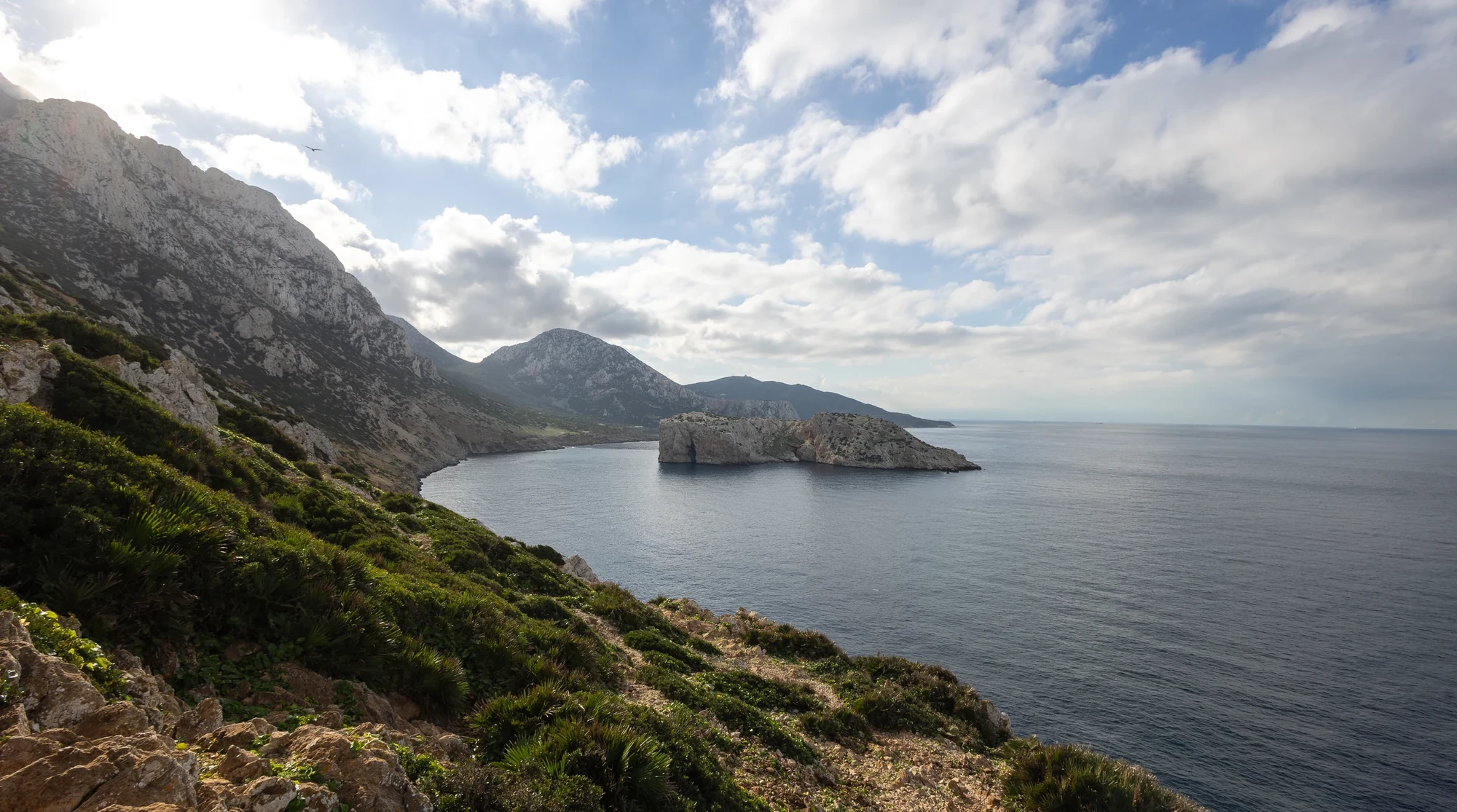
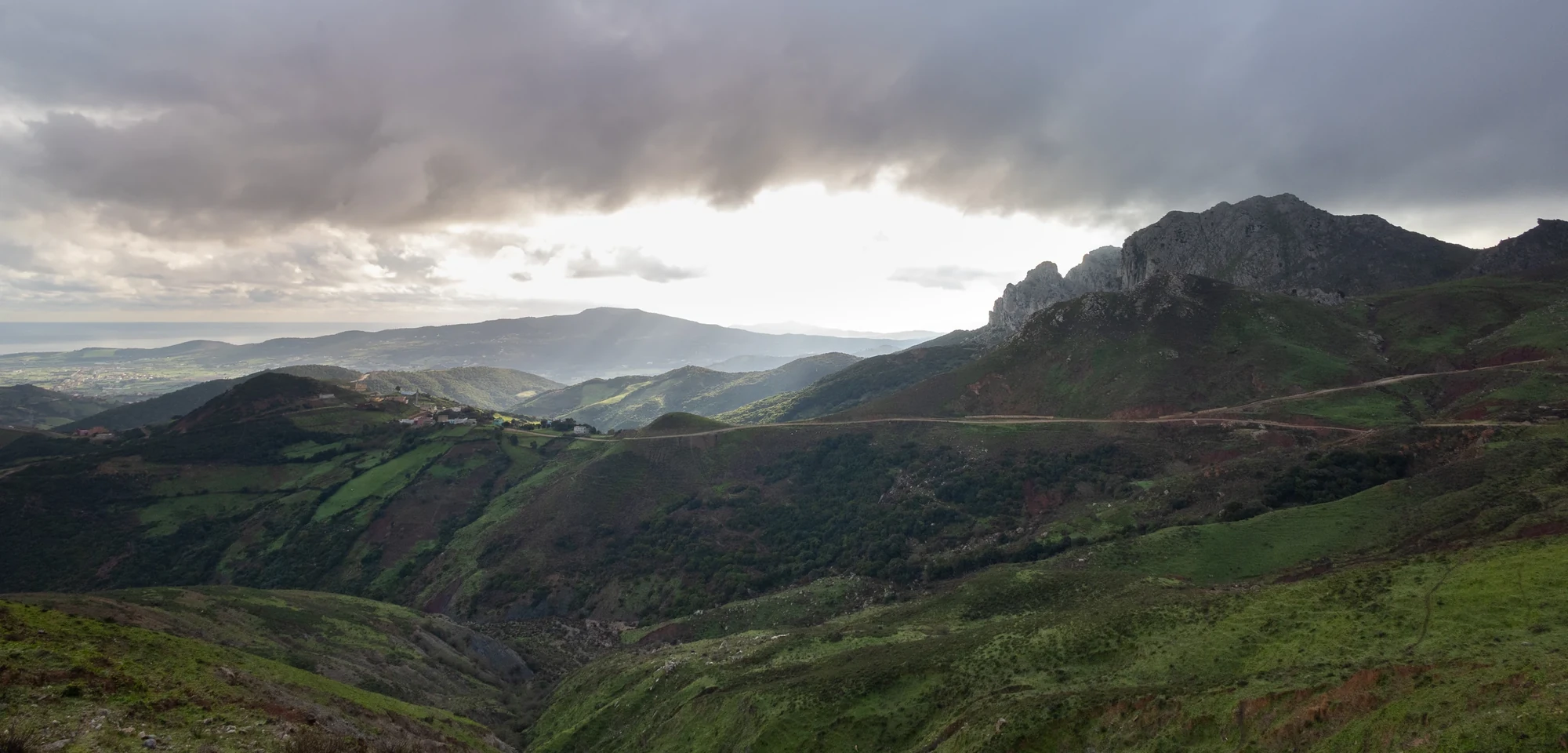
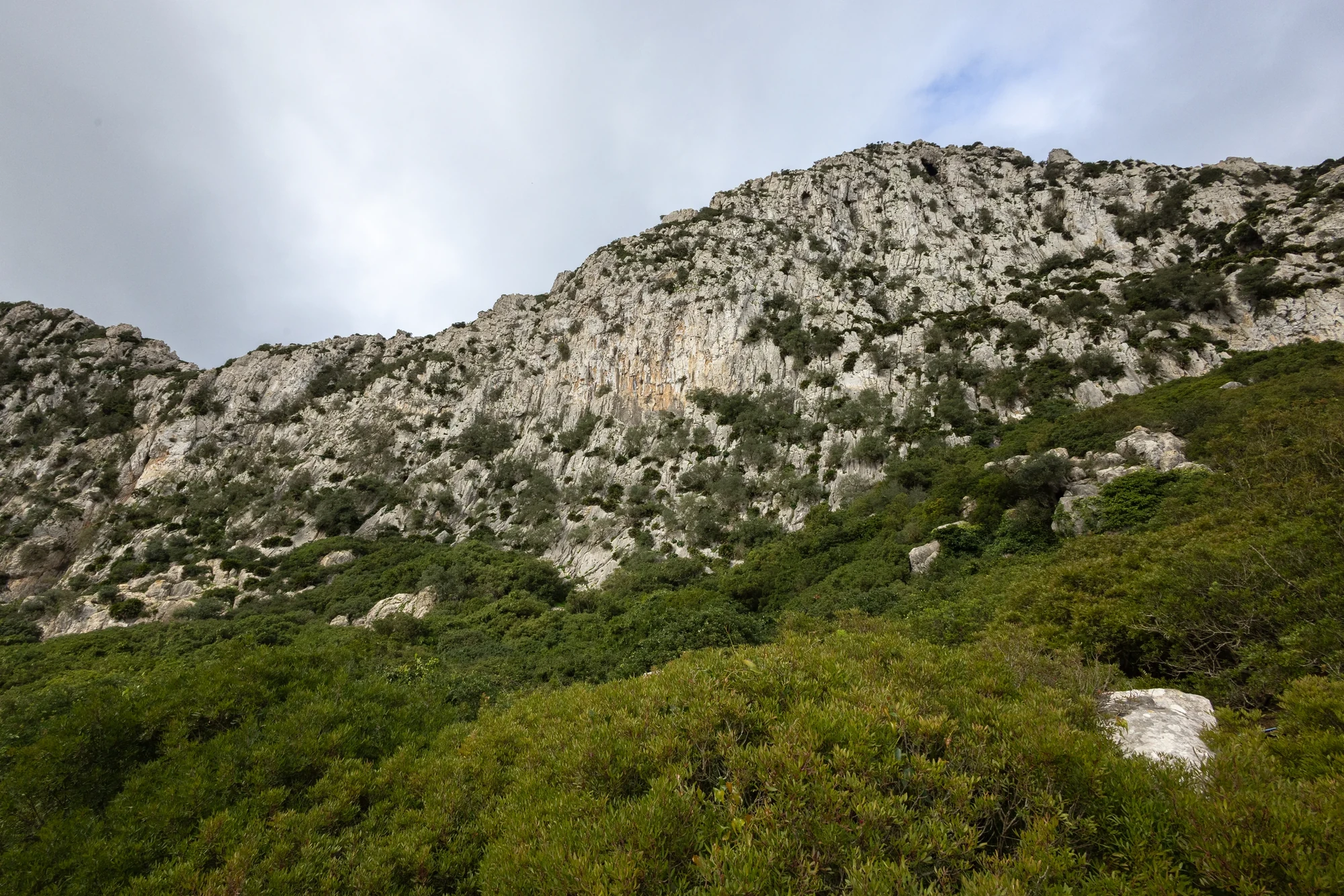
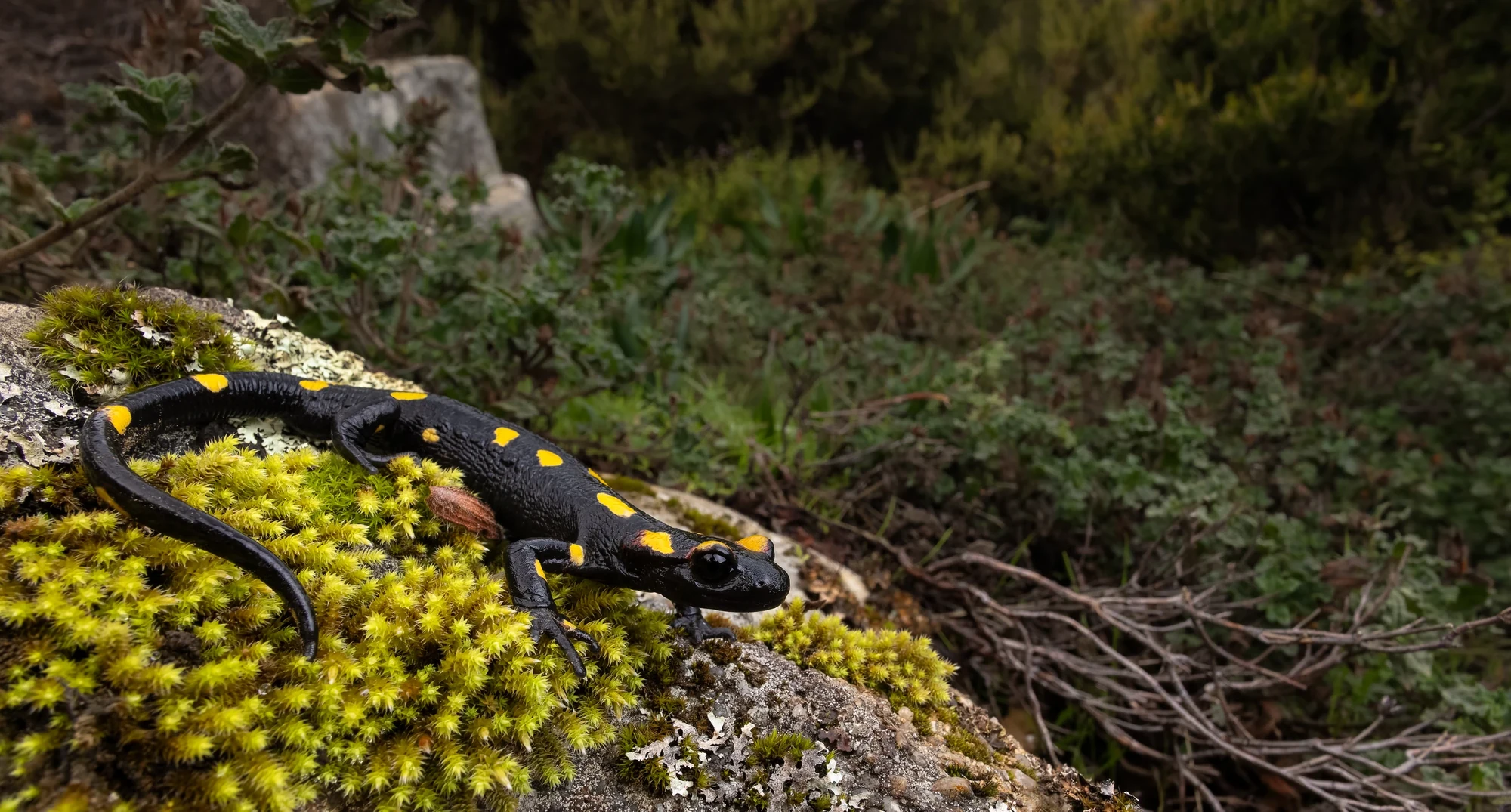
The landscape is stunning, open and dotted with light gray rocks, ferns, and moss. A few puddles by the roadside recall the rains of the previous day.
As night falls, the humidity is visible, but being inexperienced in searching for the species, we remain cautious despite our efforts to maximize our chances.
Yet, barely ten minutes into the search, Valentin finds one again. The evening is already a success.
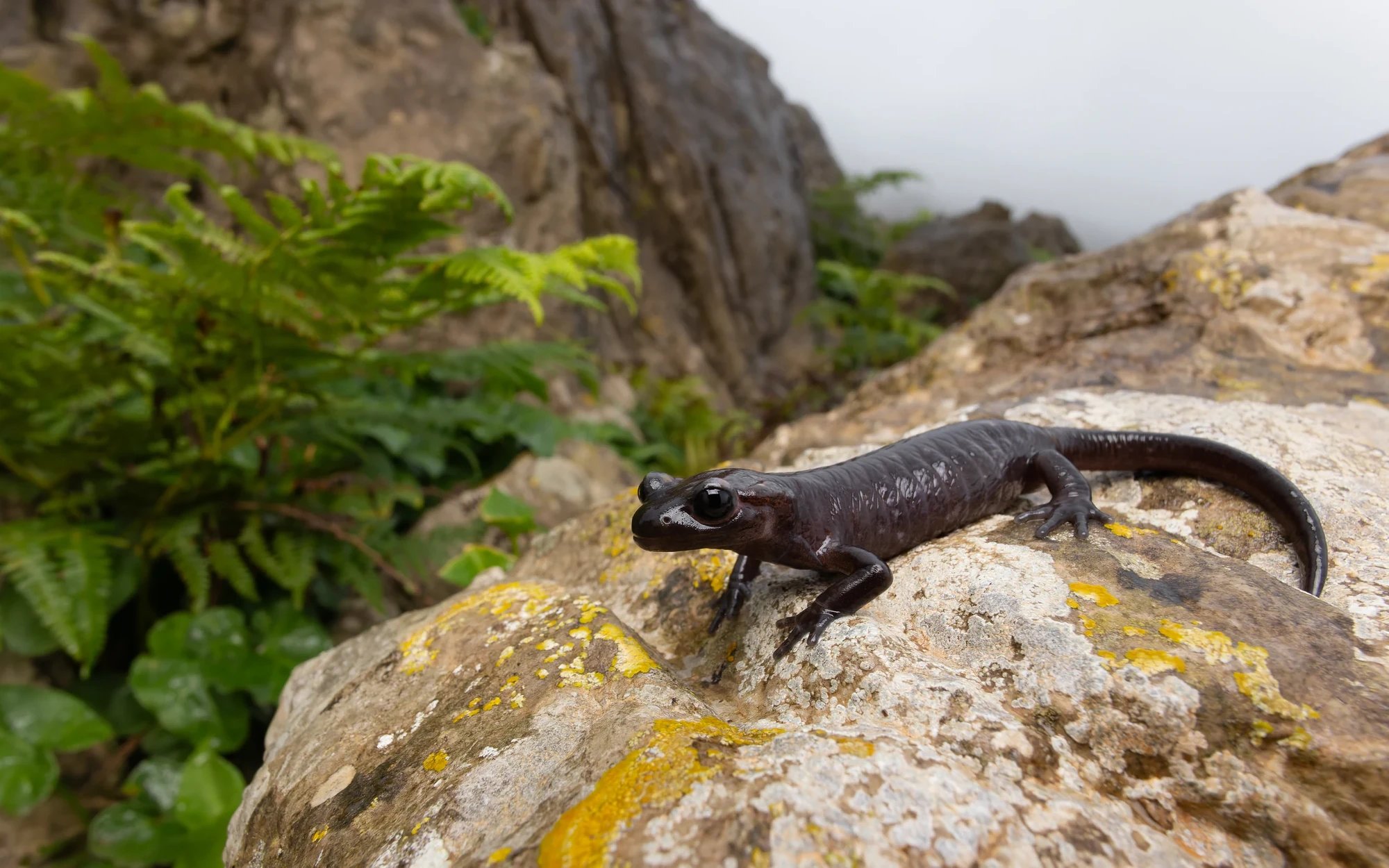
The local salamanders belong to clade 1 of the subspecies tingitana.
At this precise spot, the salamanders are very dark, almost without spots, viviparous, and truly endangered. Their habitat, limited to a few hills, is visibly deteriorating.
Field journal
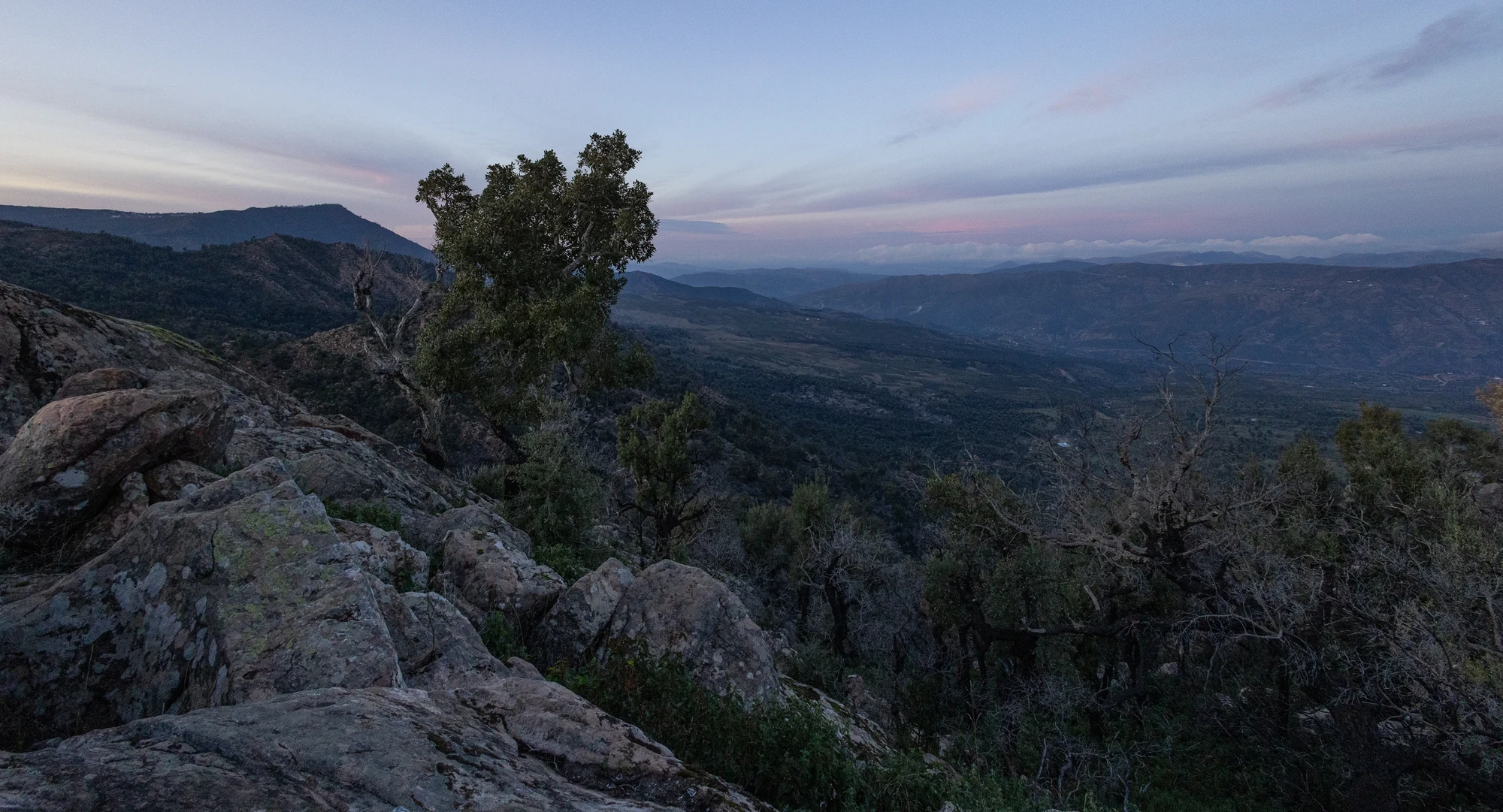
We get up very early, still pleased with the results from the previous day.
We haven't mentioned it yet, but it is extremely cold, and the rooms are generally poorly insulated. Getting out of bed is therefore an achievement, motivated mostly by the need to find a new spot for that very evening.
Today, our goal is to locate the third clade of Salamandra algira tingitana.
Breakfast awaits us. The setting is magnificent, and we learn that all around us, on the mountainsides, several groups of Barbary Macaques live.
After a short walk, we get back on the road. We know where we will sleep in the evening and that salamanders are nearby, but as on the previous day, we need to determine precisely where to search, before nightfall.
Several hours of driving follow, through the hills in the center of the peninsula. The landscapes change every fifteen minutes and are breathtaking.
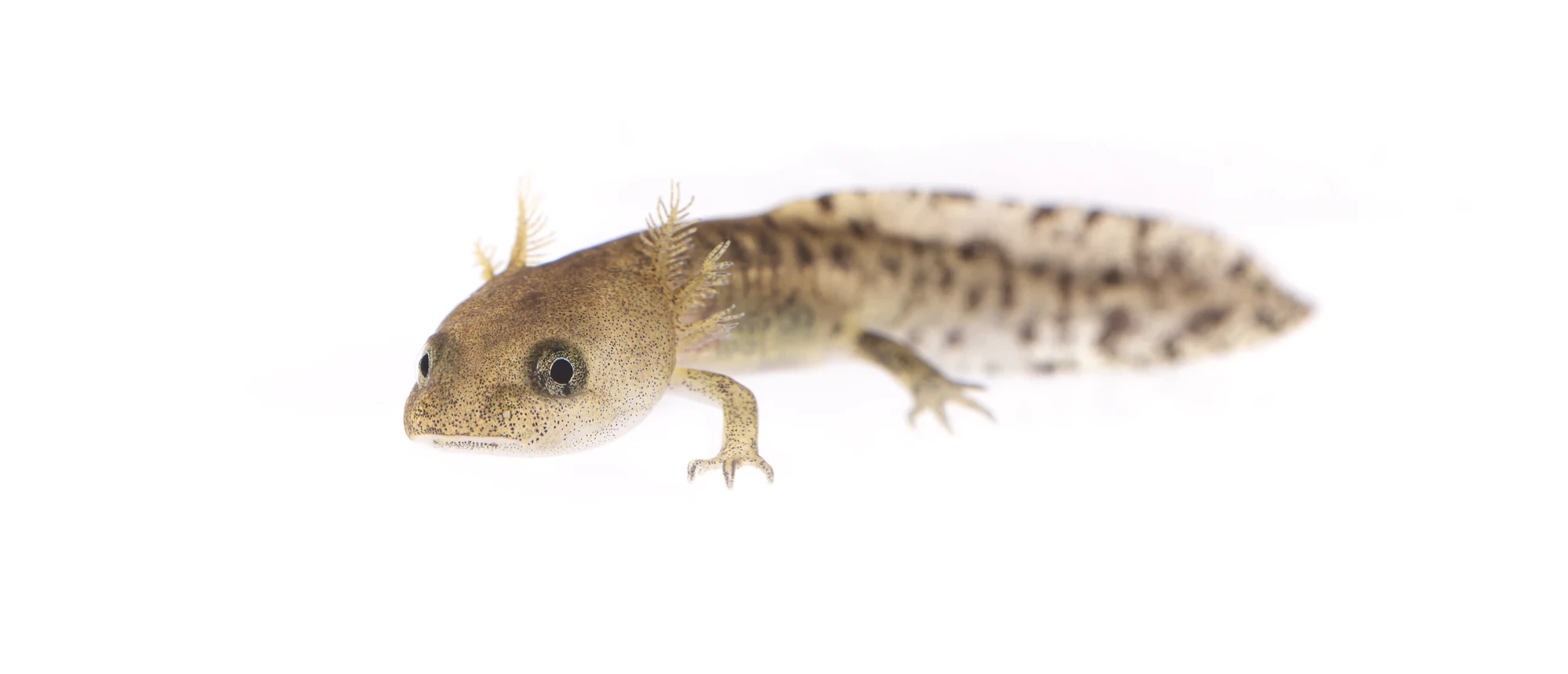
After multiple stops, a conversation with a shepherd, and an encounter with a group of macaques, we finally come across salamander larvae. All that remains is to return that same evening.
Since we still have a little time before sunset, we push a bit further, curious to explore the region.
Our ability to analyze the terrain improves, and we find a second potential spot for the evening.
It is now time to have dinner and rest a little in preparation for the nocturnal searches that await us.
It is time to return to the first spot.
The environment seems unfavorable for salamanders, dry and rather Mediterranean. Yet, the presence of larvae confirms that adults are nearby.
This is the first time we find signs of presence before seeing active individuals. Our mindset is therefore different this evening: they are here, we just need to find them.
Our search quickly pays off. Once again, it is Valentin who spots the first one, after only twenty minutes. Luck is certainly on our side.
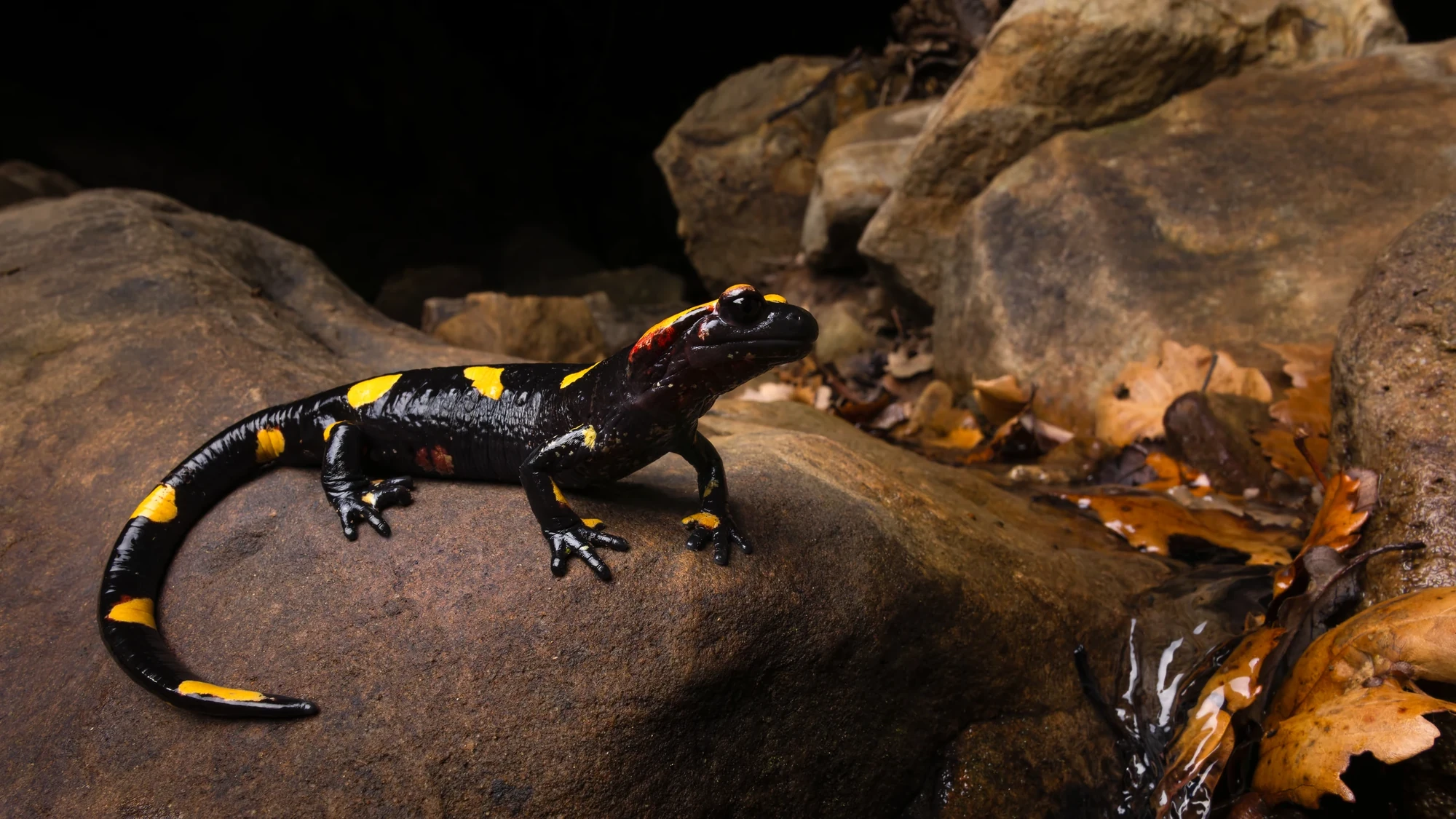
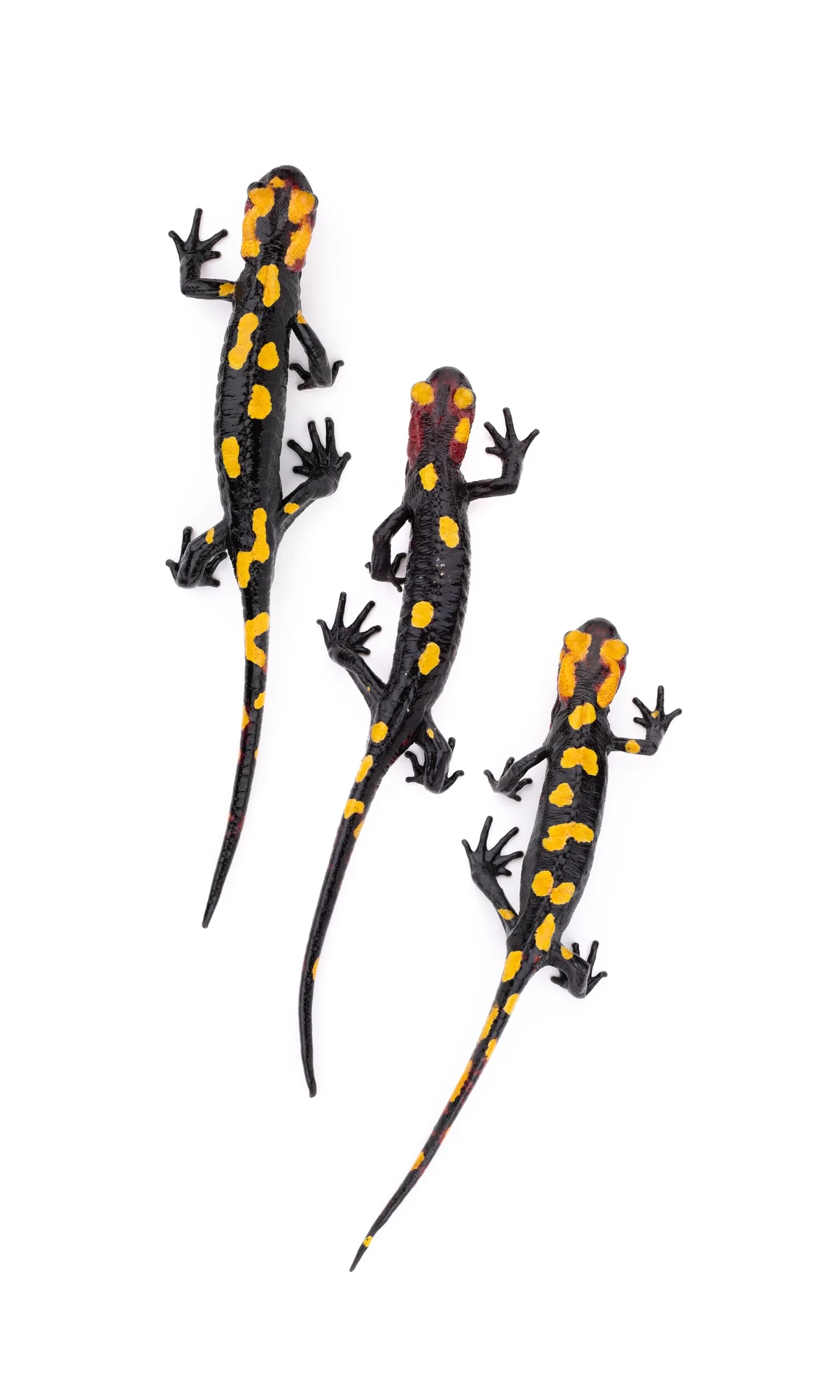
We find two more shortly after. These show more yellow than those of clade 2, with a few reddish spots, typical of populations further east. Here, the red remains subtle and dark.
We decide not to disturb the spot any longer and head to the second location scouted in the afternoon.
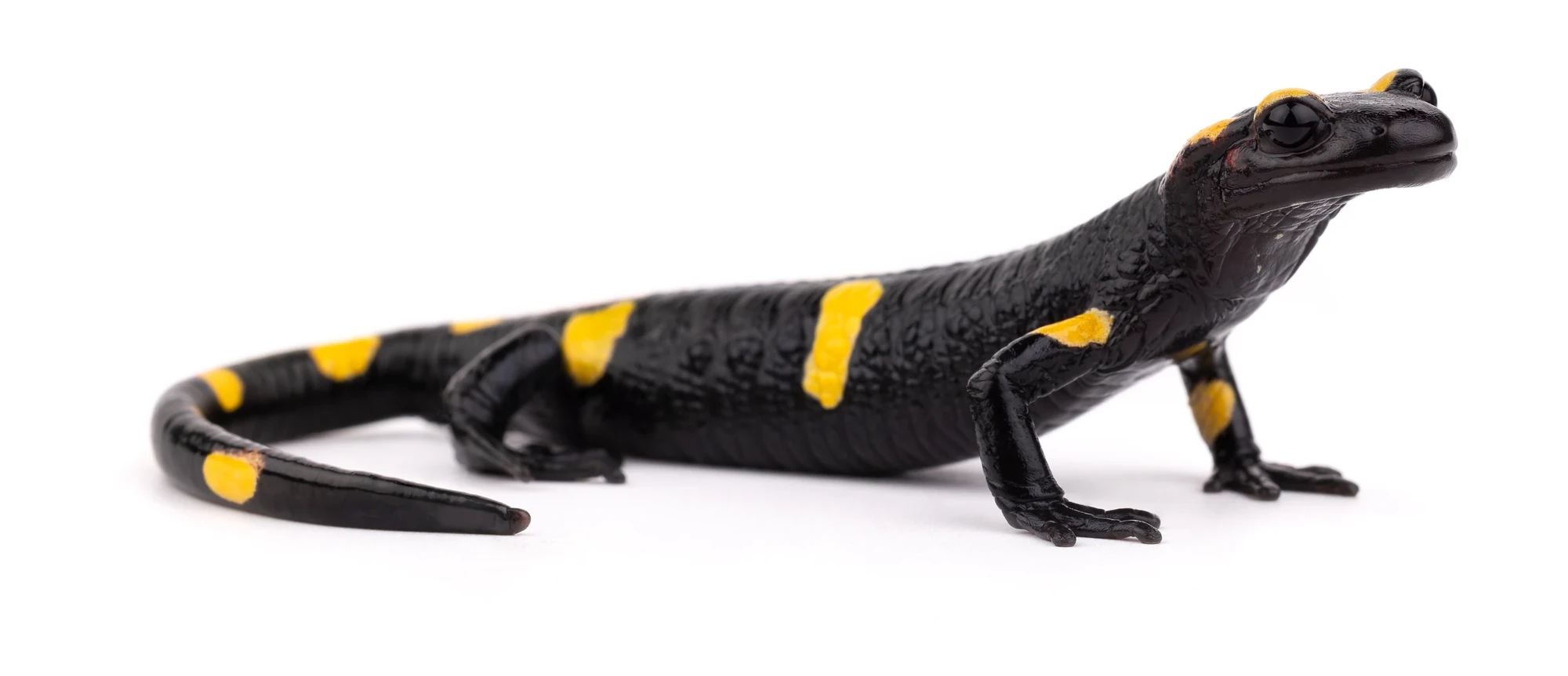
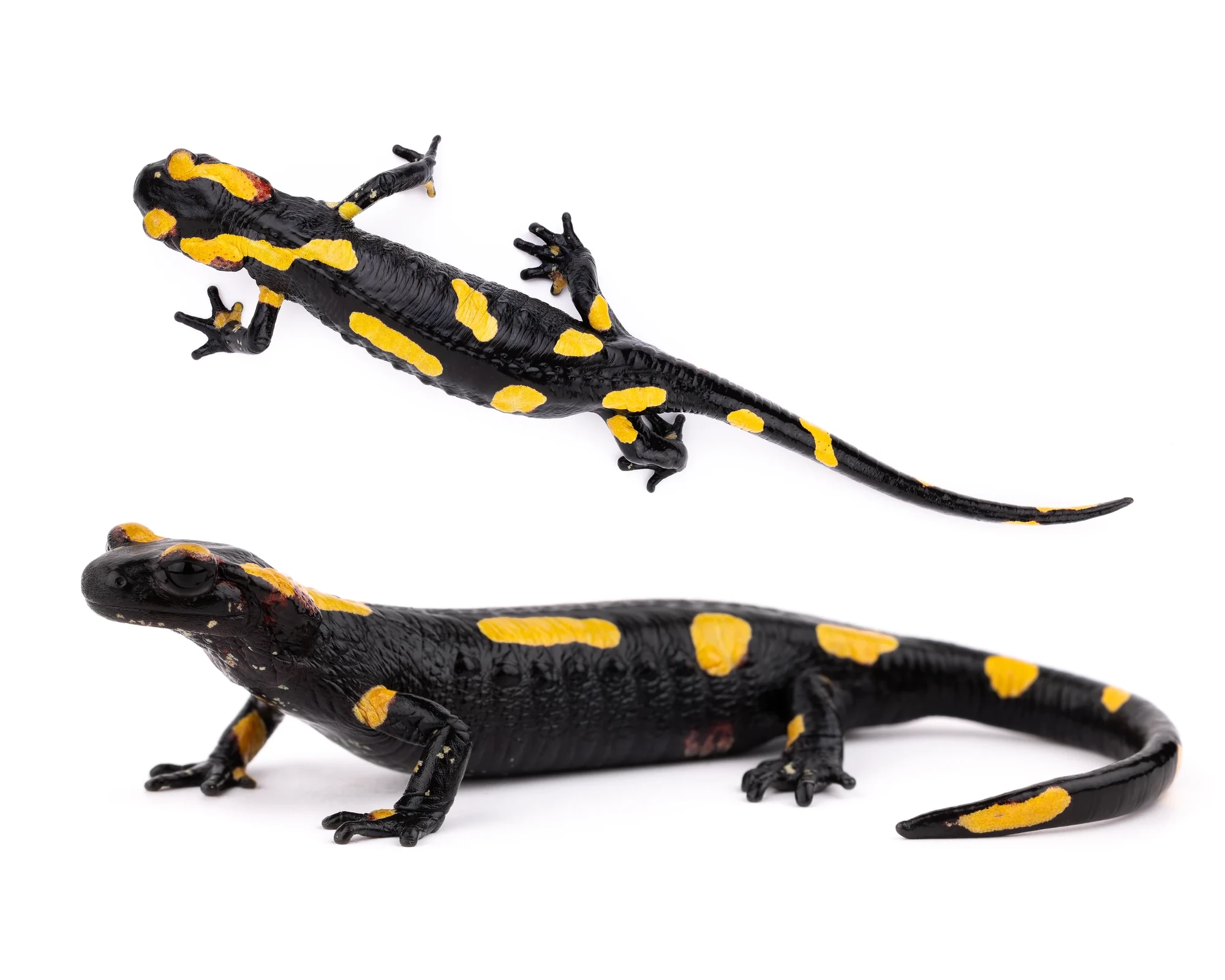
We now continue our search in a forest, beside a small stream. It takes just five minutes for us to find three salamanders, exactly what we were hoping for.
Here, the individuals differ greatly from one another, displaying a wide variety of patterns, and only one of them shows red spots.
Field journal
A third morning in Morocco, after three nights with consistently good results.
First step: explore a new potential site for clade 2 Salamandra algira tingitana, located three hours away by road.
We set off in late morning, crossing hills and valleys, enjoying the magnificent landscapes of the region. Little by little, the road turns into a dirt track and the phone signal disappears, but Valentin handles the driving with ease.
By mid-afternoon, we reach a hilltop village. The locals confirm the presence of salamanders, but explain that we should have come earlier in order to hike up to their habitat. Since the species is nocturnal, climbing back down at night without preparation would be risky. Too bad, we will return next year.
We get back on the road, heading toward Chefchaouen, the blue city, which is at least two hours away. We arrive at the beginning of the evening and take the time to have dinner, as we already know where we will search for our salamanders later that night.
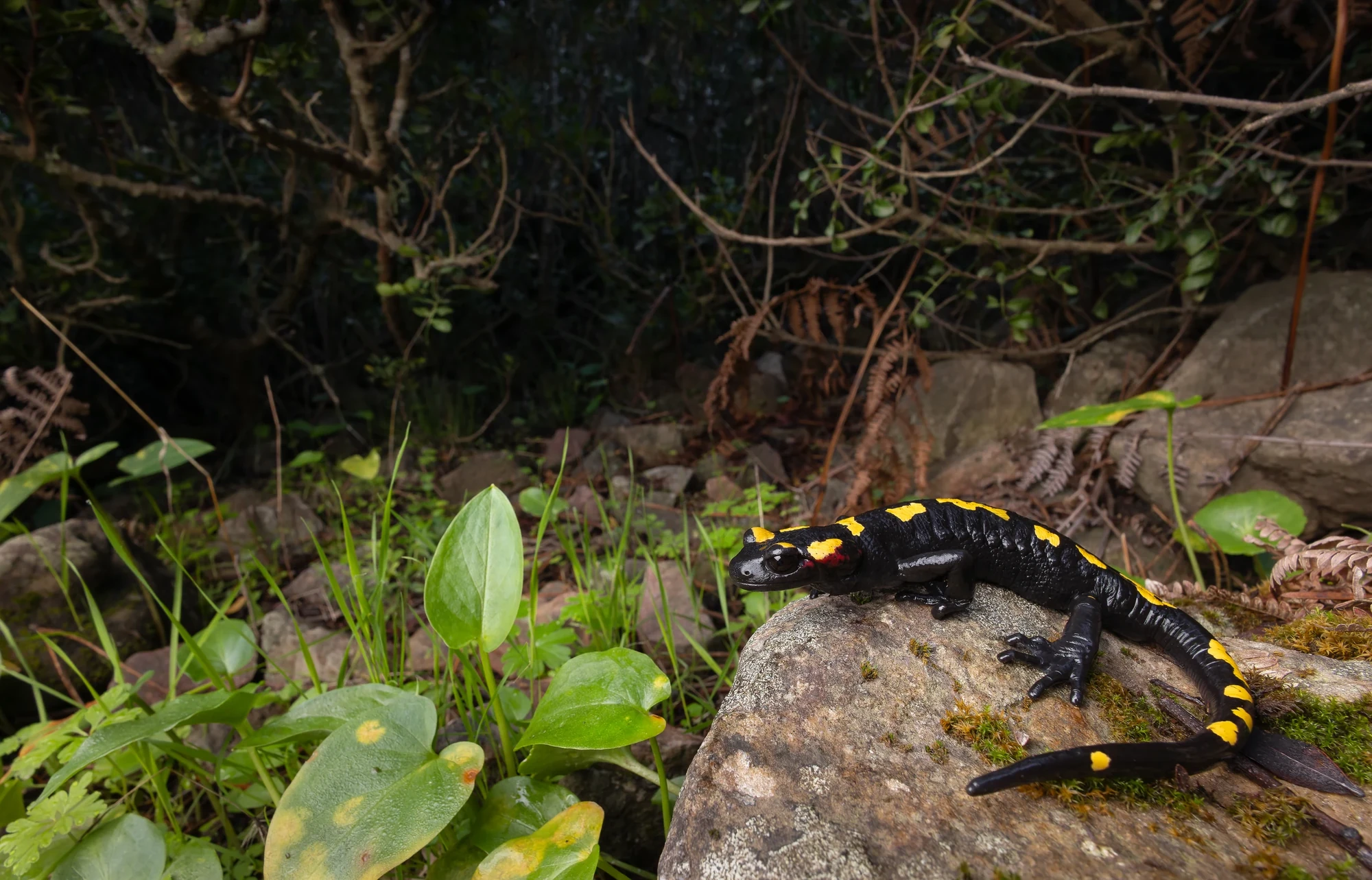
The spot is interesting because it is heavily frequented by locals. Once again, it takes us only a few minutes to find our first Salamandra algira splendens.
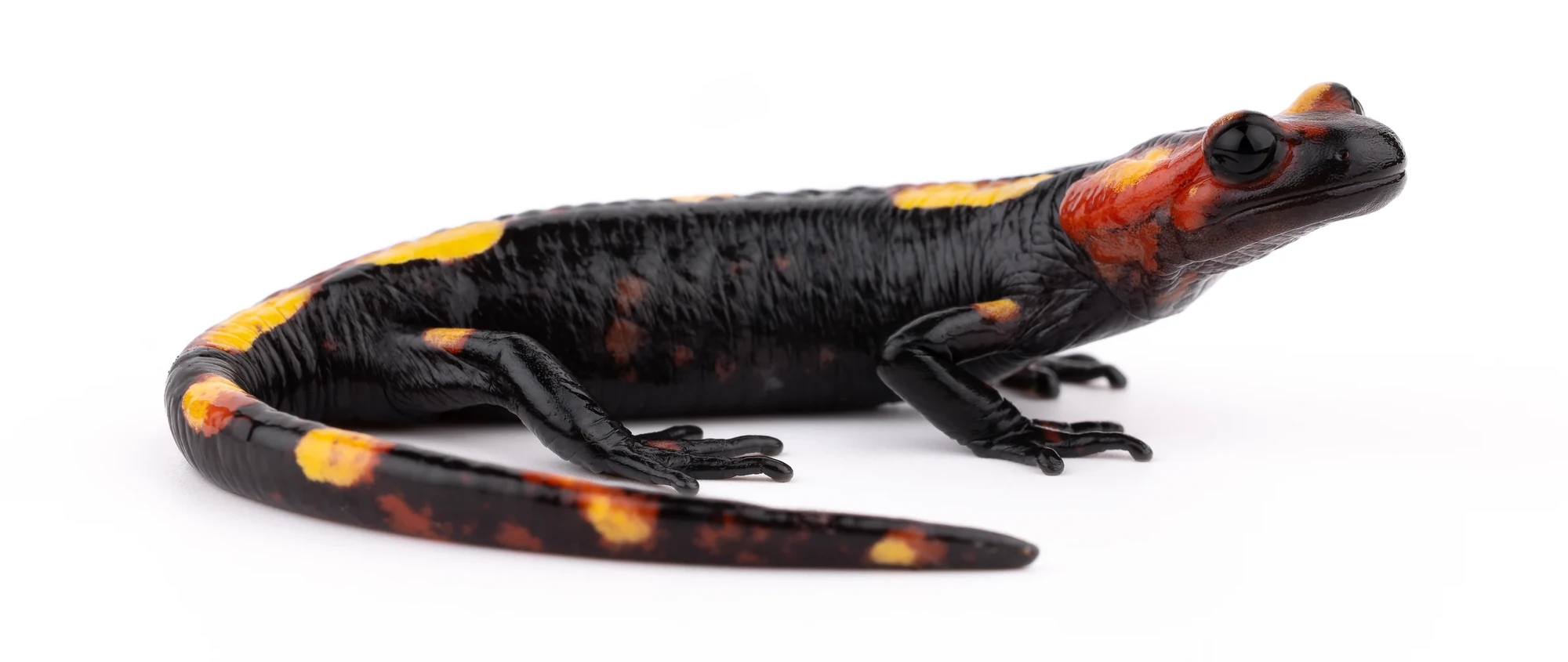
This is a new subspecies for the trip. We have now left the range of tingitana and are discovering individuals that are sometimes more colorful, but above all slightly different in terms of morphology.
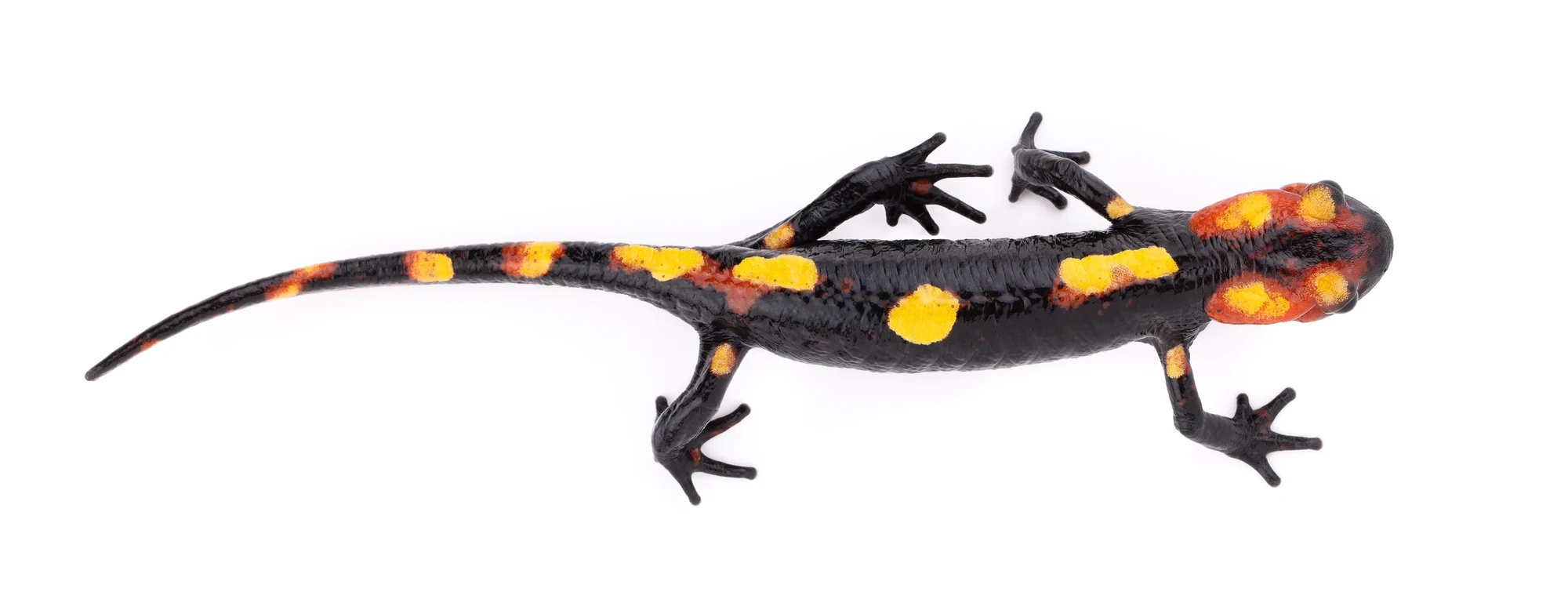
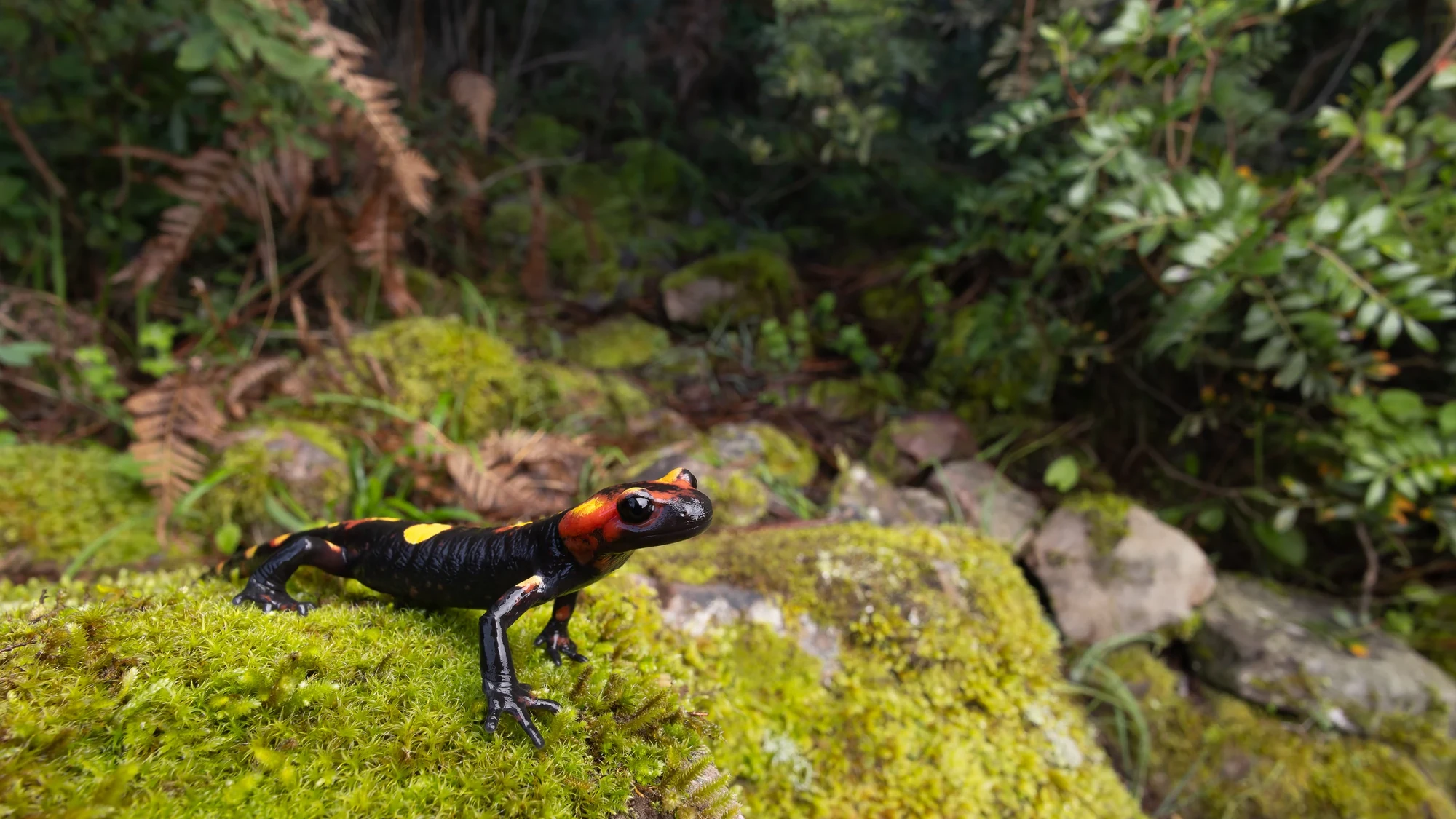
We keep searching, since our goal is to document at least three individuals per locality in order to capture a minimum level of phenotypic variation. We find three more, but choose not to disturb a very large female, almost certainly gravid.
The two other individuals we photograph are darker, with red markings that are more discreet and less vivid.
This is now the fourth evening we have devoted to searching for salamanders, and each time, our preparation and scouting efforts have paid off.
We have found two of the four subspecies, as well as all clades of Salamandra algira tingitana. The rest of the trip looks interesting: to the east, where we are heading tomorrow, the landscape is drier and it has not rained yet.
Field journal
As usual, we hit the road in the morning. Since the beginning of the trip, we have had decent conditions, although with almost no rain. Today, things will be different.
The landscape first shifts to a more alpine character. At the higher altitudes we have now reached, conifers become more and more common, and the views from the road grow increasingly dizzying. Then, after yet another mountain pass, we find ourselves surrounded by colors reminiscent of southern Morocco, where the vegetation gradually fades away.
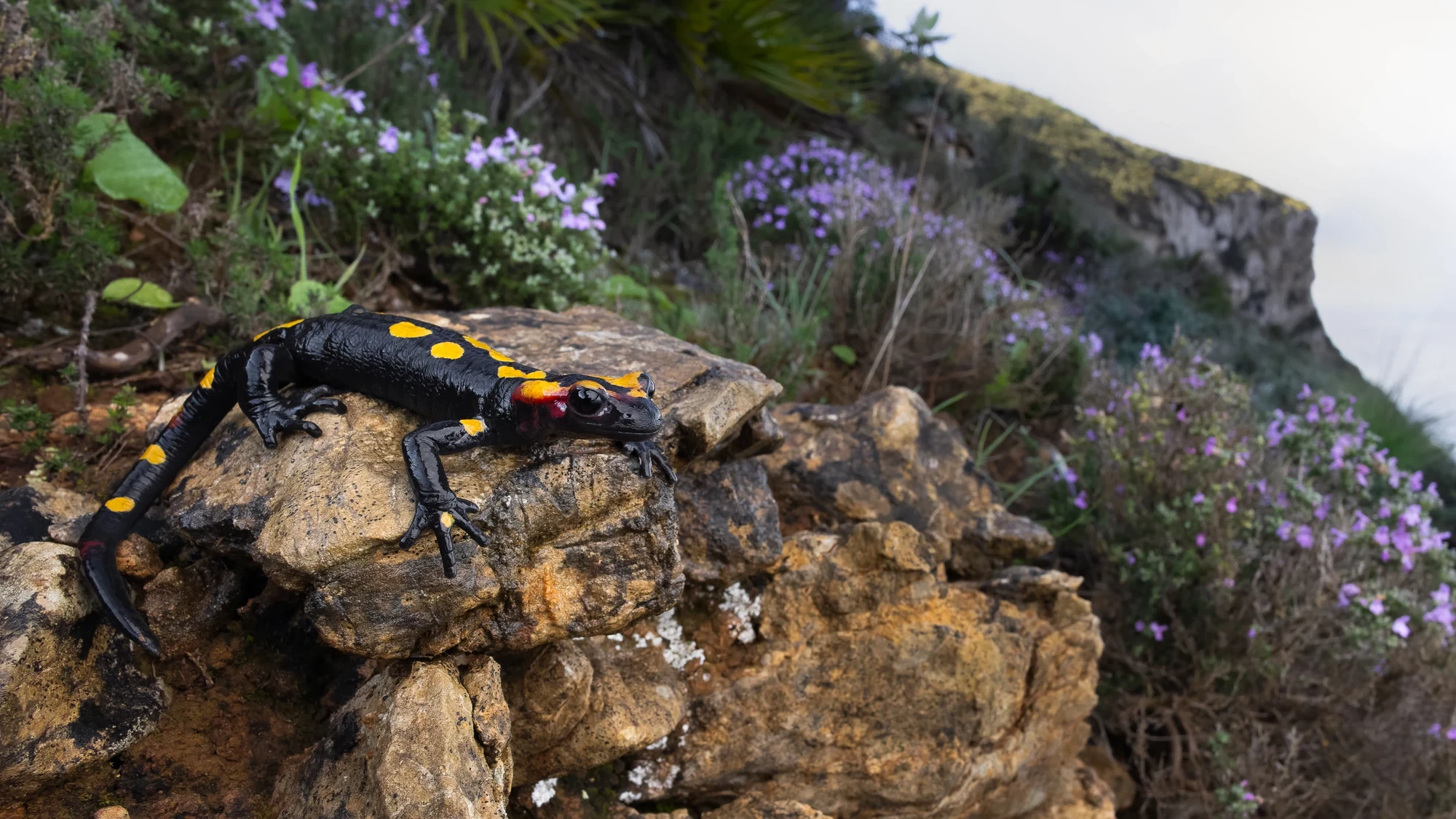
Fortunately, the area where we eventually begin searching for our beloved salamanders becomes more humid as the evening settles. The environment is incredible, and the plants are very different from what we have seen so far.
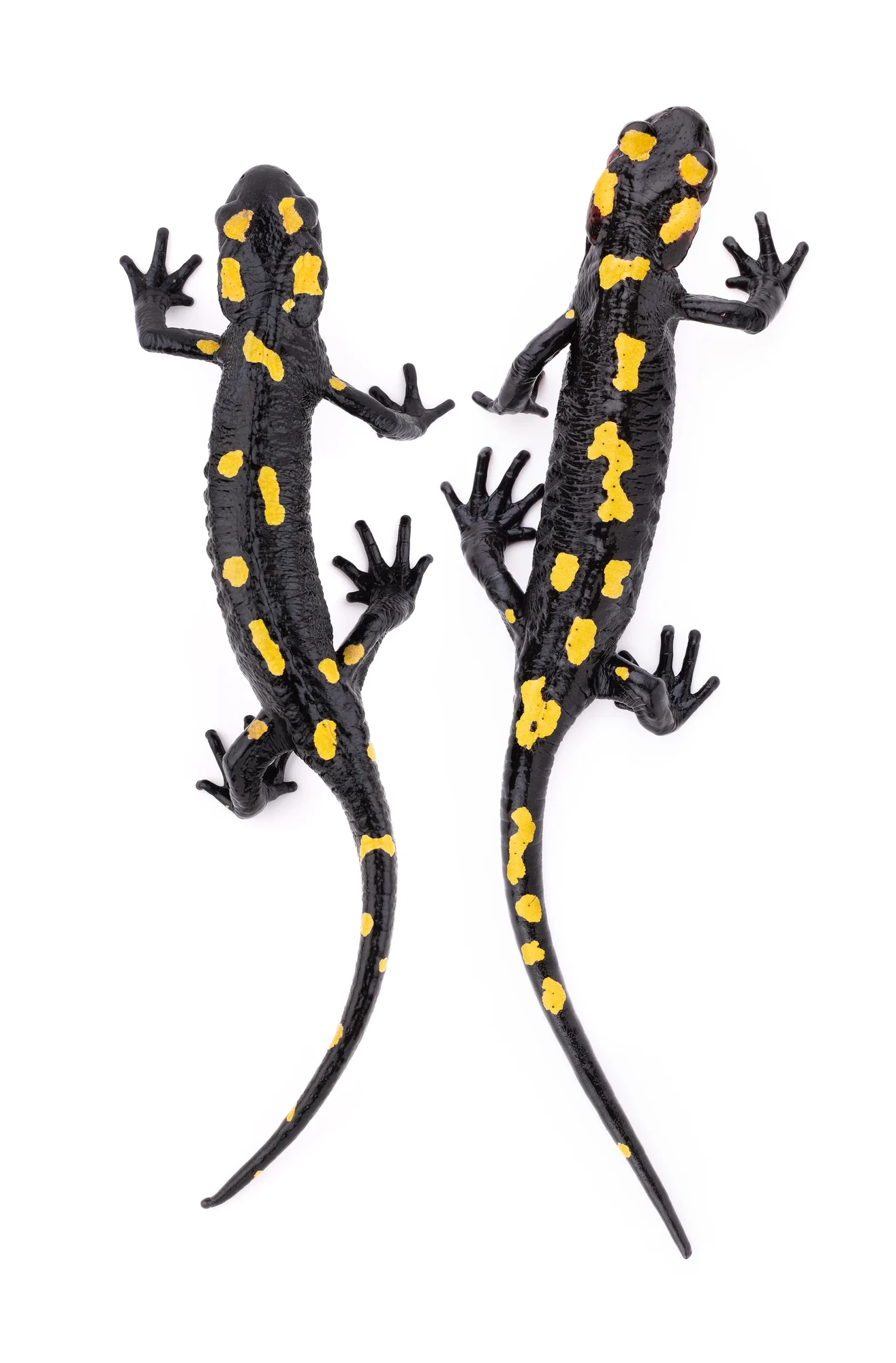
This time, it takes us longer to find the salamanders. The night is freezing, the vegetation dense, and the approach walk feels endless. Fortunately, we are rewarded with the discovery of four individuals over the course of the night.
Field journal
Today a long drive awaits us, as we head to the east, towards the Algerian border and the Beni Snassen massif, home to the rarest North African Fire Salamander subspecies in Morocco: Salamandra algira spelaea.
Up until now, our days had been too busy, and certainly too cold, to have any real chance of finding reptiles. But the climate is now becoming more pleasant, and it seems worthwhile to stop a few times along the way to search for lizards and snakes.
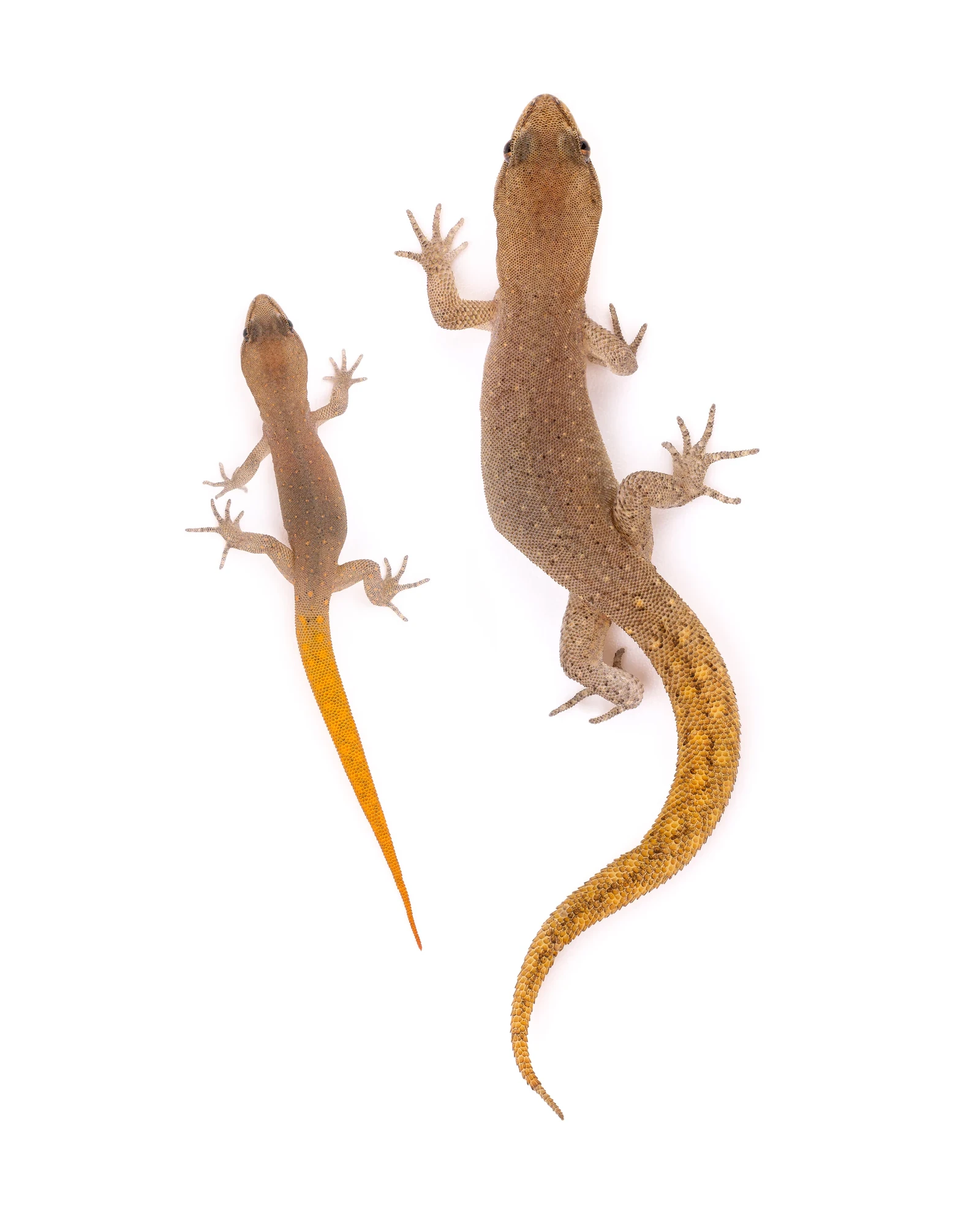
Our first stop allows us to find a new lizard for the project: the Northern Lizard-fingered Gecko (Saurodactylus mauritanicus), a species we would encounter again later at another location.
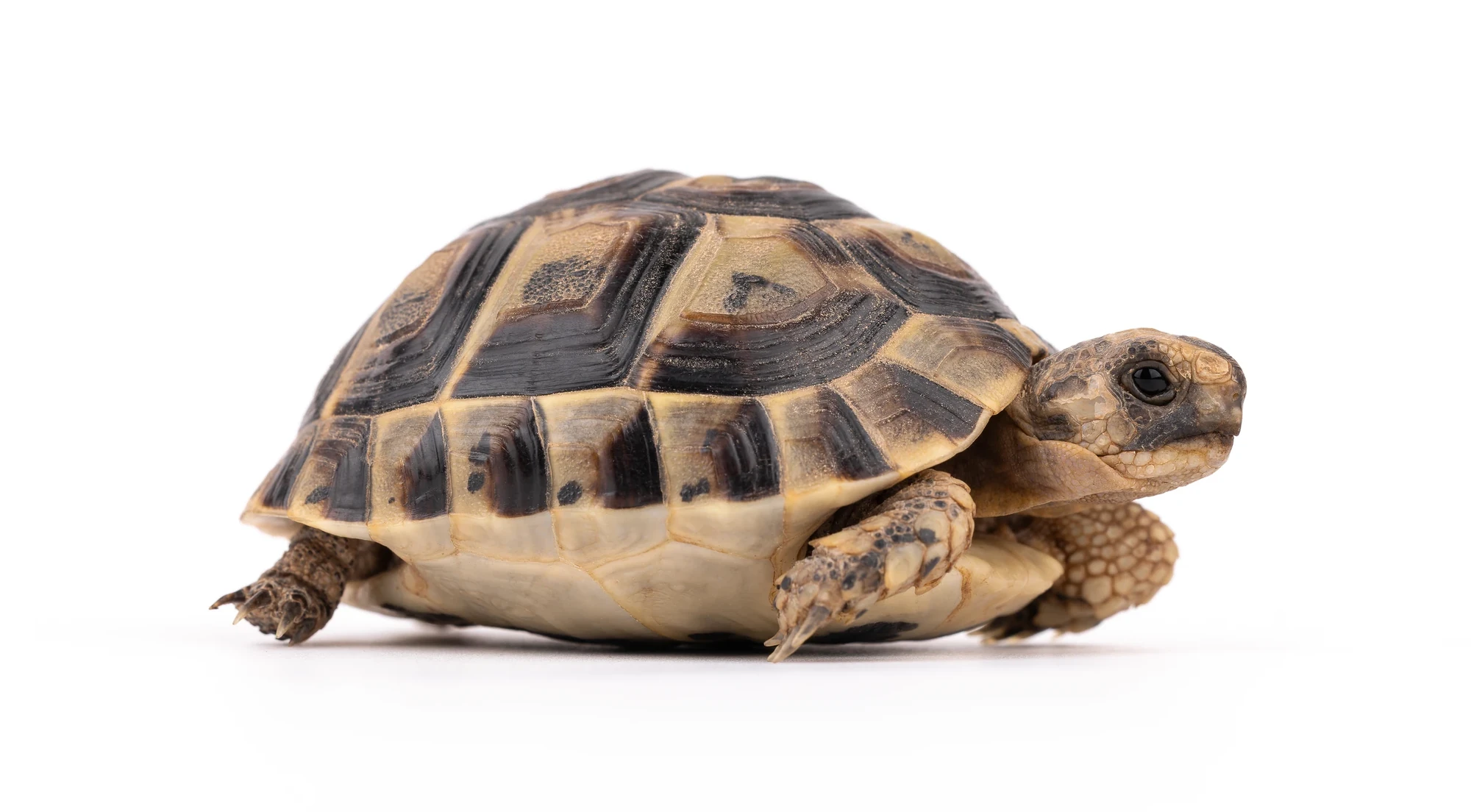
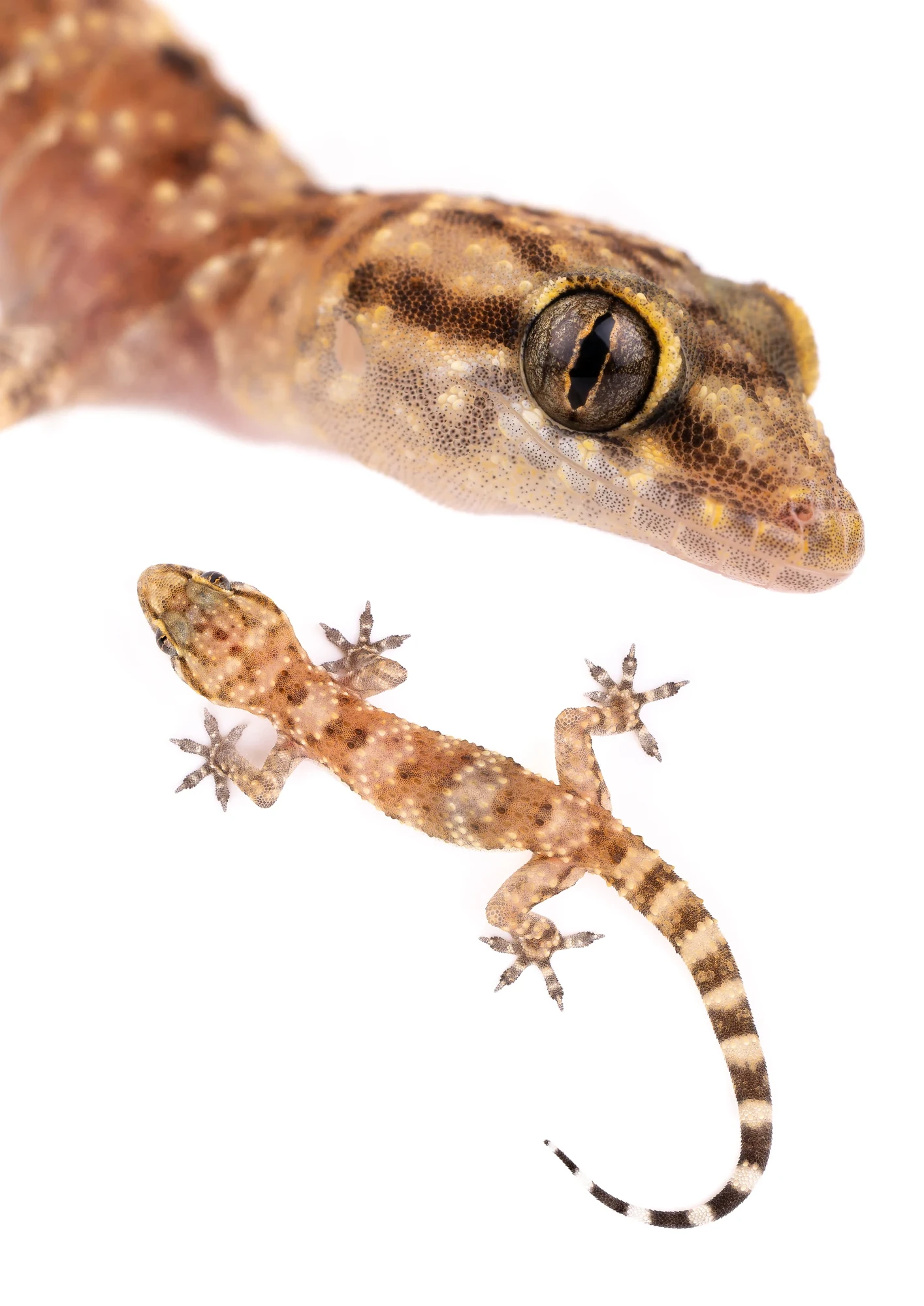
We also come across a very nice looking young Mediterranean House Gecko (Hemidactylus turcicus). We also find a small Moorish Tortoise, belonging here to the eastern subspecies (Testudo graeca whitei).
The region is dry; it almost feels like summer, were it not cold in the shade. As a result, finding a place with enough humidity for salamanders turns out to be complicated. We do find a stream, but at too low an elevation; there, we only encounter a few frogs and some Mediterranean Pond Turtles (Mauremys leprosa leprosa).
The evening ends without salamanders, a first since the beginning of the trip.
Field journal
After the first salamander-less night since the beginning of the trip, we decide to extend our stay by one more night to better explore the region.
The massif is magnificent: we climb, descend, and search every corner. Everywhere, dryness dominates; ferns are scorched, rivers completely dry. By late afternoon, after hours of searching, we finally uncover a small area that still holds some moisture. Full of hope, we head back down to the city for dinner, eager to return to this promising spot.
But as we drive back up toward the site, Valentin notices the gears aren't shifting properly. The clutch smells burnt. We pull over in a bend of the road, and the car will not move again. Insurance, tow truck, endless waiting. Luckily, it's the only bend in the massif with cell reception.
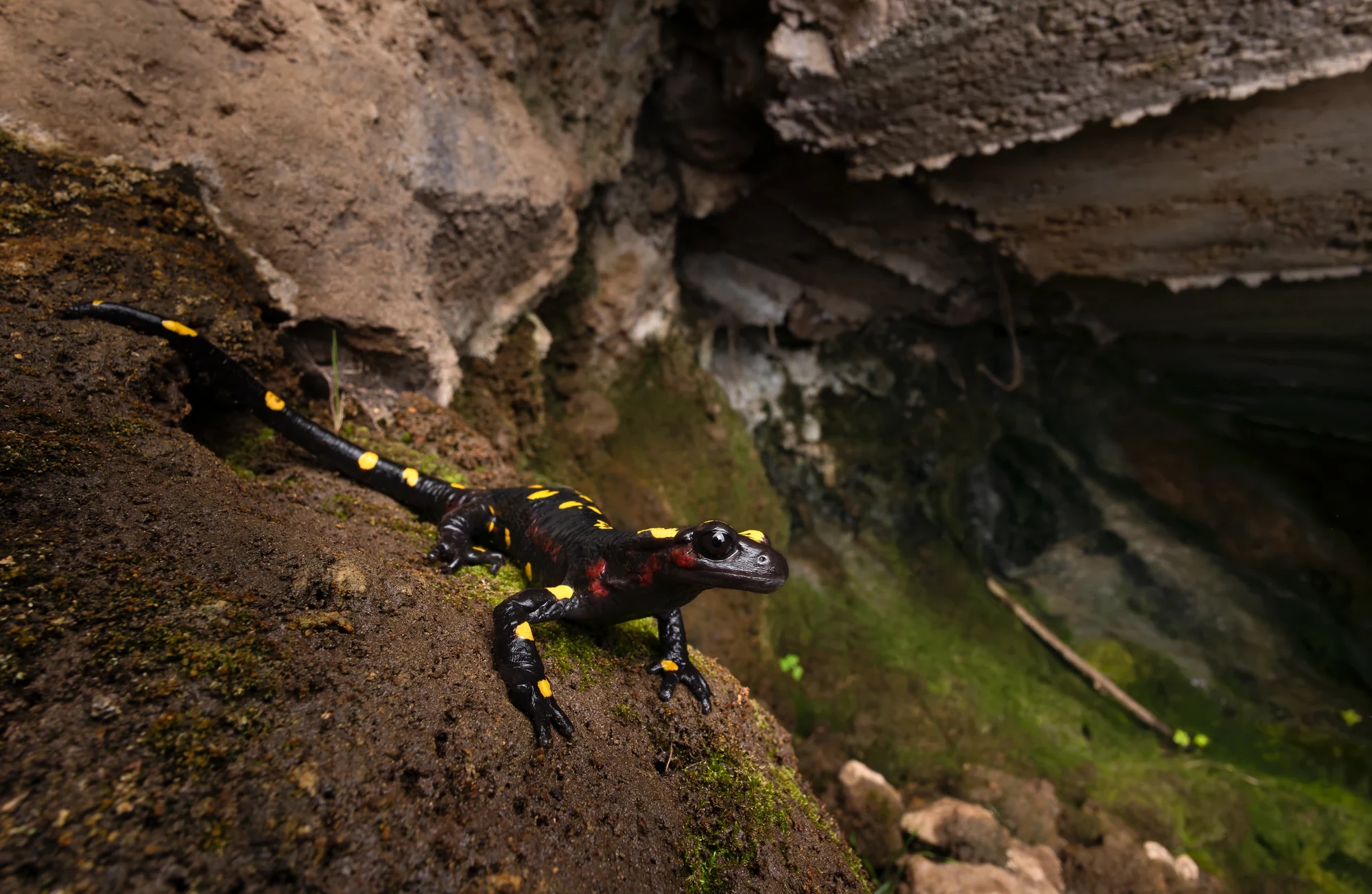
Very quickly, frustration turns into determination. If the car is stuck, we are not. The spot is an hour's walk away. We hitchhike and, by unbelievable luck, a salamander is waiting for us up there. Our luck has returned.
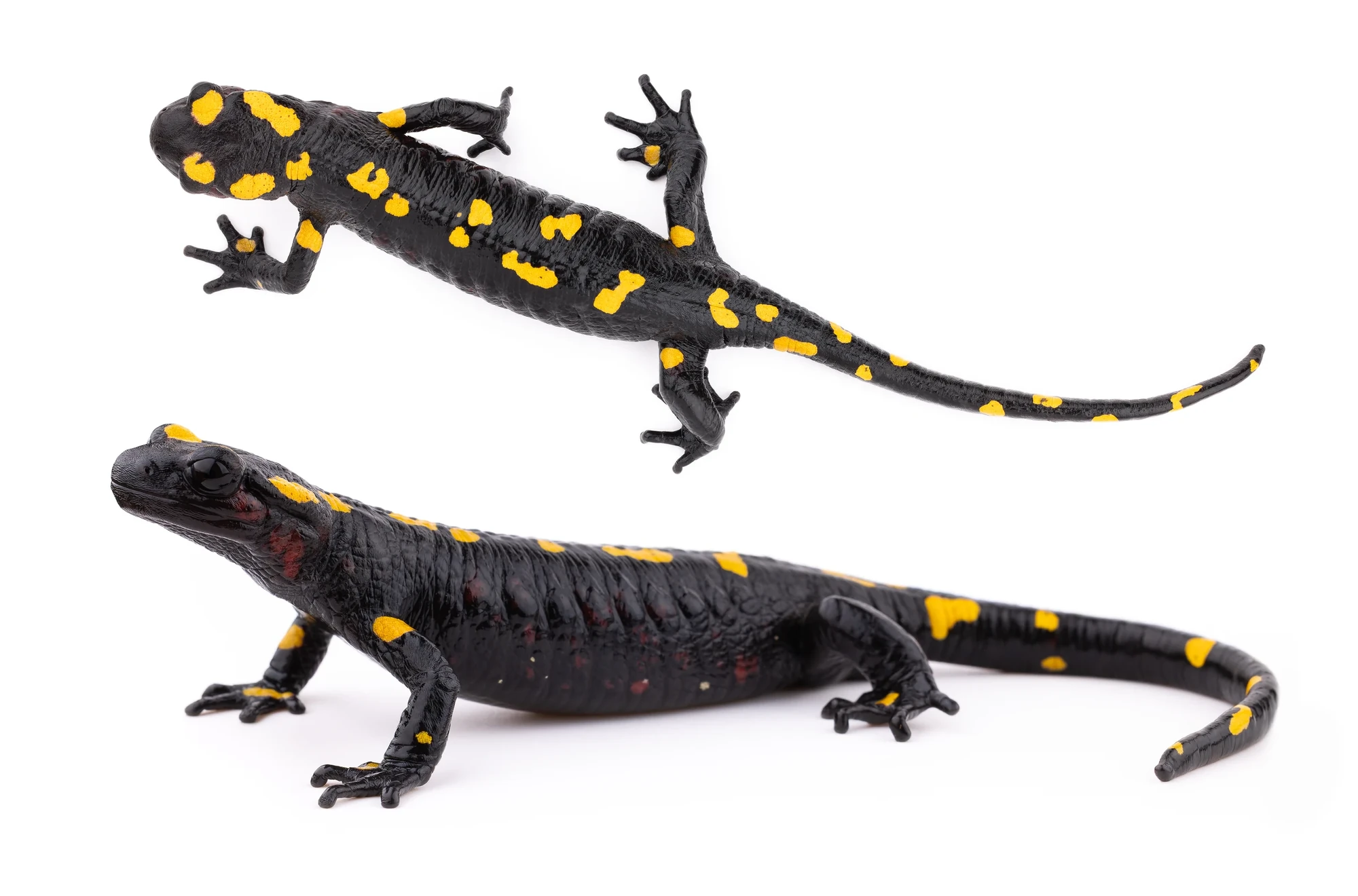
The rarest, most localized, and most threatened salamander in Morocco, Salamandra algira spelaea is quite robust, with very little red.
Field journal
After reconnecting with success, and especially after photographing the most difficult subspecies to find, the end of the trip looks promising.
Indeed, the last subspecies we are missing, Salamandra algira atlantica, is certainly the easiest to find. We can already imagine finishing the trip having virtually found “all” the Moroccan salamanders, at least every known subspecies and genetic clade.
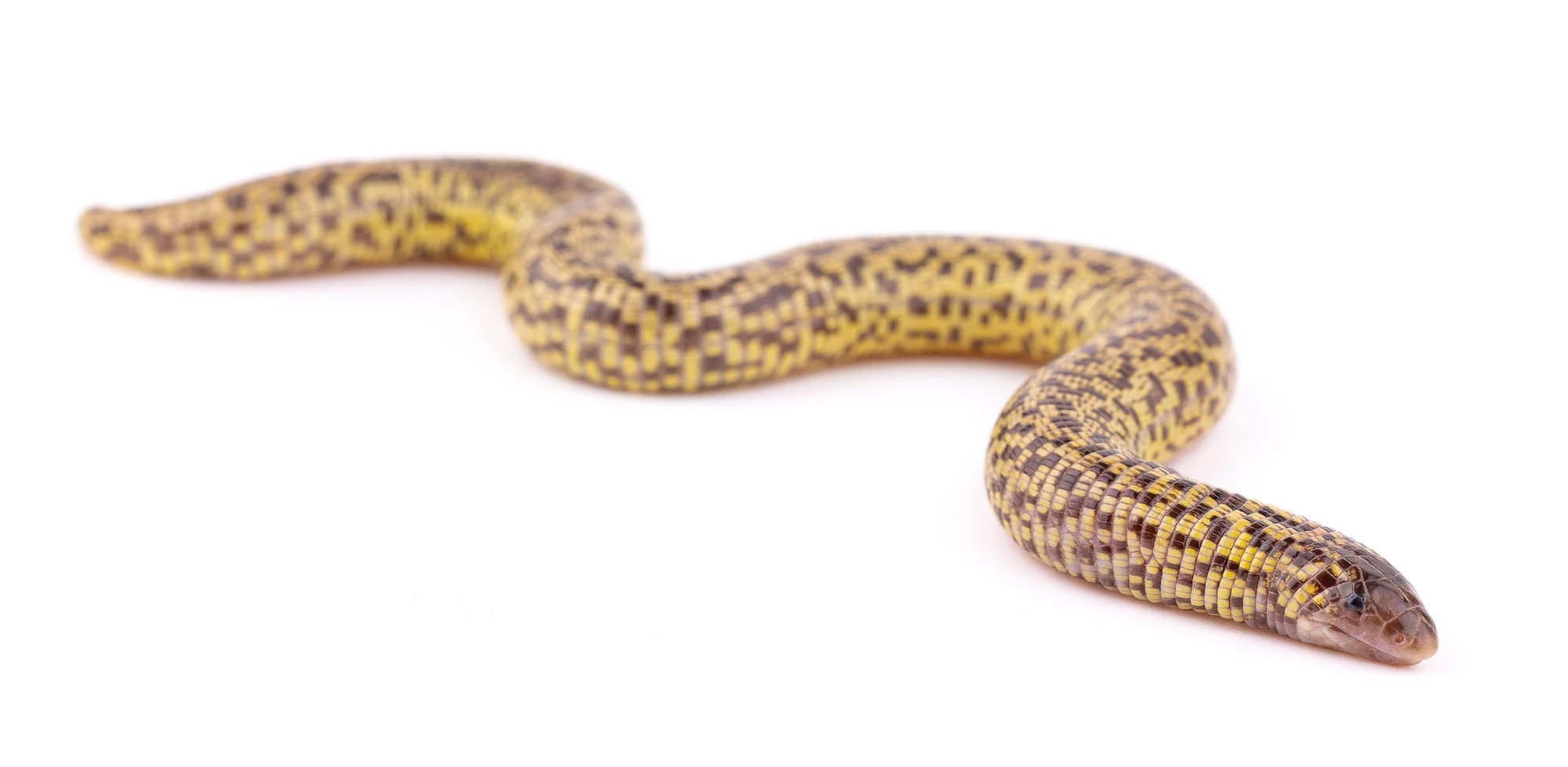
On the road, we stop to turn over a few stones and come across a Checkerboard Worm Lizard (Trogonophis wiegmanni wiegmanni). One more species for the project!
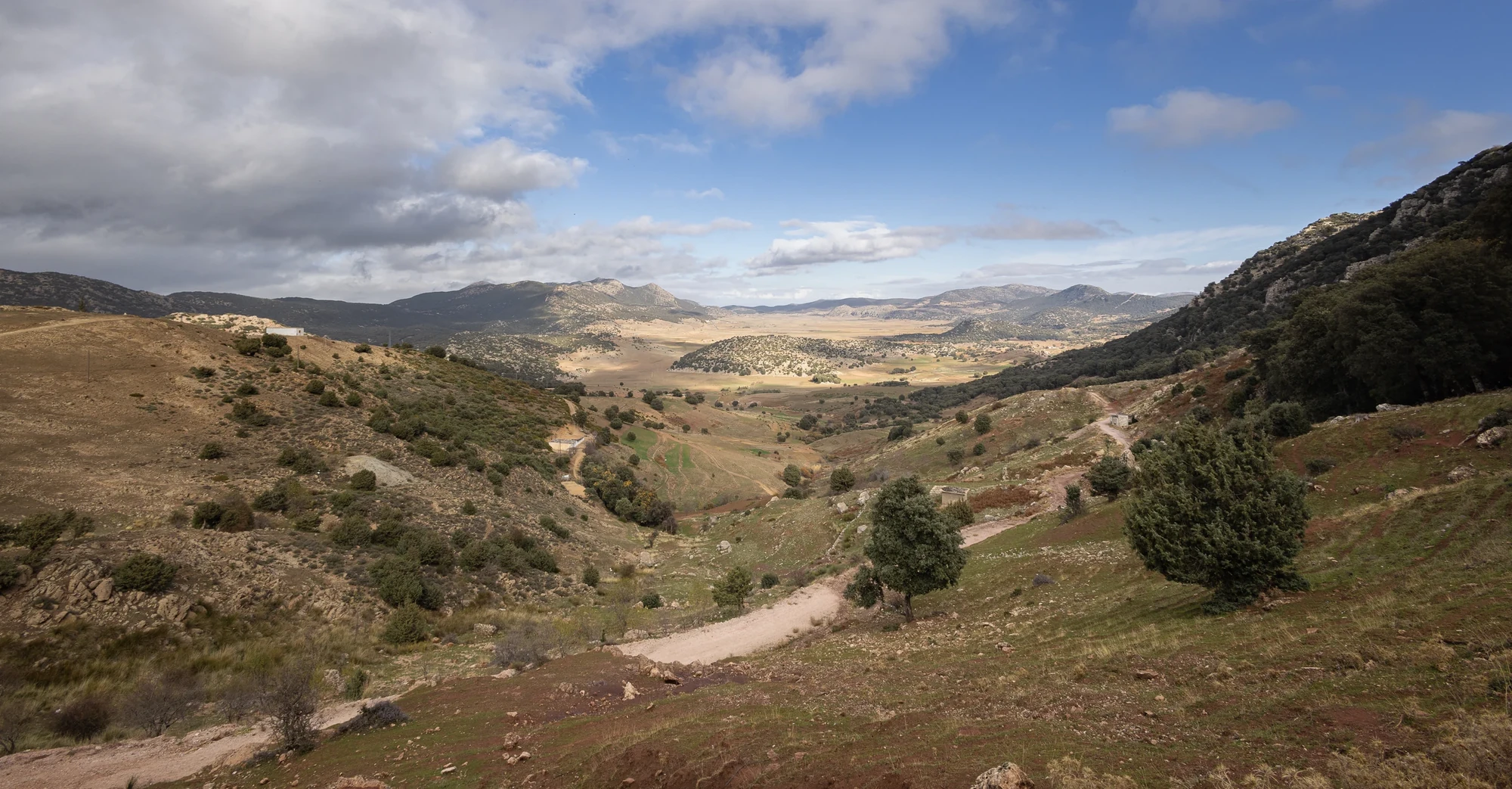
We arrive at the end of the day in the Atlas Mountains. The air cools rapidly, and everything becomes increasingly humid. We still do not know exactly where we will search for our salamanders today, but we're working on it.
Before going to dinner, we explore the area a little.
The air quickly becomes very humid, and a veil of fog makes the road dangerous. We head back to eat, a moment that will allow us to gather valuable information about the region and go back out with a clearer idea of where to search for the last subspecies we are missing.
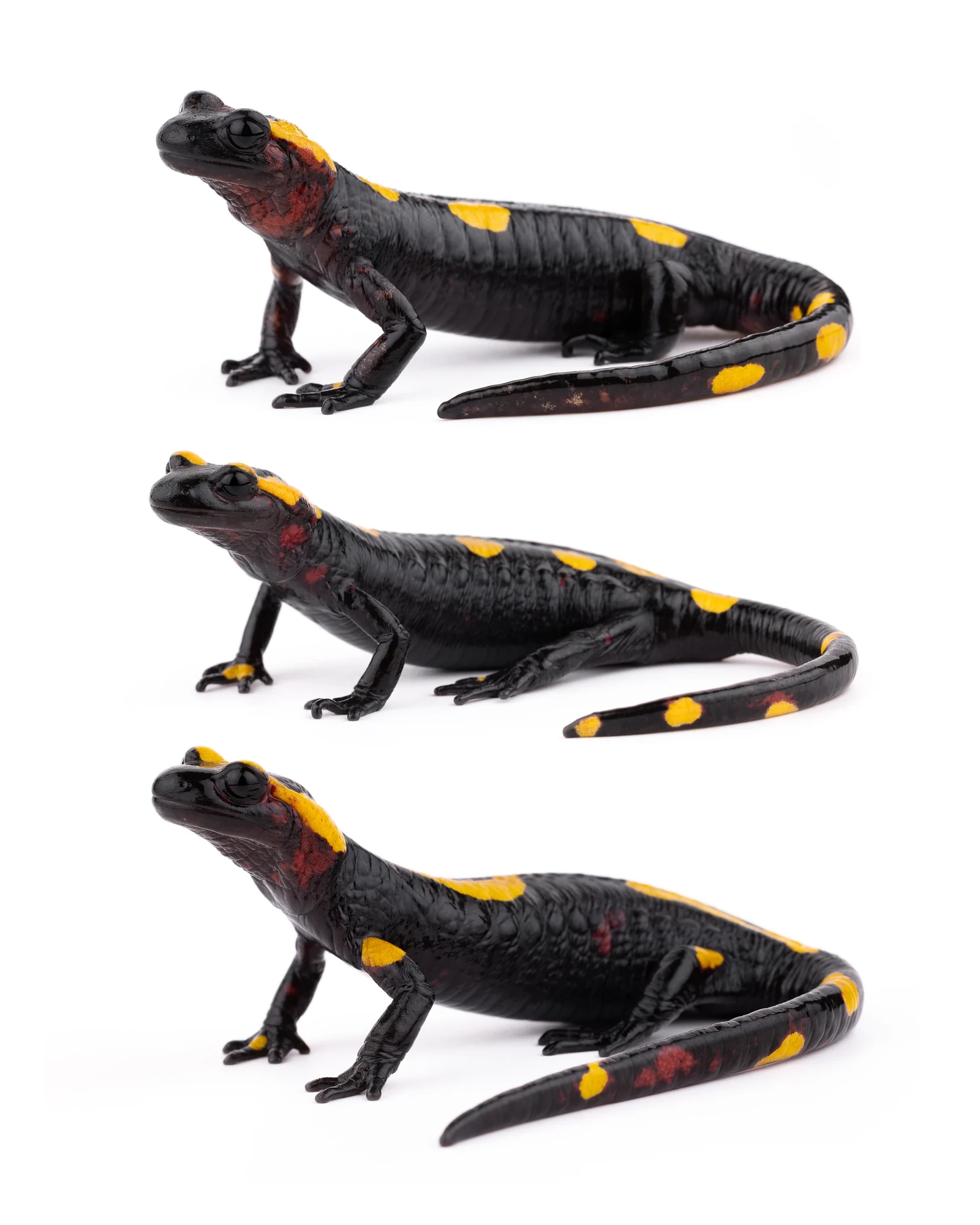
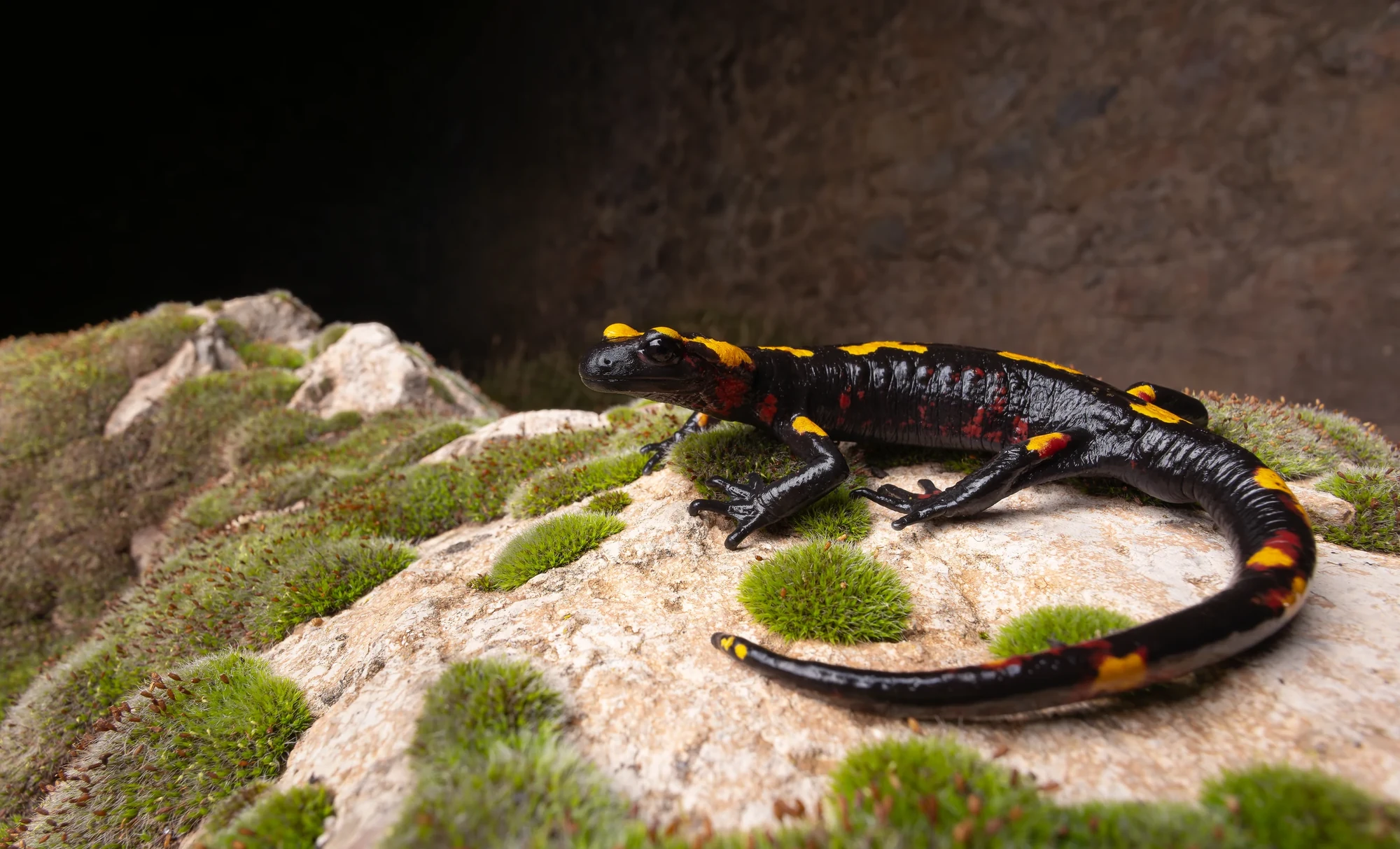
A few minutes by car, a stop near a stream, one meter, one salamander. It took us not even ten seconds to find it. We photographed four in total that evening, although we could have kept searching and found many more. But it had been a long day, and it was better to head back and rest to make the most of the following day.
The salamanders in this region are Salamandra algira atlantica, a subspecies only described in 2019. The individuals here also have red, sometimes in large amounts, on the head, body, and tail. The habitat is the most humid we've encountered so far, the most suitable for the species, as evidenced by the surprising density of salamanders per square meter.
We also found many larvae in various bodies of water, as well as a few Spiny Toads (Bufo spinosus).
Field journal
We allow ourselves a bit of rest the next day, and even enjoy a walk without any herpetological purpose. The region is stunning, its mountains too, and it is one of the rare places in Morocco where nature still seems to reign over its territory.
The day remains productive: at the end of the afternoon, Valentin spots our first salamander from the car! The evening gets even better, we end up seeing more than fifteen of them that night and photograph several. The expedition is officially a huge success in terms of salamanders; we couldn't have hoped for better.
As for frogs and toads, our results reflect our efforts: we didn't really try to find the species we were missing since the salamanders took so much of our time. Before going to sleep, we attempt to find Moroccan Midwife Toads (Alytes maurus), but without success this time.
Field journal
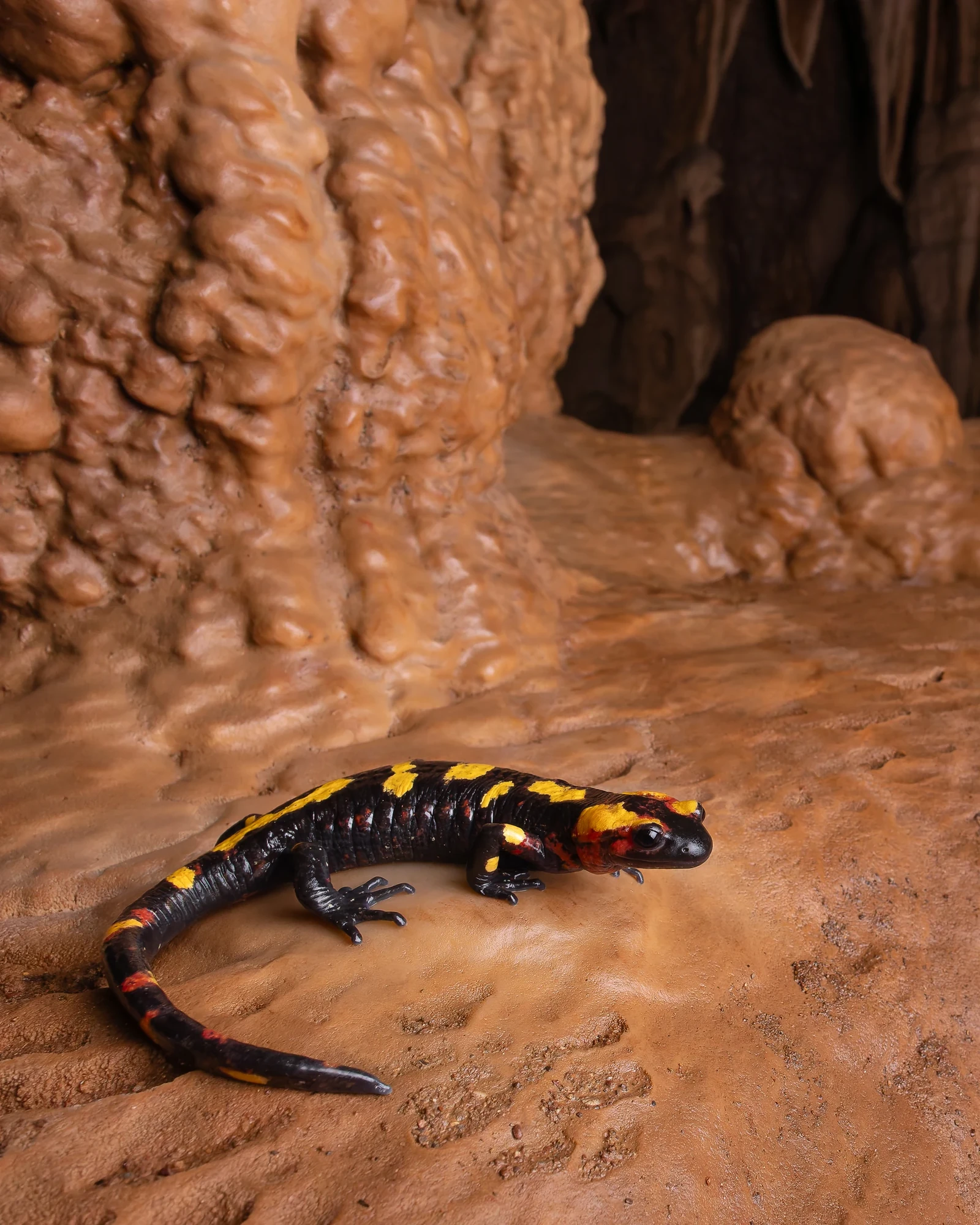
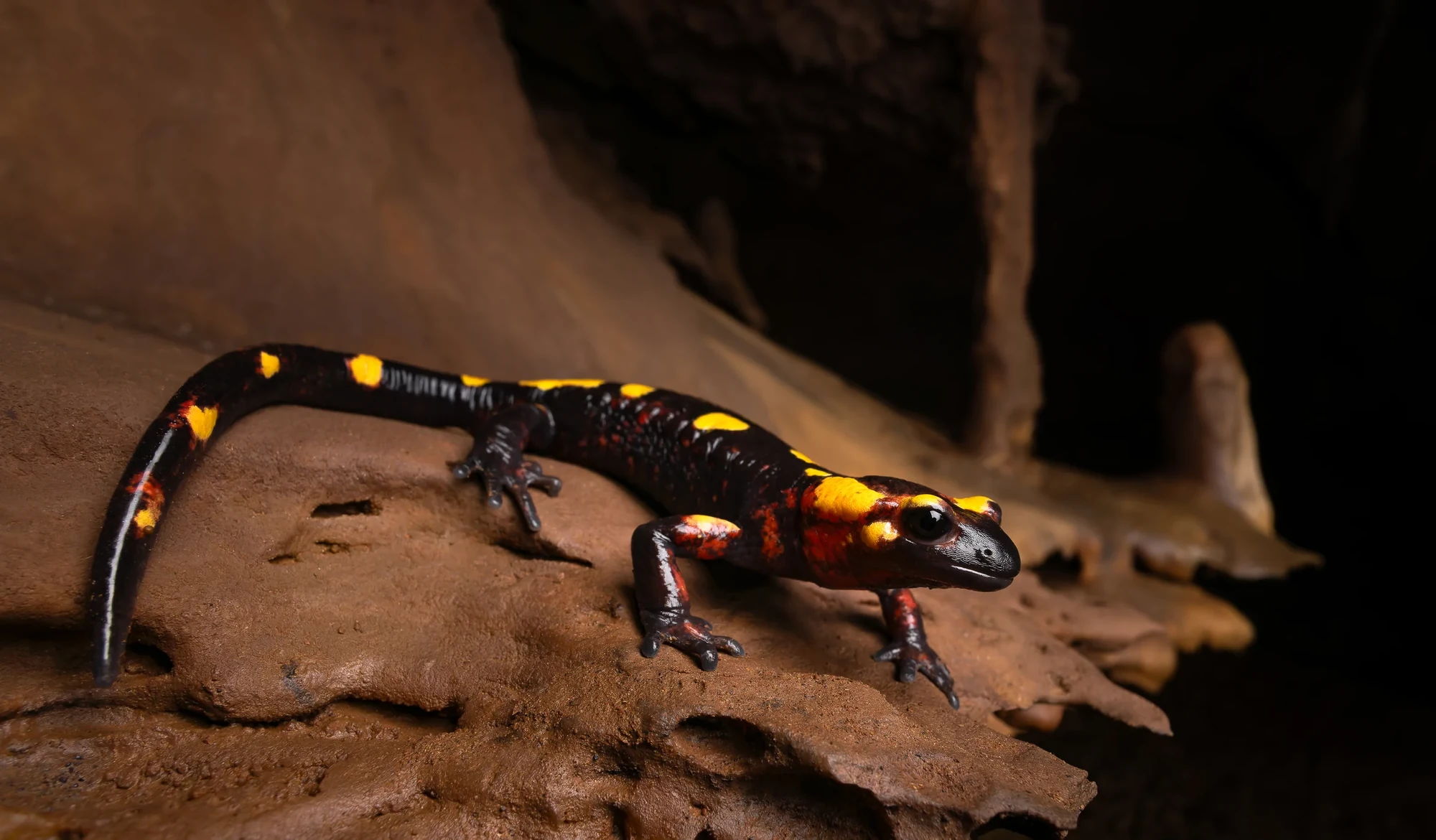
Before concluding this trip, one last step awaits us: a bit of caving. Indeed, in certain caves of the region, some Salamandra algira atlantica have made their home. Some cave-dwelling populations have also evolved slightly, differentiating themselves from their surface-dwelling neighbors by being much more red.
With no caving experience, we are joined by a guide. As a precaution, for ourselves and for the equipment, we only go down with the bare essentials. We therefore won't be photographing these salamanders this time.
After nearly one kilometer of walking, we are 80 meters below the surface and come across our first salamanders of the day, and the last of the trip.
Conclusion
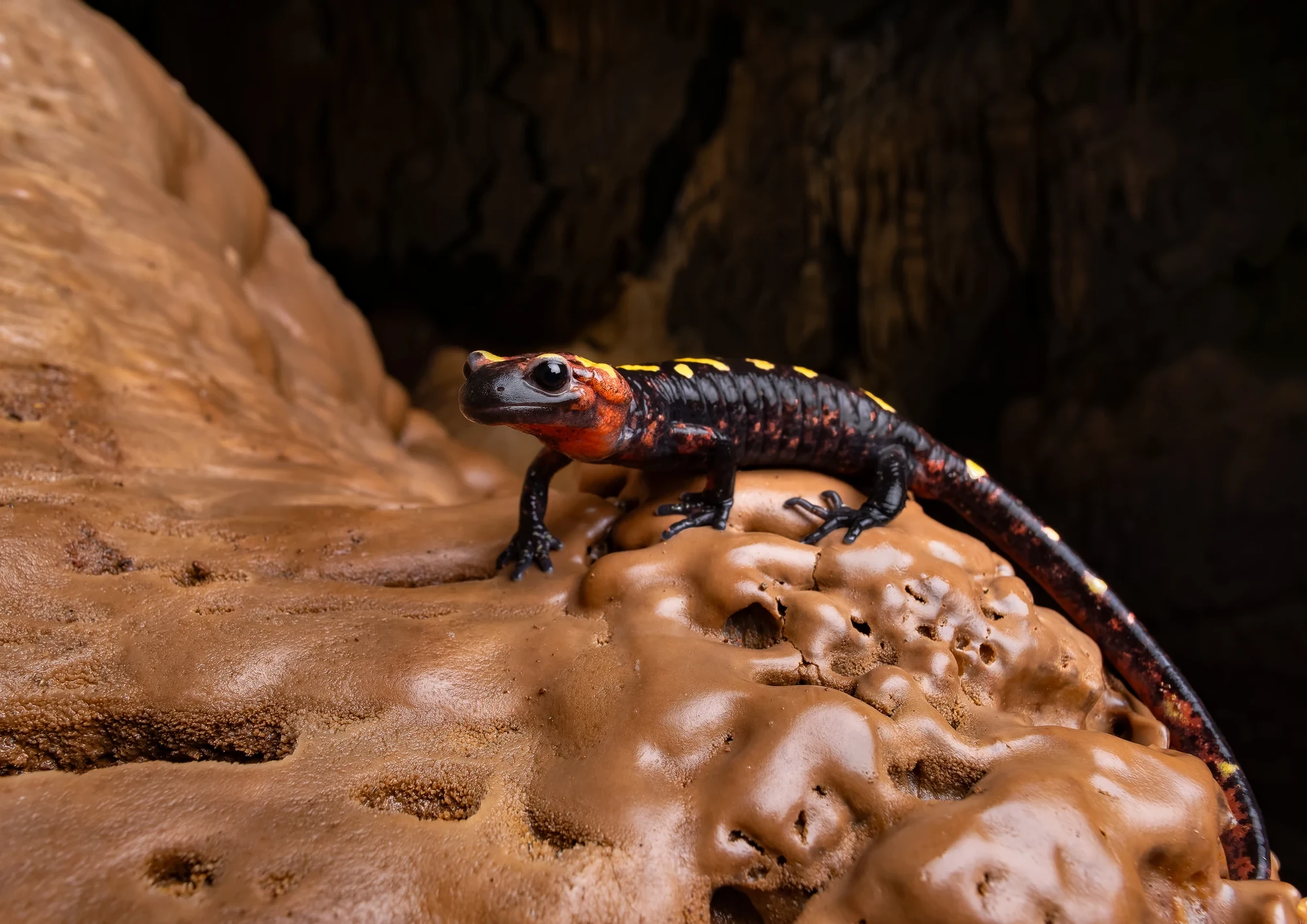
This first herpetological trip to Morocco in winter could not have gone better. In addition to discovering incredible landscapes, we found everything we were looking for. The preparation beforehand paid off, and the help of experienced friends played a huge role.
Anything that might appear as “luck” in the chosen writing style is in fact the result of a tremendous amount of work, as well as constant support from specialists in the field. Of course, finding all these subspecies without it having truly rained involved some fortunate coincidences, but the main purpose of this paragraph is to thank those who helped us throughout the trip.
The main goal of this expedition was above all to get to know the region, so we could come back stronger the following year. Given the success, we will return to document new salamander localities, but especially the anuran species we are still missing (Discoglossus sp., and the hard-to-find Pelobates varaldii and Alytes maurus).
As for urodeles, we will also need to find Pleurodeles waltl in the future, since the individuals presented in our encyclopedia were bred in captivity. See you at the end of 2025!
End of report
We warmly thank our partners, Morocco Herpetology and Ibn Zohr University, as well as the Caméléon Center Conservation, for their support throughout this mission.
Peguiron, V. & Vuillemin, R. (2026). Salamander mission, trip report, December 2024. Fauna Morocco. https://fauna-morocco.org/expeditions/report-mission-salamandre.html
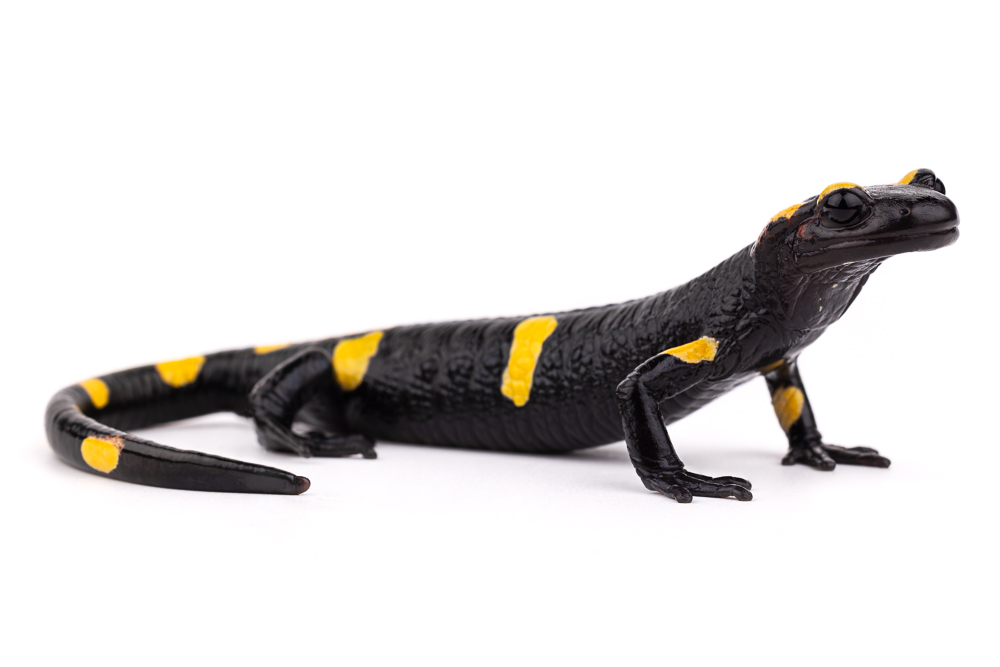 Go furtherNorth African Fire SalamanderSalamandra algiraIdentification, subspecies, distribution, conservation: find the full species account in our encyclopedia.See the species account
 Support the projectFund fieldwork and the encyclopediaFauna Morocco is a non-profit association. Your donations fund our field missions and help us provide information on Morocco's wildlife for free, in 3 languages and forever.Donate