Chameleons of Morocco
One chameleon, from Tangier to Dakhla
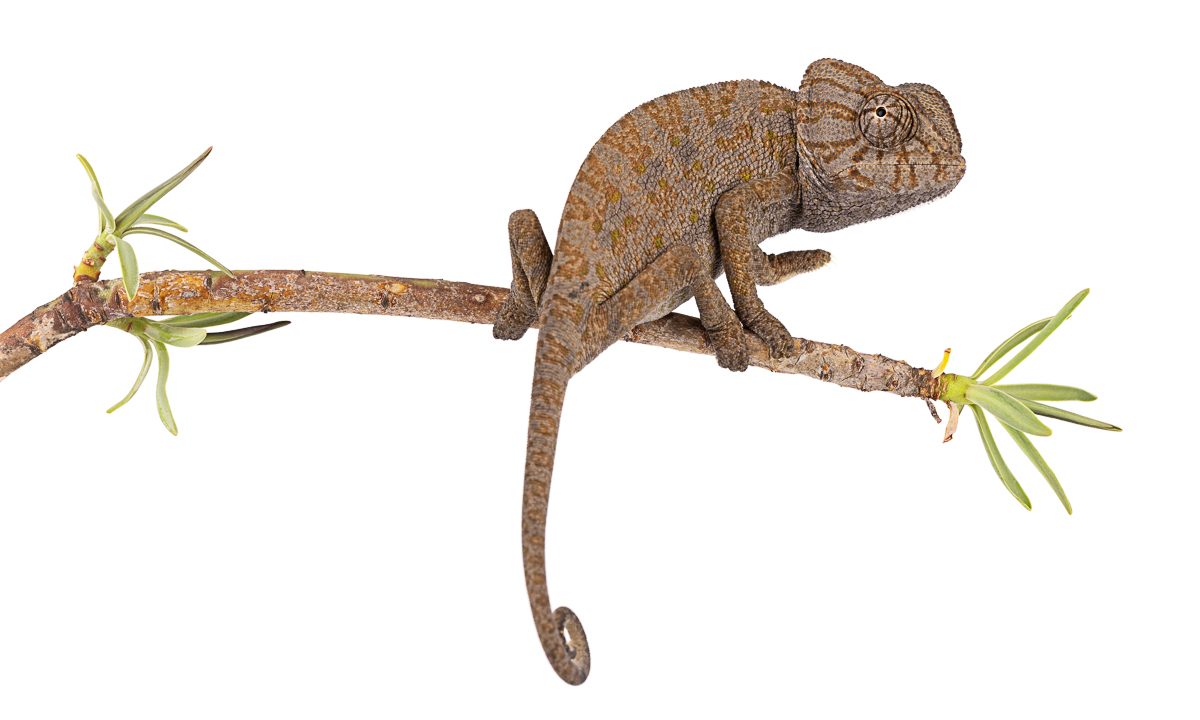
The Common Chameleon (Chamaeleo chamaeleon) is Morocco's only chameleon, and the country holds about a quarter of its global range. For many people it is surely the easiest lizard to identify, thanks to its very distinctive appearance and an equally unusual way of life, usually tied to branches and therefore to areas rich in bushes and shrubs.
Morocco
There are more than 230 chameleon species worldwide, found mostly in Africa and Madagascar. All of them share the same features: toes fused into pincers, a grasping tail, eyes that move independently and a tongue that shoots out to catch insects. The Common Chameleon lives around the Mediterranean, from Morocco to the Middle East, and the chameleons of southern Spain and Portugal descend from Moroccan animals brought over by people.
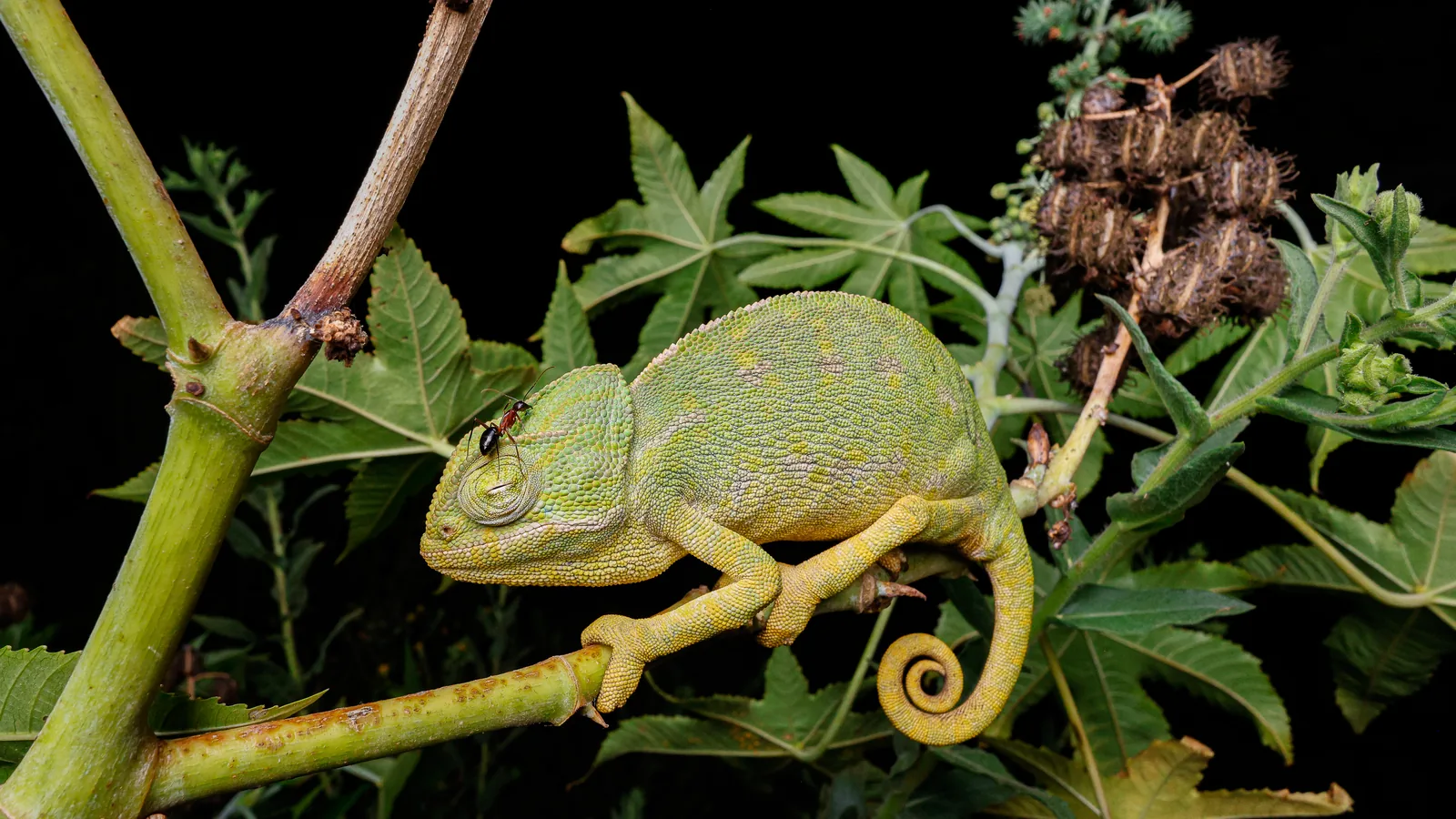
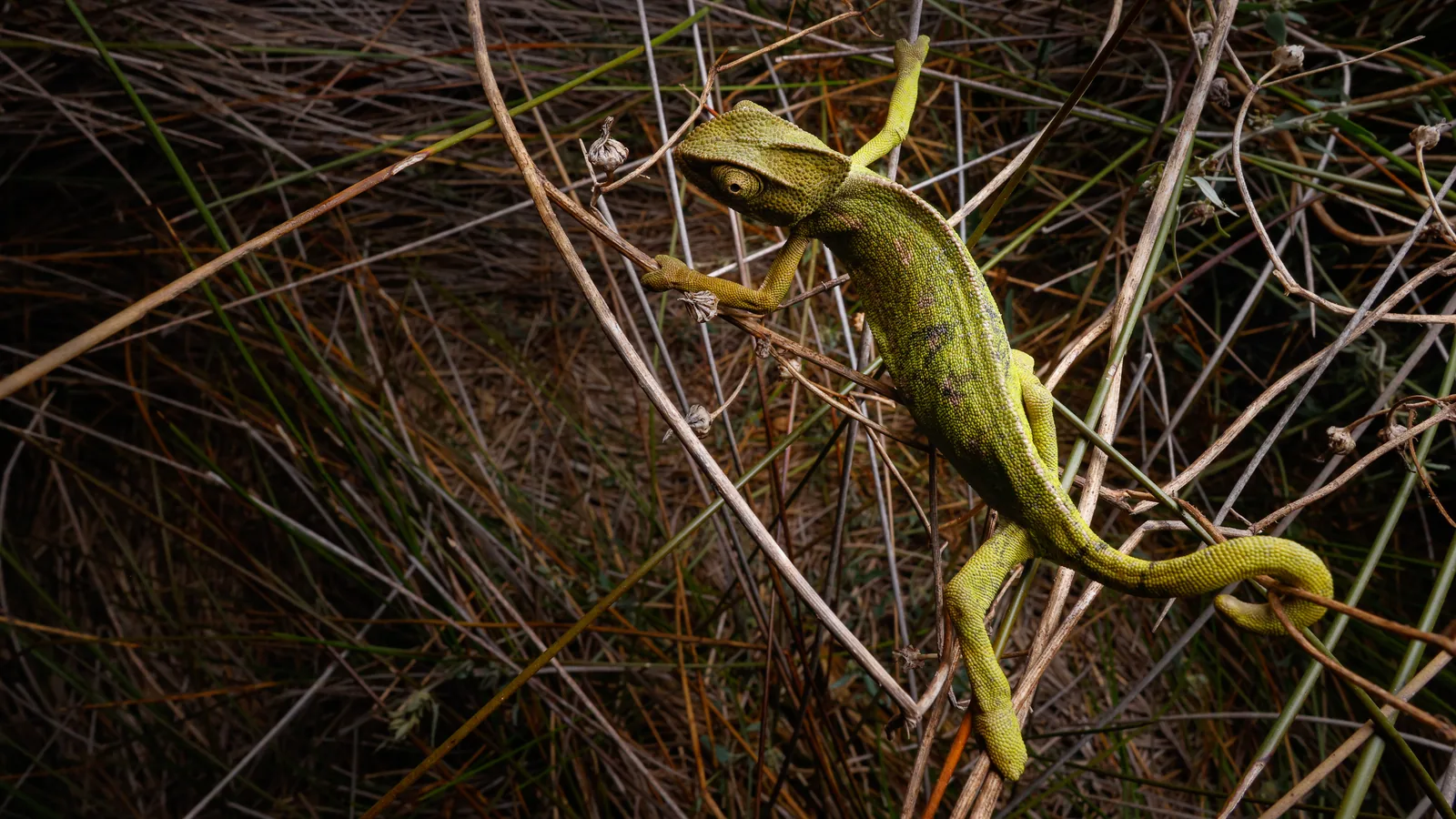
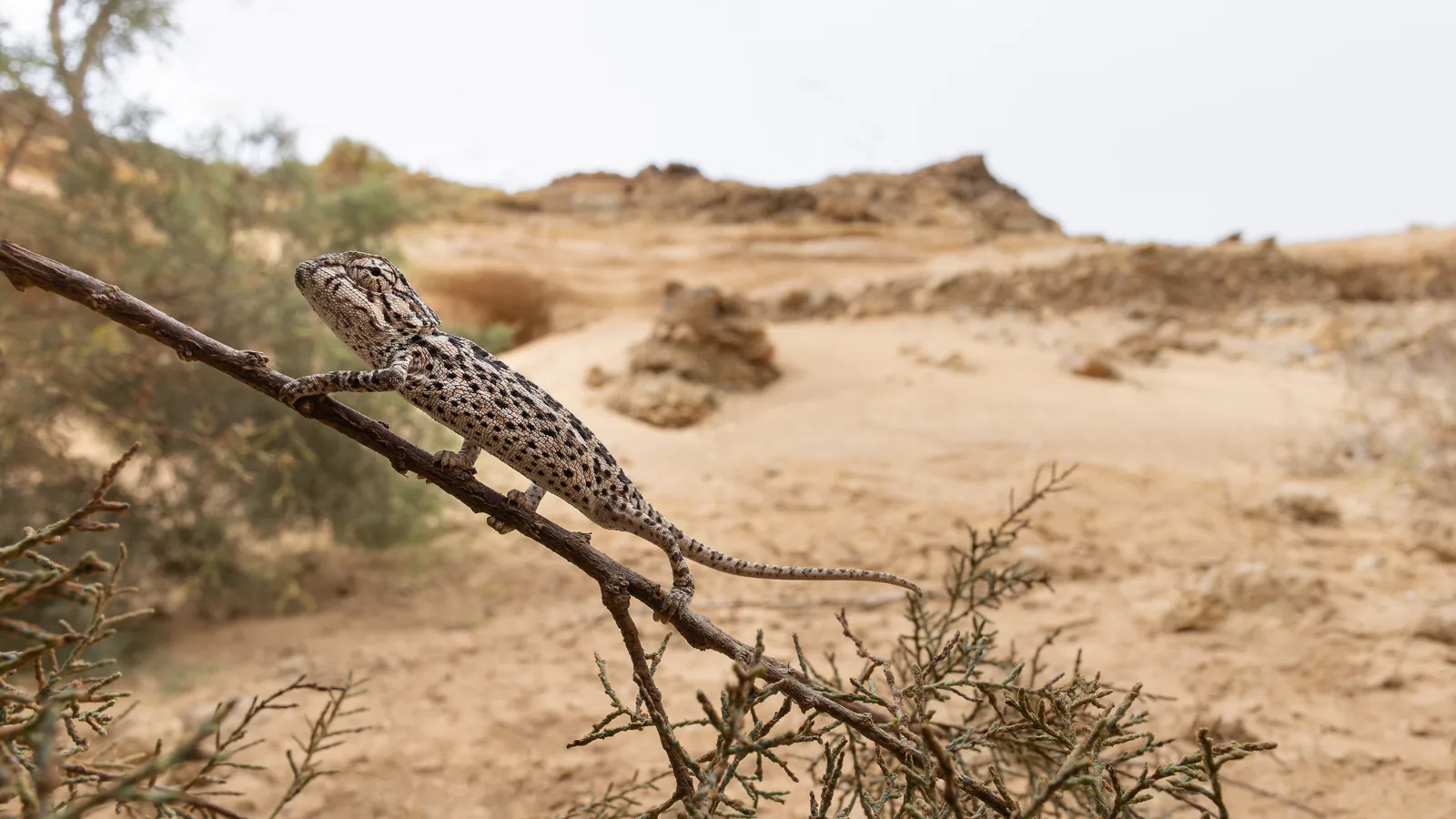 Chamaeleo chamaeleonCommon Chameleon
How to identify a Chameleon in Morocco
Morocco's only chameleon species is harmless, but fragile and protected. Keep your distance, this guide is for identification, not to encourage handling.
1 Is it really a Chameleon?
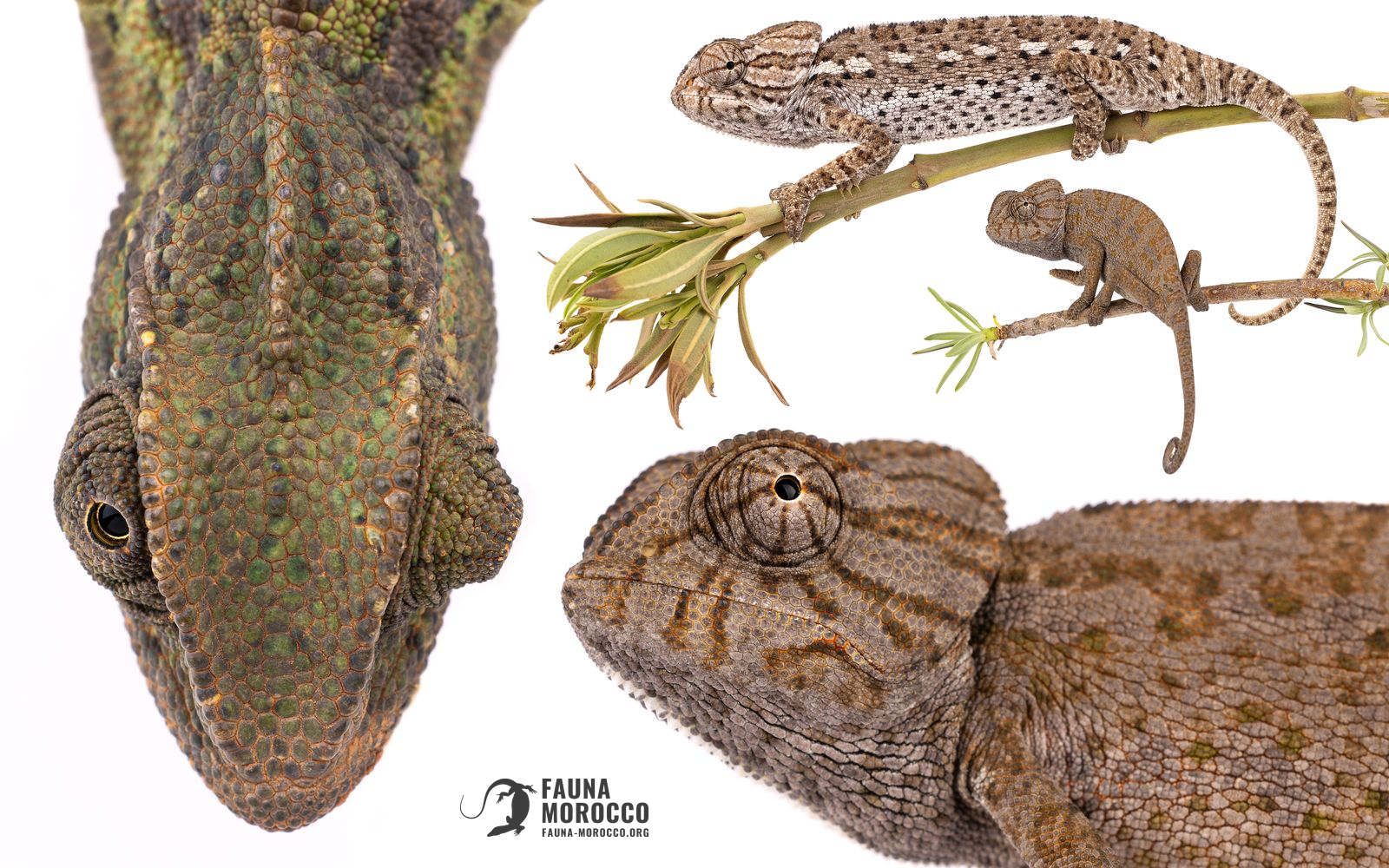 COLLAGE: Common Chameleon, full body on white
Four quick checks
- Pincer-like feet that grip branches
- Eyes that move independently, each covered by a round eyelid
- Helmet-like casque on the head and a prehensile tail
- Green to brown coloration
Chameleons of Morocco
Is the Common Chameleon dangerous?
No. A chameleon that is picked up opens its mouth wide, may hiss and tries to bite, but it soon stops, and the bite is harmless to people. The risk runs the other way: it is a fragile, stress-prone animal, so leave it where it is.
Where can I see a chameleon in Morocco?
The Common Chameleon is found across much of Morocco, in scrub, gardens, olive groves and oases. A slow-moving species, well camouflaged in the vegetation, it is hard to spot and most often found by chance rather than by looking. It is a fragile, stress-prone animal, so if you do come across one, do not disturb or collect it.
Is it legal to keep or buy a chameleon in Morocco?
No. The Common Chameleon (Chamaeleo chamaeleon) sold in souks is protected in Morocco under law 29-05, where it falls in category II. Selling one, buying one and keeping one are all illegal without a permit, and the fine runs from 20,000 to 50,000 dirhams per animal.
These animals are taken from the wild, and most die within weeks in captivity. (Law 29-05, articles 5 and 63; Decree 2-12-484 of 21 May 2015, Official Bulletin no. 6366.)
Can I bring a chameleon home, or on a plane?
No. Beyond the Moroccan rules, the Common Chameleon (Chamaeleo chamaeleon) is listed in Appendix II of CITES, so moving one across any border requires an export permit and an import permit.
In the European Union it is listed in Annex A of Regulation (EC) No 338/97, which is stricter still: commercial trade is banned outright, and even keeping or transferring a specimen inside the EU requires a certificate. An animal carried without paperwork is seized by customs on arrival and the traveller is fined.
How do you say "chameleon" in Arabic and Darija?
The chameleon goes by many names. Hirbae (الحرباء) is the Standard Arabic word. In Darija it is most often called Tata (تاتا), a name understood everywhere, or Lbouya (لبوية) in some regions, while mahbaouch and tayo are other local names.
Haven’t found an answer to your question?
Ask us